CCSD code N2842: Frenuloplasty of the penis billing guide
CCSD code N2842: Definition and clinical scope CCSD code N2842 is the billable p...

Last Updated: Nov 13, 2026
L6530 is the CCSD code for revision femoral bypass graft.
Let Pabau's smart automation suggest the right codes, reduce claim denials, and keep your practice compliant—effortlessly.
Automate repetitive tasks and focus on what matters most—your patients.
Reduce coding errors and ensure compliance with the latest regulations.
Clean claims, fewer denials, and faster reimbursements.
Powerful insights and reporting to help your practice thrive.
HIPAA compliant SOC 2 certified GDPR-compliant Trusted by 4,000+ clinics worldwide

CCSD code L6530 covers revision of an existing femoral bypass graft only – not a primary (first-time) bypass insertion.
An operative note confirming the prior graft and the indication for revision is mandatory supporting documentation; its absence is the most common denial trigger.
Most UK private insurers require pre-authorisation before elective revision surgery; emergency revisions may be retrospectively authorised – confirm per insurer.
Pabau’s claims management software lets vascular teams link the ICD-10 diagnosis, attach operative documentation, and submit directly to insurer portals from one workflow.
CCSD code L6530 carries the official descriptor “Revision femoral bypass graft.” It sits within the vascular/arterial chapter of the CCSD official schedule, which the Classification of Clinical Services and Diagnostic Procedures (CCSD) group maintains and updates annually in conjunction with UK private insurers including Bupa, AXA Health, Vitality, and Aviva.
The code applies when a consultant vascular surgeon re-explores and corrects a femoral bypass graft that is no longer functioning as intended. It does not apply to the original insertion of a femoral bypass graft, nor to endovascular (catheter-based) revision of a stented segment. The clinical event is open surgical revision of a prosthetic or autologous vein bypass that was placed at a prior operation.
A revision femoral bypass graft procedure is performed when an existing bypass fails to maintain adequate arterial flow through the lower limb. The most common indications are graft thrombosis, anastomotic stenosis, graft infection, pseudoaneurysm formation at the anastomotic site, and progressive atherosclerosis in the native outflow vessel that compromises graft patency.
The operative sequence varies by indication but typically follows this pattern:
The key coding distinction: The operative note must record that this was a revision of an existing bypass, not a new primary bypass. If the note describes the case as a primary procedure or fails to mention the prior graft, the insurer cannot distinguish L6530 from a primary insertion code – and will typically reject or downcode the claim.
UK private insurers require a supported ICD-10 diagnosis code on every L6530 claim. The diagnosis must reflect the clinical reason for revision, not simply the original peripheral arterial disease (PAD) that prompted the first bypass. The table below lists the most commonly paired diagnoses; always verify against the current NHS Classifications Browser for the precise code applicable to your patient’s presentation.
Confirm codes against the current NHS ICD-10 release before submission. T82.3 is typically the principal procedure-related diagnosis for mechanical graft complications; I70.2 may be added as a secondary code reflecting the underlying disease burden.
The vascular/arterial chapter of the CCSD schedule contains several femoral and peripheral bypass codes. Selecting the wrong code is a common source of insurer queries and denials – particularly confusing L6530 with a primary bypass insertion code.
The decision rule is straightforward: L6530 applies only when both conditions are met. First, an open femoral bypass graft was placed at a prior operation. Second, this procedure surgically revises that graft. Any endovascular intervention on the femoral segment uses a different code series. When in doubt, verify adjacent codes against the current CCSD schedule at ccsd.org.uk rather than relying on a cached code list.
Before selecting L6530, confirm in the operative note that the word ‘revision’ (or equivalent: ‘re-exploration’, ‘redo’, ‘conversion’) appears alongside explicit reference to the prior graft. If the note describes the case as a ‘femoral bypass’ without qualifying it as a revision of an existing graft, the insurer may downcode to a primary insertion rate. Flag this in your documentation checklist before submission.
An operative note confirming the existence of a prior graft is mandatory to support L6530. Without it, the insurer has no basis for paying at the revision tariff rather than the primary insertion rate – or rejecting the claim entirely. Using digital clinical documentation that structures operative reports reduces the risk of these fields being omitted under time pressure.
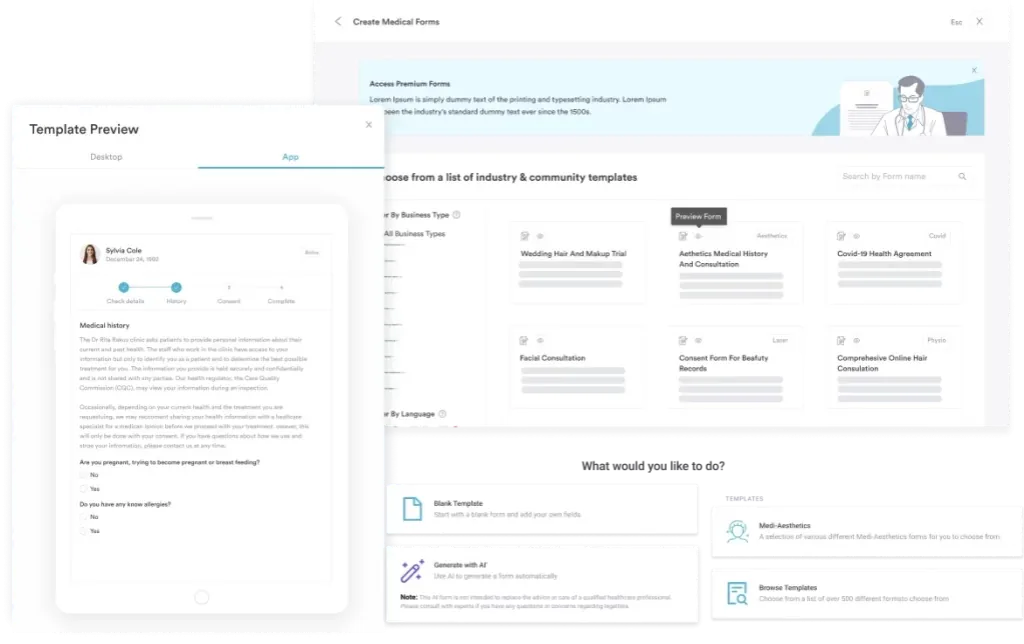
The operative note must address each of the following:
Beyond the operative note, the insurer claim form requires: The pre-authorisation reference number (for elective cases), the correct ICD-10 diagnosis code, the consultant’s GMC registration number, and the hospital facility charges submitted separately from the surgical fee. Missing any of these fields typically triggers a manual review that delays payment by weeks.

Pabau lets UK vascular practices link diagnosis codes, attach operative documentation, and submit claims to private insurers without leaving the patient record.

Most UK private insurers require pre-authorisation before elective revision vascular surgery. For L6530, this is standard practice across Bupa, AXA Health, Vitality, Aviva, Cigna UK, and WPA, though the exact clinical information required and the turnaround time differ by insurer. For detailed Bupa CCSD requirements, see Pabau’s Bupa CCSD billing guidance.
When submitting a pre-authorisation request for L6530, most insurers ask for:
Emergency revisions – where the patient presents acutely with critical limb ischaemia due to graft occlusion – may be performed without prior authorisation, with retrospective authorisation sought within the insurer’s specified window (commonly 24-48 hours for hospital notification). Check each insurer’s emergency protocol directly: Vitality’s fee finder lists applicable codes and guidance, while the Healix fee schedule provides unbundling rules relevant to emergency admissions.
L6530 claims are denied more often than primary bypass codes because the revision designation requires explicit documentary evidence that may be overlooked in a busy surgical list. The most frequent denial triggers are:
Resolution is usually straightforward once the specific denial reason is known. For documentation failures, submit a corrected claim with the full operative note attached. For pre-auth failures, contact the insurer’s clinical team with the supporting clinical letter and imaging before resubmitting.
Run a documentation checklist before every L6530 submission: prior graft confirmed in operative note, indication for revision stated, ICD-10 complication code (not PAD code) linked, pre-auth reference on the claim form, GMC number present, hospital charges submitted separately. A team member reviewing against this list before submission reduces rework significantly.
CCSD convention treats the surgeon’s operative fee and the anaesthesia fee as separate charges. Anaesthesia for L6530 is billed by the anaesthetist under the relevant CCSD anaesthesia code for major arterial surgery; it is not bundled within L6530 and should not appear on the same line as the surgical fee.
Unbundling rules vary by insurer and are updated periodically. Refer to the insurer’s own fee schedule for the most current bundling guidance before submitting any additional code alongside L6530.
A structured workflow in claims management software reduces the administrative errors that cause L6530 denials. The steps below reflect a typical UK private practice submission process.
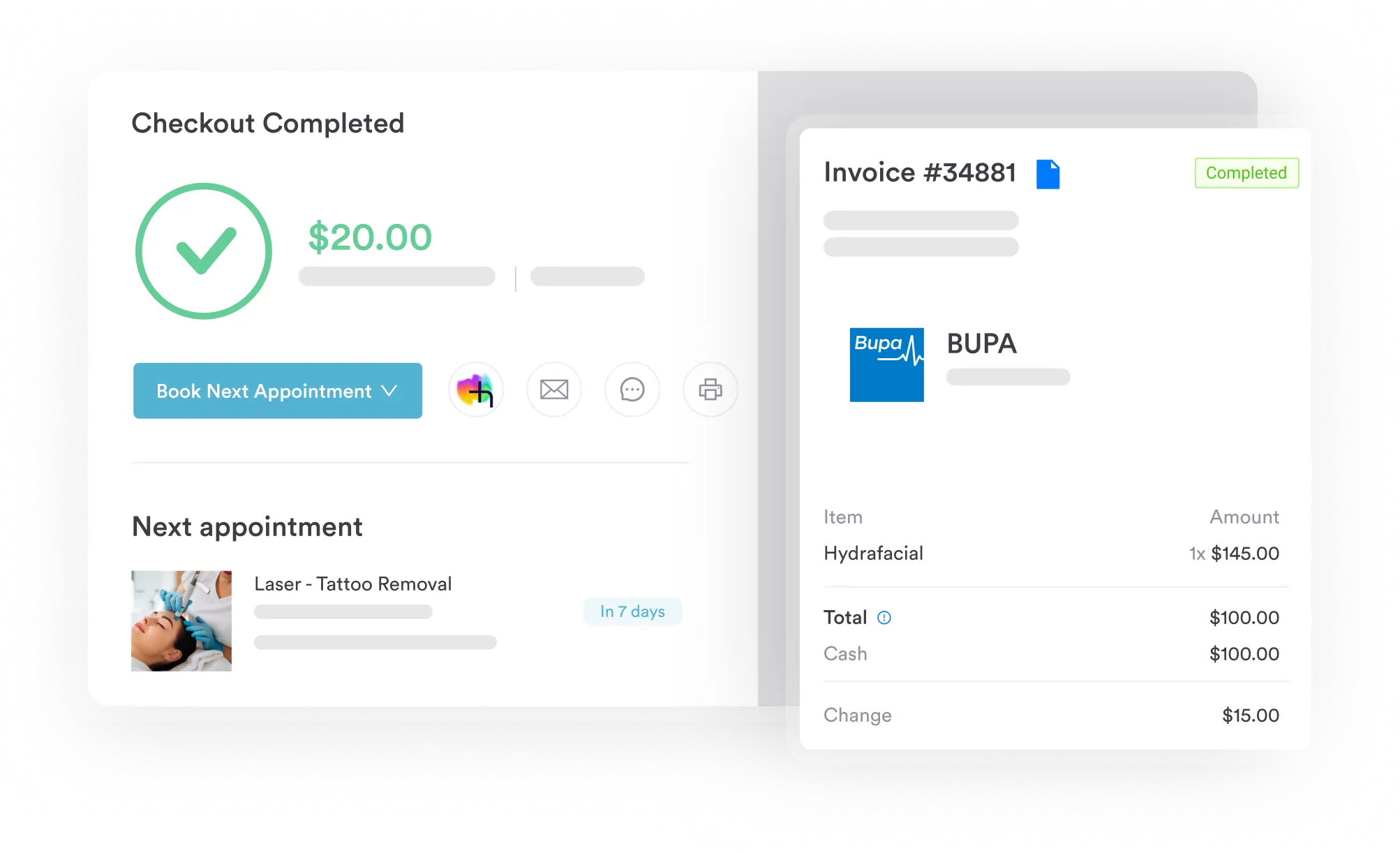
Tracking claim status within your practice management system – rather than relying on paper remittances – allows the billing team to identify denials promptly and act within appeal windows.
L6530 is a specific revision code with a narrow clinical scope: Open surgical re-exploration of an existing femoral bypass graft. The documentation failure that most commonly triggers denial is an operative note that does not confirm the prior graft. Address that in your pre-submission checklist and most L6530 claims will process cleanly.
Pabau’s claims management tools help UK vascular practices structure operative documentation, link ICD-10 diagnosis codes, and submit directly to insurer portals – keeping revision surgery claims moving without manual rework. Book a demo to see how the billing workflow handles CCSD submissions end to end.

Need a full Bupa CCSD code reference? Bupa CCSD codes guide covers Bupa’s procedure code structure, fee chapters, and submission requirements for UK private practice.
Looking to streamline how your team handles private billing? Claims management software from Pabau lets you code, document, and submit insurer claims without switching between systems.
Want to reduce administrative errors across your clinical documentation? Private practice management explains how structured workflows reduce rework in UK consultant-led practices.
CCSD code L6530 covers the open surgical revision of an existing femoral bypass graft. It applies when a consultant vascular surgeon re-explores and corrects a prior bypass that has failed, stenosed, become infected, or developed an anastomotic complication – not to the original insertion of a femoral bypass.
Revision is required when an existing femoral bypass loses patency or develops a complication that cannot be managed conservatively. The most common indications are graft thrombosis, anastomotic stenosis, graft infection, pseudoaneurysm formation, and progressive outflow disease that compromises graft function.
The operative note must confirm the prior graft was in situ, state the indication for revision, describe operative findings, specify the revision technique, and confirm graft patency at closure. The claim form also requires a pre-authorisation reference (for elective cases), a supported ICD-10 diagnosis code, and the consultant’s GMC number.
L6530 is a revision code – it applies only when a prior femoral bypass already exists. Primary insertion codes such as L6500 apply to the first-time placement of a femoral bypass graft. Using a primary code for a revision procedure is a coding error that may result in claim downcoding or denial.
L6530 is a standard CCSD code recognised by all major UK private insurers that use the CCSD schedule, including Bupa, AXA Health, Vitality Health, Aviva, Cigna UK, WPA, Healix, and Allianz Care. Fee rates vary by insurer; check each insurer’s current fee schedule or use their online code-search tool for the applicable tariff.
Yes. Under CCSD convention, the anaesthetist’s fee is billed separately under the relevant CCSD anaesthesia code for major arterial surgery – it is not bundled within L6530. The surgeon and anaesthetist each submit their own claims to the insurer for the same operative episode.