


CPT Code 30801: Superficial turbinate ablation billing guide
CPT Code 30801: Official descriptor and procedure overview The American Medical ...

Last Updated: Nov 27, 2026
CCSD code XR565 is the UK private billing code for percutaneous dilatation of a biliary stricture under imaging control. Bupa’s Finder directory lists the code with that exact wording. In practice, an interventional radiologist passes a balloon catheter through the skin into a narrowed bile duct, then widens it under live imaging. The code sits in Chapter 17 of the CCSD schedule, the dilatation chapter. So it’s an interventional procedure, not a diagnostic imaging test.
That difference matters at invoice time. XR565 can’t share a claim with the biliary stent codes XR570 or XR575, and that clash is easy to miss on a busy list.

CCSD code XR565 covers percutaneous dilatation of a biliary stricture under imaging control, listed in Chapter 17 (Dilatation) of the schedule.
It’s an interventional radiology procedure, so don’t use it for a plain film, a fluoroscopy study or a diagnostic cholangiogram.
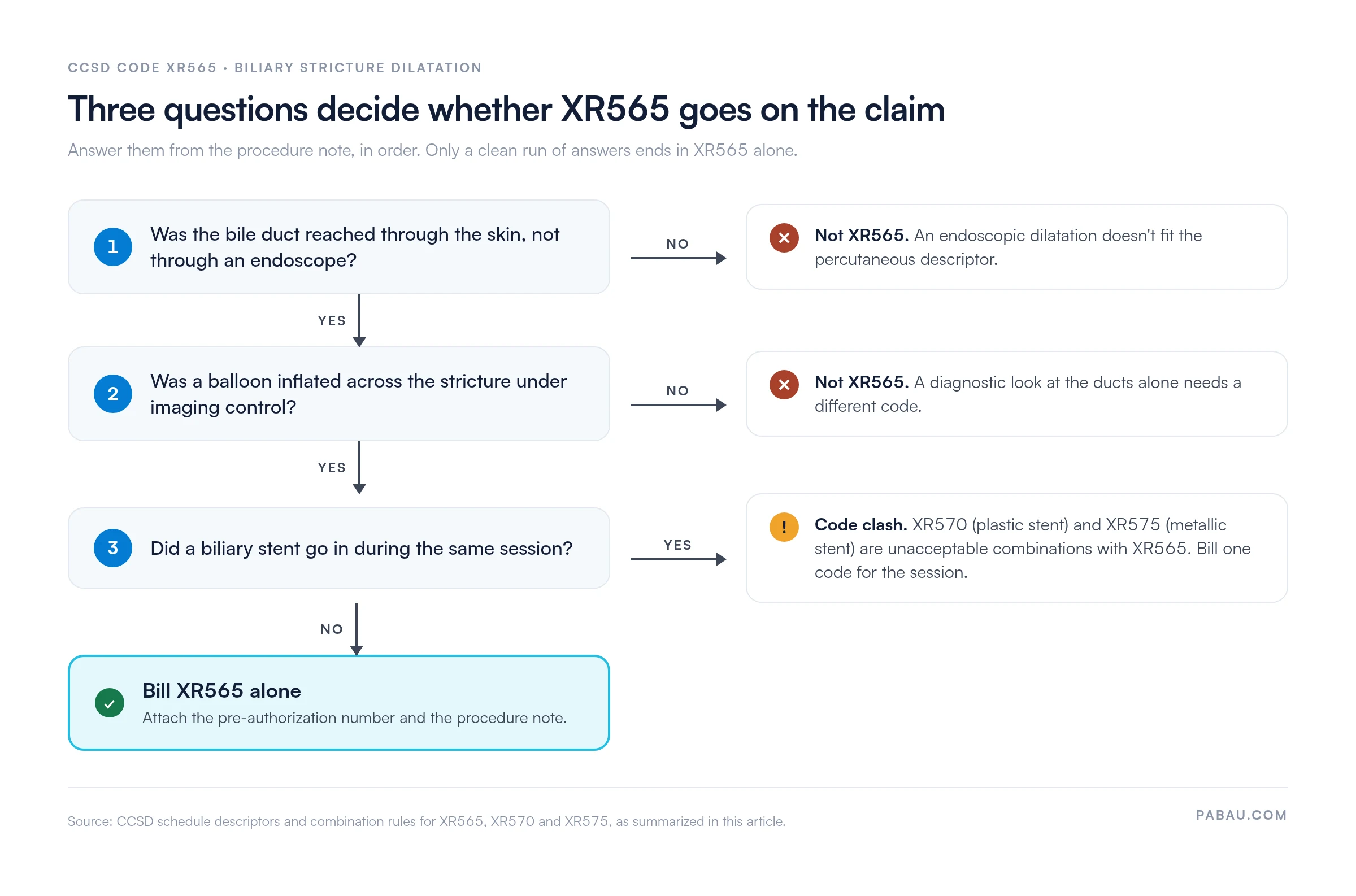
XR570 (plastic biliary stent) and XR575 (metallic biliary stent) are unacceptable combinations with XR565, so they can’t share a claim.
The procedure note should record the indication, the stricture site, the approach, the balloon used and the imaging control.
Confirm pre-authorization and the insurer’s fee before the list, because CCSD sets codes and descriptions, not fees.
XR565 covers one procedure: percutaneous dilatation of a biliary stricture under imaging control. “Percutaneous” means the duct is reached through the skin, not through an endoscope. The feeding tube in XR585 percutaneous gastrostomy also goes in through the skin, entering the stomach through the abdominal wall. “Imaging control” means the radiologist guides the wire and balloon on screen, usually with fluoroscopy.
The code lives in Chapter 17 of the schedule, which groups dilatation procedures. Its code-specific guidance sits under section 17.6.0. The consultant who performs the dilatation bills it, and that’s normally an interventional radiologist.
The Clinical Coding and Schedule Development group maintains the schedule for UK private insurers. Its members include Aviva, AXA Health, Bupa and VitalityHealth. The group sets codes and descriptions, while each insurer sets its own fees. Code entries can change, so check the live schedule before you invoice. To look up neighboring procedures, search our UK private billing reference.
Knowing the steps helps you read the procedure note and spot what belongs on the claim. A typical session runs like this:
Patients usually come to this route when endoscopic access isn’t possible. A common example is altered anatomy after bile duct surgery. Benign strictures, such as those at a surgical join, often need more than one session.
XR565 describes the dilatation only. Leave it off the claim in these situations:
The CCSD schedule flags two biliary stent codes as unacceptable combinations with XR565. In practice, they can’t appear on the same claim.
When a stent and a dilatation happen in one session, the claim carries a single code. Check the schedule entry for which one applies, and keep the dilatation in the procedure note. The flow below runs the three checks in the order you meet them in the note.
No. CCSD claims don’t use CPT-style modifiers for laterality, timing or supervision. If the procedure changes, the code changes. So the fix for a mismatch is always a different code, never a suffix.
Insurers query interventional claims when the notes don’t show what was done and why. Before the claim goes out, make sure the record holds these items:
Keep these records for as long as your professional body’s guidance and UK GDPR require. A query can arrive months after payment.
Most major UK insurers expect pre-authorization for planned interventional procedures. Rules differ by insurer and by policy, so check the provider portal for each patient. If the procedure is urgent, contact the insurer as soon as you can and record the reference you’re given.
Fees work the same way. CCSD doesn’t publish a fee for XR565, so look up each insurer’s figure:
Where your fee exceeds the insurer’s, tell the patient about the shortfall before the procedure. Our Bupa CCSD codes guide covers Bupa’s rules in more detail.
Take an illustrative patient with a narrowed bile duct at a surgical join, months after bile duct surgery. An MRCP confirms the stricture, and the insurer authorizes a percutaneous dilatation.
On the day, the radiologist enters through an existing drain, crosses the stricture and inflates a balloon twice under fluoroscopy. The final contrast run shows good drainage, and no stent is placed. The claim carries XR565 alone, with the authorization number and the procedure note attached.
Now change one detail. If the duct had narrowed again and a plastic stent went in, XR565 and XR570 couldn’t both go on the claim. The coder would check the schedule and bill one code for the session. A stent that is already in place and has blocked is a different case again. Draining that obstructed system is billed under CCSD code XR576.
These are the errors to watch for on an XR565 claim, with a fix for each.
Interventional claims often stall on admin details rather than coding. An authorization number sits in an email, or a membership number has changed since the referral.
Pabau, a practice management platform with a Healthcode integration, raises CCSD-coded claims from the patient record. Its claims management checks that required fields, such as the membership number and authorization code, are complete before the claim can be sent. You can then follow each claim’s status from the same record, so a query doesn’t slip past your team.
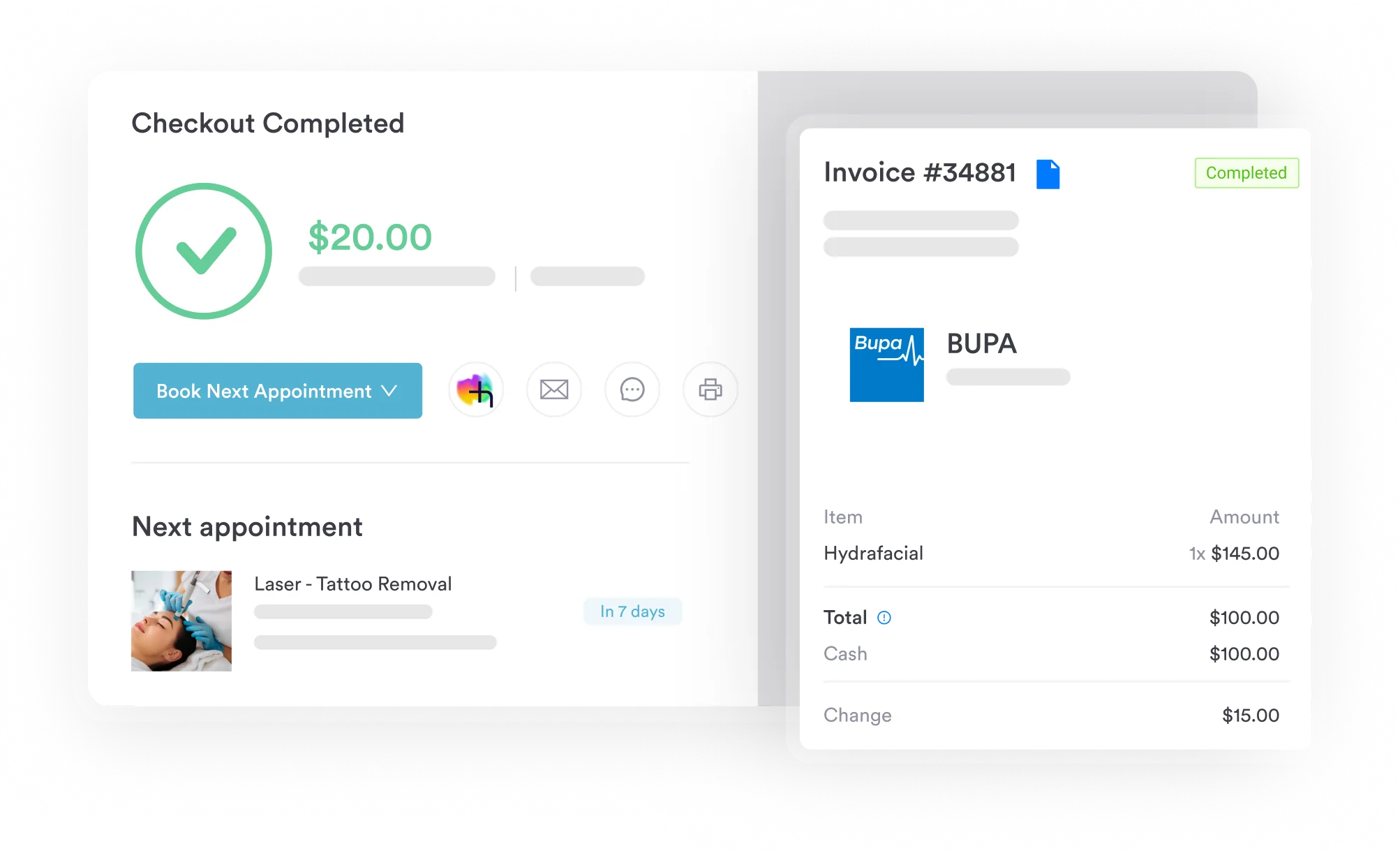

Pabau raises CCSD-coded claims from the patient record and sends them through Healthcode. Required fields are checked first, and you can follow each claim’s status in one place.

XR565 is a narrow code. It describes a percutaneous balloon dilatation of a bile duct, and only that. Get the approach right in the note, and keep the stent codes off the same claim.
If you change one habit, check the procedure note for a stent before you code. That single look prevents the clash that trips up many biliary claims. Book a demo to see how Pabau sends CCSD claims through Healthcode with the required details checked first.

Was the duct reached through an endoscope instead? CCSD code J3900 covers billing for therapeutic ERCP.
Only a diagnostic look at the ducts? CCSD code J4300 covers diagnostic ERCP, including forceps biopsy.
Did the case involve a sphincterotomy? CCSD code J3500 covers sphincterotomy of the bile and pancreatic ducts.
Was the bile duct rejoined surgically? CCSD code J3000 covers anastomosis of the common bile duct.
Billing Bupa for the session? Bupa CCSD codes sets out how Bupa handles CCSD-coded claims.
It’s the clinical name for balloon dilatation of a bile duct stricture, reached through the skin and liver. In UK private billing, this procedure falls under CCSD code XR565.
Yes, when the dilatation is repeated in a later session. Benign strictures often need several sessions over weeks or months. Each session needs its own claim, so check whether the insurer’s authorization covers repeats.
No. CCSD codes are for claims to UK private medical insurers. NHS hospitals record procedures with OPCS-4 codes instead, so an NHS episode never carries XR565.
No. XR565 is the consultant’s procedure code. The hospital invoices the insurer separately for the operating room or suite, the stay and any consumables, under its own agreement.




