



CCSD code G5100: Bypass of duodenum billing guide
CCSD code G5100 bills a bypass that leaves the duodenum in place CCSD code G5100...

Last Updated: Oct 16, 2026

CCSD Code B2810 covers segmental resection or quadrantectomy, a breast-conserving surgical procedure that removes a defined segment or quadrant of breast tissue.
The code is recognised by major UK private medical insurers including Bupa, AXA Health, Vitality, Aviva, and Allianz Care, each with their own fee schedules and submission requirements.
Claims for B2810 must include complete clinical documentation and must be submitted in the correct insurer-specific format to avoid denials or payment delays.
Pabau’s claims management software supports CCSD billing workflows for UK private practices, helping teams submit accurate claims and reduce administrative errors.
CCSD Code B2810 covers segmental resection or quadrantectomy, a breast-conserving surgical procedure that removes a defined segment or quadrant of breast tissue. It sits in the CCSD breast chapter alongside B2800 (excision or biopsy of a breast lump), B2820 (wide local excision of a breast lesion), and B2830 (repeat local excision to clear margins).
Providers billing across Bupa, AXA Health, Vitality, and other major UK insurers need to confirm which payers recognise the code, the correct fee, and what documentation must accompany the claim. This guide covers all of it, including electronic submission via Healthcode and the most common errors that trigger rejections.
If your practice is moving from NHS work into private practice, understanding the CCSD schedule is one of the first operational priorities. The coding system underpins almost every insurer reimbursement claim in the UK private sector.
CCSD Code B2810 sits within the CCSD Schedule of Procedures, the standard coding system used across UK private healthcare insurers and providers. The CCSD (Clinical Coding and Schedule Development Group) maintains separate procedural and diagnostic schedules, and all codes are assigned chapter numbers that indicate clinical category.
B2810 is the code for segmental resection or quadrantectomy: surgical removal of a defined segment or quadrant of breast tissue, most often to treat a confirmed or suspected breast malignancy. It’s a form of breast-conserving surgery, sometimes called partial mastectomy.
It sits in the CCSD breast chapter alongside B2800 (excision or biopsy of a breast lump), B2820 (wide local excision of a breast lesion), and B2830 (repeat local excision to clear margins). Public fee schedules, including the States of Guernsey’s 2021 private surgical fee list, corroborate this identity.
The official CCSD narrative wording and the current insurer-recognised fee for B2810 sit behind member registration on the CCSD website or your insurer’s provider portal, so confirm both before invoicing. B2810 follows the same coding structure and business rules that apply across the CCSD procedural schedule, as set out in the CCSD Technical Guide (October 2025).
Key structural rules that apply to CCSD Code B2810 and all procedural codes:
For a broader overview of how the CCSD schedule works and which codes Bupa specifically recognises.
Practices performing breast and plastic surgical procedures like B2810 often rely on specialty tools such as Pabau’s plastic surgery EMR software to keep clinical notes, imaging, and billing details aligned.
The CCSD schedule is the industry standard for UK private healthcare billing. Major insurers base their own fee schedules on CCSD codes, though acceptance of any specific code and the applicable fee must be confirmed with each payer directly. The table below shows the primary UK insurers known to use CCSD-based billing and their relevant provider resources.
Always confirm the current accepted fee for CCSD Code B2810 with each insurer before invoicing. Fee amounts vary by payer, are updated annually, and are not set by CCSD centrally. Invoicing above the recognised fee is a common cause of short payment.
Each insurer that accepts CCSD-based claims applies its own billing rules on top of the CCSD schedule structure. Understanding these variations reduces the risk of partial payment or outright denial when billing CCSD Code B2810.
Bupa is the largest UK private medical insurer and the most commonly referenced user of CCSD codes. Claims should be submitted via the Bupa provider portal or Healthcode. Bupa applies its own fee schedule, which may differ from other insurers. Before submitting a B2810 claim, verify the code is listed in Bupa’s current schedule using the Bupa code search tool.
AXA Health organises its procedure codes into fee chapters. The applicable chapter for B2810 determines the recognised fee. Providers should check the AXA Health specialist procedure codes portal and confirm the code is covered under the patient’s policy before the procedure takes place. Pre-authorisation is typically required for insured work.
Vitality uses the CCSD schedule as the basis for its fee structure. The Vitality fee finder tool allows providers to look up the recognised fee for a specific CCSD code. Check B2810 in the fee finder before invoicing and retain the result as part of your pre-claim documentation.
Both Allianz Care and H3 Insurance publish fee schedules that explicitly reference CCSD codes as the basis for their procedure coding. The Allianz Care UK published fee schedule confirms this approach. Check each insurer’s current published schedule or provider portal for the recognised fee applicable to B2810.
Before treating any insured patient, confirm the patient’s policy covers the procedure you intend to bill under B2810, obtain pre-authorisation where the insurer requires it, and record the authorisation reference number in the patient record. Missing authorisation is the single most preventable cause of claim denial in UK private healthcare.
Strong documentation is the foundation of a clean B2810 claim. UK private insurers can and do audit claims, and incomplete or inconsistent records are the most common reason for queried or denied invoices. The compliance requirements for UK private practices extend into billing records as well as clinical notes.
Every CCSD Code B2810 claim should be supported by the following:
Patient billing records contain sensitive personal data. UK GDPR requires that this data is handled lawfully, stored securely, and not kept longer than necessary, with retention periods documented and justified.
The widely followed baseline for adult private-healthcare records is eight years, a standard set by the NHS Records Management Code of Practice and endorsed by the GMC for private doctors. Longer retention periods apply to records for children, maternity care, and mental health.
Your practice’s UK GDPR compliance checklist should include billing records explicitly, not just clinical notes.
Pabau’s digital forms for clinical documentation let practices capture structured patient data at the point of care, so billing submissions match the clinical record without manual re-entry. Consistent, timestamped records support accurate CCSD Code B2810 claims and reduce audit risk.
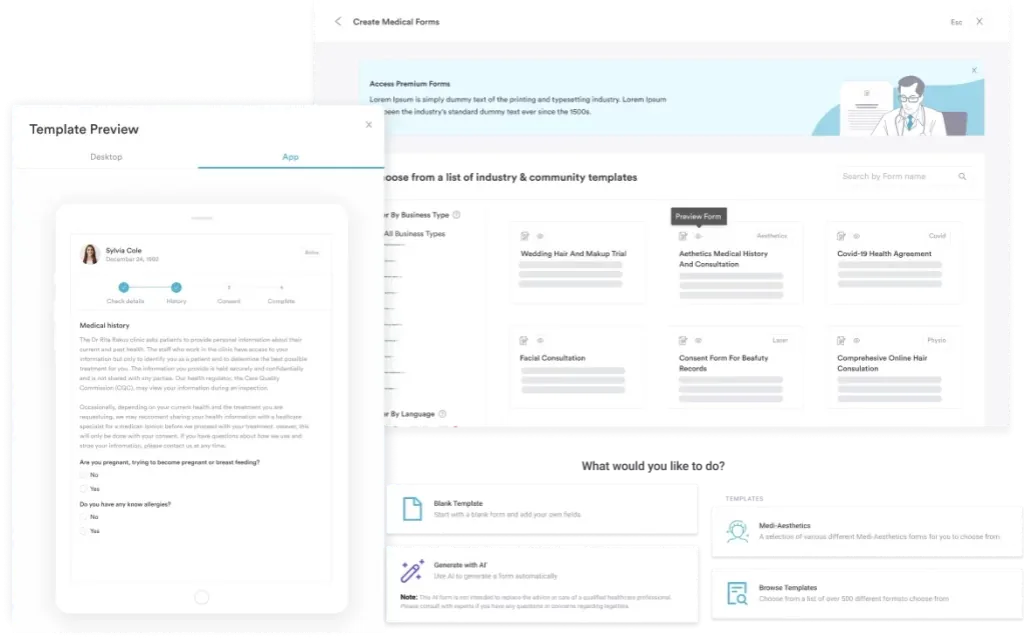

Pabau helps UK private practices manage clinical documentation, insurer invoicing, and claim submissions in one place. See how it works for practices billing across Bupa, AXA Health, Vitality, and other UK insurers.

Electronic claim submission is now the standard for UK private healthcare billing. Paper invoices are slower, harder to track, and more likely to be queried. Healthcode is the primary electronic data interchange (EDI) gateway used by UK private insurers, and most major payers including Bupa, AXA Health, and Vitality accept claims via this route.
To submit a B2810 claim electronically via Healthcode:
Practices that connect their practice management software to a claims workflow reduce manual data entry errors. Pabau’s claims management software supports structured invoicing for UK private healthcare providers, helping practices build consistent claim records for CCSD billing. For practices also considering how technology fits into the broader picture of running a successful private practice, integrating billing with patient records removes a significant administrative burden.
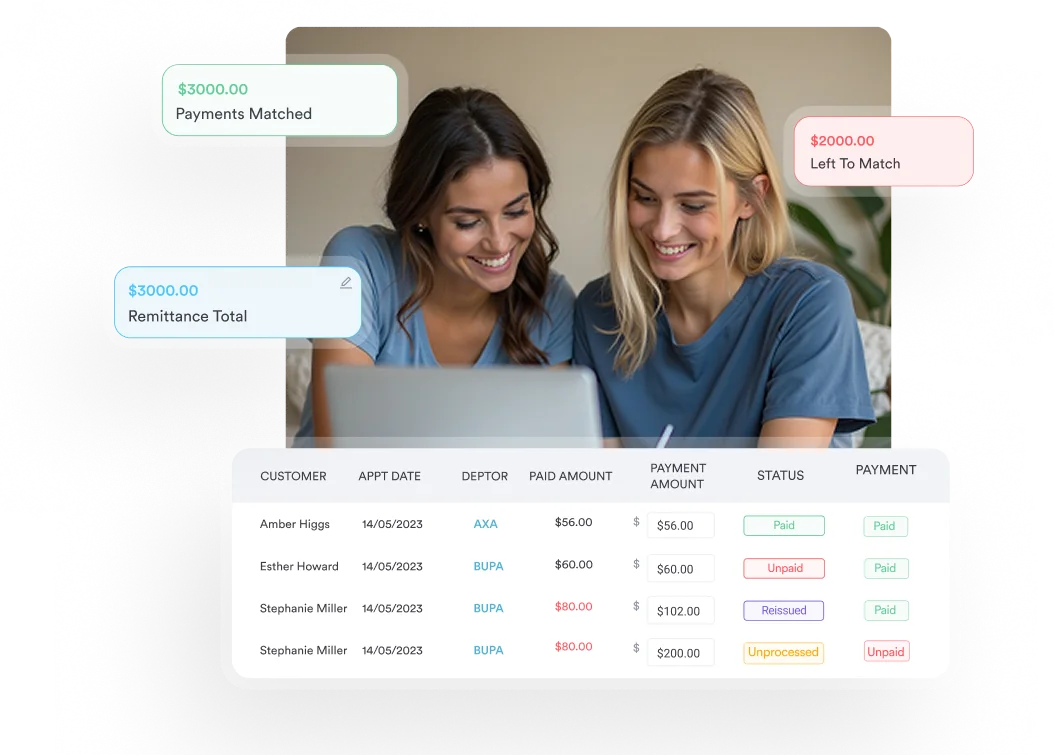
Most major UK insurers allow up to six months from the date of treatment to submit an invoice (Bupa and AXA Health both cite a six-month cutoff), but confirm the exact window in your provider agreement. Submitting promptly still reduces processing delays and query risk. Track outstanding claims weekly to catch delays before they age into write-offs.
Even experienced billing teams make consistent errors when submitting CCSD claims. These are the most common problems when billing B2810 and similar procedural codes.
Submitting without a valid pre-authorisation number is the fastest way to receive a denial. Some insured procedures allow retrospective authorisation in genuine emergencies, but routine work does not. Always obtain the reference number before the procedure takes place and include it on every claim submission. UK private practices should consider compliance management software that prompts staff to capture authorisation details before procedures are booked.
CCSD Code B2810 will carry a different fee depending on the insurer. Charging above the recognised fee results in short payment or a query that delays the full claim. Check the insurer’s published fee schedule before invoicing. For Vitality, use the Vitality fee finder to confirm the current rate. For Allianz Care, the published UK fee schedule lists recognised amounts by CCSD code.
CCSD coding rules prohibit billing certain combinations of codes together where one code already encompasses the component procedures. The CCSD Technical Guide sets out unbundling rules that apply across the schedule. Billing B2810 alongside a code that it already includes is a common audit trigger. Review the CCSD Technical Guide (October 2025) to confirm permissible code combinations for your specific scenario.
Insurers have the right to audit claims at any point. A claim for CCSD Code B2810 with clinical notes that do not support the procedure billed creates a liability. Ensure your records include the clinical rationale for the procedure, the procedure itself, and any follow-up notes. This protects both the practice and the patient in any dispute. Practices building a strong EHR workflow for private practice typically see fewer audit-related claim queries.
Getting CCSD Code B2810 right comes down to three things: confirming the code is accepted by the patient’s insurer, capturing complete documentation before the procedure, and submitting within the insurer’s timeframe. Most denials are preventable, and most successful claims follow the same clean process.
Pabau’s practice management software for private UK GP practices brings clinical documentation, patient records, and invoicing into one system, cutting the points where billing errors typically occur. Whether you are billing B2810 across a single insurer or managing claims across Bupa, AXA Health, Vitality, and Allianz Care simultaneously, a connected workflow makes the difference between a clean claim run and a backlog of queries. See how Pabau handles private healthcare billing workflows for UK practices. What a superbill includes decides whether the patient insurer processes or rejects the reimbursement request.

Billing behavioral counseling for obesity? G0447 obesity counseling billing guide G0447 bills 15-minute face-to-face behavioral counseling for obesity under the Intensive Behavioral Therapy benefit.
Looking to understand the full Bupa fee schedule? Bupa procedure codes and fee schedule provides a reference for recognised fees and procedure categories.
Still billing a deleted COVID-19 code? G2023 specimen collection billing guide G2023 covered COVID-19 specimen collection by independent labs before Medicare deleted it in May 2023.
Coding for a different specialty? Our HCPCS Code A9575 guide walks through documentation and reimbursement for that code.
Need a diagnostic code reference too? The ICD-10 Code G808 guide covers billing and documentation requirements.
Coding an in-office esketamine session? G2083 esketamine billing guide G2083 bundles the evaluation, supervision, and required observation for a self-administered esketamine session into one charge.
CCSD Code B2810 is the code for segmental resection or quadrantectomy, a breast-conserving surgical procedure that removes a defined segment or quadrant of breast tissue. It sits in the CCSD breast chapter alongside B2800, B2820, and B2830. Confirm the exact insurer-recognised fee and any unbundling relationships with those codes via your insurer’s provider portal or the CCSD member schedule.
Major UK private medical insurers including Bupa, AXA Health, Vitality Health, Aviva, Allianz Care, H3 Insurance, and WPA base their fee schedules on CCSD codes. Acceptance of any specific code and the applicable fee must be confirmed directly with each insurer, as policies and schedules are updated annually.
Claims for CCSD Code B2810 can be submitted electronically via Healthcode, the primary EDI gateway for UK private healthcare billing. Register your practice with Healthcode, obtain the insurer’s pre-authorisation reference number before the procedure, enter the B2810 code with the correct narrative and fee, and submit through the gateway. Most major UK insurers including Bupa and AXA Health accept Healthcode submissions.
A B2810 claim requires clinical notes supporting the procedure, the insurer’s pre-authorisation reference number, the date of service, the clinician’s GMC number and details, the patient’s insurer membership number, and an invoice with the CCSD code, narrative, and fee aligned to the insurer’s recognised rate. Retain all documentation for the period set out in your practice’s retention policy, commonly eight years for adult private-healthcare records under NHS Records Management guidance endorsed by the GMC.
The most common causes of B2810 claim denial are: missing or invalid pre-authorisation reference, invoicing above the insurer’s recognised fee, unbundling errors where B2810 is billed alongside a code it already encompasses, and incomplete clinical documentation. Most denials are preventable by confirming insurer requirements before the procedure and submitting a complete, well-documented claim on time.



