CPT code 93503: Swan-Ganz catheter billing and modifiers
CPT code 93503: Official descriptor and procedure overview In the AMA CPT code s...

Last Updated: Oct 23, 2026
Billable Code Specific Code
G80.8 is the billable ICD-10-CM code for other cerebral palsy.
Let Pabau's smart automation suggest the right codes, reduce claim denials, and keep your practice compliant—effortlessly.
Automate repetitive tasks and focus on what matters most—your patients.
Reduce coding errors and ensure compliance with the latest regulations.
Clean claims, fewer denials, and faster reimbursements.
Powerful insights and reporting to help your practice thrive.
HIPAA compliant SOC 2 certified GDPR-compliant Trusted by 4,000+ clinics worldwide

ICD-10 code G80.8 is the billable subcode for Other cerebral palsy, covering mixed, atypical, and congenital forms not captured by G80.0 through G80.4.
G80.8 is valid and reimbursable for FY2026 under ICD-10-CM; parent code G80 is non-billable and cannot be submitted alone.
Choose G80.8 over G80.9 only when the physician has documented a specific CP type that does not match spastic, athetoid, or ataxic categories; G80.9 is for truly unspecified presentations.
Practice management software like Pabau supports accurate ICD-10 code submission and documentation workflows for neurological diagnoses.
ICD-10 code G80.8, titled “Other cerebral palsy,” is a billable ICD-10-CM diagnosis code valid for FY2026. It belongs to code category G80 (Cerebral palsy), within the broader block G80-G83 (Cerebral palsy and other paralytic syndromes), under chapter G00-G99 (Diseases of the nervous system).
Cerebral palsy itself is a group of permanent movement disorders caused by non-progressive brain damage occurring before, during, or shortly after birth. The G80 category captures the full diagnostic range. ICD-10 code G80.8 captures the presentations that are clinically identifiable as cerebral palsy but do not map cleanly to the four named motor subtypes (G80.0 through G80.4).
One naming quirk trips up coders cross-referencing sources. The US ICD-10-CM title is “Other cerebral palsy,” while the WHO ICD-10 version labels the same code “Other infantile cerebral palsy.” Both point to G80.8, so when a referral or an older record uses the infantile cerebral palsy wording, it is the same diagnosis code rather than a different one.
Per the CDC’s ICD-10-CM web tool, G80.8 is validated as a billable/specific code for reimbursement purposes. It is distinct from G80.9 (cerebral palsy, unspecified), which is used when the physician cannot specify any subtype at all.
G80.8 has one official ICD-10-CM Tabular List inclusion term: mixed cerebral palsy syndromes. Two more terms appear only in the ICD-10-CM Alphabetic Index as approximate synonyms, not as Tabular List entries. Coders should still recognize all three in physician documentation, since each one maps to G80.8.
Mixed cerebral palsy syndromes is the most clinically significant term, and the only one with formal Tabular List status. Many patients present with overlapping motor features, such as spasticity combined with athetoid movements, that do not satisfy criteria for a single named subtype.
G80.8 is the correct code for those cases, provided the physician documents the mixed or atypical nature of the presentation. Coders should not default to G80.9 when the record clearly describes a specific pattern that simply combines multiple motor features.
Understanding how the cerebral palsy ICD-10 codes nest under G80 prevents the most common billing error: submitting G80 (non-billable) instead of a specific subcode. The CMS ICD-10-CM code set requires the highest level of specificity the documentation supports.
Each named subtype maps to a motor pattern:
G80.8 is where a presentation lands when it blends these patterns or fits none of them.
One boundary sits at the top of the category. G80 carries an Excludes1 note for hereditary spastic paraplegia (G11.4). Excludes1 means the two codes are mutually exclusive, so hereditary spastic paraplegia is coded to G11.4 and never reported with a G80 code, even when the motor picture looks similar.
The same hierarchy principle applies to other neurodevelopmental diagnoses: G80 follows the same rule, so submitting it alone will result in a claim edit requiring a more specific code before adjudication can proceed.
Before assigning G80.8, scan the physician note for explicit motor subtype language. If the note says ‘spastic’ with documented limb distribution, you likely have G80.0, G80.1, or G80.2. If the note describes mixed features, overlapping motor signs, flaccid tone, or an atypical presentation without naming a standard subtype, G80.8 is the appropriate choice.
Practices taking a root-cause approach to neurological symptoms often chart them in functional medicine software.
This is where most coding errors occur. Both G80.8 and G80.9 apply when the patient does not fit cleanly into G80.0 through G80.4. The distinction depends entirely on what the physician has documented.
Payers do not automatically deny G80.9 as insufficient, but auditors will question G80.8 if the supporting documentation does not contain descriptive language consistent with one of its inclusion terms. Reviewers look for phrases like “mixed CP,” “hypotonic CP,” “flaccid paralysis of cerebral origin,” or “atypical cerebral palsy” in the note.

Pabau’s claims management tools help physical therapy, occupational therapy, and neurology practices submit ICD-10 codes accurately and track claim status in one place.

Strong documentation is what separates a clean claim from a medical necessity review. For G80.8, the record should contain the following elements.
The physician must explicitly document the cerebral palsy diagnosis and characterize the motor presentation. Language that supports G80.8 includes: mixed spastic-athetoid pattern, hypotonic or flaccid paralysis of central origin, atypical CP with overlapping features, congenital paraplegia of cerebral etiology, or similar descriptive phrasing. A bare “cerebral palsy” with no additional detail supports only G80.9.
Coders working in physical therapy EMR software environments often encounter G80.8 in referral notes and progress records. The referring neurologist’s documentation carries the diagnostic weight; the treating therapist’s note supports medical necessity for the specific services rendered.
Cerebral palsy under G80.8 is congenital or perinatal in origin. If the motor impairment resulted from a documented traumatic brain injury, stroke, or acquired brain insult occurring after the early developmental period, different codes apply.
Traumatic sequelae are captured under sequela codes from the injury chapter, not G80.x. The physician note should confirm either congenital etiology or perinatal brain injury to support any G80 subcode.
Periventricular leukomalacia is one perinatal brain injury coders find in these records, reported as P91.2. Spastic cerebral palsy is a recognized later outcome, so that history documents the perinatal etiology G80.8 requires.
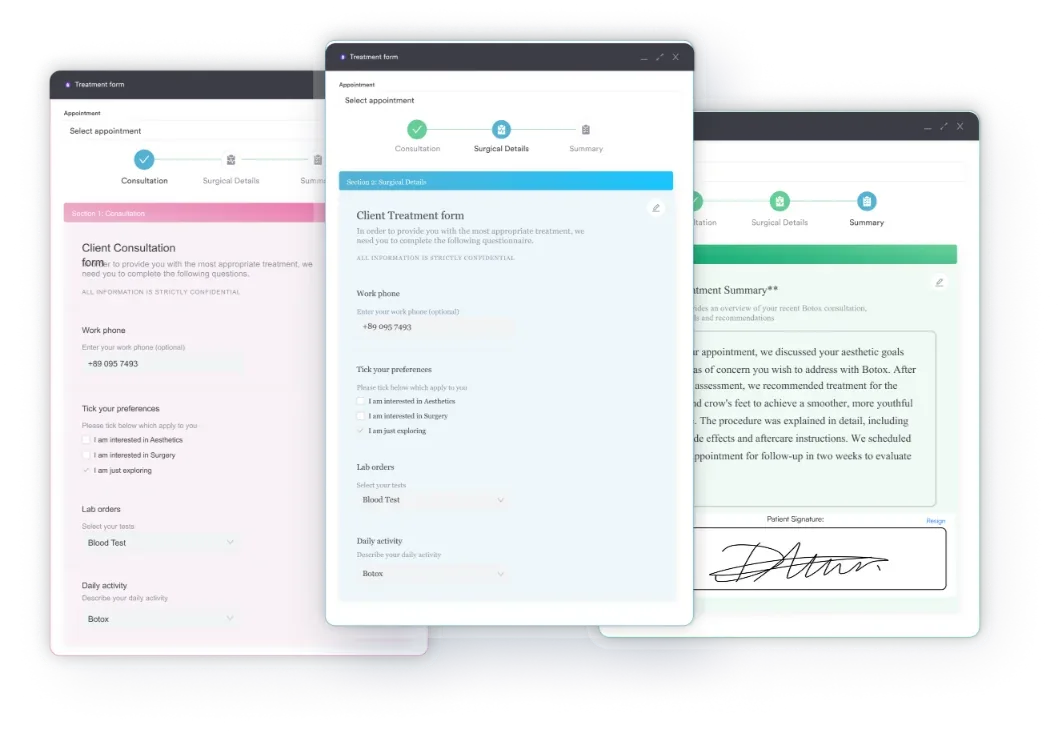
Proper documentation workflows, including structured digital intake forms that capture birth and developmental history, help practices collect the etiology information needed to support G80.8 at the time of the initial encounter rather than during a retrospective audit.
While limb distribution is not embedded in G80.8 the way it is in G80.0 (quadriplegic) or G80.2 (hemiplegic), documenting the functional impact strengthens medical necessity.
Notes should include which limbs are affected, degree of motor involvement, functional limitations, and how the presentation affects daily activities or therapy goals. A standardized muscular strength test gives this detail a repeatable baseline that payers can compare across visits.
Accurate clinical records management that links diagnosis codes to documented functional limitations reduces the risk of denials on physical therapy and occupational therapy claims billed with G80.8 as the primary or secondary diagnosis.
G80.8 appears most frequently as a primary or supporting diagnosis on claims for rehabilitation and neurology services. The following CPT code families are billed alongside it in typical practice.
Practices providing occupational therapy alongside physical therapy for CP patients benefit from occupational therapy practice software that links CPT codes to ICD-10 diagnoses at the encounter level, reducing manual cross-referencing during claim preparation.
Review physical therapy clinic requirements in your state when determining which CPT codes require physician orders, direct access authorization, or prior authorization for G80.8-related services. Rules vary significantly by payer and jurisdiction.
When billing botulinum toxin injections (CPT 64644/64645) with G80.8, document the specific muscle groups treated, the rationale for injection in the context of the mixed or atypical CP presentation, and the spasticity severity. Payers frequently request medical records for these claims and the narrative must connect the G80.8 diagnosis to the spasticity being targeted.
Cerebral palsy frequently presents alongside other neurological and functional diagnoses. Coders need to know how G80.8 sequences relative to those comorbidities.
G80.8 is typically the principal diagnosis when the encounter is primarily for CP management, therapy, or neurological review. It becomes a secondary diagnosis when the patient presents for a condition that arose because of the CP, such as a pressure injury, contracture, or aspiration pneumonia.
In those cases, the acute condition or complication codes as principal, with G80.8 following to establish clinical context.
Patients coded under G80.8 commonly carry additional diagnoses that appear on the same claim. These include intellectual disability (F70-F79), epilepsy (G40.x), speech and language disorders (F80.x), feeding disorders (R63.3), and dysphagia (R13.1x).
Each comorbidity requires its own documented clinical basis in the record. The same specificity principle applies to comorbid dysphagia: coders should confirm the physician has documented a specific phase rather than defaulting to R13.10.
Perinatal brain events may appear as historical sequela codes. Query the provider if the coding relationship between a documented perinatal brain event and the current CP presentation is unclear.
Practices still cross-referencing older records against ICD-9 equivalents should note that G80.8 maps from ICD-9-CM code 343.8 (Other specified infantile cerebral palsy). The ICD-9 code 343.9 (Infantile cerebral palsy, unspecified) maps to G80.9. This crosswalk is relevant when reviewing historical claims, conducting audits on retrospective records, or working with legacy data in practice management systems.
The WHO ICD-10 browser provides the international classification reference underlying the US ICD-10-CM adaptation. The AAPC’s ICD-10-CM code lookup and ICD10Data’s G80.8 reference are useful commercial tools for confirming code descriptions, synonyms, and coding edits during chart review.
Reviewing physiotherapy clinic compliance requirements is also worthwhile when auditing historical CP billing, as documentation standards for ICD-10 were stricter than those typically applied under ICD-9, and practices that converted records without updating documentation practices may have shortfalls that surface on audit.
ICD-10 code G80.8 applies to a specific slice of cerebral palsy coding: billable, specific, and correct when the physician has documented a presentation that is clearly CP but does not match any of the four named motor subtypes. The distinction from G80.9 comes down to physician documentation, not clinical severity.
Practices managing neurological and rehabilitation caseloads benefit from documentation workflows that capture the motor presentation detail G80.8 requires at the time of the encounter. Pabau’s claims management software supports accurate ICD-10 diagnosis submission and links clinical records to billing workflows, reducing the back-and-forth that delays reimbursement for complex diagnoses. To see how Pabau handles this in practice, book a demo. Every payer sets its own timely filing window, and a correctly coded claim still fails once that window closes.

Need to understand developmental assessment billing for pediatric neurology visits? CPT code 96112 covers developmental test administration billing that often accompanies a new CP diagnosis.
Need the code for a benign nasopharynx growth? benign nasopharynx growth coding guide ICD-10 code D10.6 is the billable code for a benign neoplasm of the nasopharynx, valid for FY2026.
Coding a nevus on the scalp or neck? scalp and neck nevus coding guide ICD-10 code D22.4 is the site-specific code preferred over unspecified D22.9 for a confirmed benign nevus.
ICD-10 code G80.8 is a billable diagnosis code for Other cerebral palsy, used when a patient has a form of cerebral palsy that does not fit the named motor subtypes G80.0 through G80.4. It includes mixed, atypical, and congenital flaccid presentations. Clinicians and coders apply it when the physician has documented specific features of the CP presentation that point away from standard spastic, athetoid, or ataxic categories.
Yes, G80.8 is a billable and specific ICD-10-CM code valid for FY2026. The parent code G80 is non-billable and cannot be submitted alone; claims must use one of the subcodes G80.0 through G80.9. G80.8 is fully accepted for reimbursement when supported by documentation of an other or mixed cerebral palsy presentation.
G80.8 is for cases where the physician documents a specific type of cerebral palsy that falls outside the named subtypes, such as mixed or flaccid CP. G80.9 is for cases where cerebral palsy is documented but no further description is provided. Use G80.8 when the record contains descriptive language about the presentation; use G80.9 only when the documentation offers no additional clinical detail.
G80.8’s only official ICD-10-CM Tabular List inclusion term is mixed cerebral palsy syndromes, covering presentations where spastic, athetoid, and ataxic features overlap. Congenital flaccid paralysis and congenital paraplegia also map to G80.8, but as ICD-10-CM Alphabetic Index synonyms rather than Tabular List entries.
Mixed cerebral palsy syndromes is G80.8’s official Tabular List inclusion term. Congenital flaccid paralysis and congenital paraplegia also code to G80.8, though as Alphabetic Index synonyms rather than Tabular List entries. Coders should recognize all three in physician documentation as indicators that G80.8, not G80.9, is the correct code.
Cerebral palsy is a lifelong, non-progressive condition, so coders report it as an active diagnosis with the appropriate G80 subcode, such as G80.8 for other or mixed forms, at every encounter. There is no dedicated status code for a resolved case, and a personal-history Z code does not replace the active G80 diagnosis while the condition is still being treated.