CPT code 93503: Swan-Ganz catheter billing and modifiers
CPT code 93503: Official descriptor and procedure overview In the AMA CPT code s...

Last Updated: Oct 23, 2026

CCSD code 0230B covers the acetylcholine receptor (AChR) immunoglobulin G (IgG) antibody blood test, the key first-line test used to help diagnose myasthenia gravis, billed to UK private medical insurers.
Fees for 0230B are set by each insurer individually. The CCSD schedule defines the test, not the reimbursement rate.
Documentation must capture the clinical indication, requesting consultant, specimen collection details, and the laboratory or assay used to avoid claim rejection.
Pabau’s claims management software supports electronic submission of CCSD-coded claims directly to UK PMIs via Healthcode.
CCSD code 0230B is the CCSD Schedule code for the acetylcholine receptor (AChR) immunoglobulin G (IgG) antibody blood test. It’s the first-line test used to help diagnose myasthenia gravis.
It sits within Chapter 34 (Pathology), section 34.3 (Immunology), of the CCSD Schedule of Diagnostic Tests.
This guide covers insurer-specific acceptance, documentation requirements, submission workflow, and the denial patterns most likely to affect 0230B claims. Practices transitioning from NHS to private practice will find the insurer-fee framework especially useful.
Clinicians order this test when a patient presents with symptoms that suggest myasthenia gravis (MG): A drooping eyelid (ptosis), double vision (diplopia), difficulty chewing or swallowing, or skeletal muscle weakness that worsens with activity.
Providers should verify the precise narrative against the official CCSD Technical Guide (updated October 2025) before billing, as schedule access requires registration with the CCSD Group.
The test looks for AChR antibodies: Autoantibodies that target acetylcholine receptors on skeletal muscle fibres and disrupt the nerve-to-muscle signal that causes MG symptoms. Laboratories report results across three antibody categories (binding, blocking, and modulating), with the binding assay the one most commonly performed.
It does not, as a rule, cover confirmatory testing such as anti-MuSK antibodies for seronegative patients. That attracts a separate diagnostic code. Practices managing a high volume of pathology test referrals should confirm bundling rules for each insurer before submitting composite claims that include more than one antibody test.
Around 85-90% of people with generalised myasthenia gravis test positive for AChR antibodies, though sensitivity drops to roughly 45-65% for ocular MG, where symptoms are limited to the eyes. A raised titre is close to 100% specific for MG, so a positive result is highly reliable.
The 10-15% of confirmed MG patients who test negative (seronegative MG) need further testing before the diagnosis can be ruled out. No special patient preparation is required beyond a standard venous blood draw.
All major UK private medical insurers (PMIs) base their fee schedules on CCSD codes. That means Bupa, AXA Health, Aviva, Vitality Health, WPA, Allianz Care, Healix, and Cigna all recognise CCSD code 0230B as a billable pathology code.
Recognition, however, does not guarantee reimbursement at any particular rate. Each insurer sets its own fee independently of the CCSD Group, as the Bupa code search portal makes explicit.
Fee amounts are not published centrally. Providers need to check each insurer’s current fee schedule directly. For context on how these schedules are structured, Pabau’s Bupa CCSD codes guide covers the fee-schedule framework in detail.
Allianz Care publishes a national fee schedule based on CCSD codes, while Vitality operates a fee finder tool where providers can look up test-level reimbursement for recognised codes. CCSD code 0049B follows the same recognition and fee-lookup process across UK private insurers.
Before sending any 0230B claim, log in to each insurer’s provider portal and confirm the current recognised fee for this code. Rates can change at annual fee schedule reviews, and billing an outdated figure can trigger an automatic query or partial payment.
Poor documentation is the leading cause of CCSD code 0230B claim queries. Insurers expect the clinical record to substantiate the code, not merely assert it.
Specifically, the record must support the clinical indication, the requesting consultant, and the specimen and assay details that justify 0230B rather than a related pathology code.
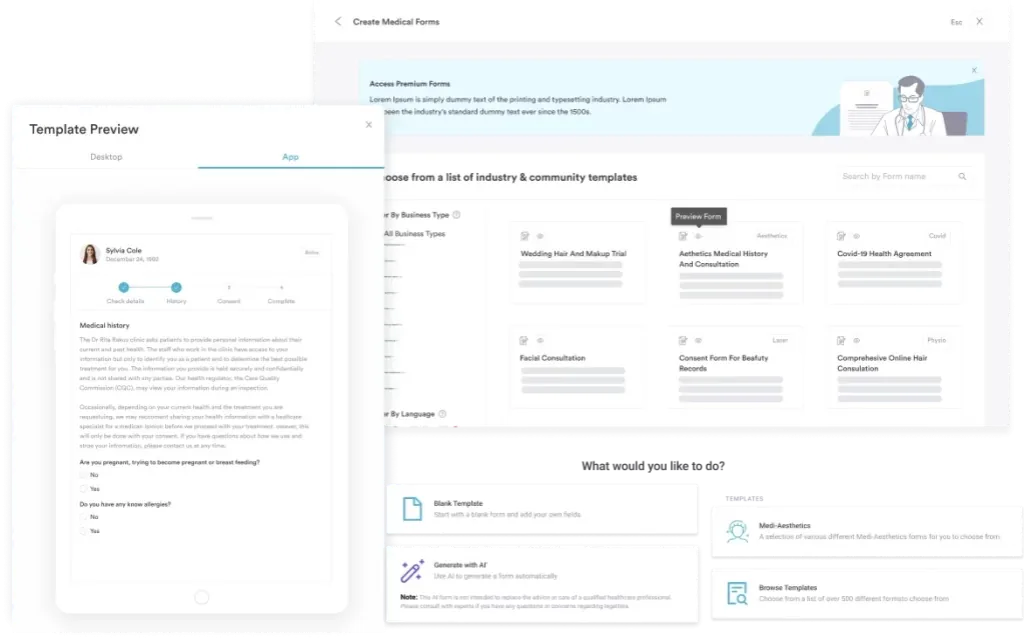
The Care Quality Commission’s role in private healthcare reinforces the standard: Clinical records must be accurate, legible, and contemporaneous. The same standard applies to records submitted in support of PMI claims.
Practices managing high volumes of pathology testing should also ensure their GDPR compliance covers the handling and storage of test results and laboratory reports where these support the billing record. The Information Commissioner’s Office (ICO) treats clinical test results as special-category personal data.

Pabau’s claims management tools let UK private practices submit CCSD-coded claims electronically, track authorisations, and keep audit-ready records in one place.

UK private healthcare claims are increasingly submitted electronically through Healthcode, the industry’s designated clearinghouse. Most major PMIs, including Bupa and AXA Health, require or strongly prefer electronic submission via Healthcode over paper invoices.
The workflow for submitting a 0230B claim follows a standard sequence.
Claim denials on CCSD code 0230B follow predictable patterns. Understanding them before submission is more effective than chasing reversals after the fact. The CQC inspection checklist for private providers includes record-completeness criteria that directly overlap with what insurers examine during claim review. First-pass rate measures how often a claim is paid without anyone touching it again.
Run a monthly audit of CCSD code 0230B claims: Compare the clinical indication recorded in the request against the code submitted. Indication mismatches are the easiest errors to catch internally and the most avoidable cause of insurer queries.
Selecting the correct code from a group of related pathology and immunology test codes matters because insurers validate clinical logic. A consultant billing 0230B for a test that was not actually run, or for a different antibody panel, will face a query or denial. The table below shows how other commonly billed pathology codes differ from CCSD code 0230B.
Verify exact code narratives against the current CCSD schedule. Code descriptions and chapter references are confirmed in the CCSD Technical Guide, which is updated periodically. Providers without CCSD login access can request it at ccsd.org.uk.
For private GPs considering how private GP referral pathways interact with specialist billing, the referral letter should specify the clinical indication clearly enough that the laboratory’s coding is unambiguous.
Manual claim preparation for CCSD codes creates avoidable errors. A test code entered incorrectly, a missing authorisation number, or an invoice sent to the wrong insurer email address can each delay payment by weeks. The same risk applies whether you run a private GP practice or a functional medicine clinic ordering broader antibody panels.
UK private practices that process regular pathology or immunology test referrals benefit from claims management software that integrates CCSD code lookup, Healthcode submission, and claim status tracking in one workflow.
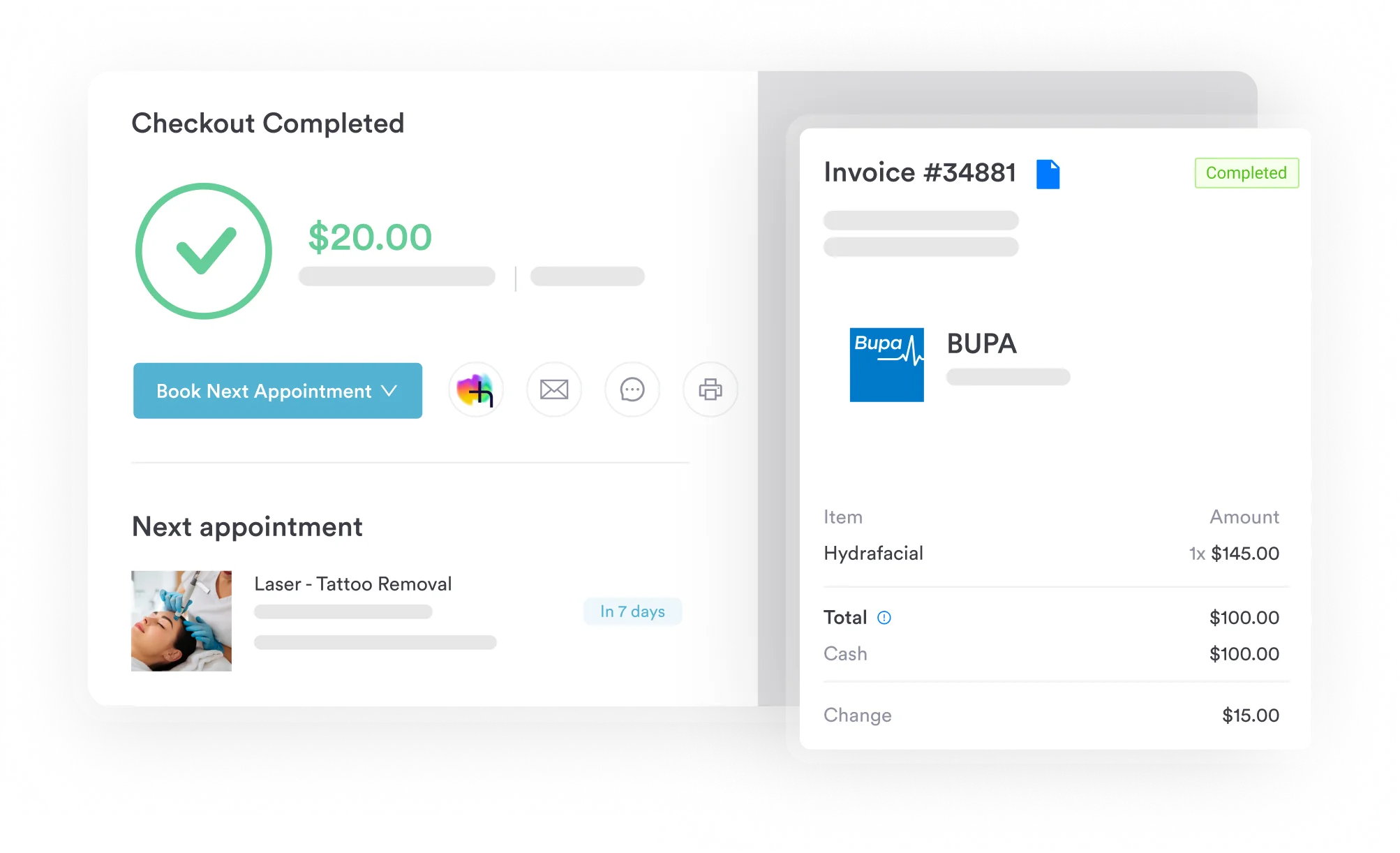
Pabau’s practice management platform supports UK private healthcare providers with CCSD-coded billing, electronic submission through Healthcode, and automated CQC-aligned record-keeping. Rather than maintaining separate systems for clinical notes, invoicing, and claim tracking, practices can manage the full billing cycle from appointment to payment in one place.
For practices handling frequent lab referrals specifically, Pabau’s lab management features connect clinical documentation directly to the billing workflow, shortening the time between test request and claim submission.
CCSD code 0230B is a straightforward code when the documentation is right. The most common problems, including missing authorisation, incorrect antibody-panel selection, and bundling errors, are all preventable with a consistent pre-submission checklist.
Pabau’s claims management software helps UK private practices submit CCSD-coded claims accurately, track authorisations, and maintain audit-ready records without manual overhead. To see how Pabau handles the full private billing workflow, book a demo.

Billing a pressure-reducing mattress overlay? Mattress overlay billing guide covers the powered alternating-pressure overlay billed as rental durable medical equipment.
Billing a positioning cushion claim? Positioning cushion billing guide covers the standard code for a positioning cushion, pillow, or wedge of any shape or size.
Billing a heel or elbow protector? Heel and elbow protector guide covers the code for the padded device that guards a bony pressure point from breaking down.
CCSD code 0230B covers the acetylcholine receptor (AChR) immunoglobulin G (IgG) antibody blood test, the key first-line test used to help diagnose myasthenia gravis. It’s listed under Chapter 34 (Pathology), section 34.3 (Immunology), of the CCSD Schedule.
All major UK PMIs, including Bupa, AXA Health, Aviva, Vitality Health, WPA, Allianz Care, Healix, and Cigna, recognise CCSD code 0230B. Each insurer sets its own fee independently; contact each insurer’s provider portal for current reimbursement rates.
The clinical record must include the clinical indication (symptoms suggesting myasthenia gravis), the requesting consultant’s details, specimen collection information, the laboratory and assay used, the patient’s insurer membership number, and prior authorisation reference where required.
The most frequent causes are missing prior authorisation, incorrect code selection (such as billing 0230B for a different antibody panel that was not actually run), bundling multiple antibody tests under 0230B rather than as separate codes, and a mismatch between the clinical indication recorded and the code submitted.
Submit through Healthcode, the UK private healthcare electronic clearinghouse. Include the patient’s PMI membership number, prior authorisation reference, the treating consultant’s insurer recognition number, and CCSD code 0230B as the primary test code, with supplementary codes on separate invoice lines.