








CPT code 17312: Mohs surgery add-on stage billing guide
CPT 17312 bills each Mohs stage after the first on the head, neck, hands, feet, ...

Last Updated: August 4, 2026


CCSD code 0002C is the UK private healthcare diagnostic code for Neurofilament Light Chain (NfL) testing, added to the CCSD schedule in June 2021.
0002C is a diagnostic code, not a procedure code – never load it into your procedure code table or bill it as a procedure.
Fees for CCSD code 0002C are set by individual insurers, not CCSD itself – always check each insurer’s current published fee schedule before billing.
Pabau’s claims management software supports CCSD diagnostic code submission workflows for UK private clinics.
CCSD code 0002C is the UK diagnostic code for the Neurofilament Light Chain (NfL) test, a blood biomarker used to detect active neuronal injury. The key billing point is that it is a diagnostic test, not a clinical procedure, and classifying it correctly in your billing system determines whether the claim pays or bounces. For clinics now moving to private practice and meeting CCSD diagnostic codes for the first time, that distinction matters from day one.
This guide covers the definition, clinical context, documentation requirements, and insurer guidance for CCSD code 0002C. We wrote this guide for private clinic billing staff, practice admin, and healthcare finance teams working within the UK private sector.
CCSD code 0002C describes the Neurofilament Light Chain (NfL) diagnostic test. NfL is a structural protein released from damaged neurons into the bloodstream and cerebrospinal fluid. Elevated levels signal active neuronal injury, and clinicians use NfL in assessing neurodegenerative conditions including multiple sclerosis, amyotrophic lateral sclerosis (ALS), Alzheimer’s disease, and frontotemporal dementia.
The code sits within the CCSD Diagnostic Schedule, maintained by the Clinical Coding and Schedule Development Group. CCSD added it to the UK private reimbursement schedule in June 2021, alongside related codes including 0015B (Anti Hyaluronidase Antibodies), 7263C (CSF Microscopy), and 8243C (CSF Microscopy and Culture).
This distinction is a common source of claim rejections. Per the CCSD FAQs, diagnostic codes do not constitute procedures — never load them into procedure code tables. 0002C belongs in the diagnostic charge section of your billing submission, separate from any related consultation or procedural codes.
Understanding when NfL testing is clinically needed helps billing staff assess whether a claim is likely to pass insurer review. For private clinics exploring the benefits of private healthcare provision in neurology and diagnostics, NfL is an increasingly requested biomarker.
NfL levels rise when axons sustain damage, no matter the underlying cause, from demyelinating disease to a hereditary autonomic disorder such as familial dysautonomia (G90.1) or a central lesion presenting as vertigo of central origin (H81.4). Neurologists use serial NfL measurements to monitor disease progression and treatment response – especially in MS patients receiving disease-modifying therapies. A single elevated reading rarely triggers payment on its own; insurers normally require clinical context and a documented clinical question that distinguishes a primary neurological cause from a systemic one such as familial erythrocytosis (D75.0).
The CCSD Technical Guide (October 2025) provides the broader framework for how diagnostic codes are structured and when they apply within a billing submission. Billing teams new to neurological biomarker claims should review chapter 35 (Diagnostic Schedule).
Flag NfL test requests that arrive without an accompanying specialist consultation code. Insurers will often expect a neurology or neuroscience consultation (e.g. a specialist outpatient visit code) on the same claim. A standalone 0002C without clinical context is a common cause of queries and delays.
Private insurers assess diagnostic claims against the records submitted. Weak or incomplete records are the main reason insurers query 0002C claims after initial filing. Meeting compliance requirements for UK private clinics means ensuring every element below is captured before the claim is filed.
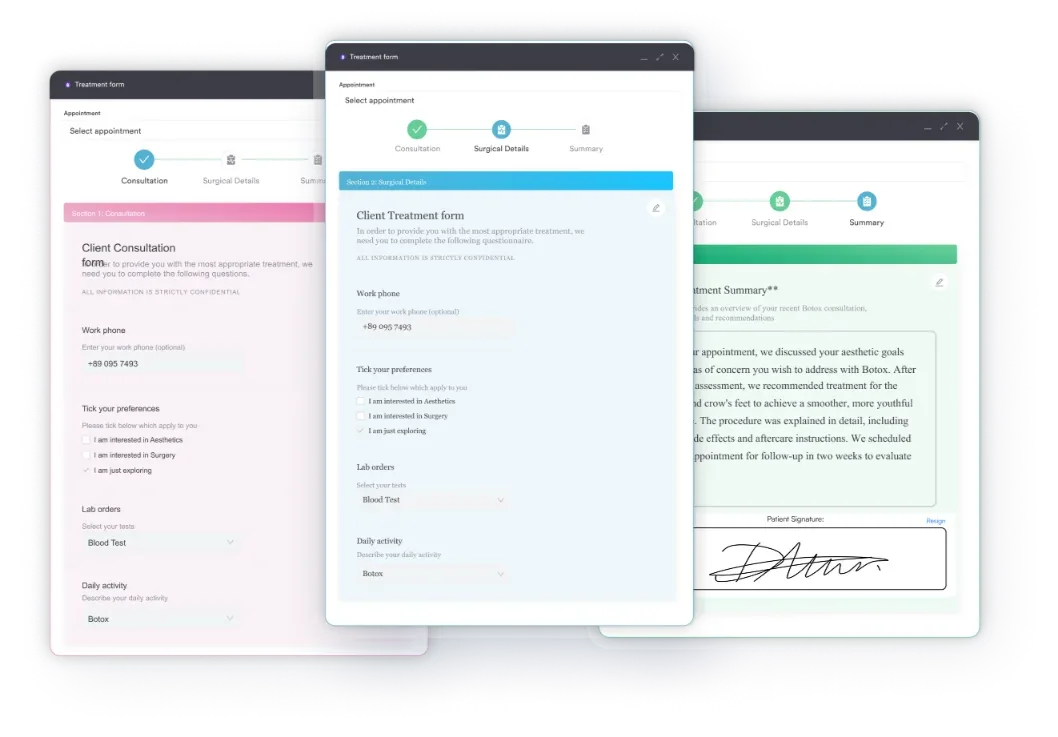
Using digital forms for clinical documentation reduces the risk of incomplete records at billing time. When you capture consent, clinical history, and test request forms electronically at the point of care, the data you need for claim filing is already structured and easy to find.
Pre-approval requirements for diagnostic codes vary widely across UK private insurers. Some require prior approval for neurological biomarker testing; others process the claim after the fact. Billing staff should never assume pre-approval is not needed – verify with each insurer before ordering the test.

Pabau gives private UK clinics a single platform for clinical documentation, digital consent forms, and claims management. See how it connects your diagnostic records to billing submissions.

CCSD does not set fees for Code 0002C. As Bupa’s code search portal confirms, CCSD publishes the codes; each insurer sets its own payment rate separately. This means the same NfL test may attract different fees depending on the patient’s insurer – and trying to charge a standard rate across all payers will cause mismatches.
Bupa uses CCSD codes as its industry standard for clinical activity coding across all approved providers. For admin teams who need a single reference, the Bupa CCSD codes guide on the Pabau website covers the full schedule with practical billing context.
| Insurer | Approach to CCSD diagnostic codes | Recommended action |
|---|---|---|
| Bupa | Uses CCSD codes as industry standard; fees set per Bupa schedule | Check Bupa code search portal for current 0002C fee |
| AXA Health | CCSD-coded submissions accepted; specialist chapter applies | Verify via AXA specialist forms portal before submission |
| Allianz Care | Publishes CCSD-based fee schedule; diagnostic codes included | Check the Allianz Care published fee schedule for 0002C rate |
| H3 Insurance | Procedure coding based on CCSD schedule | Cross-reference H3 fee schedule for diagnostic code reimbursement |
CCSD fixes none of these rates. Billing teams working across multiple insurer panels should maintain a live log of each insurer’s current 0002C rate, updated whenever insurers publish revised schedules. The features that streamline private practice billing – including built-in insurer code management – make this much more manageable at scale.
CCSD code 0002C rarely appears in isolation on a neurology billing submission. Understanding the codes most commonly submitted alongside it reduces the risk of incorrect ordering and billing disputes. Private clinics investing in robust private GP clinic software benefit from having all related diagnostic codes mapped in one place.
When 0002C and 7263C appear on the same claim, insurers may check whether the lab genuinely ran both from the same CSF sample or whether two separate specimen collections took place. Documenting the specimen type, collection date, and clinical rationale for each code prevents this from triggering a query. For teams managing UK data protection requirements alongside clinical records, keeping accurate, time-stamped records of specimen collection is both a clinical and a legal requirement.
If you are submitting 0002C alongside a CSF analysis code such as 7263C, note clearly in the claim documentation whether the NfL test was performed on a blood serum sample or a CSF sample. A single CSF collection that generates multiple diagnostic codes is valid – but document it as one collection event, not two.
The following errors appear regularly in CCSD diagnostic code claims across UK private clinics. Clear pre-filing checks prevent most of them. For practices building out their billing workflows, the claims management software approach replaces manual checklists with system-enforced validation.
Teams new to neurological biomarker billing often benefit from reviewing their private practice management processes as a whole before tackling individual code errors. Regular gaps in records workflows tend to produce the same billing errors across multiple codes.
CCSD code 0002C is a straightforward diagnostic code once you understand the code type. The most common mistakes are loading it as a procedure, skipping pre-authorisation, or submitting without a lab report. The right documentation checks prevent all three before the claim is filed.
Pabau’s claims management software connects clinical documentation directly to billing submissions, reducing the manual checking that causes most CCSD diagnostic code errors. To see how it works for UK private clinics handling neurological biomarker billing, book a demo.

Need a full reference for Bupa CCSD codes? Bupa CCSD codes guide covers the complete schedule with practical billing guidance for UK private providers.
Looking to reduce claim rejections across your practice? Features that streamline private practice billing outlines the workflow tools that reduce manual claim errors.
Managing compliance for a UK private clinic? UK data protection checklist covers the documentation and data governance requirements that run alongside clinical billing requirements.
CCSD code 0002C is the UK private healthcare diagnostic code for Neurofilament Light Chain (NfL) testing, a blood or CSF biomarker used to assess neuronal damage in conditions such as multiple sclerosis, ALS, and dementia. CCSD added it to the Diagnostic Schedule in June 2021.
CCSD procedure codes represent clinical interventions and are loaded into your procedure code table for billing. Diagnostic codes such as 0002C represent laboratory and diagnostic service charges and must be submitted in a separate diagnostic charge section – they must never be loaded into the procedure code table.
Most major UK private medical insurers – including Bupa, AXA Health, Allianz Care, and H3 Insurance – use CCSD codes as their coding standard and will pay 0002C claims when filed correctly with appropriate clinical records. Each insurer sets its own fee independently; contact your insurer or check their published fee schedule for the current rate.
Pre-approval requirements vary by insurer and by patient policy type. Some insurers require prior approval for neurological biomarker tests; others process claims after the fact. Always check pre-approval requirements with the patient’s specific insurer before the test is ordered.
The CCSD Diagnostic Schedule is available to registered users via the CCSD website at ccsd.org.uk. Neurological biomarker codes including 0002C sit in the Diagnostic Schedule. The CCSD Technical Guide (updated October 2025) provides the business rules and chapter structure for working through the schedule.
CCSD does not set a fee for 0002C. Each UK private insurer publishes its own rate for Neurofilament Light Chain testing, so the same test can reimburse differently across Bupa, AXA Health, Allianz Care, and others. Check the insurer’s current published fee schedule before you bill.