








ICD-10 Code Z43.1: Encounter for attention to gastrostomy
ICD-10 Code Z43.1 is the billable ICD-10-CM code for an encounter for attention ...

Last Updated: September 1, 2026


ICD-10 code S31.157A covers an open bite of the abdominal wall, left flank, without penetration into the peritoneal cavity, initial encounter.
It is a new FY2026 code, effective October 1, 2025, when the flank became its own site value.
S31.157 is not billable alone. Append A, D, or S so the claim carries a valid 7th character.
A bite that breaches the peritoneum goes to S31.657A, and S31.627A is a penetrating laceration with a foreign body.
The note must show a bite mechanism, the left flank, an intact peritoneum, and active treatment.
A dog bite across the left flank gets irrigated, closed, and sent home inside the hour. Then the claim bounces.
S31.157A is the ICD-10-CM code for an open bite of the abdominal wall, left flank, without penetration into the peritoneal cavity, initial encounter. It has only existed since October 1, 2025.
Before FY2026, a left flank bite had to be forced into a quadrant code. Old templates, cheat sheets, and claim scrubbers still point that way. Every descriptor below was checked against the CMS FY2026 code descriptions file rather than a secondary listing.
S31.157A is a billable code for one situation. A bite broke the skin of the left flank and the peritoneal cavity stayed closed. The patient is also under active treatment at this visit.
You can confirm the descriptor in the CDC/NCHS ICD-10-CM lookup tool or in the FY2026 files on the CMS ICD-10 codes page. Both carry the same official wording.
The official descriptor is Open bite of abdominal wall, left flank without penetration into peritoneal cavity, initial encounter. Four separate facts have to be in the record before you can use it.
Drop any one of those four and the code changes. A bite that did not break the skin is superficial and belongs to S30.871. A bite that reached the peritoneal cavity belongs to S31.657A.
S31.157 needs a 7th character to become billable. Three are valid, and each one marks a different phase of care.
The ICD-10-CM Official Guidelines tie “initial encounter” to active treatment, not to the calendar. A patient transferred to a second facility for ongoing wound management still gets the A character while active treatment continues.
Sequela coding reverses the order. List the condition itself first, such as the scar a dermatology practice is treating. S31.157S follows it to show what caused the scar.
That pattern runs through the whole injury chapter. A healing eyelid laceration takes D for the same reason and lands on S01.111D.
An open bite is a wound where teeth have broken through the skin, leaving contaminated tissue and a track of variable depth. Dog bites dominate the presentation, followed by cat and human bites.
Flank bites tend to be shallower than they look because the lateral abdominal wall carries three muscle layers over the peritoneum.
That anatomy is exactly why the with-penetration and without-penetration split matters, and why the exam note has to answer it.
Because this is the without-penetration code, it sits at the lower-acuity end of abdominal bite injuries.
Management is usually irrigation, debridement, a closure decision, tetanus and rabies review, and antibiotic cover. Clear documentation standards keep those findings retrievable when a payer asks.
Reading the chain top to bottom shows why the code means what it means. The with-penetration and without-penetration split happens at the fourth character, one level above the wound type.
One point is worth fixing in memory. Every code under S31.1 is a without-penetration code, and every code under S31.6 is a with-penetration code. S31.6 has no without-penetration branch, so a without-penetration bite can never be coded there.
The WHO ICD-10 browser shows the international skeleton of that hierarchy. Laterality, the flank site values, and the 7th character layer are all US clinical modification additions.
S31 also reaches wider than the abdominal wall. It covers the lower back, pelvis, and external genitals, which is why a neighbor like a neighbor like S31.33XA looks unrelated at first glance.
Check your claim scrubber’s code file before you bill S31.157A. It only exists from October 1, 2025, so a scrubber still loaded with FY2025 data will reject it as invalid rather than as unbillable. Refreshing the code file usually clears the whole flank series at once, including S31.156A and S31.15AA.
Two axes generate the neighbors of S31.157A. Change the site and you stay inside S31.15. Change the wound type or the penetration status and you leave it.
Every code in the first table is an open bite of the abdominal wall without peritoneal penetration, initial encounter. Only the site differs.
The second table holds the left flank codes that are not open bites, plus the two with-penetration codes that get picked by mistake.
S31.657A is the decision that carries the most weight. It signals a breached peritoneal cavity, which changes triage, imaging, and the surgical pathway. Wound exploration findings or cross-sectional imaging should be in the note before a coder chooses between the two.
S31.627A is a different trap. The digits sit close to S31.157A, but that code is a penetrating laceration with a retained foreign body. Cross-check descriptors in the AAPC Codify ICD-10-CM lookup whenever two candidate codes differ by one digit.
Four annotations in the tabular list govern S31.157A. They sit at different levels of the hierarchy, so all four are inherited.
Two more instructions attach further up. S31 carries a Code Also note for any associated spinal cord injury (S24.0, S24.1-, S34.0-, S34.1-) and for wound infection. Chapter S00-T88 tells you to add a Chapter 20 external cause code, plus Z18.- if a foreign body is retained.
The Alphabetic Index route is Bite(s) (animal) (human), then flank, then left, which lands on S31.157. Add the 7th character in the tabular list, never in the index.
S31.157A only holds up if the record supports every element of the descriptor. These are the six items an auditor looks for.
Bite wounds carry other decisions auditors expect to see recorded.
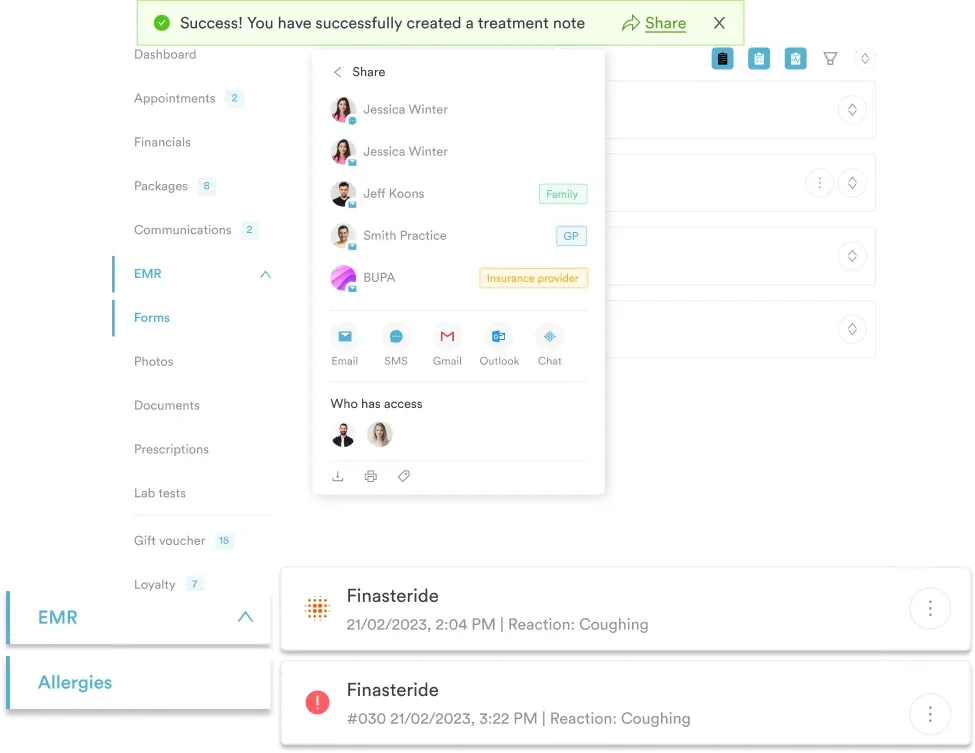
Tetanus status, rabies risk, and whether the wound was closed or left open all belong in the note. Practices that run vaccination programs, such as travel clinics, already log those dates as a matter of routine.
Digital intake forms keep the same prompts on screen during the encounter, which means fewer coder queries afterwards.
Work through the descriptor in the same order every time. Each step rules a code family in or out.
An intact skin surface makes the injury superficial, and S30.871 applies. Only a wound that breaches the skin belongs in S31.
Without penetration keeps you in S31.1. Any documented peritoneal breach moves the claim to S31.6, which for a bite means S31.657A.
A bite mechanism takes you to S31.15. A laceration or puncture takes you to S31.11 through S31.14 instead, and a retained foreign body changes the choice again.
The flank is now a distinct site value, so do not translate it into a quadrant. Left flank gives you S31.157, and an undocumented side gives you S31.15A.
Append A for active treatment, which completes S31.157A. Then add the Chapter 20 code for the mechanism, such as W54.0XXA for a dog bite or W55.01XA for a cat bite. Human bites split by intent, with W50.3XXA for accidental and Y04.1XXA for assault. Add Z20.3 when rabies exposure is suspected. Coding sits in the middle of the revenue cycle, between registration and payment posting. Coders working across several specialties keep a coding reference to hand rather than searching the full manual.
Build the flank-versus-quadrant question into your wound template as a single required field. Before October 1, 2025, left flank bites were routed to a quadrant code or to unspecified quadrant. Old habits and old macros both push coders that way. One dropdown at the point of care removes the query later.
The flank counts as trunk for CPT repair coding, so the trunk ranges apply. Pick the repair level first, then the size band.
One range gets mis-picked often enough to name. 12020 and 12021 cover treatment of superficial wound dehiscence, by simple closure and with packing. Neither is a primary repair code.
For a fresh flank bite, simple repair runs from 12001 through 12007 and stops there. The 12011 to 12018 codes cover the face, ears, eyelids, nose, lips, and mucous membranes, so they never apply to the trunk.
Bite wounds are often left open rather than closed, which means no repair code applies at all. The visit then bills as evaluation and management. Debridement such as 11042, or a complex repair such as 13100, is added only when the note supports it.
The claim itself is short. S31.157A leads and the Chapter 20 external cause code follows. The procedure side carries either an evaluation and management level or a repair code.
Denials on a code this new are usually mechanical rather than clinical. Run these five checks before the claim leaves the practice.
Two mistakes account for most of the rework. The first is a quadrant code picked out of habit, which pushes the claim through with the wrong site. The second is a missing external cause code, which some payers reject outright on injury claims.
Most flank bite queries come back to the same thing. The clinician knew the answer during the encounter, and the note never captured it. Side, depth, mechanism, and encounter phase then get reconstructed days later from a free-text paragraph.
Practice management software like Pabau moves those four fields into the template itself. Wound forms can require laterality, region, mechanism, and peritoneal findings before the note is signed, and photos attach to the same record.
Medical records management keeps that history in one place. A coder reviewing an S31.157A claim reads the original findings instead of chasing the clinician for them.
On the billing side, Pabau’s claims management software checks insurer details before a claim is submitted, which removes a common source of avoidable rejections. Pair that with compliance tools and audit trails, and the practice can show how a code was reached months later.
The outcome is fewer coder queries per injury encounter, a shorter path from visit to clean claim, and a record that survives an audit. Every Pabau subscription includes all of it.
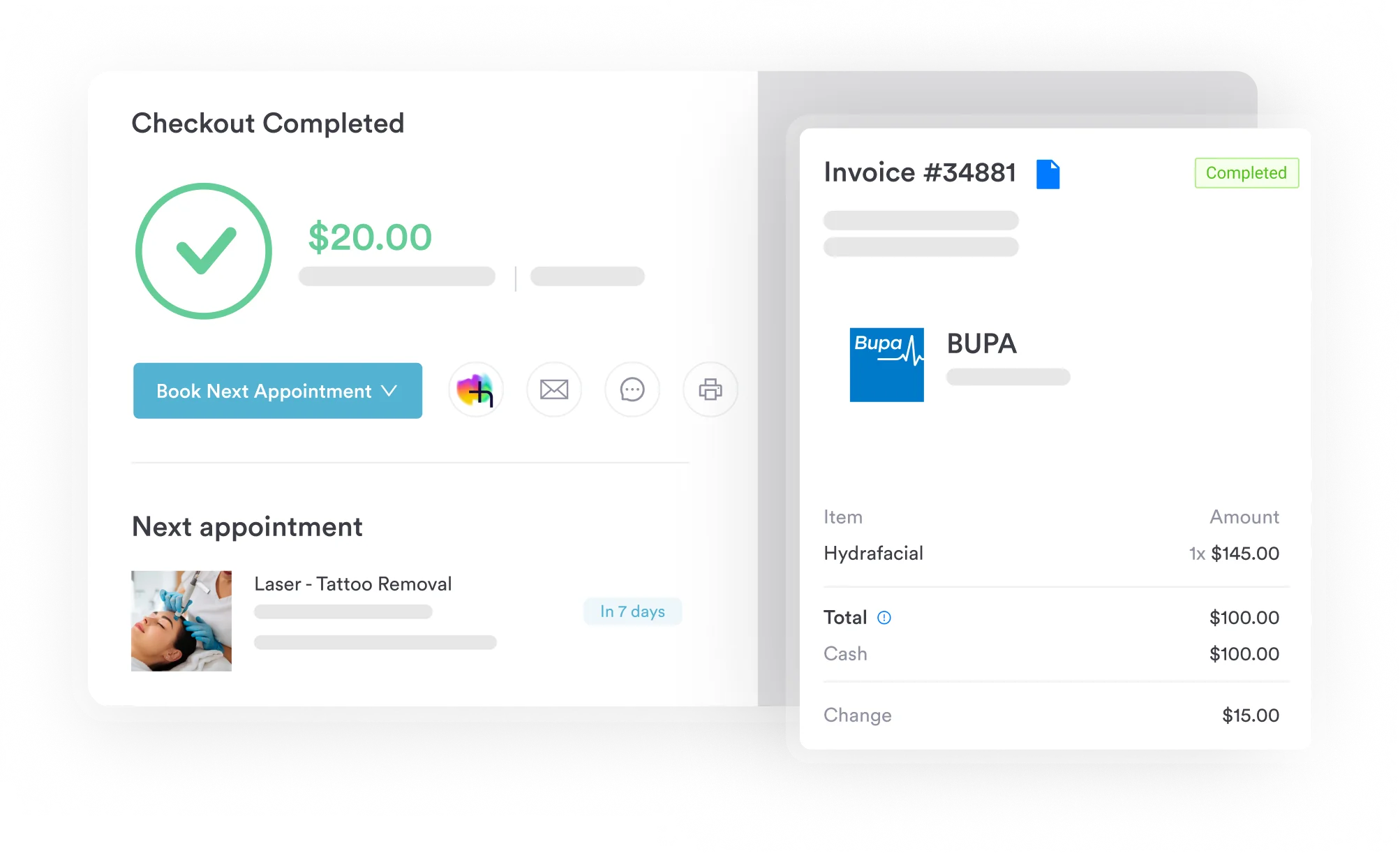

Pabau prompts your team for mechanism, laterality, depth, and encounter phase while the patient is still in the room. Coders then see every element of the S31.157A descriptor.

S31.157A is narrow on purpose. It covers a bite that broke the skin of the left flank and stopped short of the peritoneal cavity. The visit also has to be active treatment. Move any one of those facts and a different code applies, whether that is S30.871, S31.154A, S31.15AA, or S31.657A.
The newness of the code is the practical risk. Scrubbers, cheat sheets, and wound templates all need updating before the first claim goes out. Get the template right and the coding takes care of itself. To see how Pabau supports injury coding from note to claim, book a demo.

Need the same breakdown for another open bite? S61.059A walks through an open bite of the thumb, including its 7th character options.
Wondering how S31 handles other wound types? S31.33XA covers a puncture wound in the same category, under the same 7th character rules.
Need the repair code that pairs with a trunk wound? 13101 sets out complex repair of the trunk from 2.6 cm to 7.5 cm.
Billing anesthesia for a penile procedure? CPT code 00932 guide Covers the base units and descriptor for anesthesia during penile amputation procedures.
Not sure which NPI belongs on the claim? NPI types explains when to bill under the individual number and when to use the group.
Yes. The injury code is sequenced first and the Chapter 20 external cause code follows it. An external cause code is never first-listed on its own.
No. Closure decisions belong to the procedure side of the claim. S31.157A applies whether the bite was sutured, packed, or left to heal open.
S31 carries a Code Also note for wound infection, so the infection is coded alongside S31.157A. Sequence the two by the reason for the visit.
The code set in force on that date. S31.157A did not exist yet, so a left flank bite went to a quadrant code or to unspecified quadrant.
Code what the provider documents. One wound crossing both areas takes the site the note names, while two separate wounds take S31.157A and S31.154A.