HCPCS code G0257: Unscheduled or emergency dialysis billing guide
HCPCS code G0257: Official descriptor and code overview HCPCS code G0257 is defi...

Last Updated: Oct 27, 2026

CPT code 13100 covers complex repair of a trunk wound measuring 1.1 to 2.5 cm.
Trunk means the chest, abdomen, back, and flanks, so every other site uses a different code family.
Complex repair needs more than layered closure, such as extensive undermining, retention sutures, stents, or debridement.
CPT 13101 is the next size tier at 2.6 to 7.5 cm, and +13102 is the only add-on.
Routine wound checks and suture removal fall inside the 10-day global period, so they are already paid for.
CPT code 13100 covers complex repair of a trunk wound measuring 1.1 to 2.5 cm. The measurement is the easy part. Two other things decide whether the claim pays, and neither of them shows up on a tape measure.
The first is the site, because 13100 is a trunk-only code. The second is the word complex, which has a narrow meaning in CPT. Miss either one and the repair gets downcoded, or the claim lands in manual review weeks later.
The official AMA descriptor reads “Repair, complex, trunk; 1.1 cm to 2.5 cm.” Trunk here means the chest, abdomen, back, and flanks. Nothing else qualifies.
The code sits in the integumentary system section of the AMA’s CPT code set. It is reserved for closures that go beyond a simple or intermediate repair.
Because every other body area has its own complex repair family, confirming the site comes before measuring the wound. Dermatology offices, plastic surgery groups.
A closure only counts as complex when it goes past layered suturing. To bill 13100, the procedure note has to name at least one qualifying element.
Strip those elements away and you are left with an intermediate repair, which pays under a different series. That single distinction drives most upcoding audits in wound repair billing.
It helps to see the three repair classes side by side. Take one 25 cm trunk wound. A single-layer closure is 12006.
Same wound, same surgeon, three very different payments. The technique in the note is what moves the claim between them, so write it down rather than asserting that the repair was complex.
Complex repair also excludes work that carries its own codes. Under CPT guidelines, none of the following counts as part of the repair.
The site rule matters as much as the size. A complex repair on the scalp, a limb, the face, the neck, a hand, or a foot needs a different code.
Coders at dermatology practices meet this most often when an excision on the back or chest is followed by a complex closure. The site table further down maps each family to its own range.
CPT 13100 and 13101 are two size tiers of the same trunk family. You pick one of them for a given wound, based on the total repaired length.
The add-on code is +13102, and it attaches to 13101 rather than 13100. It covers each additional 5 cm or less once the repair runs past 7.5 cm.
A 3.7 cm laceration on the abdomen, closed with extensive undermining, bills as 13101 alone. Adding 13100 to that claim would charge twice for one closure.
A 12 cm complex repair on the back starts with 13101 for the first 7.5 cm. One unit of +13102 covers the remaining 4.5 cm. The complexity criteria still have to hold across the whole repair.
When several wounds are repaired at one encounter, add the lengths within the same classification and anatomic group. Two trunk wounds needing complex repair, 1.4 cm and 2.0 cm, sum to 3.4 cm and bill as 13101.
Wounds in a different class or a different anatomic group are reported separately. Report the most complex repair first. Then append modifier 59 or XS to the others where the payer asks for it.
One edit runs the opposite way to how people expect. Billing +13102 without 13101 triggers an automatic rejection, while 13101 stands perfectly well on its own.
Our roundup of software for plastic surgery practices shows how documentation, photos, and billing fit together.
The complex repair series splits by anatomic site. Each family carries its own size tiers and its own add-on code, so confirm the location before you choose a range.
CPT 13150 is no longer active, so the eyelid, nose, ear. Sitting outside the size logic altogether, 13160 covers secondary closure of a surgical wound or dehiscence.
Facial repairs split across two families, which is where site errors cluster. Forehead, cheek, chin.
Check the anatomic site before you reach for the tape measure. CPT 13100 is trunk only, so a complex repair on the neck, an axilla, a hand, or a foot belongs to 13131 to 13133. Eyelid, nose, ear, and lip repairs belong to 13151 to 13153. Billing 13100 for any of those sites is a site-coding error that sends the claim to manual review.
There is no single national figure for CPT 13100. Medicare prices the code through the Medicare Physician Fee Schedule, known as the MPFS, which CMS updates each January.
Two things then move the number. Geographic Practice Cost Index values adjust payment by locality, and the facility or non-facility setting changes the practice expense side of the calculation.
Published dollar amounts therefore go stale within months. Pull the current rate from the CMS fee schedule lookup instead. Enter 13100, select your MAC locality, then choose facility or non-facility.
Commercial payers usually pay a percentage of the Medicare rate, or a negotiated fee schedule of their own. Check the contract rather than assuming parity with Medicare. Practices outside a payer’s network instead hand the claim to the patient, so a superbill form has to be complete.
Comparing platforms before committing to one is worth the time, since not every system surfaces MAC-specific rates or tracks claims the same way. A guide to medical billing software for US practices compares seven options on exactly this.
CPT 13100 carries a 010 global period, the standard designation for a minor surgical procedure. Wound checks and suture removal by the same practice inside those 10 days are already paid for.
Work outside routine follow-up still gets paid, provided it carries the right modifier. An unrelated visit inside the window takes modifier 24. A significant, separately identifiable visit on the day of the repair takes modifier 25.
Modifier choice on a 13100 claim comes down to one question. What else happened at that visit, or during the 10 days after it?
Laterality modifiers do not belong on this code. Selection turns on the repaired length and the site family, never on which side of the body the wound sits.
You can often bill both, but only when the closure clears the simple bar. NCCI bundles simple closure into every excision code, on the basis that basic closure is inherent to the excision.
From there, four rules from CPT and CMS bundling guidance decide the claim.
Confirm the edit pair before the claim goes out. The CMS NCCI edit files and the AAPC code lookup both show which pairs need a modifier.
Auditors look for a short list of elements in the operative note. Missing one is usually what turns a 13100 claim into an intermediate payment, or into a denial.
A note that only says “complex repair performed” will not survive that review.
Measurement is the other weak spot. Record the wound as repaired, not the excised specimen, and take the measurement before closure. Some payers also want it clear that the closure method was the least extensive one the wound allowed.
Denials on 13100 cluster around the same handful of mistakes. Each one is easy to catch in the note, and expensive to fix after the fact.
A 13100 claim passes three checkpoints, and each one rejects for a different reason. The coder reads the note, the clearinghouse runs its edits, then the payer reviews medical necessity.
The clearinghouse catches structural problems within a day, such as +13102 sitting on a claim without 13101. Everything else falls to the payer, and that verdict arrives weeks later.
That first checkpoint runs against the 837 file, the standard electronic claim format your system builds from the encounter before transmission. A malformed one bounces back before a payer ever reviews the code.
So work backwards from the payer and check the note first. Seven quick questions cover almost every denial reason on this code.
Running that list at the point of care costs a minute. Reworking a denied claim costs a great deal more, and payment waits until it clears. A clean claim carries the code, the modifiers and the diagnosis in agreement, and needs no rework before payment.
Most 13100 denials trace back to a note that never recorded the complexity element, even though the technique was performed correctly. The work happened, but the claim cannot prove it.
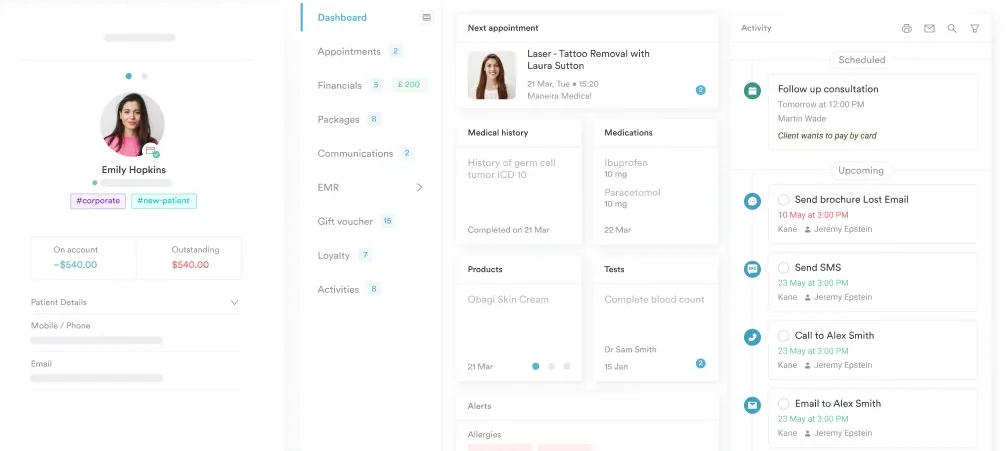
Pabau helps dermatology, skin, and surgical practices build procedure note templates that ask for the missing detail. Each template prompts for the wound location, the measured length, the layers closed, and the technique used.
Those answers are stored as structured fields in the client record rather than free text. Photographs and measurements stay attached to the same encounter, so an audit request two years later takes minutes to answer.
From there. Nobody re-keys the site, the length, or the technique into a separate billing system, so fewer transcription errors reach the payer.
Coding the encounter while the note is still open also shortens the distance between the record and the claim. For a practice doing wound repairs every week, that removes most of the retroactive note-fixing that follows a denial.

Pabau’s digital forms and claims tools help skin and dermatology practices capture the documentation that supports a CPT 13100 claim.

CPT 13100 rewards precision in three places. Confirm the trunk site, measure the repair before closure, and name the technique that made the closure complex.
Settle those three points while the patient is still in the room and this code rarely comes back. Leave any of them to memory and the claim gets decided by whoever reads the note next.
That habit is worth more than knowing the tiers by heart. Book a demo to see how Pabau captures wound repair documentation and keeps CPT coding tied to the clinical record.

Repairing a trunk wound larger than 2.5 cm? CPT code 13101 covers the 2.6 to 7.5 cm tier and the add-on rules that follow it.
Closing a facial or neck wound instead? CPT code 13131 sets out the forehead, cheek, neck, axilla, hand, and foot family.
Not sure the closure reaches complex? CPT code 12032 explains where intermediate repair sits between simple and complex closure.
Layered closure on a much longer trunk wound? CPT code 12036 covers intermediate repair at the 20.1 to 30.0 cm tier.
Superficial wound that only needs one layer? CPT code 12006 shows how simple closure is measured and reported.
Payers want a trunk-specific diagnosis. Open wound codes sit in the S21 range for the thorax, and the S31 range for the abdomen, lower back, and pelvis. Repairs after an excision pair with skin neoplasm codes such as C44.5 or D22.5.
Use the 14000 series when closure needs tissue rearrangement, such as a rotation flap, an advancement flap, or a Z-plasty. Those codes already include the lesion excision and the closure, so reporting 13100 as well bills the same work twice.
Yes, where state scope of practice allows it. Billed under their own NPI, Medicare pays 85% of the fee schedule amount. Incident-to billing at the full rate needs direct physician supervision and an established plan of care.
Yes. A closure done only to improve appearance is not a covered benefit. The note should show the clinical reason for the repair, such as trauma, infection risk, or removal of a lesion.
Yes. The physician who performs the repair reports 13100 on the professional claim. The hospital bills its own facility charge separately, so one repair can generate two claims for the same visit.