ICD-10 Code S42.444P: Medial epicondyle fracture, right humerus
ICD-10 Code S42.444P: full descriptor and code validity ICD-10 Code S42.444P car...

Last Updated: Oct 13, 2026
Billable Code Specific Code
S30.9AXS is the billable ICD-10-CM code for unspecified superficial injury of flank, sequela.
Two mistakes drive most denials on this code. Coders copy the old S30.9 descriptor, which still names the abdomen, lower back, pelvis and external genitals. Or they drop the 7th character and submit the non-billable parent. Both are avoidable once you know what the code says now.
Let Pabau's smart automation suggest the right codes, reduce claim denials, and keep your practice compliant—effortlessly.
Automate repetitive tasks and focus on what matters most—your patients.
Reduce coding errors and ensure compliance with the latest regulations.
Clean claims, fewer denials, and faster reimbursements.
Powerful insights and reporting to help your practice thrive.
HIPAA compliant SOC 2 certified GDPR-compliant Trusted by 4,000+ clinics worldwide

ICD-10 code S30.9AXS reports the sequela of an unspecified superficial injury of the flank.
The flank is the side of the torso between the lower ribs and the top of the hip.
S30.9A and its three 7th character codes are new for FY2026, effective October 1, 2025.
S30.9A on its own is not billable, so every claim needs the 7th character A, D, or S.
Use the S extension only after the original injury has healed and a late effect remains.
S30.9AXS is a billable ICD-10-CM diagnosis code. Its full descriptor is unspecified superficial injury of flank, sequela. The code took effect on October 1, 2025 as part of the FY2026 update, and it stays valid through September 30, 2026. You can confirm the current release on the CMS ICD-10 codes page.
The longer descriptor you may remember belongs one level up. Category S30.9 still reads “unspecified superficial injury of abdomen, lower back, pelvis and external genitals”. That phrase describes the whole category. It does not describe this subcode, and reusing it on a claim narrative is how the flank detail gets lost. A shared coding reference also standardizes how two coders handle the same borderline case.
The hierarchy explains why the wrong descriptor spreads so easily. Three levels sit above S30.9AXS, and two of them still carry the broad wording. Only the bottom three rows can go on a claim.
S30, S30.9 and S30.9A are structural headers in the Tabular List. None of them can be submitted, and payer edits reject them on sight. The 2026 ICD-10-CM entry flags S30.9A as non-billable for exactly this reason.
The flank is the side of the torso between the lower ribs and the top of the hip bone. ICD-10-CM calls it the latus region. It wraps from the side of the body around toward the back, sitting lateral to the abdomen and above the iliac crest.
Two boundaries matter on a claim. The flank is not the hip, and the S30 block carries a Type 2 excludes note pointing hip injuries to S70. The flank is also not the abdominal wall, which keeps its own code at S30.92. Get either boundary wrong and the code changes.
“Unspecified” carries a narrow meaning here. It describes a record that confirms a superficial injury but never names the type. FY2026 also gave the flank a full set of typed codes, so check these first:
Each of those takes the same 7th characters, so their sequela forms also end with the S extension. Reach for S30.9A only when none of them is supportable. That is the specificity principle in practice. Code to the highest detail the record supports, and no higher.
S30.9A becomes billable only once a 7th character names the encounter type. Three options exist, and each one has to be supported by what the note says. The AAPC Codify entry lists all three.
The X in the 6th position is a placeholder, not a typo. S30.9A has no 6th character subdivision, so the X holds the slot and keeps the 7th character in position seven. Write S30.9AS instead and the string is invalid, which means an instant rejection.
Three extensions cover this code, and other Chapter 19 families run longer. Fracture codes add characters for healing status, which is how S92.209K reports a nonunion. A superficial injury never needs that much detail.
Choose S when the original wound has healed and a new problem remains because of it. Choose D when the wound itself is still the thing you are treating. That single question settles most of these claims. Mixing the two up is the fastest route to an audit flag.
Use S30.9AXS (sequela) when:
Use S30.9AXD (subsequent encounter) when:
Here is how that looks in a chart. A cyclist catches their right flank on a fence in March, and the note records a superficial injury without naming the type. The wound is dressed and healed by April.
In August they return with a tight, painful scar over the same area. So April’s visits were D, and August is S.
One more sequencing rule catches people out. Sequence the residual condition first, then let S30.9AXS explain where it came from. So the scar or the chronic pain leads on the claim. That order holds right across the injury chapter, from S60.219S to S60.219S to S56.599S.
A sequela claim lives or dies on the causal link in the clinical note. Payers want to see that today’s problem came from a specific earlier injury. Run through these five elements before the claim goes out.
Two sections of the FY2026 ICD-10-CM Official Guidelines govern this. Section I.B.10 sets the general sequela rules, including sequencing. Section I.C.19.a explains how the 7th characters work across Chapter 19 injury codes.
Most of this is easier to capture at the visit than to reconstruct at billing. Practices using structured digital intake forms can prompt for the injury date and cause up front, which is the detail sequela claims usually lack.
Because the code is less than a year old, the errors cluster in predictable places. Here are the five worth checking on every claim.
A sixth trap is quieter. Payer edits and internal code lists were built before FY2026, so some still do not recognize the flank codes. If a clean claim comes back rejected as invalid, check the payer’s code set date before you rework the note.
There is no General Equivalence Mapping for this code, and there never will be. CMS published its final set of GEMs for FY2018 and stopped maintaining them after that. S30.9AXS did not exist until October 1, 2025, so it was never in scope for the mappings.
That matters if your team still runs legacy crosswalk lookups. A tool that returns an ICD-9 equivalent for S30.9AXS is guessing. For pre-October 2015 records, unspecified trunk injuries sat under ICD-9 code 959.19, but that is a rough concept match rather than an official mapping.
Date of service governs everything here. Encounters on or after October 1, 2025 can use S30.9AXS. Anything earlier has to use the code set in force at the time, and the flank codes were not part of it. You can check any code’s history in the CDC ICD-10-CM web tool.
Before you submit, check the date of service against the code’s active window. S30.9AXS is valid from October 1, 2025 through September 30, 2026. The flank codes did not exist before that date. For an earlier injury, code from the fiscal year that applied on the date of service.
Most denials on codes like this one start with a fragmented record. The original injury sits in one visit note and the follow-up sits in another. Months later, someone builds the sequela claim from memory.
Pabau keeps that history in a single patient file, so the injury date and the causal link survive the wait. Pabau Scribe, our AI scribe, drafts the treatment note during the consultation itself. Healing status gets written down while it is fresh.
Medical records management keeps every note, form, and photo on the same record. The claims workflow then submits from that record rather than a separate billing silo.
For a physical therapy practice or a sports medicine team seeing injury sequelae every week, that saves hours of chart archaeology.
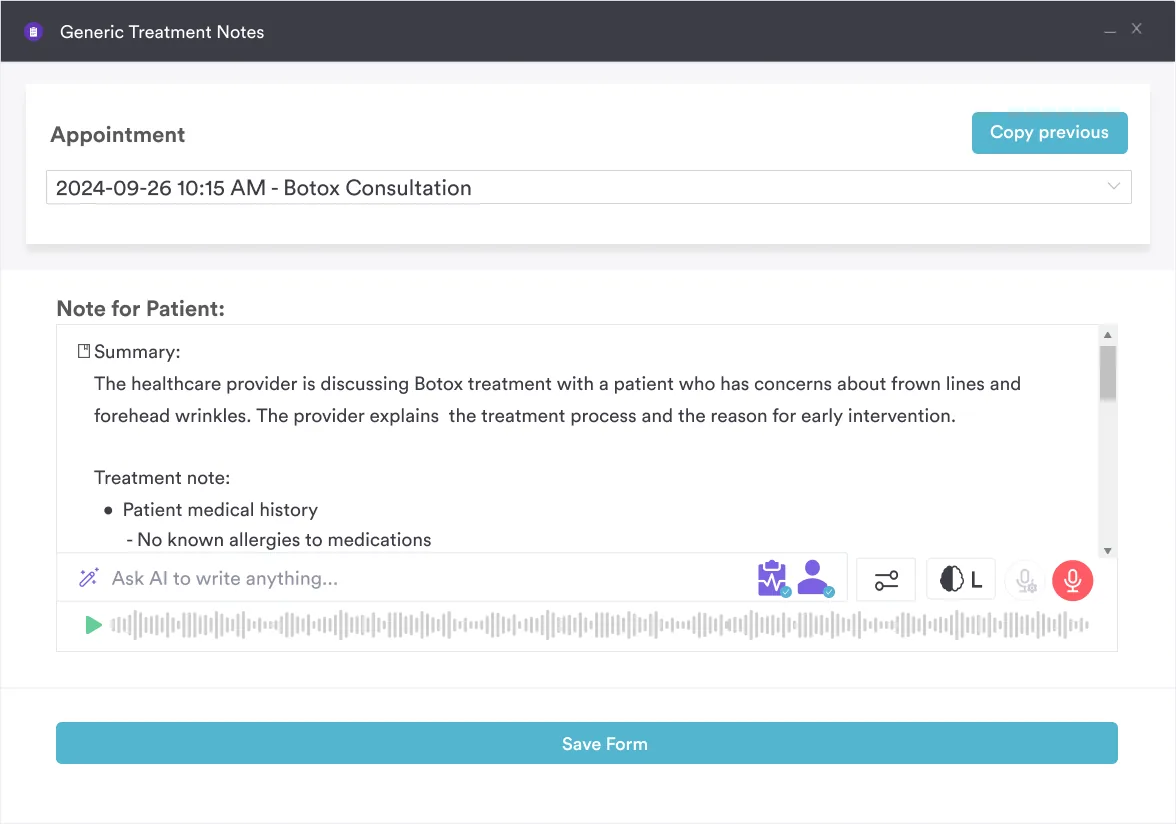

Pabau links every treatment note, intake form, and claim to the same patient record. The causal link behind a sequela code stays where you can find it.

The safest habit with S30.9AXS is to read the code fresh rather than from memory. It means the flank, it means an injury that has already healed, and it means a late effect that brought the patient back. Anything else belongs in a different subcode.
One more thing is worth remembering. A new code takes a while to settle in, so payer edits lag, cheat sheets go stale, and old descriptors keep circulating. Checking the descriptor against the current Tabular List costs a minute and saves a rework cycle.
If your team is rebuilding sequela claims from scattered notes, the fix is upstream of the coder. Book a demo to see how Pabau keeps injury history, documentation, and claims in one place.

Coding another sequela this week? S59.199S runs the same 7th character decision through a physeal fracture of the upper radius.
Not sure the injury has finished healing? S53.442D shows how the subsequent encounter extension works on an elbow sprain still under review.
Handling laceration sequelae as well? S56.529S applies the same sequencing rules to an extensor muscle laceration at the forearm.
Billing anesthesia for a prostatectomy? CPT code 00908 guide Covers the base units and why this code applies only to the open perineal approach.
Billing anesthesia for a transurethral procedure? CPT code 00910 guide Covers the time units, supervision modifier, and qualifying circumstance add-on for this claim.
No. The S30 block carries a Type 2 excludes note sending superficial injury of the hip to S70. The flank stops at the top of the hip bone. If the record points to the hip or the buttock, S30.9AXS is the wrong code.
Yes. Like other sequela codes, S30.9AXS sits on the POA exempt list, so inpatient claims need no present on admission indicator for it. Outpatient claims never carry POA indicators at all.
Only when the record documents the cause. Chapter 20 external cause codes are secondary codes and are never reported on their own. If you use one for a sequela, give it the S extension to match.
Look up Injury, then flank. The Alphabetic Index points to S30.9A. Turn to the Tabular List from there. You will see the three 7th character options, so you can confirm the encounter type before coding.
No. A documented contusion of the flank belongs to S30.13, which is also new for FY2026, and its sequela form is S30.13XS. Reserve S30.9AXS for notes that confirm a superficial injury without naming the type.