ICD-10 Code Z74.8: Other problems related to care provider dependency
ICD-10 Code Z74.8: Definition and code details ICD-10 Code Z74.8 is the billable...

Last Updated: Oct 19, 2026
Billable Code Specific Code
H57.89 is the billable ICD-10-CM code for other specified disorders of eye and adnexa.
The term "adnexa" refers to the ocular adnexa: the eyelids, lacrimal apparatus (tear ducts and glands), orbit. H57.89 captures ocular and adnexal disorders that are clinically identified and documented but do not have a more precise, dedicated ICD-10-CM code.
This code is billable and specific. It can be used to indicate a diagnosis for reimbursement purposes on any claim with a date of service on or after October 1, 2018, the effective date of the FY2019 ICD-10-CM update that introduced this code.
Let Pabau's smart automation suggest the right codes, reduce claim denials, and keep your practice compliant—effortlessly.
Automate repetitive tasks and focus on what matters most—your patients.
Reduce coding errors and ensure compliance with the latest regulations.
Clean claims, fewer denials, and faster reimbursements.
Powerful insights and reporting to help your practice thrive.
HIPAA compliant SOC 2 certified GDPR-compliant Trusted by 4,000+ clinics worldwide

H57.89 (Other specified disorders of eye and adnexa) is a billable, specific ICD-10-CM code, valid for reimbursement on dates of service on or after October 1, 2018.
H57.89 replaced the now non-billable subcategory header H57.8 in the FY2019 update; submitting H57.8 triggers Medicare denials.
Use H57.89 only when the clinician names a specific ocular or adnexal condition that has no more precise code — brow ptosis (H57.81) and foreign body sensation (H57.8A) have their own codes.
When no condition is specified at all, H57.9 (unspecified) applies, not H57.89.
Documentation that names the condition and records laterality is the primary defense in a post-payment audit.
Understanding the hierarchy helps coders avoid the H57.8 billing error that caused widespread Medicare denials. The CMS ICD-10-CM code set structures the H57 family as follows:
H57.8 was always a subcategory header, never a valid reporting code. Medicare’s claims processing system correctly rejected it. The American Academy of Ophthalmology’s December 2018 advisory confirmed that H57.89 became the required code as of October 2018 when the FY2019 ICD-10-CM update took effect.
Coders researching related ICD-10 code hierarchies for other sensory conditions, such as ICD-10 Code H02.9: Unspecified disorder of eyelid, will find the same pattern: non-billable subcategory headers exist throughout the tabular list, and submitting them generates denials.
H57.89 is a “specified” code, meaning it requires documented clinical specificity. The condition must be named or described in the medical record, even though no dedicated ICD-10-CM code exists for it. Use it when all three criteria below are met:
Clinical scenarios where H57.89 is commonly appropriate include documented ocular surface abnormalities without a dedicated code, certain lacrimal apparatus disorders not captured by more specific H04-range codes, and rare orbital or adnexal conditions described in the record but absent from the main tabular hierarchy.
The distinction matters for audit risk. H57.89 signals to payers that the clinician identified a specific disorder; H57.9 signals that no further specification was possible.
The ICD-10-CM Official Guidelines for Coding and Reporting instruct coders to assign the code with the highest degree of specificity supported by the documentation. Choosing H57.9 when the physician has named a condition in the note is a coding error, even if the named condition lacks a dedicated code.
Before defaulting to H57.89, run the physician’s exact wording through the CDC/NCHS ICD-10-CM tool. If the note names brow ptosis (H57.81) or foreign body sensation (H57.8A), those laterality-specific codes take priority, and choosing H57.89 instead is an undercoding error.
Because H57.89 is a catch-all within the specified category, documentation quality is the primary audit defense. Payers conducting post-payment reviews look for three things in the clinical record:
Practices using digital intake forms and templated clinical notes reduce the risk of vague documentation. A structured note template prompts clinicians to name the condition and record laterality at the point of care, before billing begins. The CDC/NCHS ICD-10-CM web tool is the authoritative lookup source for confirming no more specific code exists before defaulting to H57.89.

For practices following HIPAA-compliant documentation practices, the same record-integrity controls that protect patient data also support clean claims. Poorly structured documentation creates both compliance exposure and reimbursement risk.

Pabau validates ICD-10 codes at claim generation, structures point-of-care documentation, and flags non-billable parent codes like H57.8 before claims reach the payer.

Several codes in the H57 family and adjacent ranges interact with H57.89 in routine ophthalmic coding. The sections below identify when a sibling code is more appropriate than H57.89.
Brow ptosis is one of the conditions that migrated from the former H57.8 catch-all when ICD-10-CM added specificity in FY2019. When the documented condition is brow ptosis specifically, use H57.81 (with applicable laterality subcodes), not H57.89. Assigning H57.89 when H57.81 applies is an undercoding error.
Foreign body sensation is another condition that was carved out of the original H57.8. The H57.8A family includes laterality-specific subcodes: H57.8A1 (right eye), H57.8A2 (left eye), H57.8A3 (bilateral), and H57.8A9 (unspecified eye). Always use the most laterally specific subcode available for foreign body sensation rather than defaulting to H57.89.
Ocular pain has its own code set within H57.1. Presenting complaints of eye pain should be coded from H57.10-H57.13 based on laterality, not H57.89, even when the underlying cause is unidentified during the encounter.
Coders working across specialties can compare how “other specified” codes function in other ICD-10 chapters. For example, ICD-10 code H16.8: Other keratitis follows the same specified-vs-unspecified logic, where specificity in documentation determines which code level applies. Similarly.
The same documentation-driven choice runs through the rest of the eye chapter. Codes such as ICD-10 code H18.9 (unspecified disorder of cornea), H31.9 (unspecified disorder of choroid).
The ICD-9-CM predecessor to H57.89 was 379.8 (Other specified disorders of eye). For practices reconciling historical records or processing late claims from the pre-October 2015 era, 379.8 is the general crosswalk reference, though the mapping is approximate rather than exact. The AAPC Codify ICD-10-CM lookup provides the full crosswalk reference for coders who need the bidirectional conversion.
H57.89 is a diagnosis code, not a procedure code. It is submitted alongside CPT codes that describe the office visit, examination, or procedure performed. The most common pairings in ophthalmic practice are the ophthalmology office visit codes and evaluation and management (E/M) codes. An established-patient visit for a documented but uncodable adnexal condition, for instance, commonly pairs H57.89 with CPT code 99213.
Payer medical necessity requirements vary by CPT-ICD-10 pairing. Some Medicare Administrative Contractors (MACs) and commercial payers have Local Coverage Determinations (LCDs) or coverage policies that apply to specific ophthalmology procedures. Practices should verify payer-specific requirements when billing less common procedure codes alongside H57.89.
CPT billing codes for diagnostic encounters pair with ICD-10 diagnosis codes across specialties. For instance, guides such as the CPT code 99347: Home visit billing for established patients illustrates how pairing the correct diagnosis code is essential across different visit types.
Audit your EHR code library each October when the new fiscal-year release takes effect. A single stored H57.8 template can generate dozens of non-billable submissions before the denials surface; code validation at claim generation catches the parent-code error before the claim leaves the practice.
Most of these presentations arrive in general practice first, where GP software handles triage, coding, and referral in one flow.
H57.89 is accepted by Medicare and most commercial payers as a valid diagnosis code. Claim denials tied to this code typically fall into one of three categories:
Prior authorization is generally not required for diagnostic codes alone, but specific procedures billed alongside H57.89 may require authorization depending on the MAC or commercial plan. Practices should confirm payer-specific policies before scheduling procedures for conditions coded under H57.89. Maintaining clean patient record management that links the clinical note to the submitted diagnosis code is the most effective audit defense. A rejected electronic claim never reaches adjudication, so it does not appear in denial reporting. A small billing team benefits more from a documented billing process than from extra hours.
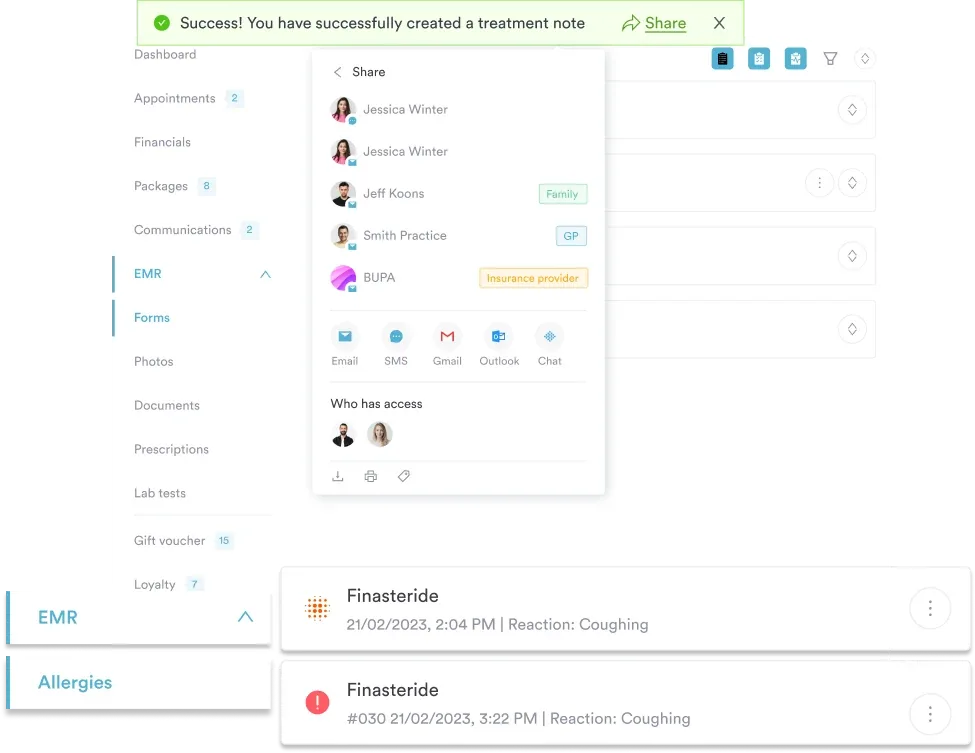
Standardized medical forms for ophthalmic encounters prompt the documentation details that make H57.89 defensible. Paired with consistent coding review, they cut the risk of claim rejection substantially.
In multi-provider or multi-location settings, a single misconfigured code template can generate dozens of incorrect H57.8 submissions per week before the error surfaces. Practice management software with built-in ICD-10 code validation .
The CMS ICD code lists are updated annually with each fiscal year’s ICD-10-CM release. Practices should audit their EHR code libraries each October against the new tabular list to confirm that any “other specified” codes in use, including H57.89, remain current and billable. H57.89 has been valid and unchanged since its FY2019 introduction through FY2026.
Practices billing H57.8 after October 2018 were submitting a non-billable subcategory header in place of a reportable code. ICD-10 Code H57.89 corrects that by providing a specific, billable designation for documented ocular and adnexal disorders that lack a more precise code in the H00-H59 chapter.
The key discipline is documentation specificity: the condition must be named in the clinical note, and coders must confirm no more precise code exists before reaching for H57.89.
Pabau’s claims management software structures the documentation and coding workflow so the right code reaches the payer the first time. To see how this works in a practice like yours, book a demo.

Billing the eye exam itself? CPT code 92002 covers the new-patient ophthalmological visits commonly paired with H57.89.
Coding an age-related cataract diagnosis? ICD-10 code H25.9 guide covers the billable code for an unspecified age-related cataract in adults.
Coding related eyelid conditions? ICD-10 code H01.9 follows the same specified-versus-unspecified logic.
ICD-10 Code H57.89 is used to report other specified disorders of the eye and adnexa, meaning conditions that are clinically documented and named but do not have a more precise ICD-10-CM code in the H00-H59 chapter. It is a billable, specific code valid for reimbursement on claims with dates of service on or after October 1, 2018.
Yes. H57.89 is a billable and specific ICD-10-CM code, confirmed as valid by CMS, icd10data.com, and the AAPC. It replaced the formerly used H57.8, which was a non-billable subcategory header that Medicare began rejecting in late 2018 after the FY2019 code update.
H57.89 (other specified disorders of eye and adnexa) requires that the condition be named or described in the clinical documentation, even if no dedicated code exists for it. H57.9 (unspecified disorder of eye and adnexa) is appropriate only when no further specification is clinically possible. ICD-10-CM coding guidelines require the highest level of specificity the documentation supports, so H57.89 is preferred when the condition is documented.
H57.89 became effective October 1, 2018, with the FY2019 ICD-10-CM update. The American Academy of Ophthalmology issued a coding advisory in December 2018 confirming that H57.8 was no longer valid for reimbursement and that practices receiving Medicare denials should resubmit using H57.89.
H57.89 covers any clinically documented ocular or adnexal condition for which no more specific ICD-10-CM code exists in the H00-H59 chapter. Common examples include rare adnexal structural abnormalities, atypical lacrimal apparatus disorders not captured by H04-range codes, and unusual orbital conditions. Note that brow ptosis (H57.81) and foreign body sensation (H57.8A) were carved out into their own codes and should not be reported under H57.89.
The most common CPT codes billed alongside H57.89 are the ophthalmology office visit codes (92002, 92004 for new patients; 92012, 92014 for established patients) and standard E/M codes (99213, 99214) when the encounter does not meet the criteria for ophthalmology-specific codes. Procedure CPT codes may also be paired with H57.89 depending on the clinical context, but practices should verify payer-specific medical necessity requirements before submitting.
No. When filing claims electronically, submit the code as H5789 without the decimal point. Many clearinghouses strip it automatically, but including the period can trigger an invalid-code rejection, so drop it on electronic submissions and keep the decimal only for written references.