ICD-10 Code Y76.0: Diagnostic obstetric and gynecological devices
ICD-10 Code Y76.0: Definition and billable status ICD-10 Code Y76.0 is a valid, ...

Last Updated: Oct 23, 2026
Billable Code Specific Code
H57.01 is the billable ICD-10-CM code for argyll Robertson pupil, atypical.
Let Pabau's smart automation suggest the right codes, reduce claim denials, and keep your practice compliant—effortlessly.
Automate repetitive tasks and focus on what matters most—your patients.
Reduce coding errors and ensure compliance with the latest regulations.
Clean claims, fewer denials, and faster reimbursements.
Powerful insights and reporting to help your practice thrive.
HIPAA compliant SOC 2 certified GDPR-compliant Trusted by 4,000+ clinics worldwide

ICD-10 Code H57.01 is a billable diagnosis code for Argyll Robertson pupil, atypical, valid for FY2026 HIPAA-covered transactions (Oct 1, 2025 through Sep 30, 2026).
The code applies to adult patients aged 15-124 and sits under H57.0 (Anomalies of pupillary function) within the H57 category (Other disorders of eye and adnexa).
Argyll Robertson pupil fails to constrict to light but constricts to near objects (light-near dissociation); the atypical variant is linked to neurosyphilis and other neurological conditions.
Pabau’s claims management software helps ophthalmology and neurology practices assign accurate ICD-10 codes, maintain compliant documentation, and reduce billing errors.
ICD-10 Code H57.01 is a billable ICD-10-CM diagnosis code. It is valid for all healthcare compliance requirements under HIPAA-covered electronic transactions for fiscal year 2026, running from October 1, 2025 through September 30, 2026. The CDC/NCHS ICD-10-CM web tool confirms the code’s validity and applicable age edits.
The age edit is an important billing detail. H57.01 is validated only for patients aged 15 and older. Claims submitted for pediatric patients will trigger an age-conflict edit and require clinical review before resubmission.
Argyll Robertson pupil describes a specific abnormality of the light reflex: the pupil fails to constrict in response to direct light but constricts normally when the patient focuses on a near object. This paradox, known as light-near dissociation, is the defining clinical feature.
When the examining clinician documents this presentation as “atypical,” ICD-10 Code H57.01 is the correct code assignment.
The “atypical” qualifier matters. Classic Argyll Robertson pupils are bilateral, small, irregular, and associated with late-stage syphilis. Atypical presentations may be unilateral, of normal size, or linked to non-syphilitic neurological causes. Assigning H57.01 rather than H57.00 (unspecified) reflects the documented clinical distinction, which is important for medical necessity review and longitudinal chart accuracy.
Key clinical features that warrant H57.01:
Understanding the code hierarchy helps coders navigate related codes and apply the correct level of specificity. ICD-10 Code H57.01 sits within a three-level structure under the broader eye and adnexa chapter.
The CMS ICD-10 codes page provides the official FY2026 code files, including the full tabular list where H57.01 appears within the H57.0 subcategory. Coders should reference the tabular list directly when validating any Excludes notes or instructional notes at the parent code level.
Seven codes share the H57.0 subcategory for anomalies of pupillary function. Selecting the most specific code requires understanding the clinical distinction between each. The table below shows each sibling code alongside its key clinical distinguisher, which helps coders avoid defaulting to H57.00 when a more specific code applies.
A common documentation shortfall: clinicians who note “Argyll Robertson-like” pupil without the “atypical” qualifier may leave coders uncertain between H57.01 and H57.00. Practices using digital intake forms can include structured examination fields that prompt clinicians to specify the reflex pattern and laterality, resolving this ambiguity before coding begins.

Accurate code assignment for H57.01 depends on what the clinical record says, not just the diagnosis name. When documentation does not specify the presentation type, coders should default to H57.00 rather than assume a level of detail the note does not support.
For H57.01, that means the record must include both the clinical finding (light-near dissociation) and the clinician’s characterization of the presentation as atypical.
The ICD-10-CM tabular list should always be reviewed for instructional notes at the H57 and H57.0 parent levels before assigning H57.01. H57.01 carries an Excludes1 note for syphilitic Argyll Robertson pupil (A52.19), which means the two codes are mutually exclusive.
When neurosyphilis is the documented cause, the encounter is coded to A52.19 instead of H57.01, never both together. For non-syphilitic causes, coders should still check the tabular list for any “code first” instruction that requires sequencing the underlying condition first.
Clinicians and coders should also use claims management software to flag when a secondary etiology code, such as a neurological condition code, should accompany H57.01 on the claim. Submitting H57.01 without the underlying cause code when clinical documentation supports one may reduce the claim’s medical necessity justification.
Syphilis is the exception: because A52.19 and H57.01 are mutually exclusive, they should never appear together on the same claim.

Before assigning H57.01, check the clinical note for the specific phrase or equivalent clinical description of light-near dissociation. If the note describes only ‘pupil abnormality’ without specifying the type, query the clinician before defaulting to H57.00 — the additional clinical detail can affect both coding specificity and downstream clinical data quality.
Argyll Robertson pupil, atypical is rarely an isolated finding. When the clinical record documents a known underlying cause, that condition should be coded alongside H57.01. Codes such as G59 frequently accompany H57.01 when the documented cause is a mononeuropathy, such as diabetic autonomic neuropathy, affecting the pupillary light reflex pathway.
Neurosyphilis is the most historically documented cause, though it’s coded differently from the other entries in this table. Because H57.01 excludes A52.19 (Other symptomatic neurosyphilis) by definition, a confirmed syphilitic Argyll Robertson pupil is coded to A52.19 alone, not combined with H57.01.
Clinicians are increasingly encountering atypical presentations in patients with no history of syphilis, and it’s for these non-syphilitic cases that H57.01 applies. Document all evaluated etiologies, even when the workup is negative for syphilis, to justify the specificity of the H57.01 code assignment.

Pabau helps ophthalmology and neurology practices capture structured clinical findings at the point of care, reducing the incomplete documentation that leads to coding errors and claim rejections.

ICD-10 Code H57.01 appears in billing workflows across two primary specialties and one subspecialty context. The code is uncommon in primary care settings, where a pupillary finding of this nature typically triggers a referral rather than a code assignment.
Practices managing multi-specialty documentation workflows benefit from specialist clinic software that allows structured clinical notes with ICD-10 code suggestion fields. This reduces the time between clinical documentation and code assignment, particularly for rare codes like H57.01 where coders may not encounter them frequently.
Coding accuracy for rare ICD-10 codes like H57.01 depends on structured clinical documentation. When examination findings are free-text only, coders face an interpretive step that introduces error risk. Pabau’s clinical records management tools allow practices to build structured ophthalmological examination templates with defined fields for pupillary assessment, including light reflex, near response, and laterality documentation. Practices that bill a narrow set of services keep a coding guide covering that set rather than the whole schedule. Missing a provider identifier or a diagnosis code sends a reimbursement claim straight back, so a reimbursement receipt lists both.
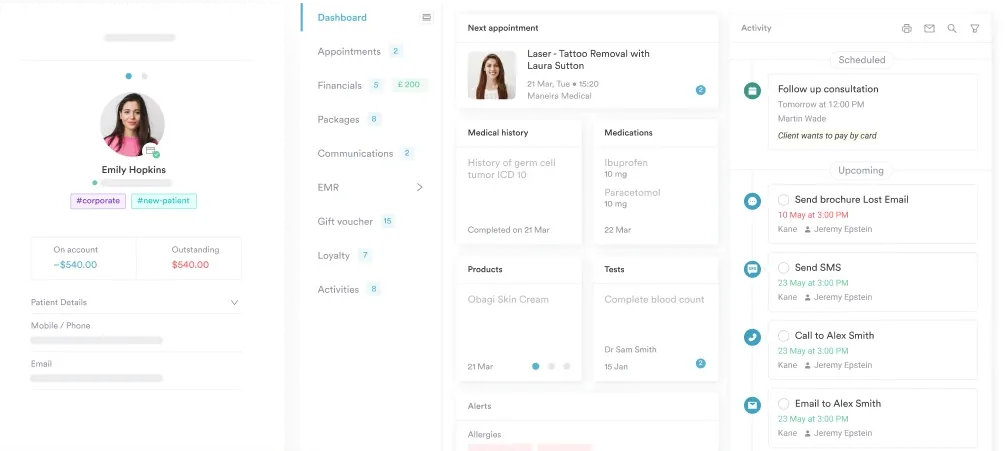
Practices using EHR integration can configure their clinical note templates to include pre-structured ICD-10-relevant fields. This means the clinician captures the documented findings at the point of care in a format that directly supports code assignment, rather than leaving interpretation to a coder reviewing a narrative note later.
For billing workflows. It also helps reduce rejections from age-edit conflicts by surfacing the applicable age range during the billing workflow.
Practices can also use HIPAA-compliant clinical documentation features to ensure all coded transactions meet the FY2026 submission standards for HIPAA-covered encounters.
Run a quarterly audit on H57.00 (unspecified) claims. If your practice submits a high volume of H57.00 codes relative to H57.01, that pattern may indicate that atypical Argyll Robertson presentations are being under-documented. A brief clinician education session on documenting the light-near dissociation finding can shift many of those claims to the more specific H57.01 code.
ICD-10 Code H57.01 is a specific, billable diagnosis code for a clinically distinct pupillary finding. Using it correctly over H57.00 requires documentation that explicitly identifies the atypical Argyll Robertson presentation and, where known, the underlying neurological or infectious cause.
Practices that invest in structured clinical documentation workflows reduce the guesswork for coders and improve claim accuracy. Pabau’s clinical records and billing tools are designed for exactly this workflow. To see how it works for ophthalmology and specialty practices, book a demo.

Coding other unspecified eye disorders? H52.7 covers refraction and accommodation disorders billed alongside comprehensive ophthalmic exams.
Coding an iridocyclitis case without laterality documented? ICD-10 code H20.9 guide covers why payers track specificity rates on iridocyclitis claims.
Coding an iris or ciliary body disorder? ICD-10 code H22 guide covers iris and ciliary body disorders tied to a disease classified elsewhere.
ICD-10 Code H57.01 is a billable diagnosis code for Argyll Robertson pupil, atypical — a condition where the pupil fails to constrict to light but constricts normally to a near object. It is valid for all HIPAA-covered transactions in FY2026 (October 1, 2025 through September 30, 2026) and applies to adult patients aged 15 to 124.
Yes, H57.01 is a valid billable ICD-10-CM code. It is confirmed billable for FY2026 by both the CDC/NCHS ICD-10-CM tool and the AAPC code lookup. Claims using H57.01 must meet the applicable age edit (patients aged 15 and older).
Argyll Robertson pupil is most classically associated with neurosyphilis, though the syphilitic form is coded to A52.19 (Other symptomatic neurosyphilis) instead of H57.01, since the two codes are mutually exclusive under an Excludes1 note. Non-syphilitic causes, including diabetes mellitus, multiple sclerosis, midbrain lesions, and alcoholic autonomic neuropathy, are coded alongside H57.01. Coders should document and code all evaluated and confirmed underlying etiologies present in the record.
H57.00 is the unspecified anomaly of pupillary function code, used when documentation does not support a more specific diagnosis. H57.01 applies when the clinician explicitly documents Argyll Robertson pupil as atypical. Coders should always select H57.01 over H57.00 when the clinical record contains the necessary specificity, since “unspecified” codes carry more audit risk and provide less clinical data for longitudinal record accuracy.
H57.01 carries an Excludes1 note for syphilitic Argyll Robertson pupil, which is coded as A52.19 (Other symptomatic neurosyphilis). An Excludes1 note means the two codes are mutually exclusive: when the clinical record documents neurosyphilis as the cause, use A52.19 instead of H57.01, never both together. H57.01 applies only when the atypical presentation has a non-syphilitic or undetermined etiology.
Ophthalmology and neurology practices are the primary users of H57.01. Infectious disease specialists may also assign it as a secondary code in confirmed neurosyphilis cases where the Argyll Robertson finding is documented. Primary care providers typically refer these patients rather than assigning the code themselves.