ICD-10 Code Y76.0: Diagnostic obstetric and gynecological devices
ICD-10 Code Y76.0: Definition and billable status ICD-10 Code Y76.0 is a valid, ...

Last Updated: Oct 23, 2026
Billable Code Specific Code
G09 is the billable ICD-10-CM code for sequelae of inflammatory diseases of central nervous system.
Let Pabau's smart automation suggest the right codes, reduce claim denials, and keep your practice compliant—effortlessly.
Automate repetitive tasks and focus on what matters most—your patients.
Reduce coding errors and ensure compliance with the latest regulations.
Clean claims, fewer denials, and faster reimbursements.
Powerful insights and reporting to help your practice thrive.
HIPAA compliant SOC 2 certified GDPR-compliant Trusted by 4,000+ clinics worldwide

ICD-10 Code G09 is a billable diagnosis code for sequelae of inflammatory diseases of the central nervous system, valid for FY 2026.
G09 applies only when an active CNS inflammatory condition (G00-G08) has resolved but left residual damage, not when inflammation is still ongoing.
Correct sequencing matters: G09 is typically listed as a secondary code alongside the specific residual condition code as principal.
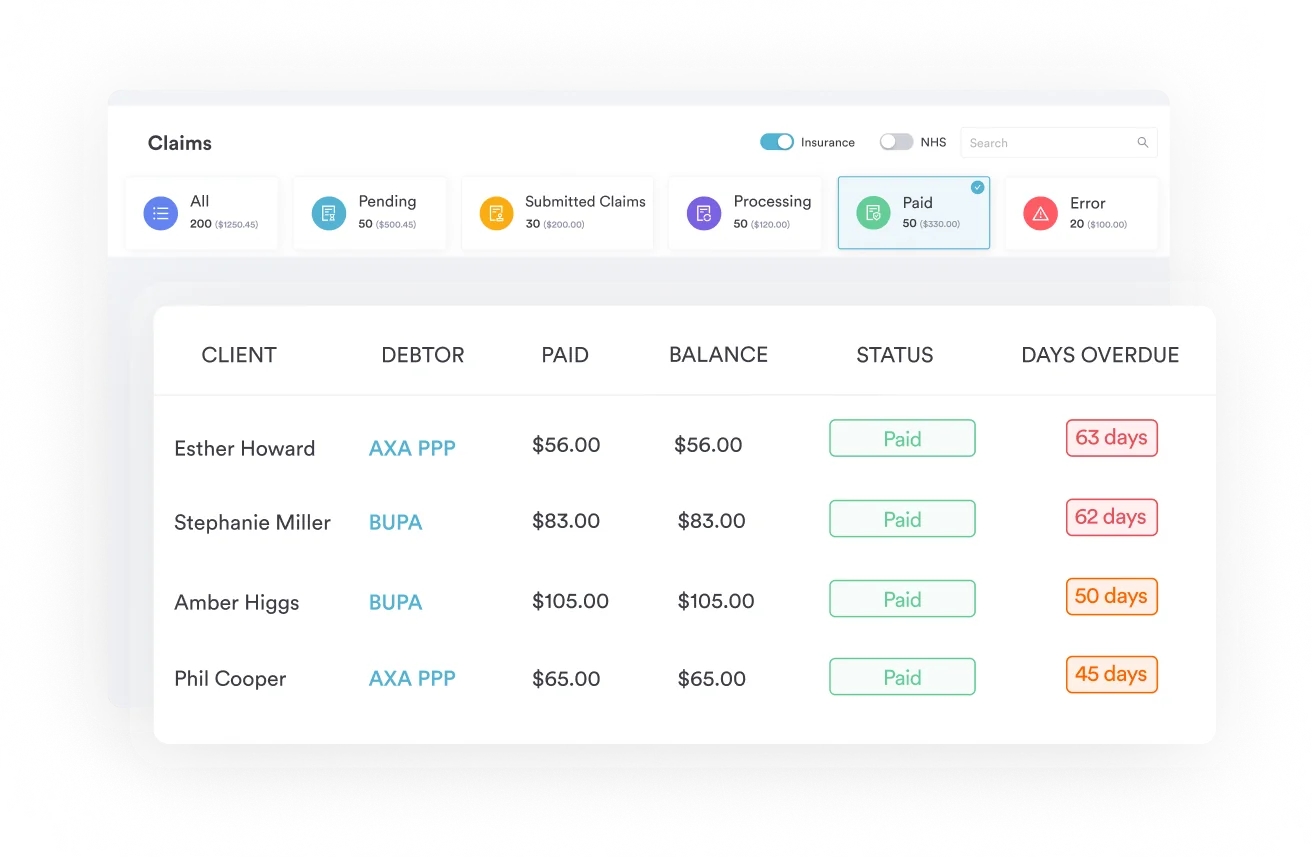
Pabau’s claims management software helps practices document sequelae accurately and reduce G09-related claim denials.
ICD-10 Code G09 is the ICD-10-CM diagnosis code for sequelae of inflammatory diseases of the central nervous system (CNS). It applies once a condition such as bacterial meningitis or encephalitis has resolved but left residual damage behind. G09 is billable only as a secondary code, sequenced after the specific residual condition it caused.
ICD-10 Code G09 is valid for the 2026 code year and sits at the end of the G00-G09 block (Inflammatory diseases of the central nervous system). As a category-level instruction code, it signals that a condition from G00-G08 caused lasting damage, and that the residual condition is now what is being treated.
The official tabular instruction reads: “Category G09 is to be used to indicate conditions whose primary classification is to G00-G08 as the cause of sequelae, themselves classifiable elsewhere.” The “sequelae” include conditions specified as residuals. According to the WHO ICD-10 browser, G09 falls within Chapter VI (Diseases of the nervous system), block G00-G09.
There are no subcategory codes under G09. It is a single-code category with no further specificity available. You cannot add a digit to make it more specific. The specificity comes from coding the residual condition separately using the appropriate code from another chapter.
G09 is not a free-standing diagnosis. It classifies the cause of sequelae, not the sequelae themselves. Understanding what falls under the G00-G08 source codes clarifies which prior conditions G09 can represent.
Hydrocephalus following meningitis is one of the most commonly documented sequelae under G09. The residual code for acquired hydrocephalus (G91.x) would appear as the principal diagnosis, with G09 coded secondarily to explain the cause.
Several clinical synonyms map to G09 in the ICD-10-CM index. Coders and clinicians should recognize these terms as indicators that G09 may be appropriate:
These terms appear in provider documentation and should trigger G09 assignment during coding review. If the record states “hydrocephalus following prior bacterial meningitis,” the code pair is G91.x (principal) + G09 (secondary).
This distinction causes the most coding errors in this code range. Confusing an active inflammatory condition with its sequelae, or vice versa, produces either an incorrect principal diagnosis or a claim that the payer cannot adjudicate.
The core rule from the CMS ICD-10 coding guidelines: a sequela code applies when the acute phase of illness has resolved and the patient is now being treated for a residual condition caused by that prior illness. Active inflammation still present requires a code from G00-G08, not G09.
Practices managing neurological patients benefit from tracking this transition point in the medical record. Coding residual conditions accurately requires documentation at each visit stating whether the original condition has resolved.
Chapter 19 injury codes carry the same timeline in a 7th character. ICD-10 code S65.992D marks a subsequent encounter for a left wrist and hand blood vessel injury, while the 7th character S marks a sequela.
Before assigning G09, verify the medical record explicitly states the original inflammatory CNS condition has resolved. A phrase like ‘history of bacterial meningitis with residual hydrocephalus’ is sufficient. Vague language like ‘meningitis-related hydrocephalus’ without a clear timeline may trigger a payer request for additional documentation.
Sequencing errors are the primary reason G09-related claims are returned for correction. The ICD-10-CM guidelines for sequelae are consistent: the residual condition is coded first (as principal or first-listed), and G09 follows as a secondary code explaining the etiology.
The AAPC Codify ICD-10-CM lookup confirms G09’s status as a category-instruction code, not a standalone principal diagnosis. This means submitting G09 alone, without the residual condition code, will typically result in a denial or return-to-provider request.
For inpatient settings, ICD-10-PCS procedure codes may also be required. The principal diagnosis selection in the inpatient context follows Uniform Hospital Discharge Data Set (UHDDS) definitions, which may differ from outpatient sequencing in some clinical scenarios.
Documenting neurological conditions in ICD-10-CM consistently, visit over visit, strengthens the audit trail when payers review sequela claims. Practices using structured documentation tools reduce the risk of the residual-to-cause linkage being absent from the record. When the residual is a pediatric cognitive or developmental deficit, CPT code 96112 testing can supply the objective documentation payers look for.

Pabau’s claims management software helps neurological and multi-specialty practices document sequelae correctly, link residual conditions to prior diagnoses, and reduce claim denials tied to sequencing errors.

Payers reviewing G09 claims look for three things in the documentation: confirmation that the prior CNS inflammatory condition existed, confirmation it has resolved, and a clinical link between that prior condition and the current residual. All three must be present before G09 can be defended on audit.
Meeting HIPAA-compliant clinical documentation standards requires that the medical record at the current encounter, not just a historical note, references the prior inflammatory disease. Coders cannot assume the causal relationship if the provider did not document it explicitly.
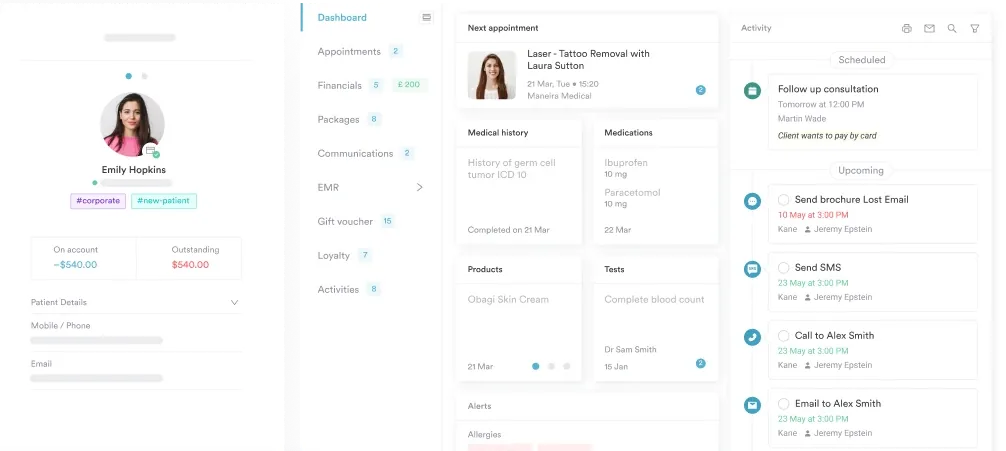
EHR systems that support structured problem-list entries make this documentation easier. When a provider can flag a condition as “residual, secondary to [prior diagnosis]” within a structured field, the coder has the link without needing to parse free-text notes. Practices using structured client records with linked diagnosis fields keep that causal link visible to coders without extra manual review.
Some commercial payers require additional clinical notes when G09 is billed alongside certain high-cost residual conditions (e.g., shunt-related hydrocephalus management). Medicare Administrative Contractors (MACs) follow CMS sequela guidelines directly, so documentation that meets the CMS standard generally satisfies MAC review. State Medicaid programs vary; practices billing in multiple states should verify local policy through their MAC or managed care contract. A billing workflow that separates coding from submission creates a handoff where claims stall.
Run a monthly audit of G09 claims using your practice management system’s denial tracking. Flag encounters where G09 was listed as principal rather than secondary, and those where no residual condition code appears alongside it. Both patterns indicate systematic documentation or sequencing issues that need staff education rather than one-off corrections.
G09 sits at the end of a 10-code block. Coding professionals working in neurology, infectious disease, or any specialty managing patients with prior CNS inflammatory disease should know this full range of central nervous system ICD-10 codes, because the source code (G00-G08) shapes both documentation requirements and sequencing logic. A coding guide that lists the full G00-G09 range next to its manifestation codes keeps sequencing errors from creeping in.
For practices billing neurology, infectious disease. They interact with residual condition codes from other chapters, such as G91 for hydrocephalus, G40 for epilepsy, and H90-H91 for hearing loss.
Anyone working across a range of neurology ICD-10 codes should verify current validity using the CDC/NCHS ICD-10-CM web tool, which is updated annually with effective dates and any code changes.
Effectively managing neurological follow-up care requires tracking which prior conditions are on the patient’s problem list and ensuring each encounter note reflects the current status, whether active or resolved.
Sequela coding is documentation-intensive. G09 denials usually originate when what the clinician knows about a patient’s history never makes it into the coded claim. Practices that capture that history consistently through structured workflows see fewer returned claims and shorter reimbursement cycles.
Pabau’s claims management software supports this workflow by linking clinical documentation to claim submission. When a coder reviews a G09 encounter, they can cross-reference the clinical note, the problem list, and the claim in one environment rather than toggling between systems.
Practices working across neurology, rehabilitation, and infectious disease also use digital intake forms to capture structured patient history that explicitly flags prior CNS conditions, making the causal link visible from the first encounter rather than buried in historical notes.
For practices with a behavioral health or mental health EMR component, G09 is especially relevant. Cognitive and behavioral sequelae from CNS inflammatory disease often present in mental health settings, where the prior neurological history may not be the primary focus of the visit but still drives accurate code selection.
Some patients also need HCPCS code H2014 skills training to rebuild function lost to the original condition.
ICD-10 Code G09 is a precise tool that describes a patient whose CNS inflammatory disease has resolved but who carries lasting neurological damage.
Used correctly, as a secondary code alongside the specific residual condition, it provides payers with the context they need to adjudicate the claim. Used incorrectly, as a standalone code or listed before the residual, it produces denials that require rework and delay payment.
The documentation requirement is not onerous, but it is specific: a clear history of the prior condition, its resolution, and a stated causal link to the current residual. Practices that build this into their intake and encounter documentation workflows reduce denials before they happen.
Pabau’s practice management software helps multi-specialty practices structure those workflows and keep coding accurate across provider teams. To see how it works in a neurological or multi-specialty setting, book a demo.

Coding an opportunistic lung infection? ICD-10 code B59 covers Pneumocystosis, the billable diagnosis for Pneumocystis jirovecii pneumonia.
Managing neurological patient records across a multi-specialty team? Pabau’s client record feature provides structured, linked diagnosis fields that keep prior condition history visible to every clinician and coder at the point of care.
Looking for related neurological sequela coding context? ICD-10 code H51.9 covers unspecified disorders of binocular eye movement, a residual sometimes seen when CNS inflammatory disease affects the cranial nerves controlling eye movement.
ICD-10 Code G09 is the diagnosis code for sequelae of inflammatory diseases of the central nervous system. It indicates that a prior CNS inflammatory condition from the G00-G08 range (such as bacterial meningitis or encephalitis) has resolved but left a residual condition that is now being treated. G09 explains the cause of the sequela; the specific residual condition is coded separately.
Yes, G09 is a billable ICD-10-CM diagnosis code valid for FY 2026. However, it is almost always coded as a secondary code alongside the principal diagnosis code for the specific residual condition. Submitting G09 as a standalone principal diagnosis without a paired residual condition code typically results in a claim denial.
Active inflammatory CNS disease (still present at the time of the encounter) is coded with the appropriate G00-G08 code. Sequelae apply when the acute inflammatory phase has fully resolved and the patient is being seen for a residual condition that resulted from the prior illness. Using G09 while the original condition is still active is a coding error and may cause denials.
G09 covers residuals from any condition in the G00-G08 block, including bacterial meningitis (G00), viral or unspecified meningitis (G02-G03), encephalitis and myelitis (G04-G05), intracranial abscess (G06-G07), and intracranial phlebitis (G08). Common sequelae include hydrocephalus, hearing loss, cognitive impairment, seizure disorders, and focal neurological deficits.
No. Per ICD-10-CM sequela coding guidelines, the residual condition (e.g., acquired hydrocephalus, cognitive impairment) is listed as the principal or first-listed diagnosis. G09 is sequenced as a secondary code to identify the original inflammatory CNS disease as the etiology. Listing G09 as the principal diagnosis misrepresents the reason for the encounter and typically triggers a denial or coding query.
Meningitis is the most common source of a G09 sequela. Code the specific residual condition first, such as acquired hydrocephalus (G91.x) or sensorineural hearing loss, then add G09 as the secondary code to show the residual followed a prior bacterial or viral meningitis. The record must state that the meningitis has resolved and that the current condition is a lasting residual of it.