CPT code 93503: Swan-Ganz catheter billing and modifiers
CPT code 93503: Official descriptor and procedure overview In the AMA CPT code s...

Last Updated: Oct 23, 2026
Billable Code Specific Code
S34.5XXA is the billable ICD-10-CM code for injury of lumbar, sacral and pelvic sympathetic nerves, initial encounter.
The lumbar, sacral, and pelvic sympathetic nerves are part of the autonomic nervous system. They govern involuntary functions in the lower body, including bladder control, bowel motility, and vascular tone. Injury at this level usually follows trauma to the abdomen, lower back, or pelvis.
Fractures, blunt-force trauma, surgical complications, and penetrating wounds are the usual mechanisms. According to the Centers for Medicare and Medicaid Services (CMS), S34.5XXA sits in the S34 category. That category covers injury of the lumbar and sacral spinal cord and nerves at abdomen, lower back and pelvis level.
Let Pabau's smart automation suggest the right codes, reduce claim denials, and keep your practice compliant—effortlessly.
Automate repetitive tasks and focus on what matters most—your patients.
Reduce coding errors and ensure compliance with the latest regulations.
Clean claims, fewer denials, and faster reimbursements.
Powerful insights and reporting to help your practice thrive.
HIPAA compliant SOC 2 certified GDPR-compliant Trusted by 4,000+ clinics worldwide

ICD-10 code S34.5XXA is the billable code for injury of lumbar, sacral and pelvic sympathetic nerves, initial encounter.
The 7th character A marks the active treatment phase, so switch to S34.5XXD for follow-up and S34.5XXS for sequela.
Only four inclusion terms sit under S34.5, and the code carries no Excludes1 or Excludes2 notes of its own.
Documentation must name the plexus or nerve injured, the mechanism of injury, and the autonomic symptoms that followed.
Practice management software like Pabau links the code to the clinical note, so billing and documentation stay in step.
The table below summarizes the billing and validity facts for S34.5XXA. Coders in sports medicine and spinal injury practices should check these against their payer’s current local coverage determinations (LCDs) before submission.
Knowing where S34.5XXA sits in the ICD-10-CM hierarchy helps you pick the right level of specificity. Other codes in the same S30-S39 block share its 7th character requirement.
The two X characters between the subcategory and the 7th character are placeholders. Under the WHO ICD-10 classification framework and ICD-10-CM Official Guidelines Section I.A.4, a placeholder X fills any unused character slot. It is required when a code needs a 7th character but has no 4th, 5th, or 6th. Omit them and the code is invalid. Practices reconciling payment posting against expected fees find short-paid claims that never appear as denials. Keeping a code lookup current matters more than keeping it comprehensive.
The 7th character records where the patient is in treatment, not how many times they have been seen. Picking the wrong suffix is an auditable coding error that payers flag on retrospective review. Every trauma code in Chapter 19 carries its own 7th character set, as S41.021A and S52.033J show.
Clinical note: “Initial encounter” does not mean the patient’s first visit to a particular provider. It means the injury is still in the active treatment phase. That phase can run through the emergency department, the ward, or an outpatient specialist visit.
A patient referred to a spinal surgeon three weeks later is still an initial encounter if active treatment continues.
Flag the encounter type in your clinical notes at every visit, not just at first presentation. When a patient transitions from active treatment (A) to routine follow-up (D), the code must change with them. Payers audit this transition and deny A-suffix claims for encounters that are clearly post-acute.
Clinics tracking fracture and sprain recovery in Jane often start comparing Jane App alternatives as caseloads grow.
The Applicable To notes list the structures that qualify under S34.5XXA. There are exactly four, and they come straight from the ICD-10-CM tabular list. The CDC ICD-10-CM web tool publishes the official tabular list and its inclusion terms.
Every one of those terms names an autonomic ganglion or plexus that regulates visceral function in the lower abdomen and pelvis. Clinicians in pelvic health and spinal rehabilitation should confirm the note names the specific structure injured. A generic “sympathetic nerve injury” does not map to this code.
Sympathetic nerve injury at neck level belongs to subcategory S14.5 instead, with ICD-10 code S14.5XXD covering routine follow-up care.
S34.5 carries no Excludes1 or Excludes2 notes of its own. That is unusual for the S34 category. Nothing in the tabular list bars you from reporting S34.5XXA alongside a spinal cord injury code. At the sequela stage that pairing becomes S34.5XXS plus S34.105S, the unspecified L5 cord injury code. Document both structures and report both codes.
What does apply is the block-level Type 2 Excludes note inherited from S30-S39. It sends four presentations elsewhere in the tabular list.
A Type 2 Excludes note means the excluded condition is not part of S34.5XXA, but a patient can have both. If a burn and a nerve injury are both documented, report both codes.
The Use Additional Code guidance for the S34 category still applies. Report an external cause code for the mechanism of injury, such as a fall, a motor vehicle accident, or an assault. A blast injury pulls a different mechanism code, with W36.1XXA covering the explosion and rupture of an aerosol can.
S34.5XXA sits alongside eight sibling subcategories. Choosing between them comes down to which structure the note names. Pelvic trauma often pulls in codes from outside S34 too.
Practices reconciling historical claims data sometimes need the ICD-9-CM equivalent for S34.5XXA. The crosswalk is approximate, because ICD-9 had no code for sympathetic nerve injury at this level. Use the AAPC Codify lookup or your practice management system to confirm the mapping your payer expects.
State the approximate equivalence in your documentation whenever you submit a crosswalk reference. Auditors expect coders to flag ICD-9 mappings for nerve injury codes as non-exact.
S34.5XXA is billable and valid for HIPAA-covered transactions under 45 CFR Part 162. Solid HIPAA compliance is the baseline for any practice submitting it to a payer. Four things decide whether the claim clears.
Denials on nerve injury codes usually trace back to vague clinical notes rather than the code itself. Payers audit S34-category claims for specificity, and “low back pain” or “nerve damage” will not support S34.5XXA. Five elements substantiate the code.
Practices using structured patient records can template these five fields so nothing is missed at the point of care. Good clinical documentation is the strongest defense a practice has against a retrospective audit.
Build a coding checklist into your intake and note templates for S34-category injuries. Name the plexus or nerve, record the mechanism, attach the imaging findings, note the autonomic symptoms, and confirm the encounter type. Five fields at the point of care prevent most S34.5XXA denials.
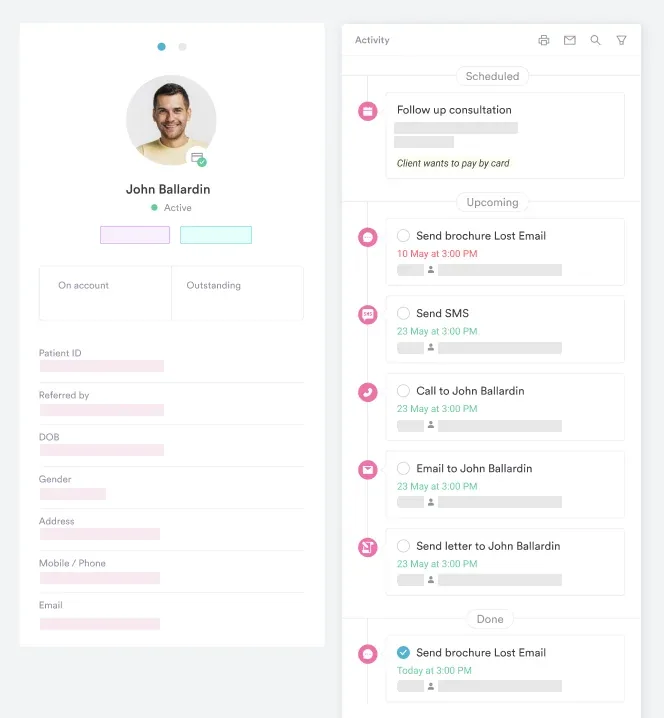
In most practices the diagnosis is chosen twice. The clinician writes it in the note, then a biller retypes it into the claim, and the two versions drift apart. Assigning S34.5XXA also requires software that accepts a full seven-character ICD-10-CM code.
Practice management software like Pabau removes the second step. Pabau’s claims management software assigns ICD-10-CM codes inside the clinical record and links them to the encounter. The clinician records the injury, the mechanism, and the functional impact, then attaches the code once.
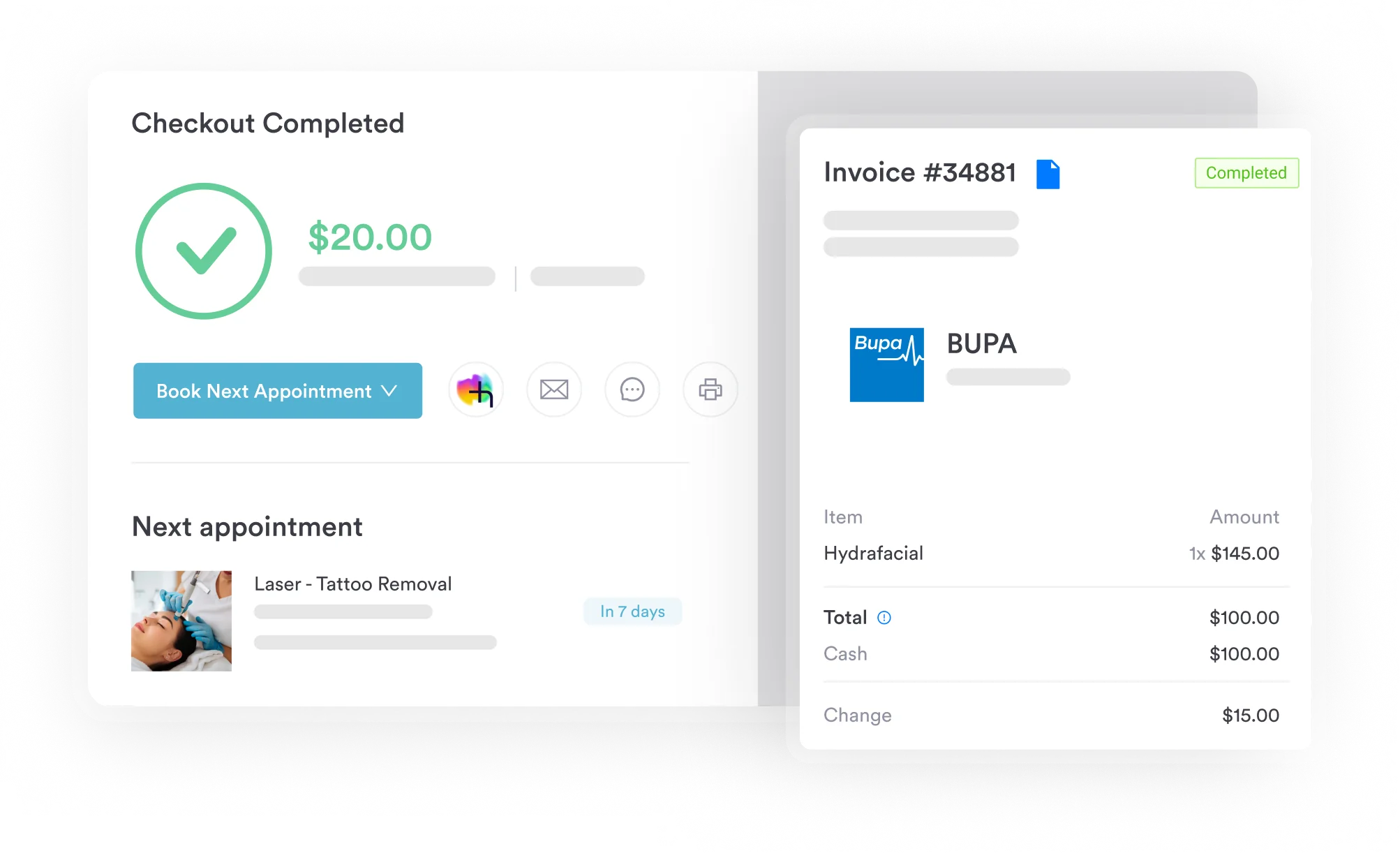
Your coder gets the trauma history and the encounter type in the same record as the diagnosis. Fewer S34.5XXA claims come back for missing documentation.

Pabau brings clinical notes, diagnosis coding, and claims into a single record, so your team stops rekeying codes and chasing denials.

S34.5XXA is a straightforward code with a demanding evidence base. The four inclusion terms are narrow, so the note has to name the plexus or nerve rather than the region. Get that wrong and no amount of appeal correspondence will rescue the claim.
The absence of code-specific Excludes notes works in your favor. You can report a spinal cord injury and a sympathetic nerve injury together when both are documented. The 7th character is the part worth double-checking at every visit.
Keeping the diagnosis, the note, and the claim in one system is what removes the transcription errors behind most S34.5XXA rejections. Book a demo to see how Pabau handles spinal injury documentation from intake to submission.

Coding anesthesia for a shoulder procedure? shoulder anesthesia billing guide covers CPT code 01630, the general shoulder anesthesia code, and its modifier rules.
Coding another injury in the same block? S36.230D walks through the subsequent-encounter rules for an abdominal organ laceration.
Working up spinal pain rather than trauma? M54.2 covers the documentation and billing rules for cervicalgia.
Billing wound preparation alongside a trauma repair? CPT 15005 explains how the add-on unit rules work.
Coding musculoskeletal follow-up in the same practice? M17.5 breaks down laterality and secondary osteoarthritis documentation.
ICD-10 code S34.5XXA means injury of lumbar, sacral and pelvic sympathetic nerves, initial encounter. Use it while the patient is under active treatment for the injury. The 7th character A is what marks that active treatment phase. It is billable and valid for HIPAA-covered transactions under the 2026 ICD-10-CM edition.
Yes. S34.5XXA is a billable, specific ICD-10-CM code valid for reimbursement claims and HIPAA-covered transactions. Billable means it sits at the highest level of specificity in its hierarchy. You can submit it as a primary or a secondary diagnosis. Coverage still depends on your payer’s local or national coverage determination.
Use S34.5XXA while the patient is in the active treatment phase, including emergency, inpatient, and specialist outpatient management. Switch to S34.5XXD once active treatment has ended and the patient is in routine follow-up. Use S34.5XXS for a late effect that persists after the injury itself has resolved. Clinical context decides the suffix, not the number of visits or the time elapsed.
The two X characters are placeholders. S34.5 has no 4th, 5th, or 6th character of its own, but the category still requires a 7th character. The placeholders fill the empty slots so the 7th character lands in position seven. Drop them and the code is invalid on submission.
Category S34 covers injury of the lumbar and sacral spinal cord and nerves at the abdomen, lower back, and pelvis level. Its subcategories run from concussion and edema of the cord (S34.0) through nerve root injury (S34.2) and cauda equina injury (S34.3). Lumbosacral plexus injury is S34.4, sympathetic nerve injury is S34.5, and peripheral nerve injury at this level is S34.6. S34.9 covers unspecified nerve injury.
The crosswalk is approximate, because ICD-9 did not capture sympathetic nerve injury at this level with the same specificity. The closest legacy codes are 953.5, injury to lumbosacral plexus, and 954.1, injury to other sympathetic nerve, excluding shoulder and pelvic girdles. Note the non-exact mapping whenever you submit historical data or payer correspondence.
S34.5 carries no Excludes1 or Excludes2 notes of its own in the ICD-10-CM tabular list. The only exclusions that reach it are the Type 2 Excludes at the S30-S39 block level. Those send burns and corrosions, effects of a foreign body, frostbite, and venomous bites or stings elsewhere. A Type 2 Excludes note still allows both conditions to be coded when both are documented.
A code like S34.5XXA tells the payer which nerve structure was injured and where the patient is in treatment. That drives the reimbursement rules, the medical necessity criteria, and the coverage policy applied to the claim. It also decides which CPT codes count as medically necessary for the visit. In an inpatient setting it feeds the DRG or APC grouping.