ICD-10 Code Y76.0: Diagnostic obstetric and gynecological devices
ICD-10 Code Y76.0: Definition and billable status ICD-10 Code Y76.0 is a valid, ...

Last Updated: Oct 23, 2026
Billable Code Specific Code
M32.9 is the billable ICD-10-CM code for systemic lupus erythematosus, unspecified.
Let Pabau's smart automation suggest the right codes, reduce claim denials, and keep your practice compliant—effortlessly.
Automate repetitive tasks and focus on what matters most—your patients.
Reduce coding errors and ensure compliance with the latest regulations.
Clean claims, fewer denials, and faster reimbursements.
Powerful insights and reporting to help your practice thrive.
HIPAA compliant SOC 2 certified GDPR-compliant Trusted by 4,000+ clinics worldwide

ICD-10 Code M32.9 is the billable, unspecified diagnosis code for systemic lupus erythematosus (SLE). It is valid for FY2026 claims from October 1, 2025 through September 30, 2026.
Use M32.9 only when the documentation does not specify the type of lupus or the organ systems involved.
The most common error is defaulting to M32.9 when organ involvement is documented. Codes M32.11 through M32.19 apply when the notes name the affected system.
M32.9 is not on the CMS present-on-admission exempt list, so inpatient claims still need a POA indicator.
Practice management software like Pabau helps rheumatology and dermatology practices capture organ-involvement detail before a claim goes out.
ICD-10 Code M32.9 is the diagnosis code for systemic lupus erythematosus (SLE), unspecified. It is billable and HIPAA-valid for FY2026, effective October 1, 2025 through September 30, 2026, per the CMS ICD-10-CM annual update.
Systemic lupus erythematosus is a chronic autoimmune condition. The immune system attacks healthy tissue across several organ systems, including the skin, kidneys, joints, heart, lungs, and nervous system.
M32.9 applies when the provider confirms SLE but does not indicate which organ systems are involved. It also applies when nothing in the notes ties the disease to a medication. Coders in rheumatology, dermatology.
The code sits in the M30-M36 block of systemic connective tissue disorders, and its parent code is M32. This article covers the M32 hierarchy, the Excludes1 note, documentation requirements, and the specificity rules that decide which subcode you use.
The table below consolidates the core attributes for ICD-10 Code M32.9 as published in the official FY2026 ICD-10-CM tabular list. Verify current-year validity with the CDC ICD-10-CM web tool before submission.
M32.9 does not appear on the CMS present-on-admission (POA) exempt list, so inpatient claims must carry a POA indicator for it. Practices that run a periodic chart audit catch unspecified-code drift before a payer does.
The ICD-10-CM tabular list recognizes several alternate terms that map to M32.9. Any of these phrases in provider documentation supports this code when organ involvement is not specified.
Discoid lupus erythematosus is limited to the skin and does not fall under M32.9. It codes to L93.0 instead. The M32 category is reserved for systemic disease affecting internal organ systems. Keeping the two apart prevents a common cross-coding error, especially when dermatology notes describe cutaneous findings alone.
Osteopaths treating these conditions can document diagnoses and sessions in osteopathy practice software.
The full M32 code tree covers SLE in all its clinical presentations. Selecting any code other than M32.9 requires documentation that specifies etiology or organ involvement. The AAPC code lookup and the WHO ICD-10 browser both carry the full hierarchy for cross-reference.
Specificity always wins when the documentation supports it, so treat M32.9 as the fallback. The same rule governs the codes around it, including M32.8 and M35.2.
The excludes note attached to M32 is an official instructional note, not a suggestion. Reading it correctly keeps lupus claims clean and supports medical billing compliance across every payer type.
An Excludes1 note means the excluded condition can never be coded at the same time as M32.9. The two conditions are mutually exclusive by definition.
Never assign L93.0 on the same claim as M32.9, because that pairing violates the Excludes1 note. If a patient has both discoid and systemic lupus, code the systemic disease, since it takes diagnostic precedence. M32 carries no Excludes2 notes, so the tabular list sets no other pairing rules for this category. Co-claiming restrictions in the Australian schedule decide which items can appear on the same day.
The ICD-10-CM Official Guidelines for Coding and Reporting are clear. Assign the most specific code the clinical documentation supports. M32.9 is appropriate in these scenarios.
The line between M32.9 and the M32.1x subcategories is where most coders hesitate. Here is the direct comparison.
If a rheumatologist documents SLE with renal involvement but never names nephritis or glomerular disease, M32.10 fits better than M32.9. When the note reads lupus nephritis, M32.14 applies. M32.9 sits at the bottom of the specificity ladder, so climb as high as the documentation allows.
Denials for M32.9 usually have a straightforward cause. Either the record does not support the unspecified designation, or it holds enough detail to require a more specific code. Good clinical documentation forms and consistent charting habits prevent both outcomes.
For M32.9 to withstand payer review, the medical record should contain the following elements.
When the documentation is ambiguous, query the provider before assigning a code. Treat that query as a compliance safeguard rather than a delay. Payers audit specificity patterns, and a practice that defaults to M32.9 when specific codes fit will attract scrutiny.
Lupus nephritis is the most clinically significant organ complication of SLE and the most frequently under-coded. Organ-level specificity governs the whole M30-M36 block.
For lupus nephritis, payers often want an additional kidney function code or a urinalysis-supported diagnosis. Document the type of renal involvement, including WHO class where a biopsy exists. Some payers use that detail for coverage decisions on immunosuppressants such as rituximab.
Drug-induced lupus erythematosus (DILE) is a distinct clinical entity from idiopathic SLE, and it carries its own code, M32.0. The difference that matters for coders is attribution. The provider must document medication causation explicitly in the clinical notes.
Take a patient on long-term minocycline for acne who develops lupus-like symptoms, and the rheumatologist confirms SLE. Without documentation linking minocycline to the diagnosis, M32.9 is correct. When the note reads SLE secondary to minocycline use, M32.0 plus the matching T-code applies.
Practices with high SLE volumes drift toward default behaviors. These are the errors most likely to trigger a denial or a payer audit, along with the corrections that resolve them. Accounts receivable aging shows which codes are slow to pay long before anyone calls it a denial problem.
SLE rarely presents without comorbidities. Most payer guidelines require every condition addressed during an encounter to be reported, not only the primary diagnosis. The table below lists the codes most often reported with ICD-10 Code M32.9 in rheumatology encounters.
Code every condition that is monitored, evaluated, or treated during the encounter. Secondary diagnoses strengthen medical necessity and support higher-complexity E&M coding where the work justifies it.
Two neighboring decisions sit alongside that table. Overlap syndromes have their own code. Degenerative joint disease is coded separately from lupus arthritis.
In most practices, the organ-involvement detail already exists somewhere. It sits in a lab result, a consultant letter, or a free-text note nobody opens at billing time. The claim then goes out as M32.9 because nothing in the chart flagged the nephritis.
Practice management software like Pabau puts that detail where the billing team already works. Custom charting templates prompt the clinician to record the affected system during the visit. The note, the diagnosis.
Practices from rheumatology to longevity practices use the same setup for chronic caseloads. Every Pabau subscription includes the full feature set, so charting, coding support, and claim tracking arrive together. Your coder sees the renal finding before the claim leaves the building.
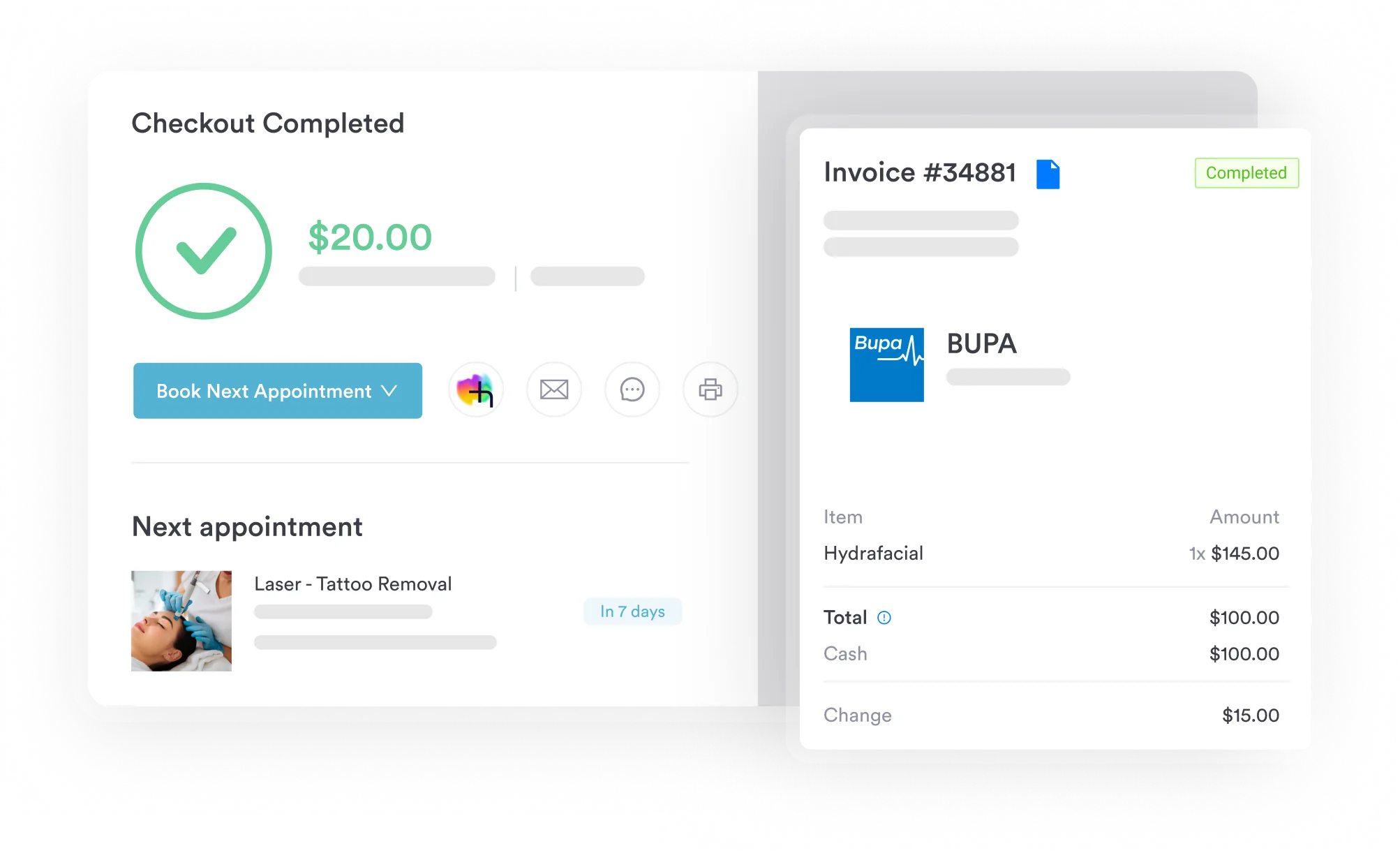

Pabau’s claims management software helps rheumatology and autoimmune practices capture organ-involvement detail at the point of care. Coders get what they need to assign the right M32 subcode every time.

The choice between M32.9 and an M32.1x subcode is settled in the chart long before billing sees it. If the note names an organ system, the specific code is the only defensible option on the claim.
Reviewing your last quarter of M32.9 claims is the fastest way to find the drift. If organ involvement shows up in even a handful of those notes, the problem sits upstream. The fix belongs in the documentation workflow.
Unspecified codes will always have their place, and M32.9 is a legitimate choice on the day a diagnosis lands. Leaving it there for years is what payers notice. Book a demo to see how Pabau keeps organ-involvement detail in front of your coders before a claim goes out.

Need the serology side of an autoimmune claim? M05.A covers how abnormal rheumatoid factor and ACPA results are reported.
Coding a lupus patient with nephritic syndrome? N05.A walks through the documentation a nephritis claim needs.
Billing immunosuppressant therapy for a lupus patient? J7515 explains how oral cyclosporine is reported and what payers check.
Facing notes that say only rheumatism? M79.0 shows how far an unspecified rheumatology code can take a claim.
Working through another code in the M30-M36 block? M31.5 covers giant cell arteritis with polymyalgia rheumatica.
ICD-10 Code M32.9 is the billable diagnosis code for systemic lupus erythematosus (SLE), unspecified. It applies when a provider confirms SLE but does not specify the type of lupus or which organ systems are involved. It is valid for HIPAA-covered claims from October 1, 2025 through September 30, 2026 (FY2026).
Yes. M32.9 is a billable, specific ICD-10-CM code valid for FY2026 claims submission. It is not on the CMS present-on-admission exempt list, so inpatient claims still need a POA indicator for it.
M32.9 applies when the documentation confirms SLE with no mention of organ or system involvement. M32.10 applies when the provider documents that organ involvement exists but does not name the system. Both sit below M32.11 through M32.19, which name the affected organ.
No. Drug-induced lupus codes to M32.0, not M32.9. M32.0 applies only when the provider explicitly attributes the SLE presentation to a specific medication. Without that attribution in the notes, M32.9 is correct even if the patient takes a known DILE-associated drug.
The Excludes1 note bars coding L93.0, discoid lupus erythematosus, on the same claim as M32.9. The two conditions are mutually exclusive by definition. M32 carries no Excludes2 notes in the ICD-10-CM tabular list, so no other exclusion pairing applies.
Common comorbidity codes include D69.3 for thrombocytopenia, D59.1 for autoimmune hemolytic anemia, and D68.61 for antiphospholipid syndrome. Hypertension (I10) and CKD stage codes (N18.1-N18.6) are also frequent once lupus nephritis has progressed. Report every condition addressed during the encounter.