ICD-10 code S61.201A: Open wound of left index finger without nail damage
ICD-10 code S61.201A covers a left index finger wound of unstated type ICD-10 co...

Last Updated: Oct 16, 2026
Billable Code Specific Code
E29.8 is the billable ICD-10-CM code for other testicular dysfunction.
Providers managing male endocrine conditions across men's health practice software platforms need structured coding workflows to avoid the most common E29.8 pitfalls: Applying Excludes1 rules correctly, and selecting the most specific code rather than defaulting to E29.9 (Unspecified) when specific documentation exists.
Let Pabau's smart automation suggest the right codes, reduce claim denials, and keep your practice compliant—effortlessly.
Automate repetitive tasks and focus on what matters most—your patients.
Reduce coding errors and ensure compliance with the latest regulations.
Clean claims, fewer denials, and faster reimbursements.
Powerful insights and reporting to help your practice thrive.
HIPAA compliant SOC 2 certified GDPR-compliant Trusted by 4,000+ clinics worldwide

E29.8 (Other testicular dysfunction) is a billable, male-specific ICD-10-CM code valid for reimbursement claims with dates of service on or after October 1, 2015.
Mullerian inhibiting factor deficiency is the primary clinical synonym documented under E29.8, covering testicular dysfunctions not captured by E29.0 or E29.1.
Klinefelter syndrome (Q98.0, Q98.1, Q98.4) is excluded via an Excludes1 note, meaning it cannot be coded alongside E29.8 on the same claim.
Pabau’s claims management software helps endocrinology and men’s health practices submit E29.8 claims accurately and reduce preventable denials.
ICD-10 code E29.8 is a billable, specific diagnosis code that represents “Other testicular dysfunction,” classified within the ICD-10-CM section E20-E35 (Disorders of other endocrine glands), part of the endocrine, nutritional and metabolic diseases chapter (E00-E89). According to CMS ICD-10-CM guidelines, this code has been valid and reimbursable for claims with dates of service on or after October 1, 2015, and remains active through FY2026.
The code sits within the E29 category (Testicular dysfunction), which itself is a non-billable parent code. Payers require a specific child code such as E29.8 for claim adjudication. E29 alone will result in rejection.
E29.8 carries a male-only diagnosis flag. Submitting this code on a claim for a female patient will trigger an automatic sex-edit denial. All payers using HIPAA-mandated ICD-10-CM transactions enforce this restriction.
The primary ICD-10-CM synonym documented under E29.8 is Mullerian inhibiting factor deficiency. This is a rare endocrine condition in which the testes fail to produce adequate anti-Mullerian hormone (AMH), resulting in persistence of Mullerian duct structures in genetically male patients. E29.8 functions as a residual category for testicular dysfunctions that do not meet the criteria for E29.0 (Testicular hyperfunction) or E29.1 (Testicular hypofunction). A shared coding reference also standardizes how two coders handle the same borderline case. Patients who claim reimbursement themselves need an itemized receipt, which is what a superbill template sets out.
Clinically, E29.8 may apply to:
Providers treating patients at HRT and hormone therapy practices should review clinical documentation carefully before selecting E29.8, since overlapping testosterone findings may better fit E29.1 (Testicular hypofunction) when low testosterone is the primary, documented diagnosis. In those cases.
Before selecting E29.8, confirm the clinical notes explicitly describe a testicular endocrine dysfunction that is neither hyperfunction nor hypofunction. If testosterone deficiency is the primary documented finding, E29.1 is typically more specific and will produce fewer payer queries at pre-authorization.
Choosing the wrong code within the E29 category is the most common documentation error for this code family. Here is how the three codes differ in practice.
The practical rule: If a patient has documented low testosterone with a clear primary diagnosis of hypogonadism, E29.1 captures the condition more specifically. E29.8 applies when the clinical evidence points to a testicular endocrine disorder that falls outside those defined categories.
E29.9 should only appear when the documentation genuinely does not support a more specific code, and auditors treat frequent use of E29.9 as a documentation quality flag. The same logic applies to unspecified codes elsewhere in the manual, including ICD-10 code H53.9 on ophthalmology claims.
Structured clinical record management helps providers distinguish these categories consistently. When patient records include testosterone lab values, AMH levels, and clinical impression notes in a single view, coders can select the most specific code without chasing documentation across multiple systems.
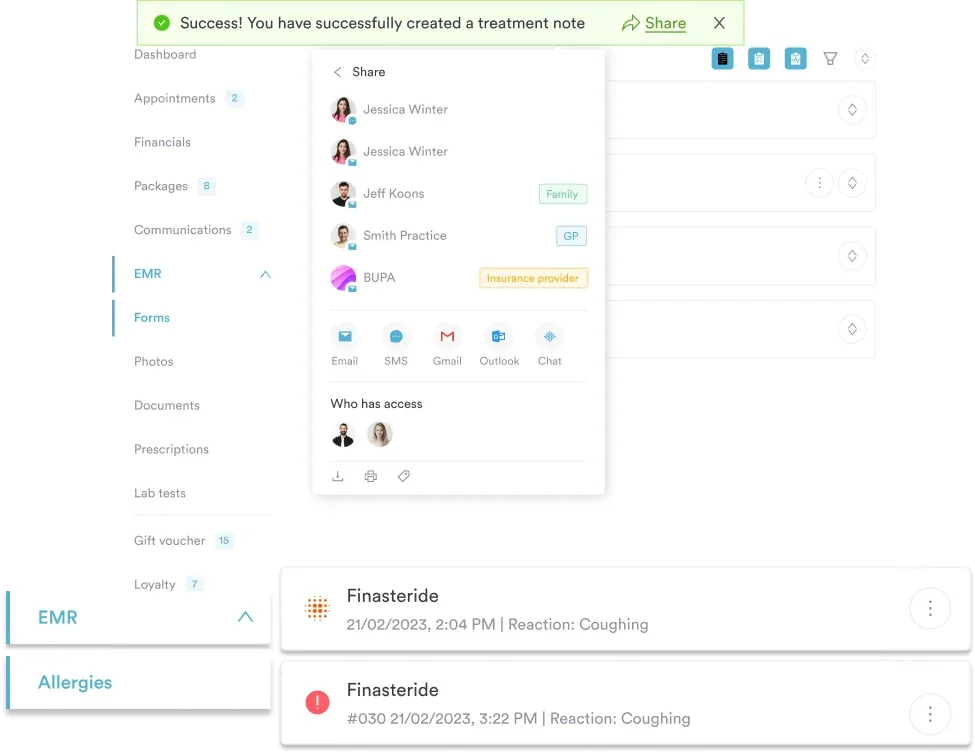

Pabau’s claims management tools help providers submit E29.8 and related diagnostic codes with the documentation support needed to clear payer edits on first submission.

Comparing the best EHRs for primary care pays off when you track chronic conditions like these long term.
The Excludes1 note attached to the E29 category is one of the most consequential coding rules for this code family. Excludes1 means the listed conditions are mutually exclusive with E29.8 and cannot appear on the same claim.
The following conditions are Excludes1 from E29 (including E29.8):
Klinefelter syndrome is the exclusion coders encounter most often. It is a chromosomal condition (Classified under Q codes) rather than a primary endocrine disorder, so submitting E29.8 alongside any Q98.0, Q98.1, or Q98.4 code on the same claim will generate an automatic Excludes1 denial.
The chromosomal diagnosis takes precedence in coding hierarchy when Klinefelter syndrome is documented. Additional endocrine manifestations such as hypogonadism in a Klinefelter patient are captured via the Q98.x code rather than E29.x.
There are no Excludes2 notes specific to E29.8, meaning many secondary diagnoses (such as infertility, erectile dysfunction, or metabolic conditions) can be coded alongside E29.8 when clinically documented and separately managed. Review the CDC/NCHS ICD-10-CM web tool to confirm any secondary code combination before submission.
For practices using claims management software with built-in edit checks, an Excludes1 conflict will surface before submission rather than after, preventing the denial cycle entirely. Automated coding validation at the point of claim creation is the most reliable way to catch these errors before they reach the payer.
When a patient has both Klinefelter syndrome (Q98.x) and secondary hypogonadism managed as a separate clinical condition, consult the ICD-10-CM Official Guidelines for Coding and Reporting for sequencing rules. The chromosomal code should typically sequence first, and secondary endocrine manifestations are captured through the Q98.x entry rather than additional E29.x codes.
E29.8 groups into the endocrine-disorder MS-DRGs for inpatient reimbursement purposes. The code is not on the CMS Present on Admission (POA) exempt list, so when E29.8 appears on an inpatient claim, providers must report a POA indicator alongside it. Accurate medical billing workflows capture that indicator at the point of documentation.
For outpatient claims, the MS-DRG assignment is not directly applicable. E29.8 functions as a supporting diagnosis code in most outpatient endocrinology encounters, pairing with the evaluation and management CPT code that reflects the complexity of the visit. The CMS Physician Fee Schedule lookup allows providers to verify reimbursement rates for the associated E/M CPT code by payer and location.
Common CPT codes used alongside E29.8 include:
Practices managing hormone and endocrine patients benefit from functional medicine practice workflows that connect lab ordering, result review, and coding in a single patient record, so what a clinician observes reaches the coder in full at billing time.
Accurate E29.8 documentation requires the provider’s clinical note to establish three things: That a testicular endocrine dysfunction is present, that it is neither hyperfunction nor hypofunction, and that a chromosomal condition (Klinefelter) has been ruled out or is not the primary diagnosis.
Without all three elements in the note, coders may default to E29.9 (Unspecified), which is technically defensible but clinically suboptimal. Clinical notes for this code should include:
Facilities with digital intake forms that capture structured endocrine history, medication lists, and lab reference ranges give coders a more complete picture at claim time. When these details flow onto the superbill, query volume drops and the revenue cycle moves faster for these encounters.
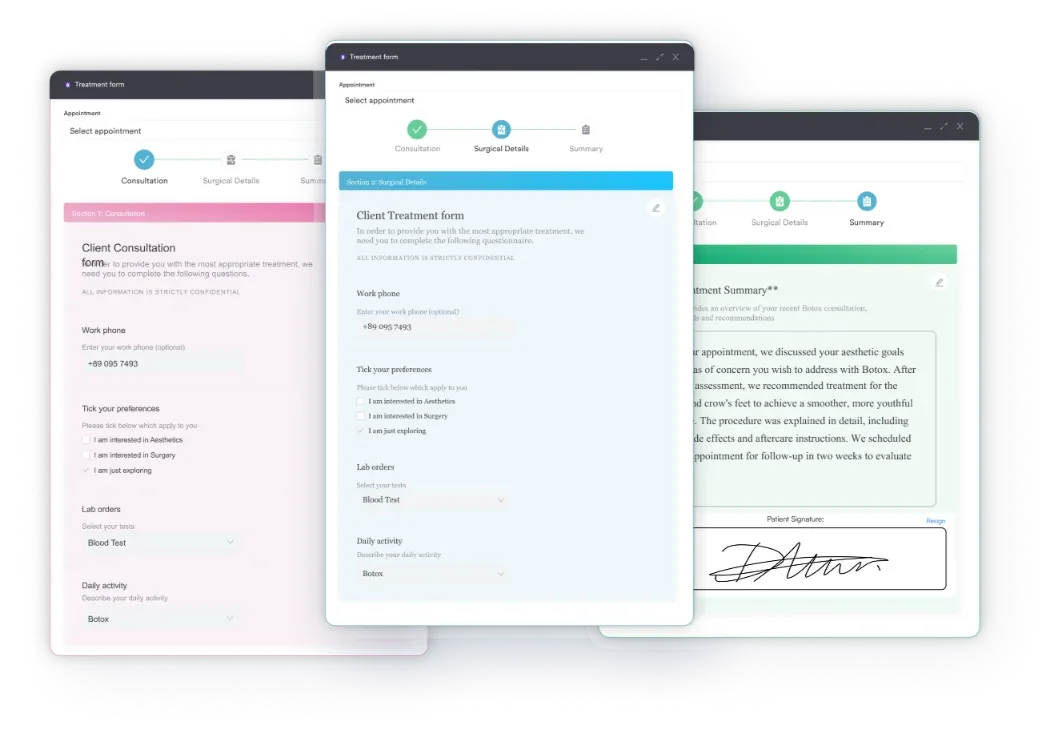
Pabau’s approach to HIPAA compliance requirements for clinical documentation includes structured templates that can be configured for endocrine specialties, ensuring the minimum required elements are captured before the encounter closes. For practices that bill Medicare and Medicaid under CMS guidelines, consistent documentation standards directly reduce audit risk.
Claim denials for testicular dysfunction codes are almost always preventable. E29.8 is a specific, billable code when the clinical documentation establishes an endocrine dysfunction outside the hyperfunction and hypofunction categories, and when Klinefelter syndrome has been correctly separated into the Q98.x code set.
The Excludes1 restriction is the single most common source of denials for this code family, and structured coding workflows catch these conflicts before submission. Pairing that with the right medical billing software keeps clean claims moving.
For practices managing male endocrine conditions. To see how Pabau handles diagnostic coding workflows across endocrinology and men’s health specialties, book a demo.

Need guidance on another endocrine diagnostic code? ICD-10 code E02 walks through the billable status, excludes notes, and documentation requirements for subclinical iodine-deficiency hypothyroidism.
Coding an adrenal or pituitary presentation? ICD-10 code E24.4 covers alcohol-induced pseudo-Cushing’s syndrome, including sequencing and documentation requirements.
Billing a sternum fracture without surgery? Sternum fracture billing guide covers the RVU value, global period, and when modifier 24 applies.
Coding benign endocrine gland neoplasms? ICD-10 code D35.7 explains the billable status and documentation requirements for benign neoplasm of other specified endocrine glands.
ICD-10 code E29.8 is used to diagnose and bill for other testicular dysfunction, specifically conditions that affect testicular endocrine function but do not meet the criteria for testicular hyperfunction (E29.0) or testicular hypofunction (E29.1). Its primary clinical synonym is Mullerian inhibiting factor deficiency.
Yes, E29.8 is a billable and specific ICD-10-CM code, valid for reimbursement claims with dates of service on or after October 1, 2015. It remains active through FY2026 and is approved for male patients only.
E29.1 (Testicular hypofunction) applies when low testosterone or primary hypogonadism is the documented primary diagnosis. E29.8 applies when a testicular endocrine disorder is documented but does not fit the hyperfunction or hypofunction definitions, such as Mullerian inhibiting factor deficiency.
Conditions coded under E29.8 include Mullerian inhibiting factor deficiency (Persistent Mullerian duct syndrome) and other specified testicular endocrine dysfunctions not captured by E29.0 or E29.1. Chromosomal conditions such as Klinefelter syndrome are specifically excluded via the Excludes1 note.
E29.8 groups into the endocrine-disorder MS-DRGs used for inpatient reimbursement. It is not on the CMS Present on Admission (POA) exempt list, so a POA indicator is required whenever E29.8 appears on an inpatient claim.
Mullerian inhibiting factor (MIF) deficiency, also called persistent Mullerian duct syndrome, is a rare condition in which male patients fail to produce sufficient anti-Mullerian hormone, resulting in retention of Mullerian duct structures despite a normal male karyotype. It is the primary clinical synonym for ICD-10 code E29.8.
ICD-10 code E29.8 (Other testicular dysfunction) is the diagnosis code that covers Mullerian inhibiting factor deficiency, the disorder in which a male patient produces insufficient anti-Mullerian hormone. Because it is the primary clinical synonym recorded under E29.8, a documented anti-Mullerian hormone deficiency in a genetically male patient is reported with this code.