

ICD-10 Code S42.444P: Medial epicondyle fracture, right humerus
ICD-10 Code S42.444P: full descriptor and code validity ICD-10 Code S42.444P car...

Last Updated: Oct 13, 2026
Billable Code Specific Code
E02 is the billable ICD-10-CM code for subclinical iodine-deficiency hypothyroidism.
The Centers for Medicare and Medicaid Services (CMS) and the National Center for Health Statistics (NCHS) maintain the ICD-10-CM code set. E02 has been valid and billable since October 1, 2015, the date ICD-10-CM replaced ICD-9-CM for all U.S. payer claims.
Let Pabau's smart automation suggest the right codes, reduce claim denials, and keep your practice compliant—effortlessly.
Automate repetitive tasks and focus on what matters most—your patients.
Reduce coding errors and ensure compliance with the latest regulations.
Clean claims, fewer denials, and faster reimbursements.
Powerful insights and reporting to help your practice thrive.
HIPAA compliant SOC 2 certified GDPR-compliant Trusted by 4,000+ clinics worldwide

ICD-10 Code E02 identifies subclinical iodine-deficiency hypothyroidism: elevated TSH with normal free T4, caused by insufficient iodine intake.
E02 is a fully billable, specific ICD-10-CM code valid for reimbursement on claims dated October 1, 2015 or later.
E03 (Other hypothyroidism) carries a Type 1 Excludes note for E02, so these two codes cannot be assigned together for the same episode.
Pabau’s claims management software and digital intake forms help endocrinology and primary care practices document and submit E02 diagnoses accurately.
ICD-10 Code E02 describes subclinical iodine-deficiency hypothyroidism, a condition in which the thyroid gland produces insufficient thyroid hormone because of inadequate dietary iodine. The word “subclinical” is key: the patient’s free thyroxine (free T4) remains within the reference range, but thyroid-stimulating hormone (TSH) is elevated because the pituitary is compensating for borderline thyroid output.
Clinically. The diagnosis emerges from laboratory findings rather than a classic clinical presentation, which is why precise coding matters. E02 sits within ICD-10-CM block E00-E07 (Disorders of thyroid gland), itself a subset of chapter E00-E89 (Endocrine, nutritional and metabolic diseases).
Because E02 has no child codes, coders do not need to search for a more specific subcategory. The code itself is the most precise level available in ICD-10-CM for this condition.
Subclinical hypothyroidism describes an elevated TSH with a normal free T4. The correct ICD-10-CM code depends on what the record identifies as the cause, which is exactly where E02 and E03.9 diverge:
Clinicians sometimes record this pattern as “compensated hypothyroidism,” an older synonym for the same high-TSH, normal-T4 state. The label does not change the rule: match the code to the documented etiology, and reserve E02 for iodine deficiency. Subclinical hypothyroidism found during pregnancy follows obstetric coding conventions instead, covered in the FAQ below.
Selecting ICD-10 Code E02 requires clinical evidence of both the subclinical pattern and an iodine-deficiency etiology. Using E02 without supporting documentation creates a coding-without-basis risk during payer audits.
The standard laboratory profile for subclinical hypothyroidism, as described in American Thyroid Association (ATA) clinical guidelines, involves elevated serum TSH with a free T4 within the normal reference interval. Specific TSH cutoff thresholds vary by laboratory and guideline version; clinicians should document the specific TSH value and the laboratory’s reference range in the encounter note.
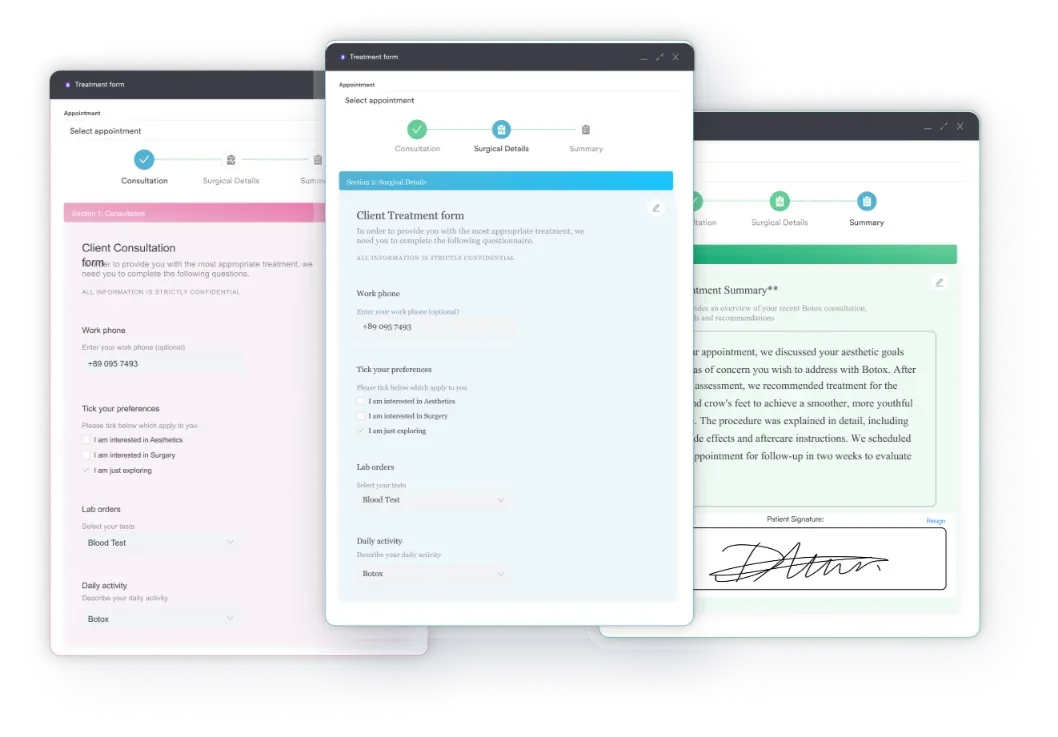
Documentation must connect the lab findings to iodine deficiency. A note stating “subclinical hypothyroidism, etiology consistent with iodine deficiency based on dietary history and urinary iodine assessment” is far stronger than a note that records only the TSH value. Practices using structured digital intake forms can collect dietary and supplementation history at registration, giving providers the data they need to document iodine-deficiency etiology at the time of the encounter.
Document iodine status explicitly. Reference a specific iodine assessment method (urinary iodine excretion measurement, validated dietary recall, or geographic population data) in the encounter note. This one addition protects E02 from downcoding to E03.9 during a payer review.
The most common coding error for subclinical thyroid conditions is assigning E03.9 (Hypothyroidism, unspecified) when a more specific code is available. E02 should be used whenever the clinical record supports both the subclinical pattern and an iodine-deficiency cause. Here is how E02 compares to the codes coders most frequently consider alongside it.
E03.9 covers hypothyroidism of unspecified or unknown cause. It is appropriate only when the etiology cannot be determined from available clinical information. The ICD-10-CM Official Guidelines, maintained by CDC/NCHS, direct coders to use the most specific code supported by documentation. When the record documents iodine deficiency as the cause and the lab pattern is subclinical, E02 is required over E03.9.
Furthermore, E03 carries a Type 1 Excludes note that explicitly lists subclinical iodine-deficiency hypothyroidism (E02). Type 1 Excludes means the two codes cannot represent the same condition and must not be used together for the same episode of care. This is a hard coding rule, not a recommendation. Practices preparing for the transition beyond ICD-10 can also review the ICD-11 hypothyroidism coding guide to see how the same distinction is handled in the newer classification.
Payers reviewing an E02 claim expect the medical record to connect three elements: the lab findings, the clinical interpretation, and the identified etiology. Missing any one of these creates a vulnerability in the documentation.
Structured clinical record templates keep documentation complete. Practices running clinical record documentation through Pabau can build thyroid-specific intake and encounter note templates that prompt providers to capture all three required elements before the chart is signed.
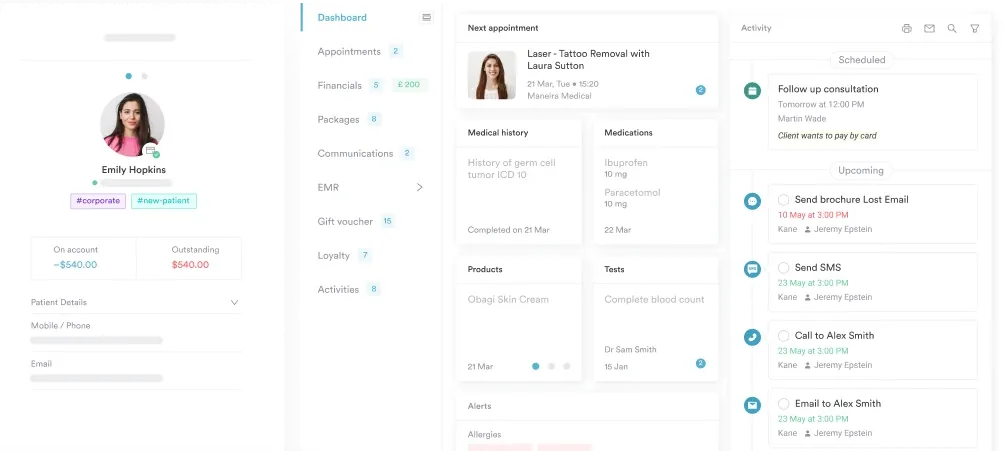
For coding teams that manage ICD-10 documentation across multiple condition types, consistent note structure matters as much as the content itself. Standardizing templates with clinical documentation software keeps encounter notes complete and audit-ready across every diagnosis your team codes.

Pabau helps endocrinology and primary care practices capture the documentation needed for accurate ICD-10 coding, from structured intake forms through to claim submission.

E02 is a billable, specific ICD-10-CM code. Reimbursement claims with a date of service on or after October 1, 2015 may use E02 to indicate this diagnosis for insurance purposes. No additional specificity is required because E02 is a terminal code with no subcategories. Injury codes work differently. ICD-10 code S92.209K carries a seventh character that marks the encounter type, which E02 does not require.
Practices submitting thyroid-related claims should verify payer-specific medical necessity policies, as some payers require documentation of symptom burden or repeat lab confirmation before approving certain monitoring frequencies. Pabau’s claims management software allows coding teams to attach diagnosis codes directly to encounters and flag claims that need additional documentation before submission.
Practices maintaining historical records or handling late-filed claims from before October 1, 2015 will encounter ICD-9-CM code 244.8 (Other specified acquired hypothyroidism). This code maps approximately to ICD-10-CM E02. The crosswalk is approximate, not exact: 244.8 covered a broader range of specified acquired hypothyroidism cases, while E02 is restricted specifically to the iodine-deficiency subclinical pattern. Confirm the General Equivalence Mapping against the official CMS GEMs file when converting historical claims.
Review claims denied under E03.9 for patients whose charts document iodine deficiency. If the documentation supports E02, a corrected claim with the specific code may reverse the denial. Run this audit quarterly using your billing software’s denial reporting.
Understanding the official coding notes for E02 prevents sequencing errors that trigger claim rejections. The key notes appear in the ICD-10-CM tabular list and apply to every E02 claim.
The E03 category (Other hypothyroidism) carries a Type 1 Excludes note for subclinical iodine-deficiency hypothyroidism (E02). This is an absolute exclusion: E02 and any E03.x code cannot be assigned together for the same condition in the same episode. If a patient has both overt hypothyroidism of another type and a separately documented subclinical iodine-deficiency component, consult your coding supervisor before assigning both codes, as the clinical distinction must be clearly established.
E00 (Congenital iodine-deficiency syndrome) and E01 (Iodine-deficiency related thyroid disorders) precede E02 in the block. The block progression reflects severity and type: E00 covers congenital presentations, E01 covers acquired iodine-deficiency thyroid disorders that are not specifically subclinical hypothyroidism, and E02 covers the specific subclinical pattern. Coders should confirm whether the patient’s presentation is congenital or acquired before selecting within this block. When a nodule or goiter prompts further workup such as a core biopsy of the thyroid gland, sequence the condition primarily driving the visit in the principal diagnosis position.
Unlike some codes in the E00-E07 block, E02 does not carry a “Use Additional Code” instruction. Coders do not need to add a code for intellectual disability or any other associated condition unless that condition is separately documented and clinically relevant to the encounter. When goiter is also present, evaluate whether E01 (which includes goiter presentations) is more appropriate than E02. A discrete thyroid nodule may instead point to a benign neoplasm of the endocrine glands (D35.7) or, when malignancy is confirmed.
Accurate ICD-10 coding does not happen at claim submission. It begins at the intake stage, runs through the encounter note, and ends at the billing review. Practices serving patients with thyroid and metabolic conditions need systems that support this documentation chain without adding manual steps for providers.
Endocrinology and primary care practices managing iodine-deficiency-related diagnoses can use metabolic health EMR tools designed for this clinical context. Structured encounter templates prompt providers to document TSH values, free T4 results, and iodine status at the time of the visit, not during a retrospective chart review. The same templates support comorbid metabolic diagnoses these patients often carry, such as type 2 diabetes (E11.9).
Practices focused on root-cause and nutritional medicine approaches to thyroid health may also find functional medicine software a natural fit for tracking iodine supplementation protocols alongside ICD-10 coding requirements. Pabau’s AI-assisted clinical documentation can capture provider dictation and structure it into compliant encounter notes, reducing the time between the clinical decision and the documented rationale that supports the diagnosis code.

Billing a drug-delivery device insertion? Drug-delivery device insertion billing guide explains why this add-on code needs a primary procedure and flags sibling code mix-ups.
Billing a tendon graft harvest? Tendon graft billing guide covers the 2026 RVUs, payment rate, and modifiers for distant-site tendon grafts.
Billing an unlisted musculoskeletal procedure? Unlisted procedure billing guide explains why the special report needs a comparable code and what payers require.
Subclinical iodine-deficiency hypothyroidism is frequently under-coded because coders default to E03.9 when the documentation does not explicitly name iodine deficiency as the cause. Getting E02 right starts with provider education on documenting iodine status and TSH-plus-free-T4 patterns in every relevant encounter note.
Pabau’s structured intake forms and AI documentation tools help clinical teams capture the three required documentation elements automatically, reducing coding errors and denied claims. To see how Pabau supports thyroid and metabolic health practices from intake through billing, book a demo.
Subclinical iodine-deficiency hypothyroidism is a condition in which insufficient dietary iodine causes mild underactivity of the thyroid gland. TSH is elevated above the laboratory reference range, but free T4 remains normal, meaning the patient has no overt thyroid failure. The diagnosis is typically detected through routine thyroid panel testing rather than patient-reported symptoms.
Yes. ICD-10 Code E02 is a fully billable and specific ICD-10-CM diagnosis code. It is valid for reimbursement claims with a date of service on or after October 1, 2015, and remains current through the 2026 fiscal year. No additional specificity is required because E02 has no child subcategories.
Use E02 when the clinical record supports both a subclinical lab pattern (elevated TSH, normal free T4) and an iodine-deficiency etiology. Use E03.9 only when the cause of hypothyroidism is unknown or unspecified from the documentation. Note that E03 carries a Type 1 Excludes note for E02, so the two codes cannot be assigned together for the same condition.
ICD-10 Code E02 maps approximately to ICD-9-CM code 244.8, Other specified acquired hypothyroidism. The crosswalk is approximate because 244.8 covered a broader set of acquired hypothyroidism cases, while E02 is specific to subclinical iodine-deficiency hypothyroidism.
E02 itself carries no Type 1 or Type 2 Excludes notes and no “Use Additional Code” instruction. The critical exclusion applies at the E03 level: the E03 category explicitly excludes subclinical iodine-deficiency hypothyroidism (E02), meaning E02 and any E03.x code cannot be used together for the same condition in the same encounter.
Subclinical hypothyroidism identified during pregnancy is not reported with E02. Code it under the obstetric convention for endocrine disorders complicating pregnancy (category O99.28-) alongside the specific thyroid diagnosis, and follow current ATA pregnancy guidance, since the TSH thresholds and management differ from the non-pregnant population.
Yes. Compensated hypothyroidism is an older clinical term for the subclinical pattern of an elevated TSH with a normal free T4. It maps to the same ICD-10 codes: E03.9 when the cause is unspecified, or E02 when iodine deficiency is documented.




