

HCPCS code E0198: Water pressure pad billing guide
HCPCS code E0198 is a water pad for a standard mattress HCPCS code E0198 is the ...

Last Updated: Oct 13, 2026
Billable Code Specific Code
S42.012P is the billable ICD-10-CM code for anterior displaced fracture of sternal end of left clavicle, subsequent encounter for fracture with malunion.
Malunion is where these claims come unstuck. Payers want the word itself in the provider's note, not a hint of it buried in the imaging. A report that reads "healed with angulation" will not carry the P character on its own.
The rest of the code is mechanical. Side, site, displacement direction, and encounter type all sit in the descriptor. Each one has to appear somewhere in the chart.
Let Pabau's smart automation suggest the right codes, reduce claim denials, and keep your practice compliant—effortlessly.
Automate repetitive tasks and focus on what matters most—your patients.
Reduce coding errors and ensure compliance with the latest regulations.
Clean claims, fewer denials, and faster reimbursements.
Powerful insights and reporting to help your practice thrive.
HIPAA compliant SOC 2 certified GDPR-compliant Trusted by 4,000+ clinics worldwide

S42.012P describes an anterior displaced fracture of the sternal end of the left clavicle. It applies at a follow-up visit, after the bone healed out of position.
The 7th character P means malunion. Nonunion is a different finding and takes K, so the two are never interchangeable.
The note must state four things: left side, sternal end, anterior displacement, and malunion at a subsequent encounter.
Malunion must come from the treating provider. A coder cannot read it off an imaging report alone.
Practice management software like Pabau keeps records, coding, and claims in one system. That makes follow-up billing quicker to check and submit.
Yes, S42.012P is a billable and specific ICD-10-CM code. It is valid for the FY2026 code set, which took effect on October 1, 2025.
Practices can report it on Medicare, Medicaid, and commercial claims. The CMS ICD-10 codes page carries the current release files.
The descriptor packs five separate clinical facts into eight characters. Read them one at a time and the code stops looking arbitrary.
Charts rarely use that exact wording. You will see “malunited left medial clavicle fracture” or “healed left sternoclavicular fracture in malposition” instead. Either phrasing works, as long as the four coded facts are all there.
The 7th character tells the payer where the patient sits in the healing process. It has nothing to do with how many times the provider has seen them.
Category S42 uses the plain closed and open pair at the start. A covers a closed fracture on first treatment, and B covers an open one, as in S42.009B.
You will never see Q or R in the shoulder chapter, though. Those extra malunion characters follow the Gustilo open fracture classification. It applies to the forearm, femur, and lower leg only. S72.452Q is one of them, and it is a useful contrast when you work across body regions.
Both characters describe a fracture that did not end well, but they are not interchangeable. Nonunion means the bone gave up on healing, and it takes the K character.
Malunion means it healed badly instead, which is what the P character records. That difference drives both the code and the treatment plan.
Radiology often sits on the fence. Reports describing “abnormal healing” or “residual angulation” support neither character by themselves.
Query the provider before you pick one, because assigning P without the word malunion is exactly what auditors look for. The shoulder girdle carries its own nonunion codes too, such as S42.131K.
Parent codes carry instructional notes, so it pays to know the branch you are standing on. The path runs like this:
One fracture can move through four or five codes before the file closes. The base code stays put and the 7th character does the work.
Move to a different part of the collarbone and the base code changes with it. A late effect at the outer end, for instance, belongs to S42.032S. Site, side, and healing status each shift the code independently.
When imaging shows the clavicle healed out of position, read the surgeon’s own words before you code. “Malunion” or “healed in malposition” supports P. “Offset alignment” on its own does not. Send a query instead, and hold the claim until it comes back signed.
A seven-character trauma code fails on one missing detail. For S42.012P, four things need to be explicit in the note before you assign it.
Those four facts are usually scattered across the operative note, the follow-up note, and the imaging report. Pulling them together is far quicker when patient records and imaging sit in one system rather than three.
Work through them in order and the character picks itself.
Two traps hide inside that sequence. First, a patient who put off care still gets the initial encounter character, even if the injury happened months ago. Second, a fresh face in your practice does not reset anything. Treatment phase decides the character, not the relationship with the provider. Patients paying up front and claiming later need a superbill, which itemizes the service, the code and the charge. A code lookup that lives beside the desk gets used; one buried in a shared drive does not.
Other injuries treated at the same visit keep their own characters. A bruised upper arm coded as arm coded as S40.022A can sit happily on the same claim as a malunion code.
Coding is one stop on a longer trip. Knowing the whole route tells you where a clavicle claim tends to stall.
A rejection at step four never reaches a claims examiner, so it is cheap and fast to correct. Denials at step five cost far more, because they usually need records attached and a written appeal.
In smaller musculoskeletal teams, such as an osteopathy practice, the same person often codes the visit and chases the rework.
Five quick checks catch most of what comes back. Work through them at charge entry, not after the denial arrives.
Four errors account for most rework on healed fracture claims.
Fracture coding rules live in Section I.C.19 of the FY2026 ICD-10-CM Official Guidelines. Four of them shape how you use S42.012P.
One more rule sits outside Section I.C.19 and matters just as much. Code assignment follows the provider’s documentation, so malunion is never something a coder infers.
Rehab teams feel this constantly. A therapist, or a clinician in a chiropractic practice, can document lost range of motion in a healed shoulder. That note supports the therapy claim, but it cannot establish the malunion behind it.
Build one query template for fracture healing status and reuse it. Fill in the site, the side, and the phrase the radiologist used. Then ask the provider to confirm routine healing, delayed healing, nonunion, or malunion. Sending it the same day you code cuts the turnaround to hours.
Most of the rework on a code like this is admin, not clinical. The follow-up note lives in one system, the coder works in another, and the claim leaves through a third. Every handoff is a chance for the malunion wording to go missing.
Practice management software like Pabau closes that distance. Patient records, treatment notes, and billing sit in the same platform. The coder reads the signed follow-up note without exporting anything, and nobody rekeys data between the chart and the charge.
From there, our claims management software submits the claim and tracks its progress. It also validates the insurer details before the claim leaves your practice. When something does bounce, the reason code and the note sit side by side. Your biller can correct and resubmit the same day.
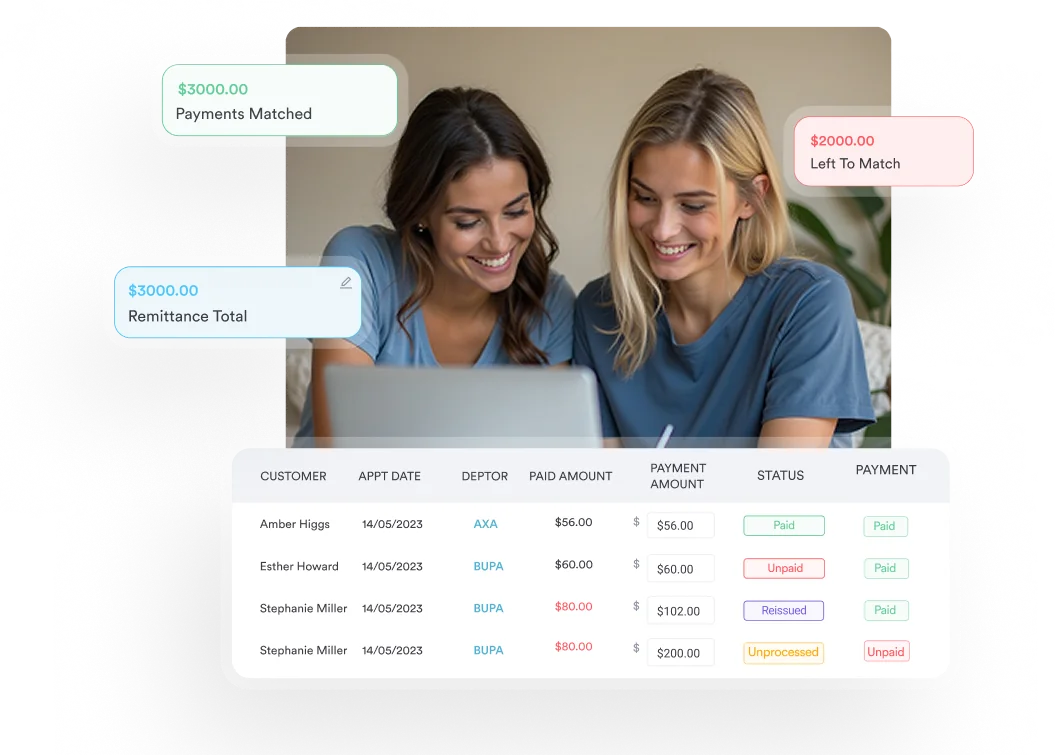

Pabau brings patient records, treatment notes, and billing into one platform. Claims management then submits each claim, tracks its progress, and validates the insurer details before it leaves your practice.

S42.012P asks for three anatomical facts and one clinical judgment. Those facts are almost always in the chart already. The judgment, malunion, is the single thing a coder can never supply.
So the fix sits upstream of billing. Agree with your surgeons on the word they will use when a fracture heals crooked. Query the ones who reach for something vaguer. Do that once and this code becomes data entry.
Book a demo to see how Pabau keeps notes, coding, and claims for follow-up visits in one system.

Coding a clavicle procedure at the same visit? CPT code 23146 covers excision of a bone cyst from the clavicle or scapula with an allograft.
Billing surgery after a shoulder injury? CPT code 23670 covers open treatment of a shoulder dislocation with a greater tuberosity fracture.
Need the nonunion code near the elbow? S42.442K covers a displaced medial epicondyle fracture that failed to join.
Working with open fracture healing characters? S72.334N shows how the nonunion characters work once Gustilo typing applies.
Billing a soft tissue localization device? Soft tissue localization device placement guide covers the facility rate differences and the NCCI edits coders run into.
Yes. S42.012P is a diagnosis code, so it does not create a charge on its own. Pair it with the evaluation and management code or procedure code for that visit. The diagnosis then supports medical necessity for the service you billed.
Yes, when the malunion is the reason for the visit. Outpatient rules put the condition chiefly responsible for the encounter first. If the patient came in for something else that day, that problem leads instead.
No. The 7th character follows the treatment phase rather than the calendar. A patient seen two years after the injury is still a subsequent encounter, provided active treatment has finished.
S42.013P covers an unspecified clavicle with malunion, but it is a last resort. Payers question unspecified laterality when imaging clearly shows a side. Query the provider first and use the specific code.
You can, while the injury is still being treated, using the subsequent encounter 7th character on the external cause code. It never leads the claim, so S42.012P stays ahead of it.



