ICD-10 Code S42.444P: Medial epicondyle fracture, right humerus
ICD-10 Code S42.444P: full descriptor and code validity ICD-10 Code S42.444P car...

Last Updated: Oct 13, 2026
Billable Code Specific Code
D62 is the billable ICD-10-CM code for acute posthemorrhagic anemia.
Let Pabau's smart automation suggest the right codes, reduce claim denials, and keep your practice compliant—effortlessly.
Automate repetitive tasks and focus on what matters most—your patients.
Reduce coding errors and ensure compliance with the latest regulations.
Clean claims, fewer denials, and faster reimbursements.
Powerful insights and reporting to help your practice thrive.
HIPAA compliant SOC 2 certified GDPR-compliant Trusted by 4,000+ clinics worldwide

ICD-10 code D62 is the billable ICD-10-CM code for acute blood loss anemia (acute posthemorrhagic anemia), valid for reimbursement since 2016.
D62 applies only to anemia from acute blood loss. Chronic blood loss anemia codes separately as D50.0, and the two cannot be billed together.
Postoperative anemia due to surgical blood loss requires explicit physician documentation linking the anemia to the specific blood loss event before D62 can be assigned.
Pabau’s claims management software helps practices track D62 documentation requirements, reducing audit risk and denial rates for blood loss anemia claims.
Under the WHO’s ICD-10 classification system, D62 sits within the D60-D64 block covering aplastic and other anemias and other bone marrow failure syndromes. The parent chapter is D50-D89, Diseases of the blood and blood-forming organs. This classification reflects the mechanism: D62 is not a nutritional deficiency anemia or a hemolytic process. It is specifically the body’s response to sudden, significant blood loss, typically from gastrointestinal bleeding, trauma, or surgical hemorrhage.
The CDC/NCHS ICD-10-CM tool confirms D62 as a billable, specific code valid for all code years from 2016 through 2026. It requires no further specification, making it a terminal code that can be submitted directly for reimbursement without additional digits.
Clinically, acute blood loss anemia shows up as a sudden hemoglobin drop, often 2 g/dL or more within 24 hours, alongside tachycardia, pallor, and an active bleeding source. That rapid onset is what separates it from the gradual decline of chronic blood loss anemia, and it is the picture the record must support before D62 is assigned.
ICD-10 Code D62 is a billable, specific code. Payers accept it for reimbursement without requiring a more granular sub-code. Here is a quick reference to its position in the ICD-10-CM hierarchy:
Practices billing D62 through Medicare should verify claim requirements via the CMS ICD-10 codes page, which publishes annual updates to the tabular list, official guidelines, and addenda. This is the primary source for confirming D62’s continued validity in each fiscal year’s code set. Beyond code validity, Medicare coverage for a service can depend on frequency limits rather than medical necessity alone.
The most common coding error with acute blood loss anemia is selecting the wrong code entirely. ICD-10 Code D62 carries an Excludes1 note excluding congenital anemia from fetal blood loss (P61.3). An Excludes1 notation means the two conditions are mutually exclusive: D62 and P61.3 cannot be reported on the same claim.
The distinction between D62 and D50.0 is equally important. Coders frequently encounter both codes on the same chart and need to choose correctly. Our guide to ICD-10 code D50.0 (chronic blood loss anemia) details how the acute vs. chronic distinction plays out on the chronic side of blood-loss coding.
D50.0’s Excludes1 note explicitly excludes acute posthemorrhagic anemia (D62), reinforcing that coders must base code selection on the physician’s documented characterization of the blood loss as acute or chronic.
Review the physician’s history and physical before assigning D62 vs D50.0. The trigger word is ‘acute.’ If the note says ‘anemia secondary to chronic GI blood loss,’ code D50.0. If it documents ‘acute blood loss anemia following colectomy,’ code D62. Do not infer acuity from lab values alone. Physicians must document it explicitly.
A lab software integration means counts and immunology panels reach the patient record as soon as they’re ready.
Payer audits targeting D62 typically focus on one issue: was the blood loss event documented as acute, and did the physician link it explicitly to the resulting anemia? A lab value showing a drop in hemoglobin alone does not justify D62 assignment. The clinical note must connect the dots.
Practices using patient record management tools can structure clinical notes to capture these linkage statements consistently, reducing the incomplete documentation that triggers denials. Structured templates make it easier for clinicians to include the required language without slowing down the encounter.
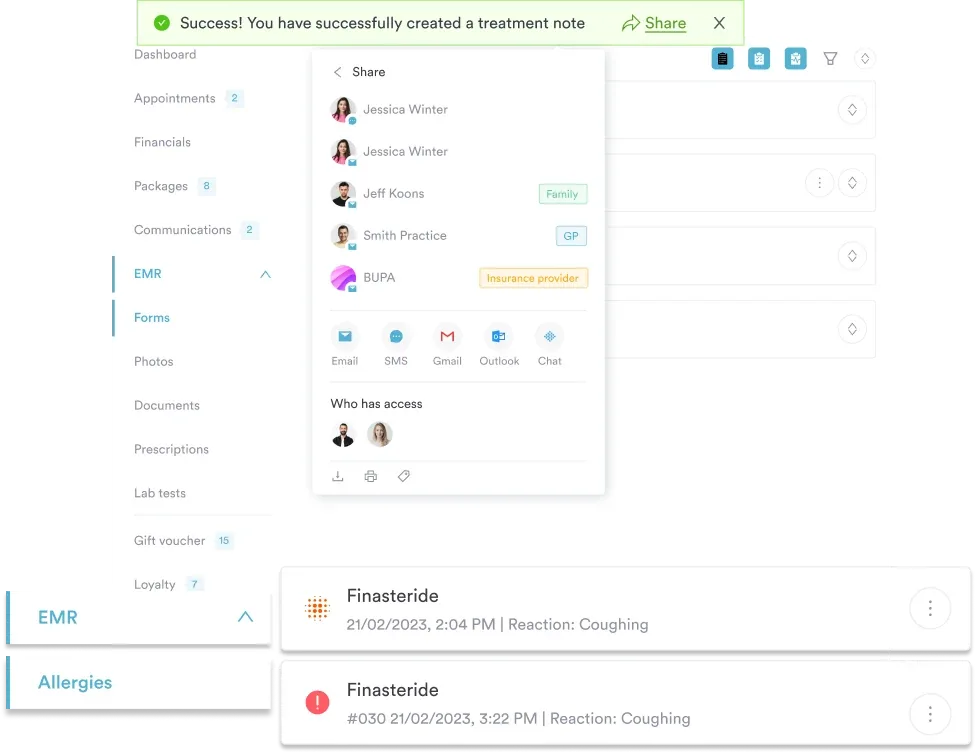
Practices using digital intake forms can pre-populate structured fields for blood loss events during perioperative or emergency encounters, creating a documentation trail that supports ICD-10 Code D62 assignment from the first clinical touch point.
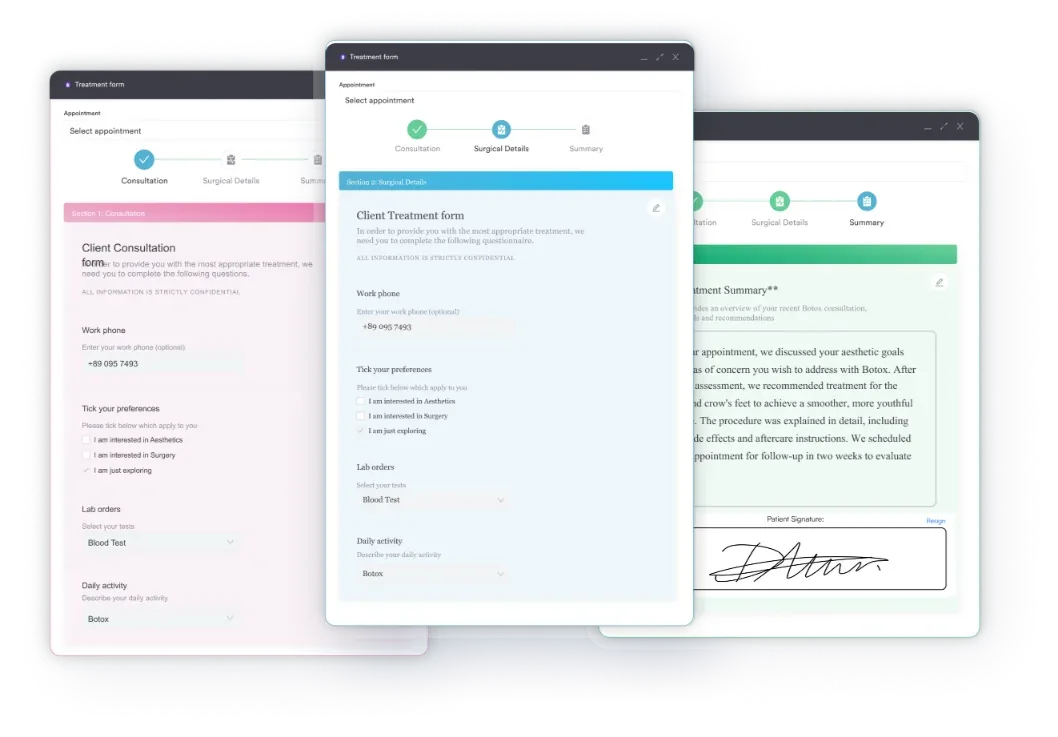
Postoperative anemia is one of the most frequently billed applications of D62. It is also one of the most frequently denied. The ICD-10-CM official guidelines are clear: postoperative anemia due to acute blood loss is coded D62 only when the physician explicitly documents that the anemia is a result of surgical blood loss. A generic diagnosis of “postoperative anemia” without a causal qualifier defaults to an anemia NOS code, not D62.
Surgical specialties such as orthopedics, general surgery, and vascular surgery carry the highest volume of D62 claims. For practices in those settings.

Pabau helps surgical and medical practices structure clinical notes that support ICD-10 Code D62 and other complex diagnoses, with built-in claims management to track denial patterns and fix documentation issues before they become write-offs.

Sequencing D62 correctly matters for MS-DRG assignment and reimbursement level. The question coders must answer: is the anemia why the patient was admitted, or did it develop as a consequence of another condition being treated?
A significant upper GI bleed is a common driver of that decision; coding the bleeding source itself.
D62 is the principal diagnosis when acute blood loss anemia is the primary reason for the hospital admission or encounter. A patient admitted for a significant upper GI bleed resulting in hemoglobin of 6.5 g/dL, where the primary clinical focus is managing the anemia and the hemorrhage source, typically supports D62 as principal.
D62 more commonly appears as a secondary diagnosis. A patient admitted for a total hip replacement who develops postoperative anemia requiring transfusion: the principal diagnosis is the underlying surgical condition, and D62 is coded as a comorbidity or complication. Accurate secondary diagnosis reporting affects MS-DRG complexity and impacts the overall reimbursement rate for the encounter.
Practices relying on automated billing workflows can configure rule sets that flag encounters where a transfusion procedure code appears without a supporting blood loss diagnosis, prompting coders to review whether D62 should be added as a secondary code.
Acute blood loss anemia rarely codes alone. It usually rides alongside the bleeding source or an obstetric condition, and the sequencing decides whether the claim pays. These are the multi-code scenarios coders hit most, with the pairing and sequencing for each.
The scenario coders ask about most is postpartum acute blood loss anemia. The ICD-10 code for acute blood loss anemia postpartum is O90.81 sequenced first, with D62 added as a secondary code, because the puerperium code carries obstetric sequencing priority. A hemoglobin drop after a vaginal or cesarean delivery still needs the physician to document the loss as acute before D62 applies. Acute-on-chronic blood loss anemia is the other frequent query: because the Excludes1 note rules out billing D62 and D50.0 together, it always comes back to what the physician documents for the current encounter.
Elsewhere in ICD-10-CM, acute on chronic gets its own combination code. K81.2 captures acute cholecystitis with chronic cholecystitis in a single assignment, rather than forcing a choice between two codes.
Understanding where D62 sits in relation to other anemia and hemorrhage codes prevents miscoding and ensures the most specific code is selected. Here is the core code set coders encounter alongside ICD-10 Code D62:
For additional coding references on related blood disorders, our ICD-10 code D77 blood disorder coding guide walks through how manifestation codes interact with parent conditions, a useful companion when working through D62’s full code hierarchy of parent codes, sibling codes, and applicable notes.
When pairing D62 with procedure codes for blood transfusion, verify that the transfusion code reflects the product administered (packed red blood cells vs whole blood vs fresh frozen plasma) and that the clinical indication in the record supports D62 as the documented reason for transfusion. Pairing a transfusion code without a supporting diagnosis code for the blood loss event is a common audit trigger. For cross-referencing blood specimen collection procedure codes, the same principle of explicit linkage between diagnosis and procedure applies.
When D62 appears alongside a transfusion procedure code, verify the transfusion clinical indication is documented as acute blood loss anemia, not a preventive or elective transfusion. Payers frequently deny transfusion claims when D62 is the listed diagnosis but the clinical note describes a pre-planned transfusion for a stable patient. The documentation must match the acute presentation.
Payer audits targeting D62 fall into predictable patterns. Knowing the most common denial reasons helps coders and billing teams build documentation review steps into their workflow before claims leave the practice.
Practices using claims management software can configure claim scrubbing rules that flag D62 claims missing a linked procedure code or causal documentation signal before submission. Catching these at the pre-submission stage eliminates the rework cycle of resubmission after denial. Building these checks into a wider revenue workflow is covered in Pabau’s guide to medical billing.
Most D62 documentation failures originate in the clinical note, not the billing department. The physician who documents “post-op anemia” without specifying acute blood loss has created a claim that the coder cannot legitimately code as D62, regardless of what the labs show.
Practices that address this at the point of care, through structured note templates in their practice management system, see consistently lower denial rates for blood loss anemia claims. For practices with multi-specialty workflows, CPT code reference guides and diagnostic code reference tools work best when integrated into the same documentation environment where clinical notes are created, so coders and clinicians are working from the same data set.
The practice management software category has moved toward real-time coding assistance, where the platform can surface relevant ICD-10 guidance during the encounter based on the diagnosis being documented. For D62 specifically, this means prompting physicians to include the acute qualifier and causal linkage before the note is finalized, rather than relying on coder queries after the fact.
Acute blood loss anemia is a high-frequency diagnosis in surgical, emergency, and gastroenterology settings. ICD-10 Code D62 is the correct code when physicians document anemia caused by an acute blood loss event, but correct coding depends entirely on the quality of the underlying documentation. The causal link, the acuity qualifier, and the exclusion of P61.3 are non-negotiable elements of a defensible D62 claim.
Pabau’s claims management software supports practices in building pre-submission edits, structured note templates, and denial tracking workflows that make D62 documentation consistently audit-ready. To see how Pabau handles complex diagnostic coding workflows, book a demo with the team.

Billing for a small wound repair? CPT code 12041 billing guide covers intermediate repair of neck, hand, foot or genital wounds measuring 2.5 cm or less.
Billing for a complex trunk repair? CPT code 13101 billing guide explains how undermining and layered closure documentation determines payment for trunk wound repairs.
Billing for a skin graft harvest? CPT code 15040 billing guide covers skin harvest up to 100 sq cm and clarifies it excludes culturing or graft placement.
ICD-10 Code D62 is the billable ICD-10-CM diagnosis code for acute posthemorrhagic anemia, a condition in which significant acute blood loss results in a rapid reduction in circulating red blood cells. It is classified under the D60-D64 code block (aplastic and other anemias) within the D50-D89 chapter (diseases of the blood and blood-forming organs) and has been valid for reimbursement since 2016.
D62 applies to anemia from acute blood loss, while D50.0 (iron deficiency anemia secondary to blood loss, chronic) applies when blood loss is slow and ongoing over time. The two codes are mutually exclusive: D50.0 explicitly excludes acute posthemorrhagic anemia (D62), and they cannot be reported together on the same claim. Code selection must be based on the physician’s documented characterization of the blood loss.
Yes, D62 applies to postoperative anemia when the physician explicitly documents that the anemia resulted from acute surgical blood loss. A generic “postoperative anemia” notation without a causal link to blood loss is insufficient for D62 assignment. The clinical note must name the blood loss event and state that the anemia is due to or resulting from that event.
D62 carries an Excludes1 note for congenital anemia from fetal blood loss (P61.3). This means D62 and P61.3 cannot appear on the same claim. D62 is also functionally separate from D50.0 (chronic blood loss anemia), which explicitly excludes D62 in its own Excludes1 note.
The ICD-9-CM equivalent of D62 is code 285.1, Acute posthemorrhagic anemia. The crosswalk is a direct, one-to-one conversion confirmed by the CMS General Equivalence Mappings (GEM). Practices working with legacy claims data or conducting historical coding reviews can use 285.1 as the direct predecessor code.
The ICD-10-CM code for acute blood loss anemia is D62, acute posthemorrhagic anemia. It covers anemia caused by a sudden, significant blood loss event such as trauma, surgery, or a gastrointestinal bleed, and it is billable with no additional digits.
Postpartum blood loss anemia is reported with O90.81 (anemia of the puerperium) sequenced first, because Chapter 15 obstetric codes take priority. D62 is added as a secondary code when the physician documents the anemia as due to acute postpartum hemorrhage.
Yes. D62 is the principal diagnosis when the acute blood loss anemia is the main reason for the admission or encounter, such as a patient admitted for a significant GI bleed with a hemoglobin of 6.5 g/dL. When the anemia develops as a complication of another treated condition, D62 is reported as a secondary diagnosis.