ICD-10 Code S42.444P: Medial epicondyle fracture, right humerus
ICD-10 Code S42.444P: full descriptor and code validity ICD-10 Code S42.444P car...

Last Updated: Oct 13, 2026
Billable Code Specific Code
V86.54XS is the billable ICD-10-CM code for driver of military vehicle injured in nontraffic accident, sequela.
Four things have to line up before it fits. The patient was driving. The vehicle belonged to the military. The accident happened entirely off the public highway. And this visit treats a late effect rather than the injury itself.
The last one is the hard part. Today's code rests on a note somebody wrote a year ago. Capture that detail early and the rest is mechanical.
Let Pabau's smart automation suggest the right codes, reduce claim denials, and keep your practice compliant—effortlessly.
Automate repetitive tasks and focus on what matters most—your patients.
Reduce coding errors and ensure compliance with the latest regulations.
Clean claims, fewer denials, and faster reimbursements.
Powerful insights and reporting to help your practice thrive.
HIPAA compliant SOC 2 certified GDPR-compliant Trusted by 4,000+ clinics worldwide

ICD-10 code V86.54XS covers the driver of a military vehicle injured in a nontraffic accident, reported at a sequela encounter.
The code is billable and valid for FY2026, and its descriptor has not changed since ICD-10-CM took effect in 2015.
V86.54XS is an external cause code, so the residual condition leads the claim and V86.54XS comes last.
Place, activity and status codes such as Y99.1 belong on the initial encounter only, never on a sequela claim.
The fifth character names the vehicle, so 4 is a military vehicle and 5 is a 3- or 4-wheeled ATV.
The table below pulls V86.54XS straight from the FY2026 ICD-10-CM tabular list published by the Centers for Medicare and Medicaid Services (CMS).
Two rows there do most of the work. Chapter 20 records how an injury happened, not what the injury was, which is why this code can never lead a claim. The 7th character then fixes the encounter type.
The wording has not changed since ICD-10-CM took effect on October 1, 2015. V86.54 has always been the military vehicle driver, so an older reference book still describes it correctly. What turns over each year is the fiscal-year file the code appears in.
S means the visit treats a sequela, the condition left behind once the acute phase of the injury has ended. Category V86 offers three 7th character values and no others, so every code in it ends in A, D or S.
D and S are the pair that get confused. Routine care during the healing phase takes D, such as a cast check or a wound review. S applies once healing has finished and something permanent remains, like a joint contracture, chronic pain or nerve damage.
There is also no time limit on a sequela code. A visit 14 months after the crash takes S, and so does a visit 14 years after it.
Keep the two codes in step as well. The 7th character on the external cause code should match the 7th character on the injury code for that encounter. Nothing about that rule is specific to military vehicles, and the rest of the transport chapter behaves the same way, the same way, V90.21XS included included.
Record healing status in plain words at every visit. Write either still healing, or healed with a residual problem. That one line decides between V86.54XD and V86.54XS, and auditors look for it first.
Each character narrows the code a little further. Reading it from the top down shows what every position carries, and where a near-miss code would take you instead.
V86.5 is a generic parent rather than an ATV code. It covers drivers of ambulances, fire engines, snowmobiles, dune buggies, military vehicles, ATVs and dirt bikes hurt off the public highway. The fifth character names the vehicle, and 4 is the military vehicle.
The X in the sixth position is a placeholder with no clinical meaning. It exists so the 7th character lands in the seventh slot. V86.54S is not a valid code, and a claim carrying it fails at submission.
The Index to External Causes reaches this code through a main term that defaults to traffic, which is where most wrong picks start. Follow the path in this order.
Stop one line early and you land on V86.34, the traffic code for an occupant whose role was never documented. Take the nontraffic subterm before the driver subterm. The same branch also holds passenger V86.64, hanger-on V86.74 and boarding or alighting V86.44.
That boarding line carries a residual fifth character as well. A person hurt boarding a go-cart or golf cart takes V86.49XD at a subsequent encounter.
Then confirm the pick in the tabular list before you submit it. The index gets you to V86.54 and stops there. Only the tabular list tells you that a 7th character is required, and that the X placeholder has to sit in front of it.
ICD-10-CM defines both military vehicle and nontraffic in the notes at the head of the transport accident section. The definitions are stricter than most coders expect, and they settle the argument when a payer queries the code.
Two things drive the code. Ownership and operator decide whether the vehicle counts as a military vehicle at all. Location then decides the traffic split. V86.04 covers the public highway, while V86.54 covers a training ground, a closed base road or open terrain.
The definitions also set a default. An accident involving only off-road motor vehicles counts as nontraffic unless the record states otherwise. That default helps when the note is thin, though it is no substitute for a documented location.
A parked vehicle is a different story. Where the injury happened during servicing or maintenance, category V86 excludes it and points to W31.-. That branch names construction vehicles but no military ones, so W31.89, contact with other specified machinery, is usually the closest fit.
Category V86 carries an Excludes1 note, so those codes never appear alongside it on a claim. A few other categories take priority as well, depending on who was hurt and what caused it.
Y36 and Y37 do not absorb every accident that happens on a base. Each Y37 subcategory names a weapon or combat mechanism, from explosions and aircraft destruction to firearms, nuclear, biological and chemical weapons. A rollover during a routine exercise is still a transport accident, so V86.54 remains the right family. A Medicare claim is adjudicated against local coverage policy, which varies by contractor. Coding sits in the middle of the revenue cycle, between registration and payment posting.
One more boundary is worth knowing. Y37 excludes a military vehicle that collides with a civilian vehicle, and sends those cases to counterpart codes such as V09.01 and V09.21. So check who else was involved before you settle on a category.
The codes below share the vehicle, the location or the encounter type with V86.54XS. Occupant role is the axis that trips people up most often, because a single word in the note moves the code.
V86.94XS deserves a warning of its own. Reaching for the unspecified occupant code when the chart says the patient was driving lowers specificity for nothing. It also invites a documentation query that costs more time than reading the note would have.
The residual condition leads. The injury that caused it follows, carrying the 7th character S. V86.54XS is reported last, as the external cause. Sequela coding takes at least two codes, and for an injury it usually takes three.
Worked example. A soldier rolled a military truck on a training ground 14 months ago and fractured the first lumbar vertebra. The fracture has healed, and he now attends for chronic pain arising from it.
Change the residual and the first slot changes with it. Where a lumbar sprain is what remains, S33.8XXS takes the lead instead, and the rest of the claim keeps the same shape.
What stays off the claim matters just as much. Place of occurrence (Y92), activity (Y93) and external cause status (Y99) codes are assigned only at the initial encounter. The guidelines state plainly that activity and status codes do not apply to late effects.
So Y92.84 for a military training ground and Y99.1 for military activity belong on the first claim only. Both look like a natural fit for a military case, which is exactly why they end up on sequela claims that should not carry them.
Every element of the code has to be visible in the record, and most of them are captured long before the sequela visit. Practices that collect accident detail on digital intake forms rarely have to reconstruct it a year later.

That last point surprises coders who treat external cause codes as compulsory. No national rule requires them. Many states and payers do require them, and the data feeds injury research, so most practices report them by default.
Write the accident mechanism into the patient record at the first visit, not the sequela visit. Ownership, operator, location and date are all easy to confirm on day one. All four are close to impossible to verify 14 months later.
A sequela claim passes through three sets of hands. The clinician documents the residual condition and ties it back to the accident.
The coder then picks the residual first, adds the injury code with S, and finishes with V86.54XS. Billing sends it, and the payer checks it against its own external cause policy.
Almost every stall happens in the middle step. Role or location is missing from the note, or the two 7th characters do not match. Y92 and Y99 codes also get carried over from the first visit.
Late effects also travel. A crash treated in an emergency room often reaches physical therapy practices or sports medicine practices months later. None of the original chart travels with the patient.
So run four checks before you submit.
Most denials on this code trace back to one of six habits. Each one is easy to catch before the claim leaves the practice.
External cause coding fails on memory, not on knowledge. The details that justify V86.54XS are gathered at the first visit, and the claim that needs them goes out months or years later. When they live in a scanned note or a colleague’s recollection, the sequela claim is built on guesswork.
Practice management software like Pabau keeps that trail in one place. Accident mechanism, occupant role and location are captured on intake forms and stay attached to the patient record.
Coders then search and attach diagnosis codes inside that same record, so nobody switches tabs to look a code up and retype it elsewhere.
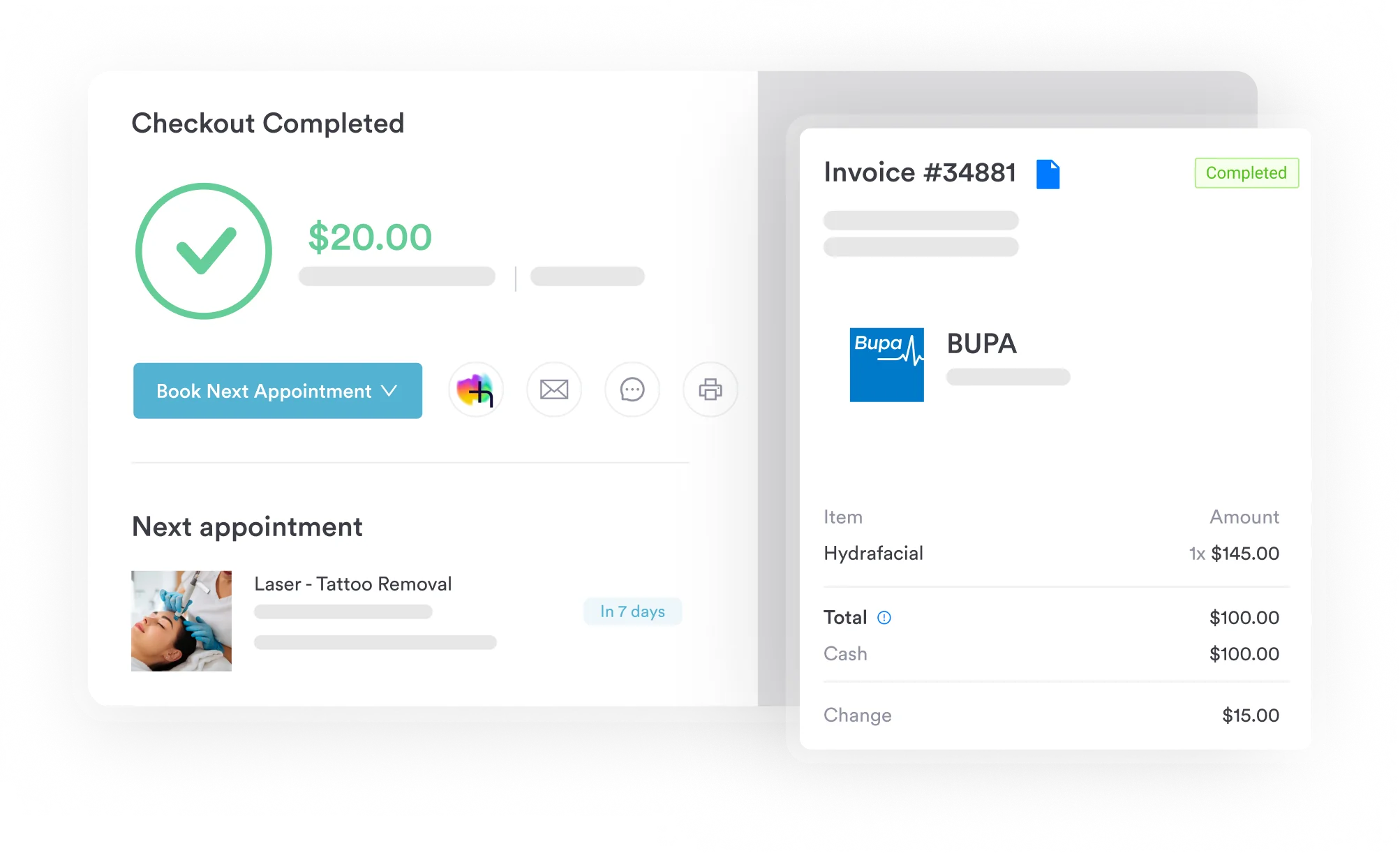
From there, claims management carries the coded encounter through to submission. Fewer claims get rebuilt from scratch, and the documentation trail is ready the day an auditor asks for it.

Pabau links intake forms, clinical notes and diagnosis coding to one patient record. The accident detail behind a sequela claim is still there a year later. See how coding and claims work together in a live demo.

V86.54XS is narrow by design, and that is what makes it easy to get wrong. Four answers pick the code on their own. Who was driving, who owned the vehicle, where the accident happened, and whether the injury has finished healing.
The trade-off worth remembering is timing. None of that can be reconstructed at the sequela visit, so the work belongs at the first encounter. Practices that capture the accident properly on day one code the late effect in minutes.
That makes this a records problem before it is a coding problem. Book a demo to see how Pabau keeps injury documentation and diagnosis coding in one workflow. External cause claims then hold up years after the accident.

Need the same sequela rules on another transport code? ICD-10 code V79.49XS applies the identical 7th character framework to a bus driver injured in a collision.
Coding a follow-up visit rather than a late effect? ICD-10 code W25.XXXD shows how the D character works on an external cause code.
Looking for the residual condition that leads the claim? ICD-10 code S62.032S is a sequela injury code sequenced ahead of the external cause.
Still coding the accident itself? ICD-10 code S32.416A covers the initial encounter, where place and activity codes still belong.
Billing a catheter irrigation solution? HCPCS code A4321 covers the therapeutic irrigating solution used to treat or prevent catheter obstruction.
Yes. The code describes the accident, not the setting or the payer. A private practice treating a former service member years later still reports it. Nothing in the tabular list ties the code to a military treatment facility.
As many as the record supports, because ICD-10-CM sets no cap. When several causes apply, transport accident codes rank ahead of most others on the claim.
No federal rule requires external cause codes. Liability, auto and workers’ compensation carriers ask for them most often, and several states mandate reporting. Check the payer’s policy before you drop the code from a claim.
No. ICD-10-CM names no models. A Humvee, a troop carrier and a supply truck all sit under V86.54. What matters is that the military owns the vehicle and a service member drives it.
In field 21, with the other diagnoses, entered after the residual condition and the injury code. Field 21 holds up to 12 diagnosis codes, so a sequela claim rarely runs out of room.