ICD-10 Code Y76.0: Diagnostic obstetric and gynecological devices
ICD-10 Code Y76.0: Definition and billable status ICD-10 Code Y76.0 is a valid, ...

Last Updated: Oct 23, 2026
Billable Code Specific Code
D10.0 is the billable ICD-10-CM code for benign neoplasm of lip.
Let Pabau's smart automation suggest the right codes, reduce claim denials, and keep your practice compliant—effortlessly.
Automate repetitive tasks and focus on what matters most—your patients.
Reduce coding errors and ensure compliance with the latest regulations.
Clean claims, fewer denials, and faster reimbursements.
Powerful insights and reporting to help your practice thrive.
HIPAA compliant SOC 2 certified GDPR-compliant Trusted by 4,000+ clinics worldwide

ICD-10 code D10.0 is the billable diagnosis code for benign neoplasm of lip, effective October 1, 2025, for the 2026 ICD-10-CM edition.
D10.0 crosswalks directly to ICD-9-CM code 210.0 and covers the frenulum of the upper and lower lip as named synonyms.
D10 (parent code) is non-billable — coders must use D10.0 for the specificity required by payers and CMS documentation standards.
Practice management software like Pabau includes claims and billing tools that help oral and maxillofacial practices keep D10.0 procedure claims organized and fully documented.
ICD-10 code D10.0 is the billable ICD-10-CM diagnosis code for benign neoplasm of lip. Medical coders and clinicians at oral surgery, dermatology, and plastic surgery practices use this code to document non-cancerous growths arising from the lip tissue, including the frenulum of the upper and lower lip.
D10.0 sits within the ICD-10-CM chapter for neoplasms (C00-D49), under the block D10-D36 (benign neoplasms, except benign neuroendocrine tumors). Its parent code, D10 (benign neoplasm of mouth and pharynx), is non-billable — payers require the specificity that D10.0 provides.
According to the Centers for Medicare and Medicaid Services, known as CMS, the 2026 edition of ICD-10-CM became effective on October 1, 2025, and D10.0 carries no changes from the prior fiscal year, remaining a stable, billable code.
Clinically, benign lip neoplasms include squamous papillomas, oral fibromas, mucoceles, and hemangiomas of the lip. These growths are non-metastasizing, distinguishing them from the malignant lip neoplasms in the C00 series.
The lip mass ICD-10 code is D10.0 once pathology confirms benign tissue. The D10.0 ICD-10-CM code never applies to a malignant or in-situ diagnosis of the lip, so proper assignment begins with the pathology report.
The ICD-10-CM tabular list and commercial code databases confirm the following synonyms and inclusions under D10.0. Coders may encounter these clinical terms in provider documentation and should map them to this single code.
All synonyms above map to a single code. Coders do not need to select a more specific sub-code — D10.0 covers the entire lip, including its inner mucosa, outer vermilion border, frenulum attachments, and commissures.
Because a mucocele forms from a blocked salivary duct, coders sometimes cross-reference K11.9 for chronic salivary gland disease when documentation describes gland obstruction rather than a discrete neoplasm.
One Type 1 Excludes note is worth flagging: a benign neoplasm of the skin of the lip is not coded here. It maps instead to D22.0 (melanocytic nevi of lip) or D23.0 (other benign neoplasm of skin of lip).
For practices managing skin clinic workflows, correctly identifying synonyms in clinical notes before coding helps prevent claim rejections associated with this code family.
Understanding the hierarchy helps coders and auditors trace D10.0 to its regulatory origin and catch sequencing errors before submission.
The parent code D10 is a header. Submitting D10 on a claim instead of D10.0 will result in a rejection because payers require a billable code with the level of specificity that D10.0 provides.
This is a frequent error in practices that use older code sets or EHR templates pre-populated with parent categories. Referencing the CDC ICD-10-CM tool for current-year validity before submission is best practice.
D10.0 is one of several codes under the D10 category. Coders selecting from this family should distinguish lip (D10.0) from adjacent anatomical sites to avoid misassignment. The same parent-to-billable-code discipline applies across other neoplasm chapters — for example. Elsewhere in the benign D10-D36 block, each organ still carries its own billable code, such as a benign neoplasm of the vulva (D28.0) or a benign neoplasm of the right ovary (D27.0), coded to its own site the same way D10.0 is fixed to the lip. Secondary payers often allow a shorter window than the primary, so the filing deadline differs by claim.
Practices billing for benign oral neoplasms encounter several codes in the D10 range, plus a handful of codes from neighboring categories that are easy to confuse with D10.0. Selecting the wrong one can trigger a claim denial. The tables below separate true D10 family members from adjacent codes that are commonly cross-referenced.
D10 itself (the category header) is non-billable and cannot be submitted on claims — one of its ten child codes above must be used instead.
The critical distinction is between D10.0 (benign), the C00 series (malignant), and D00.0x (carcinoma in situ). These three categories are mutually exclusive. Using D10.0 when pathology confirms malignancy is a significant coding error that creates audit risk and may delay appropriate treatment authorization.
Practice management software like Pabau supports this distinction indirectly — role-based access controls, before-and-after photo documentation, and treatment notes stay attached to the patient record, so the pathology finding a coder needs to confirm D10.0 versus a C00-series code is easy to locate during an audit.
Check surgical pathology reports before finalizing D10.0. If the report says ‘benign’ – use D10.0. If it says ‘well-differentiated squamous cell carcinoma’ or ‘carcinoma in situ’ – stop. Those require C00-series or D00-series codes respectively. The word ‘benign’ must appear in the clinical documentation to justify D10.0.
With software for managing patients, these diagnoses stay tied to lab schedules and specialist correspondence.
Practices transitioning legacy records or handling resubmissions for pre-2015 dates of service need the ICD-9-CM equivalent. According to the 2026 CMS General Equivalence Mappings, ICD-10 code D10.0 converts directly to a single predecessor code.
This is a direct one-to-one crosswalk with no ambiguity. ICD-9-CM code 210.0 covered the same anatomical scope as D10.0 — the lip in its entirety. Practices archiving records for audit purposes can use this mapping confidently.
For current claims in the 2026 fiscal year, only D10.0 is valid. ICD-9-CM codes are not accepted by Medicare or commercial payers for dates of service after October 1, 2015. Coders verifying historical conversions should rely on the CMS General Equivalence Mappings referenced above rather than third-party lookup tools of uncertain accuracy.
Payers routinely request supporting documentation when processing claims for benign neoplasm excision. Missing even one element below is enough to trigger a request for additional information or an outright denial.
Required documentation for D10.0 claims typically includes:
Because this documentation includes pathology results and other sensitive diagnostic history, practices should keep a signed HIPAA authorization on file and apply the same EHR security practices used for the rest of the patient record.
Practices using digital intake forms can build lip lesion assessment fields directly into pre-consultation questionnaires, capturing anatomical detail and symptom history before the encounter note is written .
Missing anatomical detail is a common trigger for post-submission review on D10.0 claims, so capturing it upfront helps claims move through faster.


Pabau’s claims and billing tools help oral and maxillofacial practices attach D10.0 accurately, track documentation completeness, and submit organized claims.

ICD-10-CM is the US clinical modification of the World Health Organization’s original ICD-10 classification, adapted and maintained by the National Center for Health Statistics for use in the United States. The sequencing rules, Type 1 Excludes notes, and billable-code specificity that govern D10.0 come from the CMS ICD-10-CM Official Guidelines, not the base WHO classification.
Anyone searching for the right lip lesion ICD-10 code should learn these US-specific rules first, because ignoring them is the fastest route to a medical necessity denial.
D10.0 functions as a principal diagnosis when the primary reason for the visit is evaluation or treatment of the benign lip lesion. It becomes a secondary code when the encounter is primarily for a related procedure (such as excision) and the neoplasm is the condition justifying the procedure.
Follow the sequencing hierarchy in the CMS Official Guidelines: principal diagnosis first, additional codes for any complicating or associated conditions second.
The most frequent audit finding for lip neoplasm claims is using D10.0 when pathology returns a malignant result. The fix is straightforward: treat D10.0 as a tentative or working diagnosis code only until pathology is confirmed. Once the report returns, update to the appropriate C00-series code if malignancy is found.
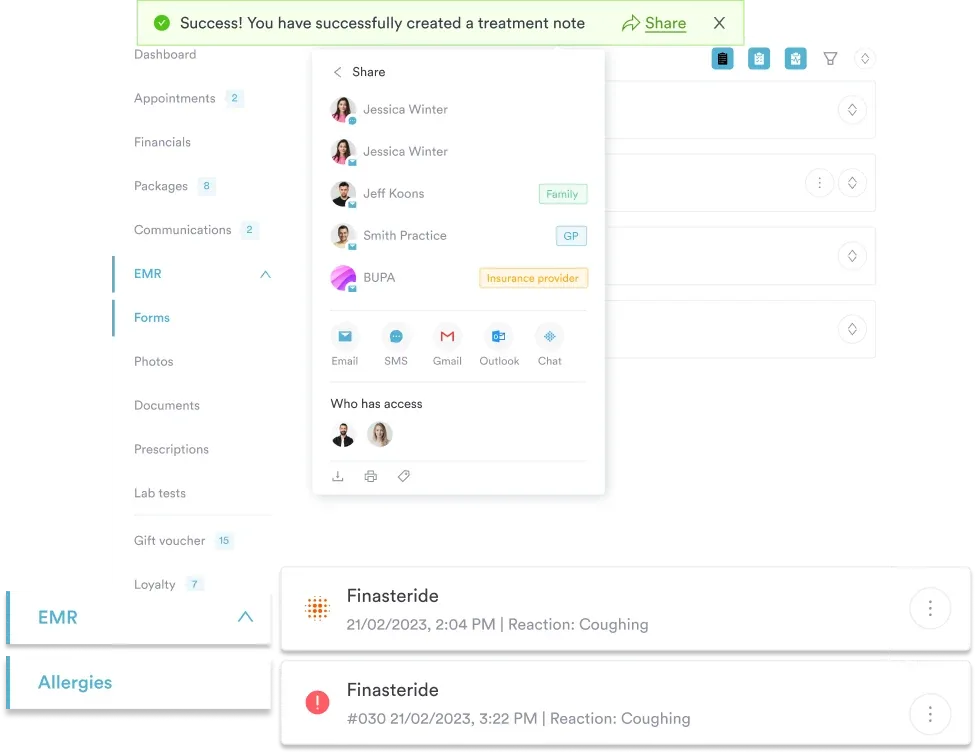
An EMR that stores the pathology report directly against the patient record makes it easy for a coder to confirm the diagnosis before the claim goes out, rather than relying on a separate paper trail.
Carcinoma in situ of the oral cavity (D00.0x series) is distinct from a benign neoplasm. In-situ neoplasms have malignant cell changes but have not yet invaded surrounding tissue. They are not coded as benign under D10.0. The distinction rests entirely on pathology language. “Carcinoma in situ” belongs in the D00 series, while “benign” or “papilloma” belongs in D10.0.
Audit tip: If your practice codes D10.0 frequently alongside excision CPT codes, run a quarterly internal audit comparing pathology reports to the submitted ICD-10 codes. Mismatches between ‘benign’ in pathology and a C00-series code on the claim (or vice versa) are the type of error that draws payer attention during routine claims analysis.
D10.0 is a diagnosis code — it defines the clinical reason for the encounter. It always pairs with at least one CPT procedure code when a service is rendered. The most commonly paired CPT codes for benign lip neoplasm encounters are listed below.
CPT code selection depends on the depth of the lesion (mucosal versus skin), the size of excision margins, and the complexity of closure required.
For comparison, malignant lip lesion excisions use a different CPT code entirely. Other lip procedures follow the same pairing logic between an ICD-10 diagnosis and its CPT procedure code.
Dermatology and oral surgery practices handling benign lip lesion excisions benefit from dermatology EMR software with built-in ICD-10 and SNOMED coding support, which keeps the diagnosis code attached to the clinical note from the first visit. Dental and oral surgery practices comparing dedicated platforms can also look at dental practice software built specifically for dental workflows.
Benign lip neoplasm coding fails most often not from complexity but from a missing pathology confirmation, a synonym mismatch in the operative note, or a parent code (D10) submitted instead of the billable child code (D10.0). Getting D10.0 right comes down to three things: confirmed benign pathology, anatomically specific documentation, and the correct CPT pairing.
Pabau’s claims and billing tools help oral surgery, dermatology, and plastic surgery teams keep documentation organized so D10.0 claims arrive at payers with the supporting elements already attached.
Dermatology practices handling a high volume of benign and malignant lip lesion cases may also want to compare dedicated dermatology practice management software, or speak with the Pabau team directly about claims workflows for benign neoplasm encounters.

Which code covers lower abdominal anesthesia? CPT code 00840 billing guide covers anesthesia for lower abdominal and laparoscopic procedures, including base units and when to use CPT 00790 instead.
Billing anesthesia for a TURP procedure? CPT code 00914 billing guide covers anesthesia billing for TURP, the standard surgical treatment for benign prostatic hyperplasia.
Running a multi-specialty practice across several locations? Multi-location management in Pabau gives dermatology, oral surgery, and plastic surgery sites shared booking, scheduling, and reporting from one system.
A few other coding references published recently may also be useful for practices working across multiple specialties:
ICD-10 code D10.0 is a billable diagnosis code used to document benign neoplasm of the lip, including squamous papillomas, fibromas, mucoceles, and hemangiomas arising from the lip tissue. It is used by oral surgeons, dermatologists, and primary care physicians to support claims for evaluation or excision of confirmed benign lip lesions.
A benign neoplasm of the lip is a non-cancerous growth arising from the lip tissue, including the mucosal lining, vermilion border, frenulum, and commissures. Common types include squamous papillomas (HPV-associated), oral fibromas (from chronic irritation), mucoceles (blocked salivary duct cysts), and vascular hemangiomas. These lesions do not invade surrounding tissue or metastasize.
The ICD-9-CM equivalent of D10.0 is code 210.0 (Benign neoplasm of lip). This is a direct one-to-one crosswalk with no ambiguity, confirmed by the 2026 CMS General Equivalence Mappings. ICD-9-CM codes are only valid for dates of service before October 1, 2015.
Yes, D10.0 is a fully billable ICD-10-CM code valid for the 2026 edition (effective October 1, 2025). The parent code D10 is non-billable and cannot be submitted on claims. Only D10.0 and other specific child codes in the D10 family carry billable status.
The D10 family includes D10.0 (benign neoplasm of lip), D10.1 (tongue), D10.2 (floor of mouth), D10.30 (unspecified part of mouth), D10.39 (other parts of mouth), D10.4 (tonsil), D10.5 (other parts of oropharynx), D10.6 (nasopharynx), D10.7 (hypopharynx), and D10.9 (pharynx, unspecified). D10 itself is the non-billable header for the entire group.