ICD-10 code S61.201A: Open wound of left index finger without nail damage
ICD-10 code S61.201A covers a left index finger wound of unstated type ICD-10 co...

Last Updated: Oct 16, 2026
Billable Code Specific Code
D27.0 is the billable ICD-10-CM code for benign neoplasm of right ovary.
Let Pabau's smart automation suggest the right codes, reduce claim denials, and keep your practice compliant—effortlessly.
Automate repetitive tasks and focus on what matters most—your patients.
Reduce coding errors and ensure compliance with the latest regulations.
Clean claims, fewer denials, and faster reimbursements.
Powerful insights and reporting to help your practice thrive.
HIPAA compliant SOC 2 certified GDPR-compliant Trusted by 4,000+ clinics worldwide

D27.0 is a billable ICD-10-CM code for benign neoplasm of the right ovary, valid for the 2026 code set.
Always specify laterality: D27.0 (right), D27.1 (left), or D27.9 (unspecified) since the parent code D27 is non-billable.
Seven conditions are excluded via Type 2 Excludes notes, including functional ovarian cysts (N83.x) and endometrial cysts (N80.1).
Pabau’s claims management software helps gynecology practices attach the correct D27.x code to claims and reduce denial rates.
Clinically, D27.0 captures a range of benign ovarian growths confirmed as neoplastic in nature. In plain terms, it is the code for a benign ovarian tumor on the right side. It does not apply to functional cysts, retention cysts, or endometriosis-related cysts, which each carry their own codes. The distinction matters: a follicular cyst (N83.0) and an ovarian cystadenoma (D27.0) may look similar on imaging but require completely different codes at billing.
D27.0 is also a sex-specific code, so it applies only to female patients. A claim scrubber will reject it if it lands on a male patient’s record, which is a common data-entry slip when a code is keyed from memory rather than selected from the chart.
Using the parent code D27 instead of the laterality-specific child codes results in a claim that payers reject outright, because D27 is non-billable. Box-by-box requirements on the professional claim form change by payer, so one filled sample is not a universal template.
D27.0 is a valid, billable ICD-10-CM code for the 2026 code set. Its parent, D27 (Benign neoplasm of ovary), is non-billable and cannot be submitted on a claim. Payers require the full laterality specification before adjudicating.
| Code | Description | Billable? |
|---|---|---|
| D27 | Benign neoplasm of ovary (parent) | No |
| D27.0 | Benign neoplasm of right ovary | Yes |
| D27.1 | Benign neoplasm of left ovary | Yes |
| D27.9 | Benign neoplasm of unspecified ovary | Yes |
Always assign D27.0 or D27.1 when the operative or pathology report specifies a side. Use D27.9 only when the laterality is genuinely unknown after reviewing all available documentation. Defaulting to D27.9 because it is easier to remember is a common coding shortcut that auditors flag during documentation reviews. Applying the same specificity discipline used when coding other benign neoplasms reinforces why specificity at the sub-code level is non-negotiable.
Per the D27 parent code instructions in the AAPC Codify ICD-10-CM lookup, an additional code may be assigned to identify any associated functional activity. This is relevant when a benign ovarian neoplasm produces hormones affecting other organ systems.
Several clinical terms map to ICD-10 code D27.0. A right ovarian cystadenoma and a right-sided dermoid cyst both land here once benign histology is confirmed, even though neither phrase appears in the code’s official title. Knowing these synonyms prevents under-coding when a pathology report uses terminology that differs from the code’s official description.
Benign germ cell tumor of ovary is a recognized synonym for D27.0. Note that atypical Meigs syndrome and Brenner tumor NOS are associated with D27.9 (unspecified) rather than D27.0, so laterality documentation is needed to move those diagnoses to the correct code.
With software for managing patients, these diagnoses stay tied to lab schedules and specialist correspondence.
The D27 parent code carries seven Type 2 Excludes notes. A Type 2 Excludes note signals that the excluded condition is separate from the code in question, but a patient can carry both diagnoses simultaneously. Neither code subsumes the other.
| Excluded condition | Correct code | Clinical distinction |
|---|---|---|
| Corpus albicans cyst | N83.2- | Functional/retention cyst, not a neoplasm |
| Corpus luteum cyst | N83.1- | Physiological cyst arising from the corpus luteum |
| Endometrial cyst (endometriosis of ovary) | N80.1- | Endometriosis-related; governed by the N80 block |
| Follicular (atretic) cyst | N83.0- | Functional ovarian cyst, not a neoplasm |
| Graafian follicle cyst | N83.0- | Functional ovarian cyst arising from unruptured follicle |
| Ovarian cyst NEC | N83.2- | Non-neoplastic, not elsewhere classified |
| Ovarian retention cyst | N83.2- | Retention cyst without neoplastic character |
The practical takeaway: D27.0 requires pathological or imaging-confirmed neoplastic tissue. If the clinical note describes a simple cyst with no histological confirmation of neoplasm, the N83.x family is the correct starting point. Mixing up N83.x and D27.x is one of the top denial triggers for gynecology claims in outpatient settings. The same distinction applies when coding a mass versus a simple cyst in other organs.
Flag every pathology report that uses the word ‘cyst’ without a histological description. If the report does not confirm neoplastic tissue, do not assign D27.0. Route the case back to the provider for clarification before billing. This one step prevents a significant share of D27.x denials.
Laterality is the deciding factor. When operative notes, imaging reports, or pathology confirm which ovary is affected, that side determines the code. The decision tree is straightforward once documentation is reviewed:
Coders should query the provider when operative notes reference only “the ovary” without side specification. Most payers treat D27.9 as a red flag during automated claim edits, particularly for surgical claims involving CPT codes such as 58661 (laparoscopy with removal of adnexal structures) or 58720 (salpingo-oophorectomy). Related gynecologic procedures such as salpingectomy and laparoscopic hysterectomy carry their own CPT coding rules. A laterality-specific code on the claim reduces the probability of a medical necessity denial.
Code sequencing also matters when D27.0 appears alongside other diagnoses. The neoplasm code is typically the principal diagnosis when the surgical procedure is performed for definitive management of the mass.
Claims data predating the October 2015 ICD-10-CM transition used ICD-9-CM code 220 (Benign neoplasm of ovary). ICD-10-CM code D27.0 converts approximately from ICD-9-CM 220 per the CDC/NCHS ICD-10-CM web tool. The crosswalk is approximate rather than exact because ICD-9 code 220 did not capture laterality. A single ICD-9 code maps to three ICD-10 child codes (D27.0, D27.1, D27.9) depending on documentation specificity.
| ICD-9-CM code | Description | Maps to (ICD-10-CM) |
|---|---|---|
| 220 | Benign neoplasm of ovary | D27.0 / D27.1 / D27.9 (laterality-dependent) |
When researching historical claims or conducting retrospective audits, verify approximate equivalencies against an ICD-9 to ICD-10 crosswalk, and remember that crosswalk tools provide guidance, not official coding authority. The CDC/NCHS ICD-10-CM files remain the authoritative reference for code definitions and hierarchical context.

Pabau’s claims management tools help gynecology and women’s health practices attach laterality-specific ICD-10 codes at the point of care, reducing billing errors before claims are submitted.

Three documentation elements must be present before a coder assigns ICD-10 code D27.0. Missing any one of them creates audit vulnerability and risks claim denial or recoupment.
Using clinical documentation tools that structure operative and pathology notes helps ensure laterality and histological findings are captured consistently. Practices comparing gynecology EHR platforms should prioritize structured ICD-10 entry. Those that rely on HIPAA-compliant diagnosis documentation workflows can build laterality fields directly into pre-operative intake templates, removing the guesswork at coding time.
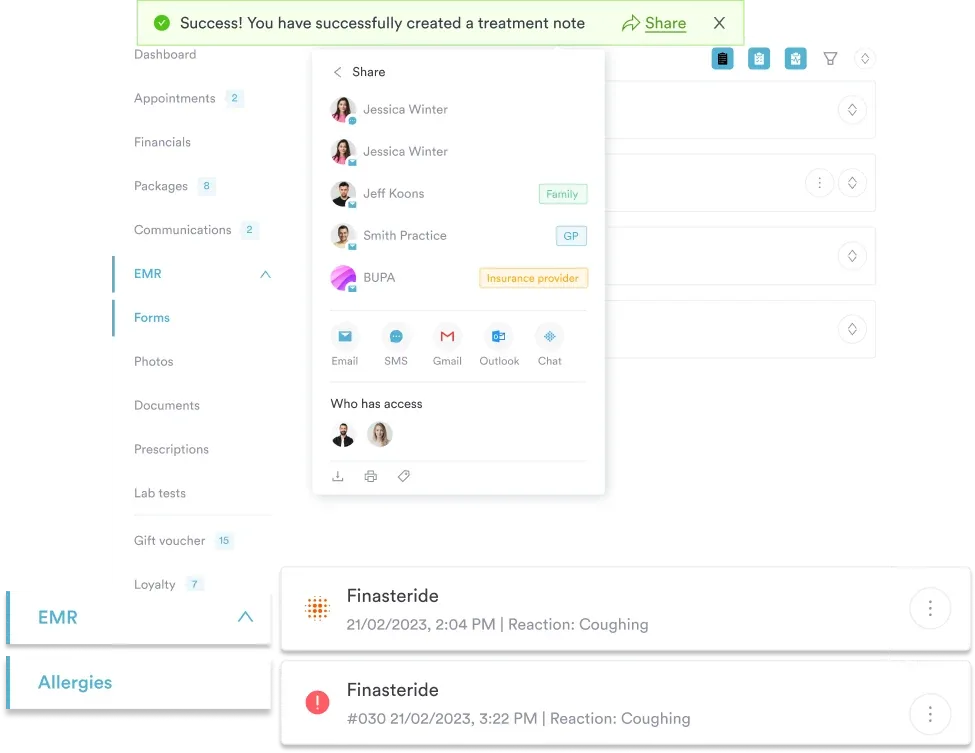
Operative notes that say “left adnexa resected” without specifying ovary versus tube create ambiguity. Pathology reports that use shorthand like “right adnexal mass – benign” without a histological subtype still support D27.0, but more specific reports strengthen the coding position. Encourage providers to include the affected structure (ovary), the side, and the histological characterization in every relevant operative dictation.
Attaching digital intake forms that prompt for laterality at the pre-operative consultation stage moves the documentation burden earlier in the care pathway, where it is easier to capture accurately.

Build a laterality checklist into your pre-operative consent and consultation workflow. When providers confirm side at consultation, it appears in the record before surgery, giving coders a second documentation anchor beyond the operative report alone.
D27.0 rarely appears in isolation on a surgical claim. Practices managing fertility clinic and general gynecology caseloads should anticipate these secondary codes:
Sequencing matters. When the surgical procedure is performed specifically for D27.0, the neoplasm code is the principal diagnosis. Secondary diagnoses follow clinical coding guidelines for sequencing.

Laterality errors in gynecology coding often trace back to documentation habits rather than coder knowledge. When operative notes are dictated quickly after surgery, key details like side specification get dropped.
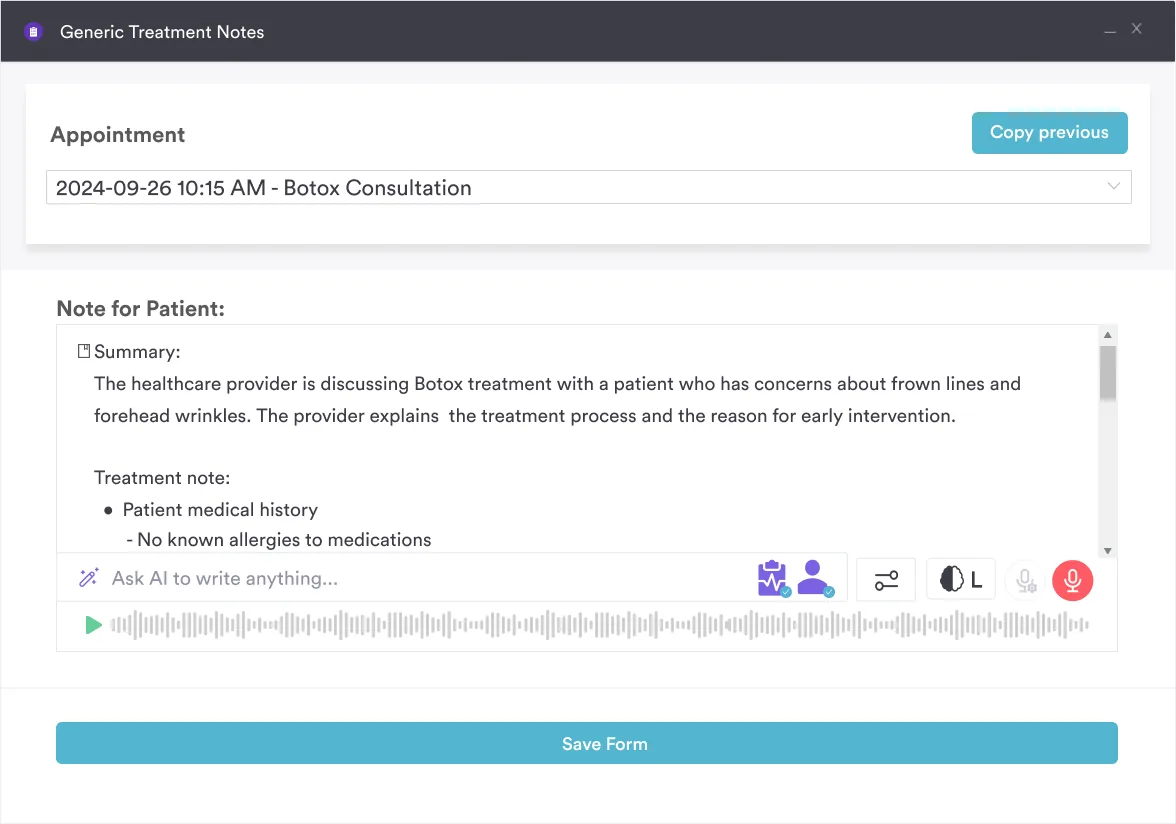
Practices using clinical documentation software and AI note-generation for gynecology procedures see fewer missing-laterality queries at coding time. The downstream effect is fewer pended claims and faster reimbursement cycles for D27.x surgical encounters.
ICD-10 code D27.0 is straightforward once coders understand its two core requirements: confirmed neoplastic tissue and documented right-sided laterality. The common failure points are using the non-billable parent code D27, conflating functional cysts (N83.x) with confirmed neoplasms, and defaulting to D27.9 when laterality is actually documented elsewhere in the record.
Gynecology and women’s health practices that build laterality prompts into their pre-operative and documentation workflows will find D27.0 coding straightforward and denial rates low. Pabau’s claims management software supports structured ICD-10 code assignment, helping practices reduce claim errors and improve reimbursement speed. To see how it works in a gynecology context, book a demo.

Billing anesthesia for artery procedures? CPT code 01272 billing guide covers anesthesia billing for femoral artery ligation, including base units and the surrounding code range.
Want to streamline fertility clinic documentation? Fertility clinic software from Pabau supports structured patient records and diagnosis code workflows.
Which code covers knee joint anesthesia? CPT code 01400 billing guide covers anesthesia for open or arthroscopic knee joint procedures, including general, regional and monitored care.
ICD-10 code D27.0 is the billable ICD-10-CM diagnosis code for a benign neoplasm of the right ovary. It is classified under Chapter C00-D49 (Neoplasms) and is valid for FY 2026 encounters. The code requires confirmed neoplastic tissue and documented right-sided laterality to be correctly assigned.
Yes, D27.0 is a billable ICD-10-CM code. Its parent code, D27 (Benign neoplasm of ovary), is non-billable. Payers require the laterality-specific child code (D27.0, D27.1, or D27.9) on all claims.
D27.0 applies to the right ovary, D27.1 to the left ovary, and D27.9 to an unspecified ovary. Use D27.0 or D27.1 whenever laterality is documented. Reserve D27.9 only when the affected side is genuinely unknown after reviewing all available records.
D27.0 converts approximately from ICD-9-CM code 220 (Benign neoplasm of ovary). Because ICD-9 code 220 did not capture laterality, it maps to all three D27.x child codes depending on documentation.
The D27 parent code carries Type 2 Excludes notes for corpus albicans cyst (N83.2-), corpus luteum cyst (N83.1-), endometrial cyst (N80.1-), follicular cyst (N83.0-), graafian follicle cyst (N83.0-), ovarian cyst NEC (N83.2-), and ovarian retention cyst (N83.2-). These exclusions reflect functional or retention cysts that are not neoplastic in nature.
CPT 58661 (laparoscopy with removal of adnexal structures) and CPT 58720 (salpingo-oophorectomy) are frequently paired with D27.0 when a confirmed right ovarian benign neoplasm is surgically managed. Pairing requirements vary by payer, so always confirm medical necessity linkage before claim submission.
When imaging or pathology confirms the right ovarian growth is a benign neoplasm, D27.0 is the correct code. If the growth has not yet been characterized as neoplastic, an unspecified cyst of the right ovary codes to N83.201 instead, so the tissue finding decides the code, not the word “mass” in the note.
A dermoid cyst is a mature cystic teratoma, which is a benign germ cell tumor, so a right-sided one codes to D27.0. The label “cyst” is misleading here because the tissue is neoplastic, not a functional cyst from the N83 family.