ICD-10 Code T86.852: Intestine transplant infection
ICD-10 Code T86.852: Definition and billable status ICD-10 Code T86.852 is the I...

Last Updated: Oct 16, 2026
Billable Code Specific Code
K11.9 is the billable ICD-10-CM code for disease of salivary gland, unspecified.
Classified under the World Health Organization's ICD-10 framework, K11.9 sits within ICD-10-CM Chapter 11 (Diseases of the Digestive System), range K00-K14 (Diseases of oral cavity and salivary glands). It is a legitimate billable code, but its use requires careful clinical justification.
Let Pabau's smart automation suggest the right codes, reduce claim denials, and keep your practice compliant—effortlessly.
Automate repetitive tasks and focus on what matters most—your patients.
Reduce coding errors and ensure compliance with the latest regulations.
Clean claims, fewer denials, and faster reimbursements.
Powerful insights and reporting to help your practice thrive.
HIPAA compliant SOC 2 certified GDPR-compliant Trusted by 4,000+ clinics worldwide

ICD-10 code K11.9 is a billable diagnosis code for disease of salivary gland, unspecified, valid for FY2026 ICD-10-CM.
Use K11.9 only when clinical documentation does not support a more specific K11.x code such as K11.2 (sialoadenitis) or K11.5 (sialolithiasis).
Payers increasingly audit unspecified codes; thorough documentation of symptoms and diagnostic workup reduces denial risk.
Pabau’s claims management software helps practices track K11.9 claims, flag incomplete documentation, and reduce avoidable denials.
The salivary gland system includes three paired major glands: the parotid, submandibular, and sublingual glands, plus numerous minor glands throughout the oral mucosa. Disorders affecting any of these structures fall within the K11 category.
K11.9 applies when a provider diagnoses a salivary gland condition but cannot yet specify which disorder within the K11 spectrum is responsible. According to the CDC/NCHS ICD-10-CM web tool, common underlying causes captured under unspecified salivary gland disease include infections, ductal obstruction, autoimmune conditions such as Sjogren’s syndrome, inflammatory disorders including mumps parotitis, and neoplastic processes. The code does not imply a cancer diagnosis – when malignancy is confirmed, more specific oncology codes apply. Where a practice does not bill the payer directly, the patient needs an itemized statement carrying this code and its charge.
Inclusion terms listed for K11.9 in the ICD-10-CM tabular include bilateral swelling of parotid glands and disorder of salivary duct. These synonyms reflect the breadth of presentations the code accommodates, from bilateral parotid enlargement associated with systemic disease to isolated duct pathology not yet classified to a specific disorder. For practices managing oral and skin health conditions, K11.9 is a code that appears across ENT, dentistry, oral surgery, and general practice encounters.
K11.9 is the catch-all at the end of a well-structured diagnostic family. Before assigning it, coders and clinicians should review the full K11 range to confirm no more specific code applies.
The same specificity-first logic applies across the oral-cavity family; a related code such as K04.7 (periapical abscess without sinus) shows how a named condition takes precedence over an unspecified alternative. Unspecified codes are valid when the diagnostic workup is genuinely incomplete or the condition is too heterogeneous to classify further at the time of the encounter.
Patients arrive with a symptom, not a code. Before defaulting to K11.9, match the presenting complaint to the K11 subcode the documentation supports. The table maps the salivary gland presentations seen most often in ENT, dental, and primary care encounters to their specific code, keeping K11.9 for the cases that genuinely cannot be classified yet.
Two presentations drive most miscoding. Undifferentiated parotid gland swelling can sit under K11.9 because bilateral swelling of parotid glands is a listed inclusion term. Documented hypertrophy points to K11.1 instead, and documented inflammation from bacterial or viral parotitis points to K11.2 (sialoadenitis). Drooling and hypersalivation are not salivary gland disease in coding terms. Sialorrhea maps to K11.7, disturbances of salivary secretion, the same subcode that covers xerostomia.
This is where most coding errors occur. K11.9 is appropriate in three situations.
K11.9 is not appropriate when the record clearly supports a more specific code. If the discharge summary says “bacterial parotitis,” K11.2 (sialoadenitis) applies. If imaging confirms a ductal stone, K11.5 (sialolithiasis) applies. Using K11.9 when a specific code is supported creates audit risk and can delay or reduce reimbursement from payers who apply specificity edits.
K11.8 occupies an important middle ground. It covers named conditions not listed elsewhere in K11 – most notably benign lymphoepithelial lesion of salivary gland. If the clinical record names a recognized condition that doesn’t map to K11.0 through K11.7, K11.8 is the correct choice before defaulting to K11.9. Investing in accurate clinical documentation shapes code selection across diagnostic categories, and the same specificity-first principle applies uniformly.
Run a monthly audit of K11.9 claims using your billing software. Flag any encounter where a follow-up note has been added with a more specific diagnosis. Updating the code retroactively (with payer authorization where required) reduces denial exposure and improves documentation compliance across your salivary gland caseload.
Payers scrutinize unspecified codes. The documentation supporting K11.9 needs to demonstrate that a more specific code genuinely could not be applied at the time of the encounter, not merely that the provider didn’t look for one.
Strong K11.9 documentation includes the following elements:
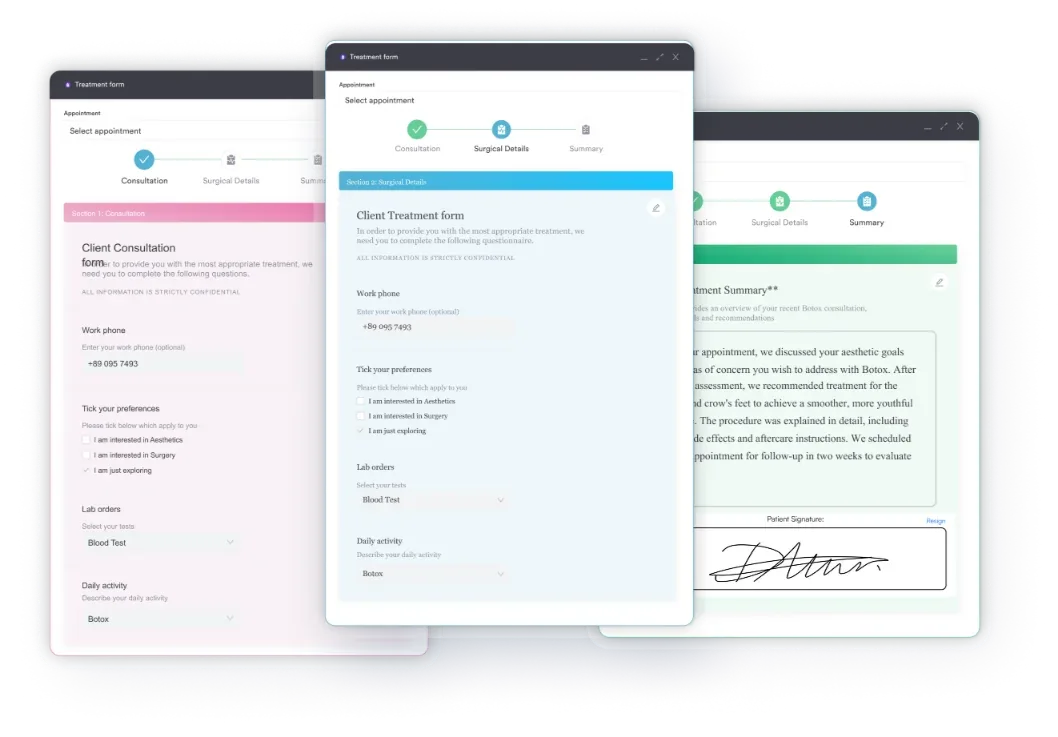
Practices using patient intake software can structure salivary gland encounter templates to capture these elements automatically at the point of care, reducing the risk of a completed note that fails a specificity audit. Pairing this with AI-assisted clinical documentation helps flag missing specificity before the note is finalized. Linking intake data directly to the patient record creates a traceable documentation chain from first presentation through diagnosis.
Practices that prioritize clinical documentation at your healthcare practice from the initial encounter reduce the risk of K11.9 being flagged as a documentation deficiency rather than a legitimate clinical choice. Similarly, keeping patient records current as diagnostic workup progresses is essential: if the definitive diagnosis arrives after the initial claim, an amended claim with the correct specific code should follow.
K11.9 is a valid billable code under the CMS ICD-10-CM coding framework for FY2026. It carries no excludes notes within the K11 category itself, meaning it can be used alongside other diagnosis codes to paint a complete clinical picture of the encounter.
MS-DRG grouping for K11.9 falls within the Diseases of the Digestive System major diagnostic category. The specific DRG assignment depends on whether surgery is performed and patient comorbidities – providers should verify the current assignment against CMS MS-DRG v43.0 tables for their encounter type.
Common CPT procedure codes that pair with K11.9 include evaluation and management codes (99202-99215 for office visits), ultrasound of salivary glands (76536). The claims management software used by your billing team should flag K11.9 pairings for medical necessity review, since some payers require a more specific ICD-10-CM code to approve advanced imaging or procedural services.
For practices with compliance management obligations, unspecified diagnosis codes like K11.9 can trigger additional payer scrutiny under LCD (Local Coverage Determination) policies. Some Medicare Administrative Contractors have LCDs for salivary gland procedures that list specific ICD-10-CM codes as coverage requirements.
Coders should check the applicable MAC’s LCD before submitting claims for salivary gland procedures paired with K11.9. Maintaining HIPAA-compliant documentation practices throughout this process protects the practice in the event of a retrospective audit.

The same specificity-before-unspecified principle governs ICD-10 documentation for other unspecified findings, such as renal masses, across the classification system.
When billing salivary gland procedures with K11.9, attach any available diagnostic notes, imaging orders, or specialist referral letters to the claim. Some payers accept supporting documentation to justify the unspecified code selection, which can prevent a denial before it starts rather than requiring a costly appeals process.

Pabau helps practices document salivary gland encounters accurately, track claim status, and flag unspecified codes for review before submission. See how it works for your practice.

Salivary gland disease often arrives at the practice before a definitive diagnosis is ready. K11.9 exists for that moment, but it is not a permanent home for a patient’s chart. The coding discipline it demands is clear: document why the diagnosis is unspecified, pursue the diagnostic workup, and update the code when the picture becomes clear.
Pabau’s claims management tools help practices flag unspecified-code encounters for follow-up, shortening the time between initial presentation and accurate diagnosis coding. To see how Pabau handles documentation and billing workflows for clinical practices, book a demo.

Coding a hereditary fever syndrome? ICD-10 Code M04.1 guide covers periodic fever syndromes, including familial Mediterranean fever, TRAPS, and HIDS or MKD.
Billing for a rare autoinflammatory disorder? ICD-10 code M04.2 guide covers the three CAPS subtypes and confirms the code’s FY2026 billing validity.
Need an unspecified autoinflammatory code? ICD-10 code M04.9 guide explains the M04 code hierarchy and the documentation payers expect on a claim.
ICD-10 code K11.9 is a billable diagnosis code for Disease of Salivary Gland, Unspecified. It sits within ICD-10-CM Chapter 11 (Diseases of the Digestive System), under the K00-K14 range covering diseases of the oral cavity and salivary glands. It is valid for FY2026 and applies when clinical documentation does not support a more specific K11.x diagnosis at the time of the encounter.
K11.9 covers any salivary gland disorder – affecting the parotid, submandibular, or sublingual glands – where the specific condition cannot be determined from available documentation. Inclusion terms include bilateral swelling of parotid glands and disorder of salivary duct. Underlying causes may include infections, obstruction, autoimmune disease, or systemic conditions such as Sjogren’s syndrome or mumps, but the code is used when those specifics are not yet confirmed.
K11.8 covers “other diseases of salivary glands” – meaning named, recognized conditions that exist within the K11 spectrum but are not listed as their own subcodes (for example, benign lymphoepithelial lesion of salivary gland). K11.9 is the true unspecified code, used when no named condition can be identified. Coders should check K11.8 before defaulting to K11.9, since K11.8 applies to specific diagnoses that simply lack their own dedicated subcode.
K11.9 is appropriate when diagnostic workup is genuinely incomplete at the time of the encounter and clinical documentation explicitly reflects that uncertainty. It is not appropriate when the record supports a specific diagnosis such as sialoadenitis (K11.2) or sialolithiasis (K11.5). Providers should document pending investigations and differential diagnosis considerations to justify the unspecified code selection and reduce payer audit risk.
The most specific codes within the K11 category are K11.2 (sialoadenitis), K11.5 (sialolithiasis), K11.3 (abscess of salivary gland), and K11.6 (mucocele of salivary gland). These cover the most common diagnosed salivary gland conditions seen in clinical practice. K11.7 is specific to secretion disturbances including xerostomia and hypersalivation. Providers should always assign the most specific code supported by clinical documentation before using K11.9.
Undifferentiated parotid gland swelling is captured under K11.9, since bilateral swelling of parotid glands is a listed inclusion term for the unspecified code. When the record documents a specific cause, a more precise code applies: K11.1 for hypertrophy, or K11.2 (sialoadenitis) for bacterial or viral inflammation. Assign the specific code whenever the parotid finding is characterized.
Drooling and excess saliva are coded under K11.7, disturbances of salivary secretion, which also covers sialorrhea and xerostomia. K11.9 is not the right choice here, because a secretion problem is a recognized condition rather than an unclassifiable one. Reserve the unspecified salivary gland code for cases where the underlying disorder is genuinely undetermined.