Sulcus Test: Shoulder Instability Assessment
The sulcus test is an orthopedic special test that checks for inferior glenohume...

2
Last Updated: Oct 22, 2026

Brainspotting therapy uses fixed eye positions to access trauma stored in the subcortical brain, developed by David Grand in 2003.
BSP may support treatment of PTSD, anxiety, depression, chronic pain, and performance issues, though the evidence base is still developing.
Brainspotting therapy differs from EMDR in its reliance on a fixed gaze point rather than bilateral eye movement, and places greater emphasis on somatic awareness.
Practitioners must complete at least Phase 1 training through Brainspotting Trainings before offering BSP to clients.
Clinics offering brainspotting therapy benefit from structured intake processes, clear session documentation, and trauma-informed scheduling workflows.
Many clients arrive having already worked through talk therapy that never quite reached the trauma still living in the body. The need is substantial: the National Institute of Mental Health estimates that 3.6% of US adults experienced PTSD in the past year, and a meaningful share never respond fully to first-line protocols alone.
Brainspotting (BSP) is one of the body-based approaches clinicians increasingly reach for with those clients. For practice owners the questions are practical ones: what the method actually involves, how it differs from EMDR, what training it requires, and how to run it safely inside an existing clinic.
Brainspotting therapy is a trauma-focused, body-based treatment method that uses the position of a client’s gaze to locate and process unresolved emotional and physiological material held in the subcortical brain. Developed by psychotherapist David Grand in 2003, brainspotting therapy emerged from his work within Eye Movement Desensitization and Reprocessing (EMDR) – Grand was an EMDR trainer who noticed that a client’s fixed eye position correlated with the intensity of their trauma response. That observation became the foundation of an entire clinical framework.
The core premise of BSP therapy is captured in Grand’s phrase: “Where you look affects how you feel.” When a clinician or client identifies a relevant visual field position – a brainspot, meaning an eye position correlated with heightened neurophysiological activation – the brain’s self-scanning and self-healing capacity may activate. Unlike talk therapies that work primarily through the cortex, brainspotting therapy targets the deeper midbrain structures associated with trauma, emotion, and body memory. For practitioners working in mental health clinic settings, understanding this neurophysiological distinction shapes how BSP sessions are structured, documented, and communicated to clients.
The treatment has since been adopted across a range of clinical contexts – from private therapy practices and trauma recovery programmes to sports performance coaching. Its growing presence reflects a broader shift toward somatic and subcortical approaches in trauma-informed care.
Brainspotting therapy operates on the theory that traumatic experiences are stored not only as cognitive memories but as neurophysiological patterns within the midbrain, limbic system, and amygdala. These subcortical structures do not respond reliably to verbal reasoning. A client who can intellectually understand their trauma history may still experience intense somatic symptoms – rapid heartbeat, frozen affect, dissociation – because the body holds what the mind cannot fully access through language.
During a brainspotting therapy session, the therapist uses a pointer or follows the client’s own gaze to identify an eye position that corresponds with heightened physiological activation. This position – the brainspot – is held while the client maintains dual awareness: staying present with the therapist and simultaneously attending to internal bodily sensations. The therapist provides what BSP calls a dual attunement frame, combining relational attunement with neurobiological attunement. Both dimensions are considered essential to the processing that occurs.
Brainspotting Trainings – the official certifying body founded by David Grand – teaches three core setup models in its Phase 1 curriculum: Outside Window, Inside Window, and Gazespotting. The Outside Window model involves the therapist locating the brainspot by observing the client’s reflexive responses (such as eye blinking, swallowing, or facial microexpressions) as the pointer moves through the visual field. The Inside Window model inverts this: the client identifies the position where internal activation feels most concentrated, and the therapist follows their guidance.
Gazespotting, the third Phase 1 model, locates the brainspot by noticing where the client spontaneously looks while talking about the activating material, rather than by scanning a pointer. Each model is a different point of entry into the same underlying neurophysiological process. More advanced techniques – including the Z-Axis model, which extends BSP work into the depth dimension of the visual field (closer or further from the client) rather than laterally, and One-Eye Brainspotting – are introduced in Phase 2 training, building on the Phase 1 foundation rather than replacing it.
Biolateral sound – alternating auditory stimulation delivered through headphones – is frequently used as an adjunct in BSP sessions. According to Brainspotting Trainings’ official materials, this bilateral auditory input may facilitate deeper subcortical access. Some practitioners use it throughout the session; others introduce it selectively based on client response.
The comparison between brainspotting therapy and EMDR comes up in nearly every clinical conversation about trauma treatment methods. A third eye-based option, Accelerated Resolution Therapy (ART), increasingly enters that conversation too. Both share the same lineage – Grand developed BSP from his EMDR practice – and both use eye positions or eye movement as a portal into trauma processing. The differences are substantive enough to matter clinically, but neither approach is universally superior. The choice often depends on the client’s presentation, the therapist’s training, and the nature of the traumatic material.
The most immediate structural difference is in the use of eye movement. EMDR uses bilateral stimulation – typically a therapist’s hand moving side to side – to reprocess traumatic memories through a structured eight-phase protocol. Brainspotting therapy, by contrast, works with a fixed eye position. Rather than moving through the visual field, the client holds their gaze at the identified brainspot and allows the processing to unfold, often accompanied by biolateral sound rather than eye movement.
EMDR follows a more prescriptive protocol with defined phases: history-taking, preparation, assessment, desensitisation, installation, body scan, closure, and re-evaluation. Brainspotting therapy is comparatively open-frame. The therapist does not direct or structure the cognitive content of processing; instead, they hold the relational container while the client’s own neural self-scanning does the work. This makes BSP more flexible for clients who find structured protocols cognitively demanding – including those with complex PTSD, dissociative presentations, or adverse childhood experiences.
NICE’s PTSD guidelines (NG116) recommend EMDR as a first-line treatment for post-traumatic stress disorder, supported by a substantial body of randomised controlled trial evidence. Brainspotting therapy has a growing research base, but it is not yet listed by NICE as a first-line recommended treatment. Several published studies – including work in journals such as the Journal of Psychotherapy Integration and Frontiers in Psychology – report positive outcomes for brainspotting therapy across trauma, anxiety, and chronic pain presentations, though the overall volume of RCT evidence remains limited.
Practitioners and clinic directors reviewing brainspotting therapy for their service offering should communicate this distinction honestly to clients: BSP is a clinically developed, theoretically grounded approach with promising outcome data, but it does not yet carry the same evidence classification as EMDR within national treatment guidelines. The Substance Abuse and Mental Health Services Administration (SAMHSA) includes trauma-informed care frameworks that support the principles underlying BSP, though it does not specifically list brainspotting as an evidence-based intervention at the same tier as EMDR. For psychology practices building trauma-informed service menus, this context matters for both clinical governance and informed consent processes.
Review your informed consent documentation before offering brainspotting therapy. Clients should understand that BSP is a clinically developed approach with an emerging evidence base, distinct from NICE-recommended first-line treatments. A clear one-paragraph description in your consent forms – covering what BSP involves, its theoretical basis, and the current state of the research – protects both the client and the practitioner.
A standard brainspotting therapy session typically runs between 50 and 90 minutes, though intensive formats of two to three hours exist for clients working through acute or complex trauma presentations. The longer duration reflects the nature of subcortical processing: unlike cognitive techniques that can be structured into timed units, the neurophysiological unfolding in brainspotting therapy does not follow a predictable timeline. Practitioners scheduling BSP in a clinic context need to build in appropriate buffer time and avoid back-to-back session booking for complex clients.
Sessions generally follow a loose arc rather than a rigid protocol. The opening phase involves checking in with the client’s current state, identifying an activation – a recent event, a body sensation, or an emotionally charged memory – and establishing a Subjective Units of Distress (SUDS) level. From there, the therapist uses either the Outside Window or Inside Window model to locate a relevant brainspot. Once identified, the pointer or the client’s own gaze holds the position while processing begins.
Processing in brainspotting therapy can involve significant somatic discharge – trembling, spontaneous imagery, emotional release, or extended silence. The therapist’s role during this phase is primarily one of regulated presence. Active direction of cognitive content is avoided. The session typically closes with a grounding sequence, re-checking the SUDS level, and discussing what emerged. For clients who are new to body-based work, the closing phase deserves careful attention; leaving a client in a dysregulated state at the end of a session is a clinical risk that documentation and clinical notes should address.
Practitioners offering brainspotting therapy through a therapy practice management system should ensure that clinical note templates capture key session variables: the activation identified, the brainspot location (often noted as left/centre/right field, approximate degrees from centre, and distance on the Z-axis), biolateral sound use, and the client’s post-session state. These details support continuity of care across sessions and are particularly important when multiple therapists may be involved in a client’s treatment. The same documentation discipline applies to any standardized clinical measure — our EASI score calculator guide shows how structured scoring keeps records comparable over time.

Pabau helps mental health and therapy clinics streamline scheduling, clinical documentation, and client records – giving practitioners more time for the work that matters. See how it supports trauma-informed practice workflows.

Brainspotting therapy was initially developed as a trauma treatment, and its primary application remains PTSD and complex trauma – including presentations arising from adverse childhood experiences, single-incident trauma, and developmental trauma. Clinical literature and practitioner-reported outcomes suggest it may also be used with anxiety disorders, depression, chronic pain, and performance issues in sports or creative fields, though the RCT evidence base for these applications is more limited than for trauma.
For PTSD presentations, brainspotting therapy offers a particular advantage with clients who cannot tolerate the structured cognitive demands of EMDR’s eight-phase protocol. Clients with complex PTSD – where hyperarousal, dissociation, and fragmented memory are prominent – may find the open-frame, body-led nature of BSP more accessible. The dual attunement frame provides both relational safety and neurobiological engagement without requiring the client to narrate or cognitively process traumatic content.
Window of tolerance considerations are central to brainspotting therapy with trauma clients. Practitioners need adequate training to recognise when a client is moving outside their window – either into hyperarousal or hypoarousal – and to modulate the session accordingly. This is not unique to BSP, but the open-frame nature of the approach means the therapist’s capacity for regulated attunement carries more clinical weight than it does in more directive protocols. For practitioners new to trauma-focused work, seeking supervision from experienced BSP trainers before working with complex cases is the appropriate path.
Published case reports and small-scale studies indicate that brainspotting therapy may support clients presenting with anxiety disorders, including generalised anxiety and social anxiety, where the somatic dimension of the presentation is significant. For depression linked to unresolved relational trauma or adverse childhood experiences, BSP may access the emotional and physiological layers that talk-based approaches alone do not reach. Chronic pain applications follow similar logic: where pain is maintained or amplified by subcortical threat responses, brainspotting therapy may reduce the neurophysiological load that sustains the pain experience.

These applications should be framed carefully in clinical settings. Clinicians may consider brainspotting therapy as a component of treatment for these presentations, but it should not be positioned as a standalone replacement for evidence-based protocols where those exist. Integrating BSP within a broader treatment framework – alongside CBT, Internal Family Systems, or medication management where indicated – is the more defensible clinical position. The psychiatry and mental health EMR tools used in multi-disciplinary teams need to reflect this multi-modal approach in client records and treatment plans.
Flag brainspotting therapy contraindications in your intake documentation. BSP may not be appropriate for clients with active psychosis, severe dissociative disorders without specialist supervision, or significant neurological conditions. Building a contraindication screening step into your initial assessment workflow – before the first BSP session – reduces clinical risk and supports informed consent.
Brainspotting Trainings – the official certifying body at brainspotting.com – defines a multi-phase training pathway, with Phases 1 and 2 forming the foundational training and Phases 3 and 4 covering advanced applications. Phase 1 is the entry-level requirement: no practitioner should offer brainspotting therapy to clients without having completed it. Phase 1 covers the core BSP models – Outside Window, Inside Window, and Gazespotting – along with the Resource Model and an introduction to biolateral sound, and it establishes the relational framework that underpins all BSP work. It is delivered as a three-day format (approximately 21 clock hours), often supplemented with pre-reading and supervised practice hours.
Phase 2 training deepens the practitioner’s understanding of specific BSP applications – including work with complex trauma, dissociation, and performance – and introduces advanced techniques such as the Z-Axis model and One-Eye Brainspotting. Phases 3 and 4 address advanced clinical situations and specialised applications, while separate Intensive trainings offer concentrated, focused practice beyond the core phase sequence; the higher phases may also include preparation for certified BSP trainer or consultant status. Brainspotting Trainings maintains a directory of qualified trainers globally, and the British Association for Counselling and Psychotherapy (BACP) and UK Council for Psychotherapy (UKCP) recognise continuing professional development hours for registered members undertaking BSP training.
For clinic directors evaluating whether to add brainspotting therapy to their service portfolio, the training pathway represents a meaningful investment – both in time and cost – for each clinician. A realistic implementation plan should account for Phase 1 completion, supervised practice before solo client delivery, and ongoing peer consultation or supervision as clinicians develop their BSP competence. Practices with team management software that tracks CPD and licence renewal dates can integrate BSP training records into staff profiles, supporting compliance with BACP, UKCP, and Health and Care Professions Council (HCPC) continuing education requirements.

The American Psychological Association (APA) does not currently classify brainspotting therapy as an empirically supported treatment at the highest evidence tier, though this reflects the relative recency and volume of RCT research rather than a judgement on the approach’s clinical validity. Practitioners working in jurisdictions where the APA’s classifications inform insurance reimbursement or supervisory requirements should verify local payer guidance before positioning BSP as a primary billed service.
Adding brainspotting therapy to a clinic’s service menu requires more than trained practitioners. The physical environment matters: BSP sessions require a quiet, low-stimulus space with appropriate seating arrangements that allow the therapist to move a pointer through the client’s visual field. Room acoustics affect biolateral sound delivery. These are not insurmountable constraints, but they distinguish BSP from talk-based therapies that can occur in a wider range of physical configurations.
Scheduling logic for brainspotting therapy differs from standard 50-minute therapy slots. Complex trauma clients typically need 75 to 90 minutes per session, with a genuine gap between appointments – both for the client’s reintegration time and for the practitioner’s own regulation. A clinic running back-to-back BSP sessions across a full day is likely to produce therapist fatigue that compromises the quality of attunement the model requires. Thoughtful scheduling, supported by clinic calendar management tools that allow session-type-specific duration templates, helps avoid this pattern.
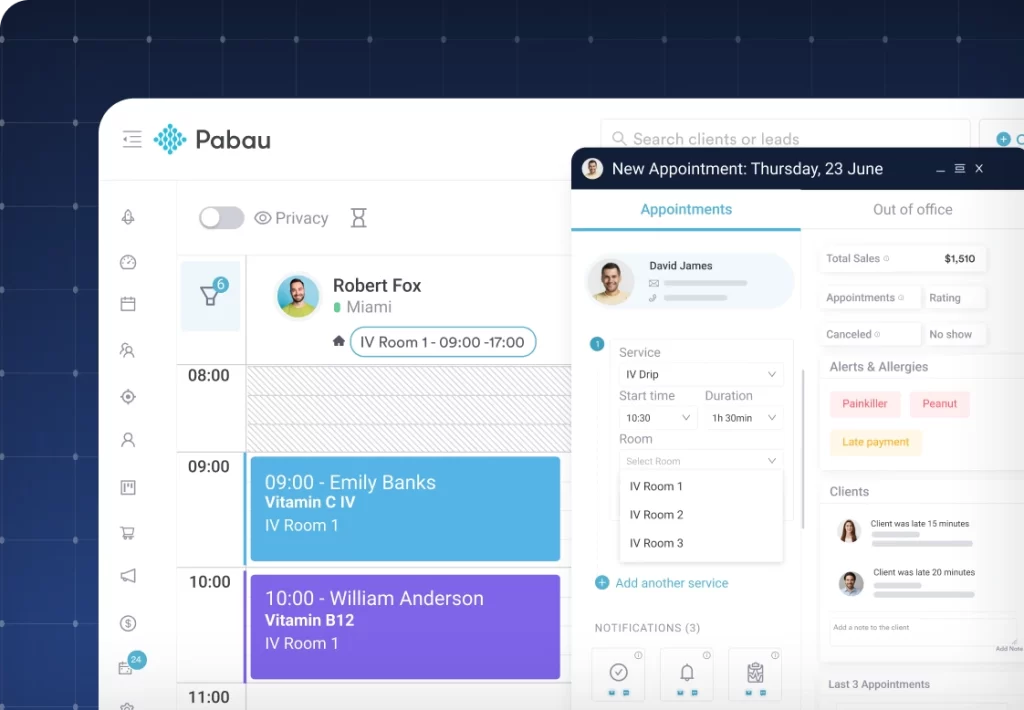
Intake processes for brainspotting therapy should include a trauma history screening, contraindication check, and informed consent documentation that specifically addresses the BSP modality. Digital intake forms sent ahead of the first session reduce administrative time and allow the clinician to review relevant history before meeting the client. Digital forms and paperless intake workflows support this process in a compliant, auditable format – particularly important for clinics operating under Care Quality Commission (CQC) oversight or seeking to meet BACP’s recommended record-keeping standards. Pre- and post-care instructions, which can be automated through pre-and post-care messaging tools, help clients navigate the often intense post-session integration period that brainspotting therapy frequently produces.

From a billing perspective, brainspotting therapy sessions are coded using standard psychotherapy CPT codes in the US (90837 for 53+ minutes, 90834 for approximately 45 minutes) or relevant CCSD codes in the UK. BSP itself is not a separately billable modality in most jurisdictions – the billing reflects the psychotherapy service, not the specific technique used within it. Practitioners should document the therapeutic approach clearly in session notes to support claims review, but should not attempt to bill BSP as a distinct service without confirming local payer guidance. For practices managing clinical claims workflows, flagging this clearly in service setup reduces downstream billing queries.
If brainspotting earns a place on your service menu, the deciding factor will not be the technique – it will be the operational scaffolding around it. Confirm that every practitioner has completed Phase 1 before seeing a client, build contraindication screening into intake, and set session-type durations that protect both the client’s integration time and the therapist’s capacity for attunement. Get those right and BSP slots into a trauma-informed service cleanly; get them wrong and even skilled practitioners struggle. Throughout, represent the evidence base honestly to clients and document the modality clearly for clinical governance and billing.
Book a demo with Pabau to see how scheduling, digital intake forms, and clinical documentation come together to support trauma-informed workflows like brainspotting.

Looking for structured clinical documentation tools for trauma-informed practice? Psychiatric Evaluation Template provides a step-by-step framework for comprehensive mental health assessments, including trauma history and risk screening.
Need guidance on managing therapist wellbeing in a demanding clinical setting? Therapist Burnout: Signs, Causes, and Prevention covers practical strategies for sustaining clinical capacity across a therapy team.
Exploring practice management workflows for mental health clinics? Mental Health EMR Software outlines how purpose-built clinic software supports scheduling, records, and compliance in therapy-focused settings.
Want to understand crisis intervention frameworks that complement trauma-focused therapies? Crisis Intervention Strategies for Clinicians offers evidence-referenced guidance on managing acute presentations in clinical practice.
Brainspotting therapy is primarily used for processing trauma and PTSD, including complex and developmental trauma presentations. It may also be applied to anxiety, depression, chronic pain, and performance enhancement, though the RCT evidence base for non-trauma applications is more limited. Practitioners typically integrate it within a broader treatment framework rather than using it as a standalone intervention.
EMDR uses bilateral eye movement within a structured eight-phase protocol. Brainspotting therapy uses a fixed eye position – the brainspot – and is comparatively open-frame, allowing the client’s neural self-scanning to direct the processing rather than a therapist-led protocol. BSP places greater emphasis on the somatic and relational dimensions of processing and may suit clients who find structured protocols cognitively demanding.
Brainspotting therapy has a growing body of clinical literature supporting its use, including published studies in peer-reviewed journals. However, it is not yet listed by NICE as a first-line recommended treatment for PTSD – unlike EMDR, which has stronger RCT support. Practitioners should represent the evidence base accurately to clients: BSP is theoretically grounded and clinically promising, with developing but not yet comprehensive trial evidence.
A BSP session begins by identifying an activation – typically a body sensation, memory, or emotionally charged experience – and checking the client’s baseline distress level. The therapist then locates a brainspot using a pointer or the client’s own gaze. Once identified, the client holds their gaze at that position while the therapist maintains a dual attunement frame. Processing unfolds through somatic and emotional release, followed by a grounding sequence before the session closes.
There is no fixed session count for brainspotting therapy. Single-incident trauma may show significant movement within a handful of sessions, while complex or developmental trauma typically requires longer-term work. Most practitioners review progress collaboratively with clients after an initial block of four to six sessions, adjusting the treatment plan based on clinical response and the client’s goals.
Yes. Brainspotting therapy integrates well with CBT, Internal Family Systems (IFS), somatic therapies, and medication management. Many practitioners use it as one component of a broader treatment approach, particularly for clients with complex presentations. The open-frame nature of BSP makes it relatively easy to weave into existing therapeutic relationships without requiring a full protocol change.