GLP-1 diet plan
A GLP-1 diet plan is a structured eating framework for patients taking semagluti...

2
Last Updated: Oct 13, 2026

An ICU note records a critically ill patient’s status across every organ system, plus the labs, medications, and plan that go with it.
The systems-based format is the clinical standard. You work through neuro, cardiovascular, respiratory, renal, GI, infectious disease, hematology, and endocrine in the same order every time.
Write each system line as a change since the last note. The reader then sees the patient’s direction of travel without opening a second document.
ICU notes carry four jobs: handover safety, clinical continuity, HIPAA-compliant records, and the documented time that critical care billing depends on.
Pabau is built for outpatient practices rather than hospital ICU units. The same structured-field discipline still cuts transcription errors in day-to-day charting.
A printable systems-based note covering vital signs, the eight organ system reviews, the daily management plan, and a handover section for the next shift. Fill it in at the bedside, or use it as the skeleton for your unit’s electronic version.
Download templateICU documentation is one of the heaviest writing loads in medicine. A single shift produces hourly vital signs, labs every four to 12 hours, imaging updates, antibiotic changes, and decisions across eight organ systems.
A structured ICU note template keeps all of that in one predictable order. Nothing gets forgotten, and the next clinician finds what they need in seconds. This guide covers the systems-based format, the admission and daily progress notes, the nursing variant, and a worked example.
An ICU note is a daily clinical record of a critically ill patient’s assessment, active problems, vital signs, labs, medications, and management plan. It is written every day, and in many units after every shift.
It has four readers, and they want slightly different things. The next clinician wants trajectory. The coder wants the documented critical care time that 99291 depends on. A reviewer wants HIPAA-compliant records that show what was decided and why.
The fourth reader is the night team, who need the two or three things that could go wrong before morning. Naming those four readers up front is what keeps a note short. Anything that serves none of them can come out.
The most widely used structure is systems-based. The clinician works through the organ systems in a fixed sequence. That routine stops a system from being skipped. A colleague can also jump straight to renal function or infection status, without reading a page of narrative.
Different note types cover different clinical moments:
Daily progress notes and nursing handover carry most of the workload. The admission note and the discharge summary frame the episode at either end.
The systems-based approach is the format taught by the Society of Critical Care Medicine (SCCM) and embedded in ACGME critical care training. You move through eight organ systems in the same order, recording the key findings and the plan for each.
That table is the backbone of every systems-based progress note. Some units add a ninth row for skin and wound care. The order matters more than the count, because a fixed sequence is what makes the note skimmable.
Units still working on paper usually pair the note with a separate vital signs record. That keeps the hourly observations off the note itself, so each system line stays to one or two lines.
One habit makes a systems note much faster to read. Record each line as a change since the last note, with the number and its direction.
Compare two versions of the same renal line. “Creatinine 1.6, urine output 0.4 mL/kg/hr” tells the reader where the patient is. “Creatinine 1.6, up from 1.2, urine output down to 0.4” tells them where the patient is heading.
Direction is what triggers action. It also survives a rushed handover, because the reader never has to open yesterday’s note to work out a trend.
Scored tools make this easier, since one number carries the whole trend. A stroke patient’s NIHSS score sheet does in one figure what three sentences of neuro narrative struggle to say.
The same rule protects you from copy-forward errors. A line that has to state a change cannot be pasted forward untouched.
The admission note sets the baseline for the whole episode. Write it once, properly, and the team stops re-asking the same questions. Use this structure:
Most of the raw material arrives with the patient. The ED note, the crew’s EMT patient assessment, and the family are your three sources, and they rarely agree on the timeline.
The daily progress note is the workhorse of the unit. It is usually written on morning rounds, or after each 12-hour shift. Keep every entry focused on what changed:
A plan reads better as a set of decisions. “Continue noradrenaline, trial a spontaneous breathing test tomorrow if MAP stays above 65, repeat lactate in six hours” leaves nothing to interpretation. The same discipline applies to clinical progress notes in any setting.
Nursing documentation mirrors the physician note, but leads with observation and intervention rather than diagnosis. A nursing note usually covers:
Recording all of that formally means the physician team reads it on rounds instead of hearing it secondhand. A structured nursing shift report does the same job at the point of handover.
Residents have to learn the sequence while being supervised. A teaching version of the same template adds a prompt explaining why each system matters:
Prompts like these turn a checklist into reasoning. Trainees learn what each number is for, rather than only where it goes.
Patient: 58-year-old male, post-operative day 3 from an emergency laparotomy for a perforated duodenal ulcer.
Count how many lines carry a direction. That is what tells the reader this patient is improving, without a word of narrative. An outpatient clinician would write the same visit as SOAP notes, grouped by data type rather than by system.
Speed matters here. A 30-bed unit generates 30 progress notes a day, and rounds do not wait for anyone.
The fastest sequence is a fixed one. Pull the overnight numbers into the template before rounds start. Then add the assessment and the plan at the bedside, while the findings are still fresh.
Dictate rather than type where your system allows it, then read the draft back before you sign. Reading it back is what catches a missing datum. A second pass later in the day rarely happens.
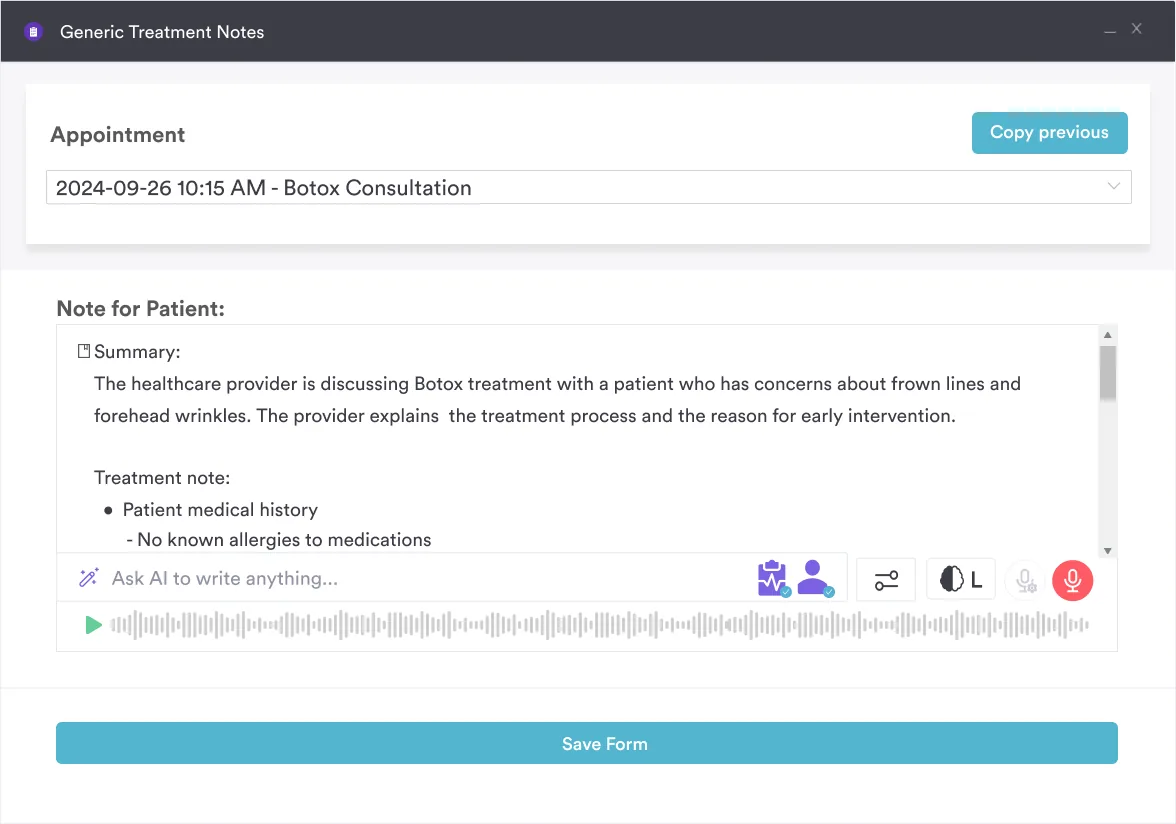
Outpatient software works on the same principle. Practice management software like Pabau includes Pabau Scribe, our AI scribe. It drafts the note from a recorded consultation, so the clinician edits rather than types.
A handwritten note on a paper template still works. It just slows team communication and adds a transcription step that can go wrong.
Five errors account for most of what goes wrong in an ICU note:
Those last three fields are worth a deliberate check before you sign. They are also among the first things a chart audit looks for.
Pabau is practice management software built for outpatient care rather than hospital ICU units. Our customers run private practices, medical aesthetics, wellness, and primary care. The discipline above still transfers, because outpatient charting fails in the same ways.
In Pabau, a note template is a live form rather than a printed page. You define the fields once, and every clinician fills the same ones. Entries save straight into the client record, so nothing waits on a scan or a retype.
This matters most where patients are watched over hours rather than minutes, such as infusion centers and IV therapy clinics. Practices carrying a medico-legal caseload need the same discipline for a different reason. Their notes get read back, sometimes years later.
Digital forms and consent sit in that same record, so a completed questionnaire and a treatment note are one click apart. One digital-first medical group runs its records, compliance, and reporting this way.
The outcome is the one every ICU chases. Documentation gets faster, omissions drop, and continuity of care survives a change of staff.
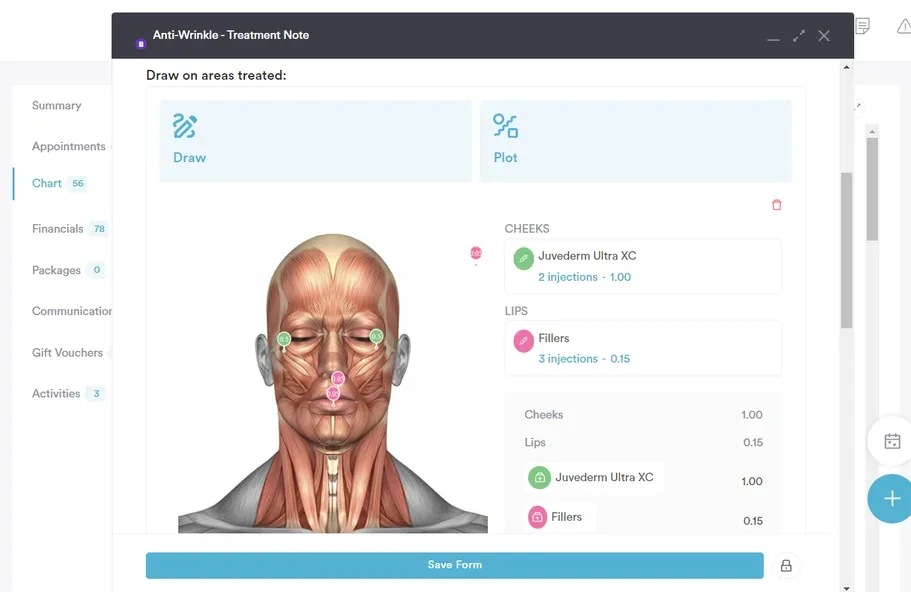

Pabau’s customizable note templates and digital forms keep every entry in the client record. Handover, audits, and follow-up all draw on one source.

Choosing a format takes an afternoon. Holding to it on a bad shift is the real work, and that is where a template earns its place.
So pick one sequence and use it for every note, every day. Write each system line as a change with a direction, and put the plan where the next reader expects to find it. That alone removes most of what goes wrong.
The trade-off worth remembering is length. A short note that carries the trend beats a complete one nobody finishes reading.
If your practice charts outside the hospital, the same structure is worth building into your software. Book a demo to see how Pabau turns a note template into a form your whole team fills the same way.

Need a handover structure that travels between teams? The I-PASS handoff template sets out the five elements a safe verbal handover has to cover.
Documenting handover at the bedside? The bedside shift report gives nursing teams a fixed order to work through with the patient present.
Coordinating care across several family caregivers? caregiver care plan template captures conditions, medications, goals of care, and emergency contacts in one print-and-fill form.
Charting neuro observations hour by hour? The neuro checks assessment breaks the bedside exam into fields you can compare across a shift.
Handing off patient care between shifts or caregivers? caregiver note template records observations, activities, and medication administration for continuity of care between caregivers.
An ICU progress note covers every organ system, from neurological through to endocrine. It records current vital signs, key labs, and anything that changed since the last note. It also lists current medications and infusion doses, then states the plan for the next 24 hours. Most notes run one to two pages.
A systems-based note records the patient’s status by moving through the organ systems in a fixed order. It replaces narrative paragraphs with one short line per system. Nothing gets overlooked, and any clinician can find a specific number without reading free text.
Start with a teaching template that prompts each system and explains why that data matters. Document your findings and reasoning in real time at the bedside. Present to your attending, take the feedback, and tighten the note next time. Most residents have the format within two to four weeks of a critical care rotation.
A SOAP note organizes information by data type, as subjective, objective, assessment, and plan. It is the usual choice in outpatient settings. A systems-based note organizes by organ system instead, which is the standard in critical care. It is faster to write and faster to read at volume.
An ICU nursing note records level of consciousness, comfort, vital sign trends, and fluid balance over the shift. It lists the interventions performed, such as medications, procedures, and positioning. It then covers the patient’s response and the priorities for the next shift.
One to two pages. A systems-based progress note usually runs 300 to 500 words, depending on how complex the patient is. Longer notes are not better. Concise, well-ordered notes improve handover speed and reduce missed information.