Professional development record
A professional development record is a structured log of a healthcare practition...

8
Last Updated: Oct 8, 2026

Telemedicine EHR integration connects virtual visit platforms directly with patient records, eliminating duplicate data entry and repeated documentation.
HIPAA-compliant video, end-to-end encryption, and role-based access controls are non-negotiable requirements for any telemedicine EHR setup.
Clinics that separate their telehealth tool from their EHR spend 30-40% more time on post-visit documentation, according to industry benchmarks.
Pabau’s built-in telehealth software keeps video consultations, clinical notes, consent forms, and billing in one connected system.
Telehealth needs vary by specialty: dermatology relies on asynchronous photo review, behavioral health on live video, and chronic care management on remote patient monitoring data feeding into the same record.
Virtual appointments now account for a significant share of outpatient encounters across primary care, aesthetics, mental health, and specialist clinics. The shift happened fast, and many practices are now running two disconnected systems: a video platform for the call and a separate EHR for the notes.
This costs time, creates documentation errors, and puts compliance at risk. A properly integrated telemedicine EHR fixes this: telehealth EHR integration keeps the virtual visit, the patient record, and the billing workflow in one place.
This guide covers what telemedicine EHR integration actually means in a clinical workflow, which features matter most, how to approach HIPAA compliance, and how modern clinics are making it work in practice.
A telemedicine EHR — also called a telehealth EHR or telemedicine EMR — goes beyond an EHR that merely lists telehealth as a feature. True integration means the video consultation, the patient history, the clinical notes, and the billing codes all live in the same system and update in real time. When a practitioner launches a virtual visit, the patient’s record is already on screen. When the call ends, the note is attached to the correct encounter, consent is logged, and the claim is ready to process.
Compare that with a bolt-on approach: a video platform for the call, a separate EHR for notes, and a third tool for billing. Every handoff between systems is a chance for data to get lost, lag, or contradict itself.
A peer-reviewed study in PMC found that a telehealth platform integrated with an interoperable EHR contributes directly to the “quadruple aim”: better health outcomes, improved patient experience, lower costs, and improved clinician experience. Systems that are not integrated undermine all four.
The core components of a functional telemedicine EHR system include:
Clinics running an integrated EHR with telehealth built in consistently report three operational gains: faster documentation, fewer billing errors, and better continuity of care between in-person and virtual visits.
When the video session and the clinical record are in the same system, the practitioner can document during the call instead of re-creating notes afterward. That adds up fast. Practitioners using fragmented systems spend an average of 15-20 additional minutes per virtual visit on post-session admin, according to industry workflow studies. Over a 30-appointment week, that is 7-10 hours of documentation overhead that an integrated system eliminates.
AI-assisted note capture makes this faster still. Pabau’s AI-assisted clinical documentation listens during the consultation and drafts structured notes in real time, so the practitioner reviews rather than writes. This matters especially for high-volume telehealth clinics where documentation fatigue is a real operational cost.
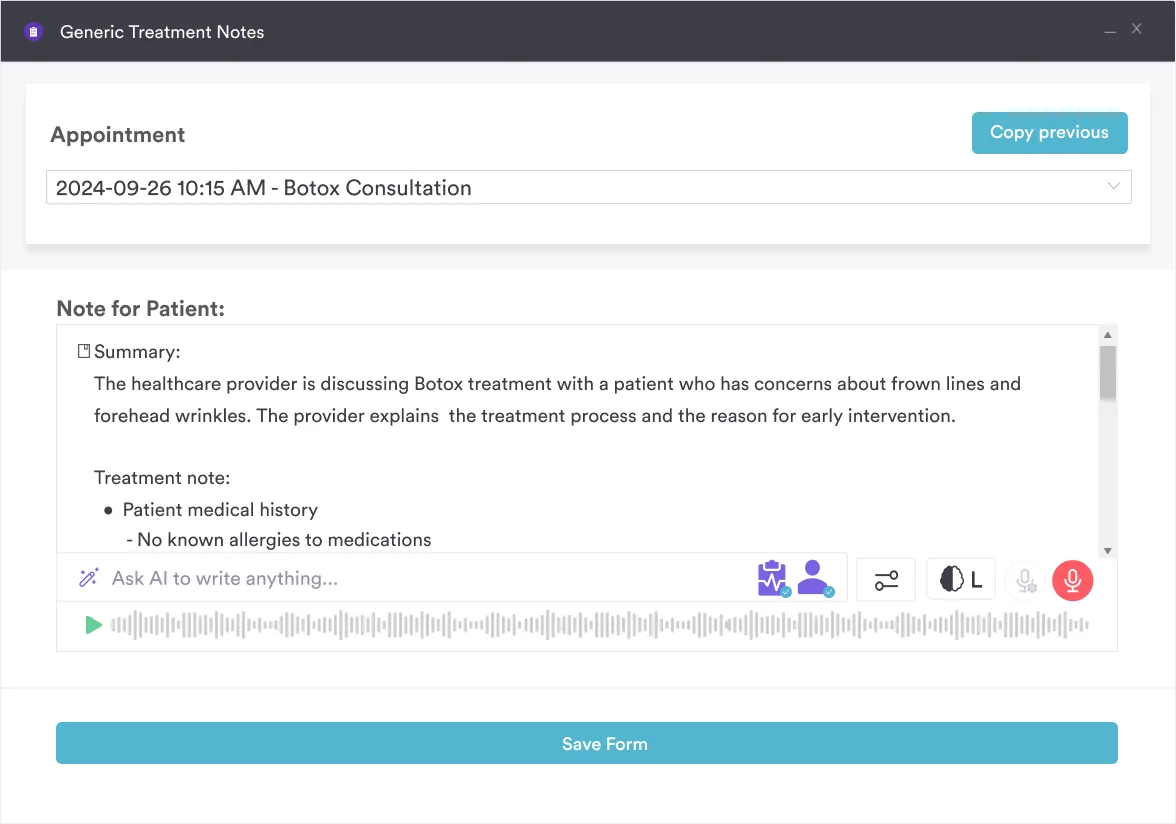
Telehealth billing runs on its own CPT codes: 98008-98015 for audio-only telemedicine visits, and 99202-99215 for video E&M services billed with a telehealth place-of-service code and modifier. The audio-only codes replaced the deleted 99441-99443 telephone codes in 2025. Using the wrong code, or missing the place-of-service modifier, is one of the most common reasons virtual visit claims get denied. An integrated telemedicine EHR pre-populates the correct codes based on the visit type and duration, cutting manual coding errors at the source.
The automated clinical workflows that handle in-person billing apply equally to virtual encounters when the systems are unified. The claim goes out with the right code, the right provider modifier, and the documentation already attached.
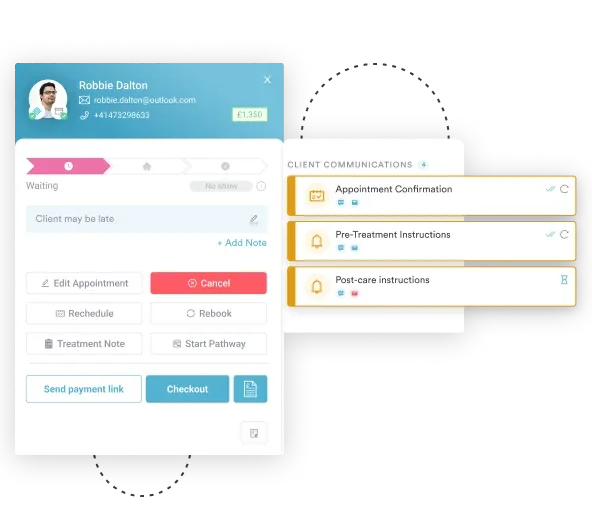
Patients often move between in-person and virtual appointments across a single treatment journey. A dermatology patient might have their initial consultation in clinic, follow-up consultations over video, and a procedure in person. If those touchpoints live in different systems, the treating clinician starts each session without a complete picture.
A unified patient record within a telemedicine EHR means every encounter, regardless of modality, is part of one continuous clinical history. Opening the record shows everything from every visit type:
That same record supports care coordination when more than one provider is involved: a referring physician, a specialist covering a virtual follow-up, or a front-desk team confirming what was agreed without paging the practitioner.
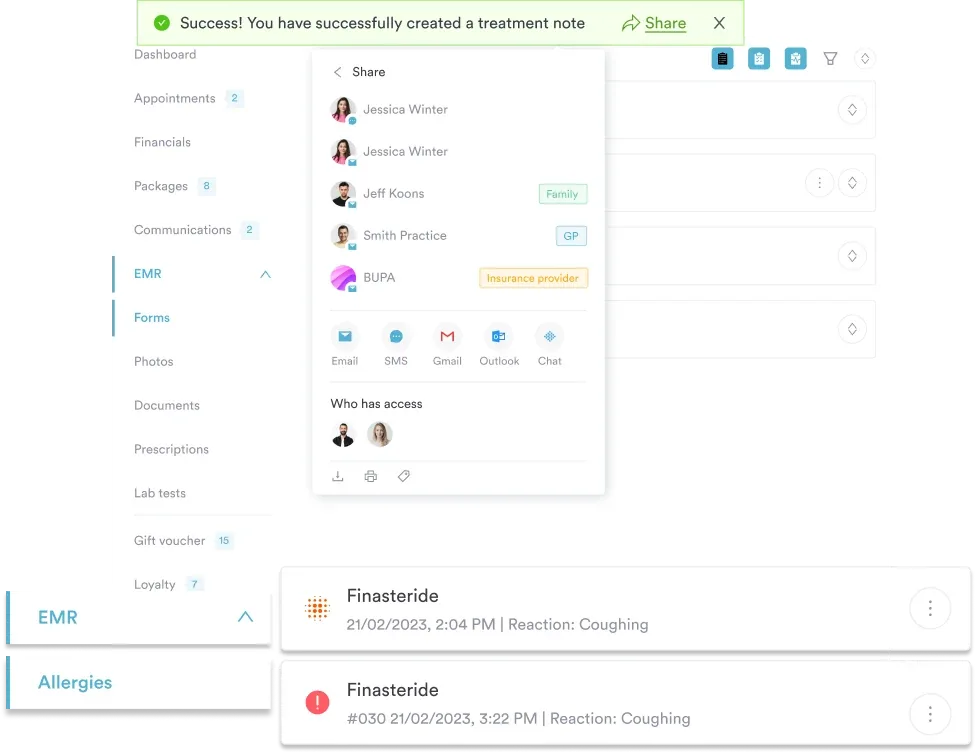

Pabau’s built-in telehealth software connects virtual consultations, clinical notes, consent forms, and billing in a single workflow. No tab-switching, no duplicate data entry.

Not every EHR that claims telehealth capability delivers genuine integration. When evaluating a telemedicine EHR, these are the features that separate a properly built system from a video link bolted onto an otherwise standalone record. Beyond telehealth, our EHR features breakdown covers the scheduling, billing, and documentation capabilities every modern system should include.
| Feature | What to look for | Why it matters |
|---|---|---|
| Embedded video consultation | Launches from the appointment calendar, no third-party login required | Eliminates context-switching and reduces patient no-show risk |
| Synchronous and asynchronous support | Live video AND store-and-forward messaging/image review | Different specialties need different modalities (dermatology vs psychiatry vs primary care) |
| Pre-visit digital forms | Consent, intake, and health history sent automatically before the appointment | Practitioner arrives at the call informed; consent is documented before the session begins |
| Real-time note capture | AI scribe or structured note templates that complete during the session | Cuts post-visit documentation time by 60-70% in integrated systems |
| Automated billing codes | System applies the correct telehealth CPT code and POS modifier | Reduces claim denials caused by manual coding errors |
| Patient portal access | Patients can view their notes, prescriptions, and follow-up plans after the visit | Improves adherence and reduces inbound admin calls |
| End-to-end encryption | Video and data transmission encrypted at rest and in transit | Non-negotiable for HIPAA compliance |
| Integrated e-prescribing | Prescriptions written during the visit and saved to the patient record | Removes a separate e-prescription step and keeps medication history complete |
| Remote patient monitoring (RPM) integration | Wearable and home device data (vitals, glucose, blood pressure) flows into the patient record | Supports chronic care management without manual data entry between visits |
The telehealth software built into Pabau covers seven of these nine natively: practitioners launch video calls from the calendar, notes are structured and saved to the patient record automatically, and pre-visit consent forms are sent and stored without a separate tool. For remote patient monitoring data, practices typically connect wearables and home devices through Zapier or the Pabau API rather than a bolt-on RPM tool.
Synchronous telehealth is a live, real-time video or audio consultation between clinician and patient. Asynchronous telehealth involves the patient submitting information (photos, questionnaires, symptom descriptions) that the clinician reviews and responds to outside of a shared session window.
Most telemedicine EHR platforms prioritize synchronous workflows. But for aesthetic and dermatology clinics in particular, asynchronous review is often how virtual consultations actually work. A patient submits before-and-after images and a brief health history. The practitioner reviews, annotates, and responds. For other specialties, asynchronous review can also cover vital signs or readings the patient records at home before the appointment, so the clinician sees them in the EHR ahead of the visit. An EHR that supports both modalities gives clinics the flexibility to match the consultation format to the patient need.
Before selecting a telemedicine EHR, map your actual consultation types. List which services run best as live video, which work better as asynchronous review, and which require a hybrid. Then test your shortlisted platforms against those specific scenarios, not the vendor demo script.
The right telemedicine EHR setup looks different depending on what a practice actually treats. A few examples show how the modality and the documentation needs change by specialty.
| Specialty | Typical telehealth modality | What the EHR needs to support |
|---|---|---|
| Dermatology and medical aesthetics | Asynchronous photo review, occasional live follow-up | Image capture and annotation tied to the patient record, before-and-after comparison |
| Mental and behavioral health | Synchronous video, session-length billing | Progress note templates, safety documentation, consent renewed each session |
| Primary care and urgent care | Hybrid: live video plus device data between visits | Vitals and remote patient monitoring data flowing into the chart automatically |
| Physical therapy and MSK | Synchronous video for form checks, home exercise tracking | Outcome-measure fields, exercise adherence logging |
| Weight loss and chronic care management | Asynchronous check-ins plus RPM (glucose, blood pressure, weight) | Device data integration and trend tracking over time |
None of these setups need a separate tool bolted onto the EHR. The modality changes, but the record stays in one place, whether the visit was synchronous, asynchronous, or informed by monitoring data collected between appointments.
HIPAA compliance for telemedicine covers far more than an encrypted video platform. EHR security for any telehealth EHR has to run across the entire data lifecycle:
The HHS HIPAA guidance requires that any technology handling protected health information (PHI) meets the Security Rule’s administrative, physical, and technical safeguard requirements. For telemedicine, this means:
For practices new to telehealth compliance requirements, the AMA Telehealth Quick Guide provides a practical checklist covering data security, consent, and reimbursement basics. And if you need to assess your current clinic setup against these standards, the HIPAA compliance for clinic software breakdown covers what a practice management system needs to do to stay on the right side of the rules.
Clinics uncertain about their specific HIPAA obligations for aesthetic and wellness services should confirm with a compliance consultant before launching telehealth services. The rules apply regardless of whether a clinic sees patients in person, virtually, or both.
Documentation requirements for virtual visits mirror those for in-person encounters in most respects. Telehealth notes still need:
The difference is in how that documentation is captured, and what additional context needs to be recorded.
For a telehealth encounter, the clinical note should include:
An integrated telemedicine EHR can auto-populate several of these fields from the appointment record, reducing the documentation burden without reducing clinical accuracy.
The ONC Health IT regulations covering EHR certification also apply to telehealth-integrated systems. Clinics using certified EHR technology for value-based care programs need to confirm their telemedicine module meets those certification standards, not just the security baseline.
Pabau’s patient portal gives patients access to their consultation notes, prescribed follow-up care instructions, and appointment history after every virtual visit. This closes the loop on continuity of care without additional admin: the note is saved, the patient can access it, and the practitioner has a documented record that the information was shared.
For aesthetic and wellness clinics, the benefits of patient portals extend well beyond telehealth: pre-visit health history, post-visit care instructions, repeat booking, and review requests all run through the same portal interface when the system is fully integrated. Patients who use a portal have measurably higher appointment adherence rates, and the portal reduces inbound admin calls by handling routine questions directly.
For medical spa software specifically, the ability to run virtual consultations, send pre-treatment digital forms, and capture consent before a patient walks in solves a common problem in how many med spas currently manage their new patient intake. A telehealth consultation that feeds directly into the patient’s EHR record means the first in-person appointment starts with a full clinical history already on file.
Appointment scheduling within the same platform means virtual and in-person slots are managed in one calendar, reducing the risk of double-bookings and allowing the front desk to handle both types of appointment without switching between systems.
The distance between a video call and a complete clinical record is where compliance risk and documentation waste live. A properly integrated telemedicine EHR closes it: virtual visits, patient records, consent, and billing all run through one system, and every encounter becomes part of a complete and searchable clinical history.
Pabau’s built-in telehealth software handles the full workflow: from pre-visit digital forms and real-time AI documentation through to post-visit patient portal access and automated billing. To see how it works in practice for your clinic type, book a demo and we’ll walk through the virtual consultation workflow end to end.

Choosing a telehealth platform for a UK practice? Telehealth platforms in the UK covers CQC oversight and GDPR requirements for remote consultations.
Outgrowing your current video call setup? Telemedicine software platforms compares tools for scheduling, billing, and multi-practitioner workflows.
Need a platform that meets HIPAA requirements? HIPAA compliant telehealth platforms compares seven tools on workflow, billing, and patient data handling.
Telemedicine EHR integration is the connection between a virtual consultation platform and a clinic’s electronic health record system, so that patient data, clinical notes, consent forms, and billing all update in a single workflow rather than across separate tools. When a practitioner starts a video call, the patient record is already open. When the call ends, the note is attached to the encounter automatically, and the billing code is pre-populated based on the visit type and duration.
An EHR supports telehealth visits by surfacing the full patient history during the call, capturing and storing notes within the same record, managing consent documentation, and feeding the encounter data directly into the billing workflow. Systems with native telehealth integration do this without any manual data transfer between platforms.
The clinical documentation standards are the same, but telehealth notes require a few additional fields: the modality used (audio-only or video), confirmation of patient consent to the virtual format, the patient’s location at the time of the visit, and the technology platform used. An integrated telemedicine EHR can auto-populate several of these from the appointment record.
HIPAA compliance in a telemedicine EHR requires end-to-end encrypted video transmission, secure data storage with access controls, a full audit trail of record access, and a signed Business Associate Agreement (BAA) with any third-party platform that handles patient data. Consumer video tools without a BAA in place do not meet the standard for clinical use.
Aesthetic and wellness clinics benefit most from telemedicine EHR features that support pre-visit digital intake forms and consent, asynchronous image review alongside live video consultations, patient portal access for post-visit care instructions, and automated billing that handles both virtual and in-person encounter types within the same system.
Telehealth EHR integration connects your video consultation tool to your electronic health record so patient data, notes, consent, and billing move through one workflow instead of separate systems. In a natively integrated platform there is nothing to connect by hand: the practitioner launches the call from the calendar, and the note, consent, and billing code save to the encounter automatically. With a bolt-on video tool, integration depends on an API or a Business Associate Agreement between the two vendors, so it is worth confirming before you commit.
The strongest fit is the system that keeps virtual visits, clinical notes, consent, and billing in a single HIPAA-compliant record, rather than a standalone video tool sitting next to a separate chart. For aesthetic and wellness practices, that also means asynchronous image review and pre-visit digital forms, not just live video. Practice management software like Pabau builds telehealth into the same system that runs scheduling, records, and payments, so nothing is duplicated across tools.
The terms are often used interchangeably, but telemedicine specifically refers to clinical services delivered remotely, like a video consultation or an asynchronous photo review. Telehealth is the broader term, covering clinical visits as well as non-clinical uses like patient education and remote monitoring. For EHR purposes, the distinction rarely changes what’s required: both need the same real-time record access, consent, and billing integration as an in-person visit.
Free and low-cost telemedicine tools typically handle the video call and stop there, leaving a practice to reconcile notes, consent, and billing in a separate system by hand. That gap is where telemedicine EHR software earns its subscription cost: the time saved on duplicate documentation, and the reduced risk of a HIPAA violation from an unvetted video tool, usually outweigh the price of a properly integrated platform within the first few months.
The advantage is consolidation: one login, one patient record, and billing that doesn’t require re-entering the same visit twice. The disadvantage practices cite most is switching cost if they’ve already invested in a separate telehealth vendor with its own patient login and history. That cost is usually one-time, while running two disconnected systems is an ongoing tax on staff time with every single visit.