Printable values cards: What they are and how to use them in therapy
Printable values cards are a reflection tool that helps a patient work out which...

14
Last Updated: Sep 30, 2026

A personal trainer liability waiver is a signed record that the client understood the risks of exercise and chose to train anyway.
Our free template covers assumption of risk, release of liability, indemnification, medical clearance, first aid permission, and a governing law line.
It closes with signature blocks for the client, the trainer, and a parent or guardian, and it has no witness or notary line.
The template holds no medical history fields and no emergency contact, so collect those on a separate screening and intake form.
No waiver covers gross negligence or deliberate harm, so keep professional liability insurance running alongside it.
Practice management software like Pabau sends the waiver before the first session, captures the e-signature, and files it on the client record.
A two-part form covering assumption of risk, release of liability, indemnification, a medical clearance representation, emergency first aid permission, and a governing law line. It closes with signature and date blocks for the client, the trainer, and a parent or guardian.
Download templateA personal trainer liability waiver is a signed agreement in which a client accepts the risks of exercise. In it, they agree not to sue you for injuries that happen despite reasonable care. It has to be signed before the first session. A waiver signed in week two does nothing about a week one injury.
This page gives you the free template above and a clause-by-clause account of what the form contains. It also sets out what the form leaves out. A waiver is not an intake pack, and treating it as one is how trainers end up with no health screening on file.
Further down you will find how enforceability differs between the UK and the US, and what no waiver can ever excuse. There is also a section on collecting signatures digitally, so nothing gets chased on the gym floor.
A liability waiver is a contract between you and your client that does two jobs. It spells out the inherent risks of physical training, and it records the client accepting those risks voluntarily. Signing releases you from liability for injuries that occur during normal training, within the limits your local law allows.
The waiver is not a blank check. Courts in the UK, the US, and the UAE all accept that some injuries come from trainer negligence or unsafe equipment. A waiver defends you when an injury happens despite reasonable care on your part, and not otherwise.
It is also a different document from a consent form. A consent form records agreement to your terms, such as cancellation notice and payment rules. A waiver deals only with risk and liability, which is why most trainers use both.
Personal training carries physical risk. Clients strain muscles, roll ankles, drop weights, and in rare cases suffer cardiac events mid-session. If an injured client sues, the signed waiver is the first document your defense rests on.
Without one, you can face litigation even when you coached the session correctly. Legal defense costs alone run into the thousands, and an adverse judgment can close a small training business.
Insurers care about this too. Many professional liability policies expect a signed waiver on file for every client, and some make it a condition of coverage. Read your policy wording before you assume a claim would be paid.
In fitness and rehabilitation practices, a waiver also signals duty of care. It tells the client you take safety seriously, and it opens the conversation about conditions that should change how you program their training. A client returning to training after alcohol withdrawal may already be following a documented nursing care plan you should ask to see.
The template is a two-part document. Part one is a short acknowledgment that the client signs and dates. Part two is a fuller training agreement, signed by the trainer, the client, and a parent or guardian where the client is a minor.
Two details are easy to skip. The governing law line arrives blank, so enter the country or state you train in before you circulate the form. The trainer block needs your own signature as well, because the agreement is a contract between two named parties.
Well-organized documents like this are the foundation of good practice management.
The file is a liability document, not an intake pack. Four things trainers often expect to find in a waiver are not in this one:
None of that makes the waiver weak. A liability release and a health screening form do different legal jobs, and courts read them separately. It does mean the waiver alone leaves you short of the information you need to train someone safely.
Pair it with a PAR-Q style screening questionnaire and an intake form that records medications, past injuries, and an emergency contact with a phone number. Collect both before the first session. Digital intake and consent forms let you send all three documents in one link. A client managing schizophrenia may already follow a documented schizophrenia nursing care plan that flags relevant medication and monitoring needs.
A witness line is optional in most jurisdictions, so its absence rarely matters. If you want one anyway, add a countersignature line beneath the client block before you print the form.
Re-sign the waiver whenever the training changes materially. A client moving from mobility work to heavy barbell training is taking on different risks. A fresh signature dated to that change is far easier to defend.
Yes, within limits that change by jurisdiction. A clearly worded waiver signed before training begins is enforceable in most UK and US courts. What it is allowed to exclude is the part that varies.
In the UK: the Unfair Contract Terms Act 1977 bars a business from excluding liability for death or personal injury caused by its own negligence. No wording gets around that. The waiver can still evidence that the client understood and accepted the inherent risks of exercise. The Consumer Rights Act 2015 applies the same restriction to consumer contracts.
In the US: enforceability is decided state by state. Most states uphold an unambiguous waiver signed before the activity. Louisiana, Montana, and Virginia are the well-known holdouts. New York voids exculpatory clauses taken by gyms and recreational facilities that charge a fee, under General Obligations Law section 5-326.
Gross negligence: no waiver anywhere covers gross negligence or deliberate harm. Load a bar far beyond a client’s tested capacity, or press on after they disclose chest pain. A court can set the whole document aside. A client managing anxiety may already be following a documented anxiety nursing care plan worth reviewing before programming intense sessions.
Minors: a child cannot sign a binding contract, which is why the template carries a guardian block. Even so, several US states refuse to let a parent waive a child’s own claim. Insurance covers that exposure, paperwork does not.
Storage matters as much as wording. An unsigned or undated waiver carries no weight, and a signed one you cannot find is worth the same. Where you hold health information alongside it, your GDPR storage obligations apply to the file too. In the US.
Both are legally valid. The choice comes down to how you onboard clients and how quickly you could produce a signed copy two years from now.
Paper waivers are familiar and need no technology. The cost is administrative. You chase signatures on the day, store the copies somewhere secure, and hunt for them when a dispute surfaces months later.
Digital waivers go out by email or booking link, get signed electronically, and file themselves. The UK Electronic Communications Act 2000 and the US ESIGN Act both make e-signatures binding. They also carry a timestamp, which a paper form in a drawer cannot.
The practical answer is digital by default, with a printed copy available for clients who prefer one. Keep both in the same place so a search returns everything.

Most trainer liability disputes start with a waiver that exists but does not hold up. These are the failures that keep recurring:
Send the waiver and your health screening form together, at least 24 hours before the first session. That gives you time to read the answers, adjust the program, and call the client if something needs checking. A form signed in the doorway offers no safety benefit at all.
Chasing paper is where waiver management usually breaks down. Practice management software like Pabau sends the waiver as a digital form ahead of the first appointment. The client signs on their phone, so you start the session with the file already on record.
You upload the waiver once into your coaching client system and set it to go out with every new client booking. The client signs electronically. Pabau timestamps the signature and files the completed copy against the client record, next to their screening answers and training notes.
Outstanding forms show against the appointment, so anyone on the front desk can see who still needs to sign before they walk in. If a claim arrives two years later, you retrieve the signed copy and its timestamp in seconds.
Because the waiver sits with health information, storage has to be controlled. Pabau keeps signed forms behind role-based access with an audit trail.
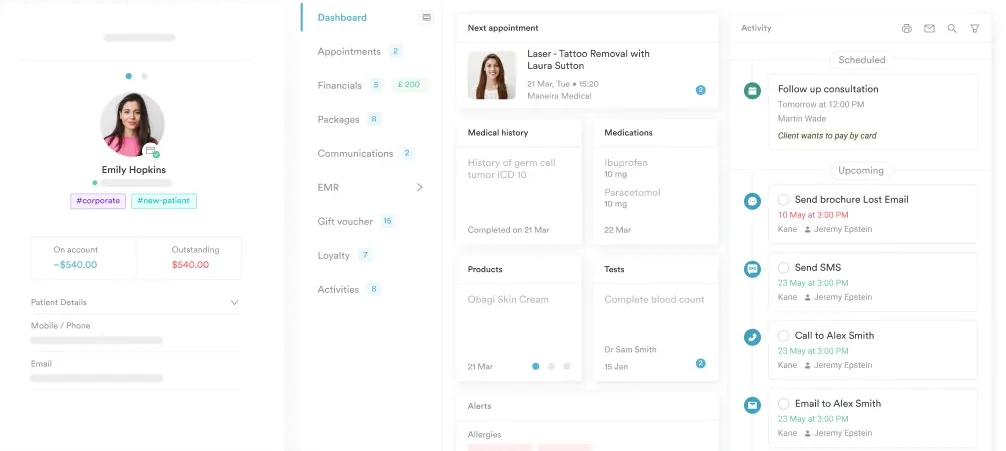

Pabau sends your liability waiver before the first session, captures a timestamped e-signature, and files the signed copy on the client record. Your front desk stops chasing paperwork, and no client trains unsigned.

A signed waiver is the cheapest protection a personal trainer can put in place. It is also the easiest to get wrong, usually by leaving it until the client is already warming up.
Use this template as your liability document, and build a screening and intake form around it. The waiver records consent to risk. The screening form is what keeps a client with an undisclosed heart condition off a heavy barbell. The waiver was never designed to do that job.
Get both signed before the first session, every time, and keep them somewhere you can still find them in three years. Book a demo to see how Pabau sends, signs, and files client waivers without anyone chasing them.

Screening for domestic violence during intake? Domestic violence worksheet checks for five categories of abuse and opens with a safety tips section.
Mapping a client’s support network and stressors? Ecomap social work template maps family, community, and support systems to guide intervention points.
Tracking a client’s progress through EMDR phases? EMDR worksheets template tracks SUD and VoC scores across all eight phases of EMDR therapy.
Need structure for a family conversation? Family meeting agenda runs 15 to 30 minutes across eight sections, with weekly and monthly formats.
Want clients to see what drives their reactions? Iceberg chart template helps clients visualize the gap between visible emotions and what drives them.
A waiver needs four things at minimum: assumption of risk, an explicit release of liability, an indemnification clause, and a dated client signature. Our template adds a medical clearance representation, a duty to follow instructions, and emergency first aid permission. It also carries a governing law line and a parent or guardian signature block for minors. Health screening details and emergency contact numbers are collected separately, on your intake form.
No. The template records only a short representation that the client is fit to train and has disclosed known conditions to you. There are no medical history fields, no emergency contact details, and no witness or notary line. Pair it with a health screening questionnaire and an intake form that captures medications, past injuries, and someone to call.
Yes, with limits that depend on where you train. In the UK, the Unfair Contract Terms Act 1977 stops a business excluding liability for personal injury caused by its own negligence. In the US, enforceability is a state question, and Louisiana, Montana, and Virginia will not uphold these waivers. Nowhere covers gross negligence or deliberate harm, and a waiver signed after an injury is worthless.
No. Waivers and insurance do different jobs. A waiver documents client consent and defends you against ordinary negligence claims. Insurance covers what the waiver cannot, including gross negligence, claims brought on behalf of minors, and your legal defense costs. Keep professional liability coverage alongside every signed waiver.
No. Someone under 18 cannot sign a binding contract, so a parent or legal guardian has to sign on their behalf. Our template includes a guardian block for exactly that. Some US states still will not let a parent waive a child’s own future claim, so insurance matters more than paperwork here.
Yes. The UK Electronic Communications Act 2000 and the US ESIGN Act both make electronic signatures binding. A digital waiver is as enforceable as an inked one, and often easier to defend. It carries an automatic timestamp showing exactly when the client signed.
A liability waiver releases you from injury claims and records the client accepting risk. A consent form documents agreement to your terms, such as cancellation notice, refunds, and training rules. Most trainers use both, alongside a health screening questionnaire, because each one solves a different problem.