Fertility clinic marketing: Strategies that attract & convert patients
Fertility clinic marketing is how a fertility practice attracts, educates, and c...

Last Updated: Oct 14, 2026

A patient referral program turns satisfied patients into your most credible marketing channel, typically at a fraction of paid acquisition costs.
AMA ethics guidelines prohibit financial incentives for referrals under physician-supervised practices; non-financial rewards (service credits, priority booking) are the safer route.
Post-treatment follow-up is the highest-converting moment to ask for a referral: time your ask within 48-72 hours of a positive outcome.
Pabau’s automated workflows and email/SMS campaigns let you systematize referral requests, track sources, and follow up without manual effort.
Paid advertising costs for healthcare practices have climbed steadily over the past five years, with cost-per-click on Google Ads for competitive medical and cosmetic keywords now often exceeding $15 in major US markets. Yet the most cost-effective new patient channel sits untapped in most practices’ existing appointment books.
Whether you’re launching a new patient referral program from scratch or fixing one that has stalled, a well-structured patient referral program converts your happiest patients into a reliable acquisition engine, and the operational lift is far smaller than most practice owners expect.
This guide covers how to design a patient acquisition strategy built around referrals. We’ll cover the incentive structures that work, the legal lines you cannot cross, how to time your ask, and how automation turns a manual process into a scalable one.
A patient referral program is a structured system that motivates existing patients to recommend your practice to friends, family, or colleagues, then captures and rewards that behavior consistently. The key word is “structured.” Most practices rely on organic word-of-mouth, which does happen, but without a system it is invisible, untraceable, and impossible to scale.
The difference between organic referrals and a managed program is mostly operational. Practices that invest in improving patient engagement across the full care journey create more referral moments naturally. A formal program codifies those moments into repeatable workflows.
There are two distinct types of referral programs practice owners often conflate:
This guide focuses primarily on patient-to-patient programs, which apply across aesthetic practices, dental practices, mental health providers, med spas, functional medicine practices, and private primary care practices. Physician referral networks get a dedicated section on compliance because the legal stakes differ.
Before designing incentives, understand where the legal boundaries sit. Getting this wrong carries real consequences: professional discipline, federal investigation, and loss of Medicare/Medicaid billing rights.
The American Medical Association’s Code of Medical Ethics states that physicians must not offer financial incentives or other valuable incentives to current patients in exchange for recruiting other patients. Word-of-mouth referrals must be voluntary and reflect honestly on the practice. This applies to all physician-supervised practices in the US.
The Anti-Kickback Statute (AKS) prohibits offering, soliciting, or receiving any remuneration to induce or reward referrals for services covered by Medicare, Medicaid, or other federal healthcare programs. The Stark Law (Physician Self-Referral Law), enforced by CMS, separately restricts physician referrals to entities with which they have a financial relationship.
For practices that bill federal programs, cash-based incentives for patient referrals are essentially off the table. Non-financial or de minimis value rewards fall into safer territory, but always verify with your healthcare attorney before launching.
Cash-pay aesthetic practices, dental practices, and private wellness practices are not governed by the AKS in the same way, but state medical board regulations add another layer. Rules vary significantly by state and by the licensed profession of your clinical staff. Always check your state’s medical board guidance before offering any referral reward, even non-monetary.
Non-financial incentives (service credits, complimentary add-ons, priority booking, loyalty points) consistently receive more favorable ethical framing in professional guidance, including from the AMA. When designing rewards, lean non-monetary as your default.
Build your referral program around service credits rather than cash. A $25 credit toward a future treatment keeps the incentive tied to your practice, avoids the clearest AKS red flags for non-federal practices, and typically costs you far less than the retail value suggests because it drives another appointment.
Timing is the most underestimated element of a referral request. Ask too early and the patient has not yet experienced the result. Ask too late and the emotional peak of satisfaction has passed. Ask at the wrong moment and you damage the relationship entirely.
The optimal window is 48-72 hours after a successful treatment, during the post-procedure follow-up. This is when patients are experiencing the result, still engaged with your practice, and most likely to share their experience. Capturing patient feedback at this moment serves double duty: it surfaces your happiest patients and creates a natural segue into a referral ask.
The ask itself should feel personal, not transactional. A templated SMS that says “You’ve been a great patient, here’s your referral link” reads as a mass blast. A message that references their treatment, acknowledges a positive outcome, and then invites them to share with someone who might benefit reads as genuine care.
| Appointment type | Best referral trigger | Timing |
|---|---|---|
| Aesthetic treatment (Botox, fillers) | Post-treatment follow-up call or SMS | 48-72 hours post-procedure |
| Dental procedure | Satisfaction check-in + review request | 3-5 days after appointment |
| Mental health / therapy | Session milestone check-in (e.g. 5th session) | At a natural progress milestone |
| Med spa membership renewal | Renewal confirmation with referral offer | At renewal point |
| Post-op consultation | Outcome review with share prompt | Final follow-up appointment |
Practices with strong post-treatment communication workflows see higher referral conversion rates because the relationship does not end at checkout. Practice automations that drive revenue growth make it feasible to run these follow-up sequences without adding to your front desk’s workload. Built-in marketing tools that manage campaigns, loyalty points, and gift cards keep referral automation on the same dashboard.
A generic script reads as a mass blast. These three templates reference the patient’s own visit, giving the front desk a starting point to personalize rather than a blank page:
Assuming your incentive choice is legally clear, the design of the reward determines whether patients actually use it. Most referral incentive programs underperform because the reward is too complicated to redeem, too small to motivate action, or too generic to feel relevant to that patient’s care journey.
For med spa marketing specifically, service credits and bilateral rewards consistently outperform single-party cash incentives in both conversion and patient sentiment.
The right incentive depends on what a practice sells and how often patients come back. A generic reward list undersells the fit, and matching the incentive to the vertical is what actually gets patients to redeem it:

Pabau’s automated workflows send personalized follow-up messages at the right moment, track where new patients come from, and connect referral activity to your CRM without manual effort.

Most practices that fail with referral programs skip the planning phase and go straight to offering a reward. Without a defined ask, a clear redemption path, and a tracking mechanism, the program dies within weeks.
A patient referral program that cannot be measured cannot be improved. The three metrics that matter most are referral conversion rate, cost per referred acquisition, and lifetime value of referred patients.
Reputation management and patient surveys feed directly into this tracking picture. Practices that run post-treatment surveys automatically generate a segmented list of satisfied patients ready for a referral ask, without any manual work.
Pabau’s automated email and SMS campaigns let you build the post-treatment follow-up sequence once, then run it across every applicable appointment type. Combined with referral source tagging in the client record, you get a closed loop from referral ask to new patient booked to revenue attributed.
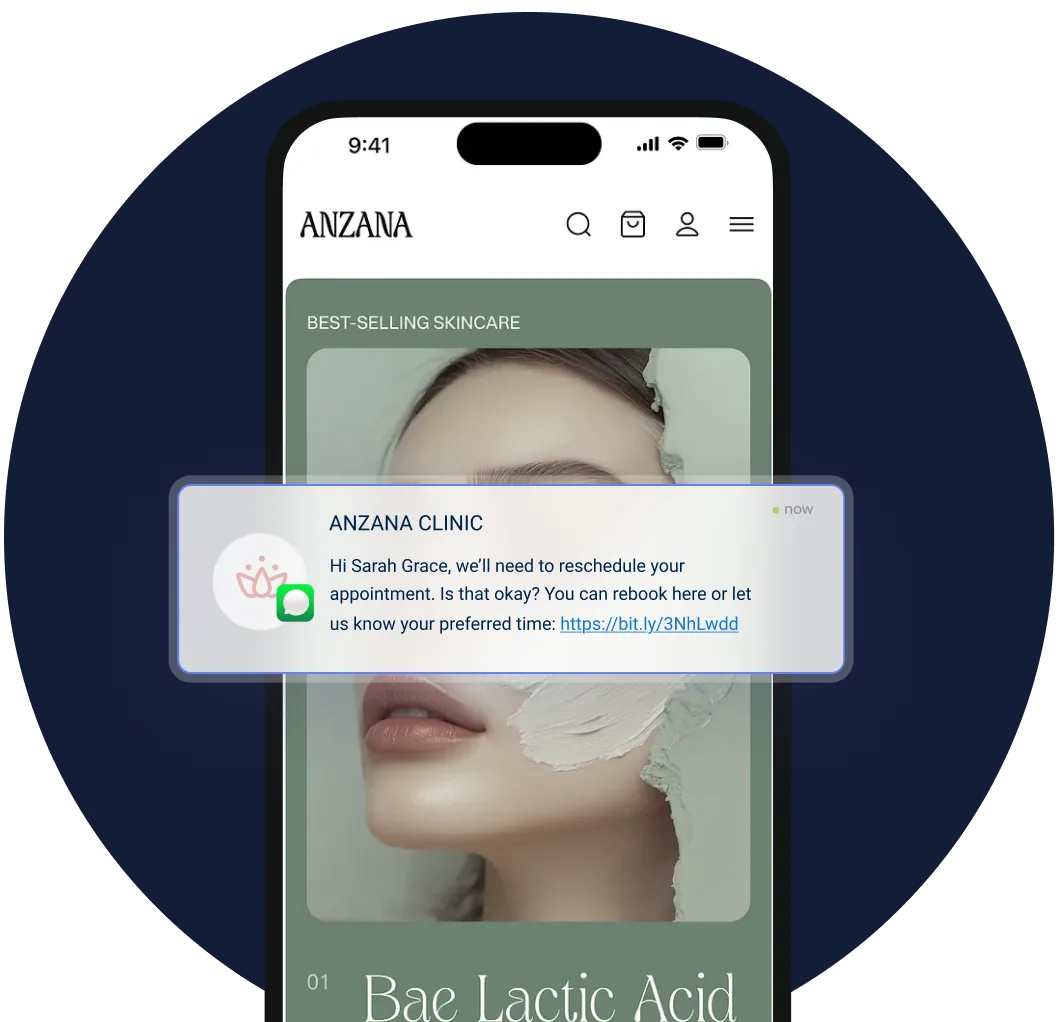
Review your referral source data quarterly. If 80% of your referred patients come from 20% of your referrers, focus your program energy on that top tier. Send them a personal thank-you note, upgrade their reward, and ask them directly if there is anything about their experience you can improve.
Manual referral programs stall because follow-up tasks fall through the cracks. A front desk team managing 30+ appointments a day cannot reliably send personalized post-treatment referral messages for every patient. Automation solves this.
With Pabau’s automated recall workflows, you can configure triggers based on appointment type, treatment outcome, or days since last visit.
A patient who completes a Botox treatment automatically enters a follow-up sequence: a check-in message at 48 hours, a feedback request at 72 hours, and a referral prompt when they confirm satisfaction. No manual intervention required.
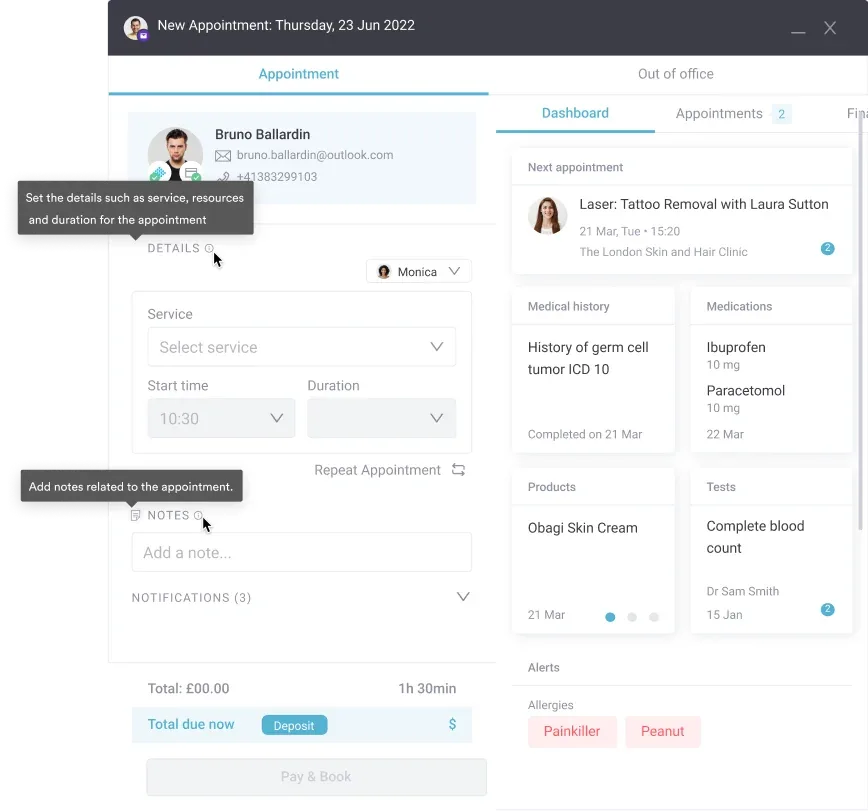
The same logic applies to membership renewals, post-surgical consultations, and milestone sessions in therapy practices. Converting warm leads into patients through referrals is significantly easier when the referral ask arrives at the exact moment the patient is most engaged. Automated workflows make that timing consistent across every patient, every time.
For practices managing multiple locations, medical spa software that centralizes patient data and referral tracking across sites prevents the fragmented picture that makes ROI measurement impossible. Every referred patient should be tagged to their source location and referring patient regardless of where they book.
The practices that grow most reliably through referrals are not the ones with the most generous incentives. They are the ones with the most consistent systems. A patient referral program works when your ask is well-timed, your reward is relevant, your tracking is automatic, and your follow-through is genuine.
Pabau’s automated workflows and CRM tools let you build a referral system that runs in the background of your normal operations, turning every successful appointment into a potential referral opportunity. If you want to see how that looks in practice, book a demo and we’ll walk through the referral workflow setup for your practice type.
For broader context on growing your practice, marketing strategies for practices covers the full acquisition picture beyond referrals.

Want to understand the full patient growth picture? Patient acquisition strategies for private practices covers paid, organic, and referral channels together.
Want to personalize care from the first visit? About me template covers personal history, lifestyle, relationships, and goals to help you build rapport early.
A patient referral program is a structured system where existing patients are encouraged to recommend your practice to friends or family, typically in exchange for a reward. It works by identifying your happiest patients, sending a timely referral ask (usually post-treatment), giving them a unique tracking link or code, and rewarding them when the referred person books an appointment.
Yes, but with real restrictions. The AMA’s Code of Medical Ethics prohibits offering financial incentives to patients for recruiting other patients, and the Anti-Kickback Statute makes cash rewards especially risky for practices that bill Medicare or Medicaid. Non-financial rewards, such as service credits or priority booking, sit in safer territory, though state medical board rules still apply, so confirm with a healthcare attorney before you launch.
For practices billing Medicare or Medicaid, the Anti-Kickback Statute restricts financial incentives for referrals. The AMA’s ethics guidelines state physicians must not offer financial or valuable incentives to patients for recruiting others. Non-financial rewards such as service credits, priority booking access, or loyalty points are generally considered safer, but you should always verify with a healthcare attorney against your state’s medical board rules before launching any incentive program.
The most reliable method is assigning each patient a unique referral code or UTM-tagged booking link, then tagging all referred patients in your practice management system at the point of intake. Track referral conversion rate, cost per referred acquisition, and the lifetime value of referred patients separately from your general patient data. Practice management software with built-in CRM and campaign tracking automates much of this process.
A physician referral is when one provider refers a patient to another provider for a specific clinical need. A patient referral program is when a practice encourages its existing patients to recommend the practice to people in their personal network. Physician referrals are subject to Stark Law and Anti-Kickback Statute restrictions, particularly for Medicare/Medicaid cases. Patient-to-patient referral programs carry different (though overlapping) compliance considerations around incentive structures.
The highest-converting window is 48-72 hours after a successful treatment, during the post-procedure follow-up. At this point, the patient is experiencing their result, still emotionally engaged with your practice, and most likely to share their experience. Avoid asking at the start of an appointment, immediately after payment, or before the patient has seen results.