GLP-1 diet plan
A GLP-1 diet plan is a structured eating framework for patients taking semagluti...

2
Last Updated: Oct 13, 2026

Nursing documentation is the legal and clinical record of every assessment, intervention, and patient response a nurse records — if it wasn’t charted, it wasn’t done.
Accuracy, completeness, timeliness, and legibility define quality nursing documentation; the American Nurses Association’s own documentation principles cover six broader areas, not a fixed count of three or four.
Documentation errors are among the leading causes of nursing license disciplinary actions, making every chart entry both a clinical and a legal act.
AI-assisted charting tools are cutting documentation time by automating note generation, freeing nurses to focus on patient care rather than paperwork.
A missed medication dose.
A deteriorating patient.
A malpractice lawsuit three years after discharge.
In each case, the first question investigators ask is the same: what does the chart say? Strong nursing documentation is what answers that question.
Nursing documentation is not administrative overhead. Instead, it is the clinical record that determines whether care was delivered and whether liability is shared. It also tells the next nurse on shift what happened in the past eight hours.
Yet a qualitative study of nurses at a South African mental health institution reached a clear finding. Even nurses who understand documentation’s direct link to patient outcomes say they need more support. Specifically, they need more in-service training and closer supervision to document consistently. That need for support does not reduce the legal or clinical consequences of incomplete records.
This guide covers what quality documentation looks like and the main methods for documenting in nursing. It also covers where nurses most often go wrong and how modern technology is beginning to reduce the documentation burden.
Nursing documentation is the written or electronic record of everything a nurse observes and assesses. It also covers what a nurse plans, performs, and evaluates during patient care. It is the formal account of the nursing process in action. Every entry in a patient’s chart represents a clinical decision and a legal statement. It is also a communication to the next provider who takes over care.
Documentation covers a broad range of record types. A nurse in a private aesthetics practice charts consent, pre-treatment assessments, procedure notes, and post-treatment observations. By contrast, a hospital nurse documents medication administration, vital signs, pain assessments, and care plan updates.
In a skilled nursing facility, the chart opens with a nursing home admission checklist. It then runs through daily care notes, resident assessments, and discharge planning.
In a mental health practice, the same obligation still applies. Specifically, it covers risk assessments, safety plans, and session notes that carry equal legal weight. The format differs; the underlying obligation does not.
Beyond the record types above, most charting follows one of a few structured methods. The method a nurse uses shapes how an entry reads and how fast the next clinician finds what matters. Six charting methods dominate documenting in nursing across US practice. The right one, however, depends on the unit and the kind of care being recorded.
SOAP documentation, its SOAPIE extension, and DAR all force structured, objective entries. That’s why they cut the vague language that weakens a chart. SOAPIE charting adds an Intervention and Evaluation line to SOAP. As a result, what the nurse did and how the patient responded are captured in the same note. PIE charting ties each entry to a numbered problem instead.
Some practices reorder SOAP into an APSO note template, moving the assessment and plan to the top. As a result, the clinical takeaway is visible before the supporting detail.
Charting by exception is the fastest of these methods. However, it only holds up in a review when a documented normal baseline backs up every absent entry. Picking one consistent format across a team matters more than the method itself. Mixed conventions are where handover errors start.
Understanding the purpose of documentation is what separates a defensible record from a box-ticking exercise. Poor nursing documentation kills continuity. A nurse may come on shift without a clear record of what the previous nurse observed. As a result, clinical decisions get made on incomplete information. Medication gets double-dosed. Deteriorating symptoms go unrecognized.
In its Principles for Nursing Documentation, the American Nurses Association, or ANA, describes four simultaneous functions the record serves. Specifically, these are communicating patient status, supporting continuity of care, providing evidence of care delivered, and meeting regulatory requirements.
Each purpose carries weight in a different context. The communication function matters at handover. The evidential function matters in court. Finally, the regulatory function matters during a state board audit. Nurses who treat documentation as an afterthought are exposing their patients and themselves to risk across all three domains.
For example, reading about time-saving practice features shows how workflow design can reduce that burden without cutting corners.
Accuracy, completeness, timeliness, and legibility are the qualities that separate a defensible chart from a liability. However, they are not aspirational guidelines. They are the baseline below which documentation is considered legally and clinically deficient.
The ANA’s own Principles for Nursing Documentation frame these qualities as characteristics under the first of six broader principles. In addition, those principles cover staff education, facility policy, protection systems, documentation entries, and standardized terminology.
Switching from paper to digital intake forms addresses legibility automatically. However, it does not fix accuracy or completeness. Those are nursing practice issues, not technology issues.
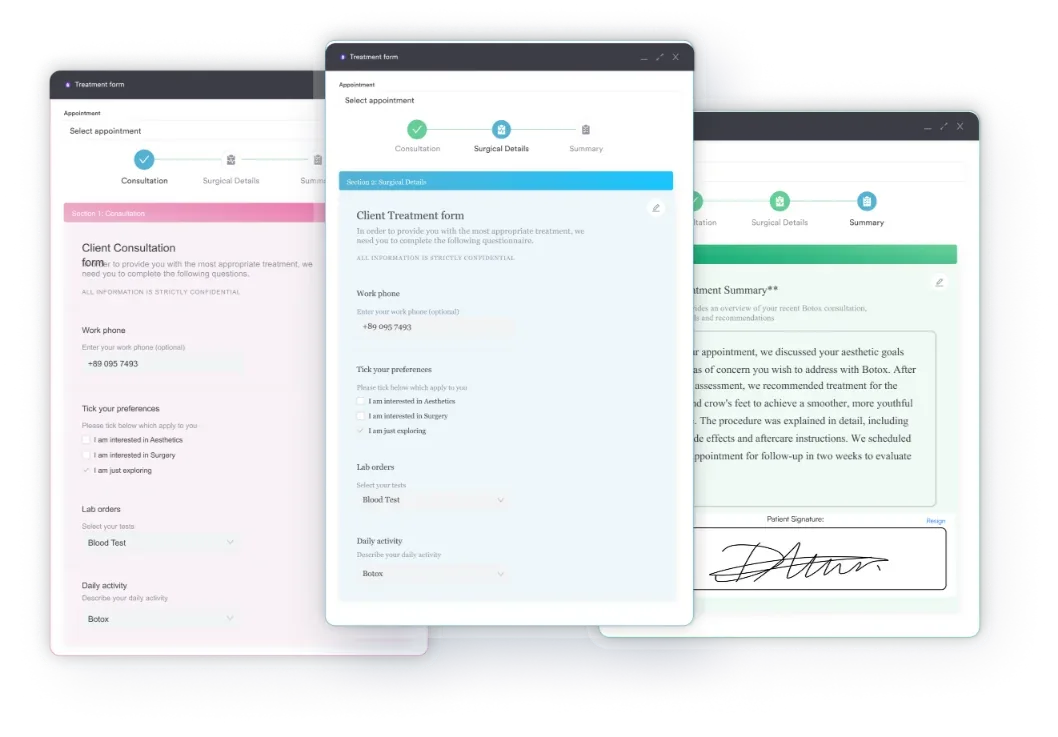
Knowing how to document as a nurse is not about writing more. Instead, it’s about writing the right things at the right time. These best practices come down to a set of habits that reduce both clinical risk and legal exposure. None of them require extra time. Most of them save it.
Consistency in applying these habits protects patients and protects nurses. A framework for safer clinical notes gives nurses and practice managers a structured standard to apply across a team. It also helps when introducing new staff who may have been trained with different documentation conventions.
Audit your documentation habits once a month by reviewing five of your own recent chart entries. Look for vague language, missing patient responses, and late entries. Self-audit catches patterns before a supervisor or board reviewer does.
Documentation errors fall into predictable categories. As a result, knowing the patterns makes them avoidable. Three errors appear in disciplinary records more consistently than any others.
Charting hours-old care as if it happened in real time creates an inconsistency. Expert witnesses and investigators detect that inconsistency quickly. As a result, timestamp mismatches between medication administration records and nursing notes become evidence of false documentation. That’s treated as more serious than simple negligence.
The correct approach is simple. Late entry nursing documentation must be labeled with the current date and time. It also needs the time of the actual event and the reason for the delay.
Writing “patient appears anxious” or “wound looks better” creates no clinical baseline for the next provider. For example, a physical therapist, a dermatologist, and an aesthetic nurse all see different things when they read “looks better.”
Objective, measurable language eliminates ambiguity: “Wound measures 2.3 cm x 1.8 cm, no purulent discharge, surrounding erythema reduced from 4 cm to 2 cm border.” The same logic applies to physical exam findings. For example, a documented closed-fist percussion test result is either positive or negative, with no room for interpretation. The added time is seconds. The clinical value is significant.
Patient falls, medication errors, allergic reactions, and unexpected clinical changes require immediate documentation regardless of how busy the shift is. In a review of nursing liability cases, the Nurses Service Organization found a consistent pattern. Incomplete records are used to infer that care was not delivered. In fact, omission is not neutral. It is legally equivalent to non-documentation of the event itself.
Heavy workloads are the environment in which most of these errors occur. However, addressing documentation burden and burnout requires systemic solutions, not just individual effort. Practice managers who design workflows that allow real-time charting reduce error rates across their entire team. That’s true not just for the most diligent nurses.

Pabau’s AI-powered charting tools help nurses document faster and more accurately, so every shift ends with complete records rather than catching up on notes.

There is no single checklist of 5 legal requirements for nursing documentation that applies nationwide. Instead, obligations stack across four layers: clinical practice, employer policy, state law, and federal regulation. Medicare billing adds federal record rules, such as the care plan, consent, and staff time logs in Chronic Care Management documentation. Understanding each layer protects both the nurse and the patient.
The base layer is professional practice itself. Standards of care, upheld through licensure, require every entry to reflect the assessment, intervention, and evaluation a nurse actually performed. In practice, this is the standard a malpractice claim or peer review measures a chart against. That standard applies independent of any employer policy or statute.
Individual practices layer their own rules on top of state and federal law. Specifically, these include approved abbreviation lists, required templates, chart-completion deadlines, and internal audit procedures. Following them is a condition of employment and license standing. It is also the specific policy an internal review or state board investigation checks a chart against first.
The HIPAA Privacy Rule (45 CFR Parts 160 and 164) governs who can access, use, and disclose nursing records. As a result, every entry a nurse makes becomes protected health information, known as PHI.
Documentation practices that allow unauthorized access create HIPAA violations independently of the clinical content. That includes access through shared logins, visible screens, or unsecured paper charts. Private practices should review HIPAA-compliant practice software requirements before selecting any documentation platform.
Every US state has a Nurse Practice Act that defines the scope of nursing practice, including documentation obligations. Requirements vary. Some states mandate specific retention periods, commonly five to seven years for adult patient records. Others, by contrast, require certain clinical events to be documented within defined time windows.
Since nurses often practice across state lines, they need to know which state’s regulations apply at the point of care.
The principle is consistent even where the specifics differ. Documentation that fails to meet state board standards can result in license review, formal reprimand, suspension, or revocation. As a result, standardized documentation across a team is the simplest way to keep every nurse aligned with those requirements. That’s better than relying on individual memory.
Exploring compliance management tools built into clinical software gives practice managers a way to embed regulatory requirements into daily workflows. That’s more reliable than expecting individual nurses to stay current on their own.
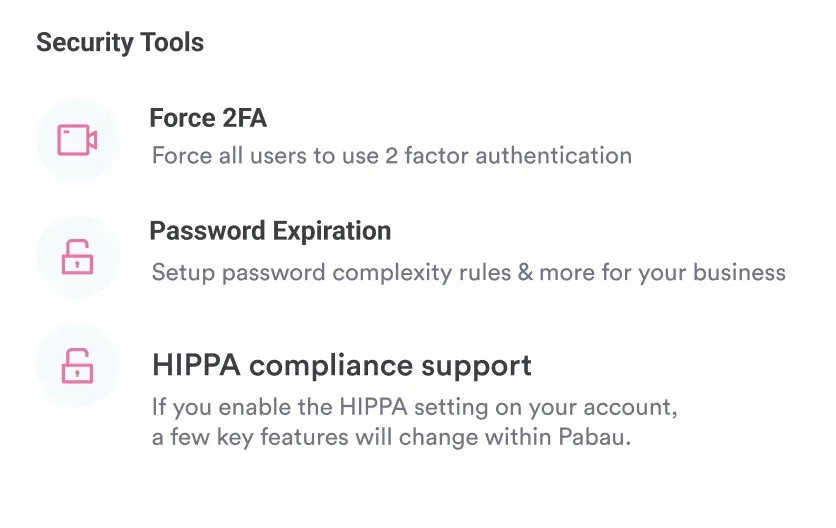
Most nurses now work in environments with some form of electronic health record. As a result, the shift from paper to digital charting changes the risk profile of nursing documentation without eliminating it.
Electronic systems solve the legibility problem entirely, but they introduce new risks of their own:
In practice, accessing electronic client records through a well-designed system reduces these risks substantially. That’s especially true when the interface is built for clinical workflow rather than administrative reporting.
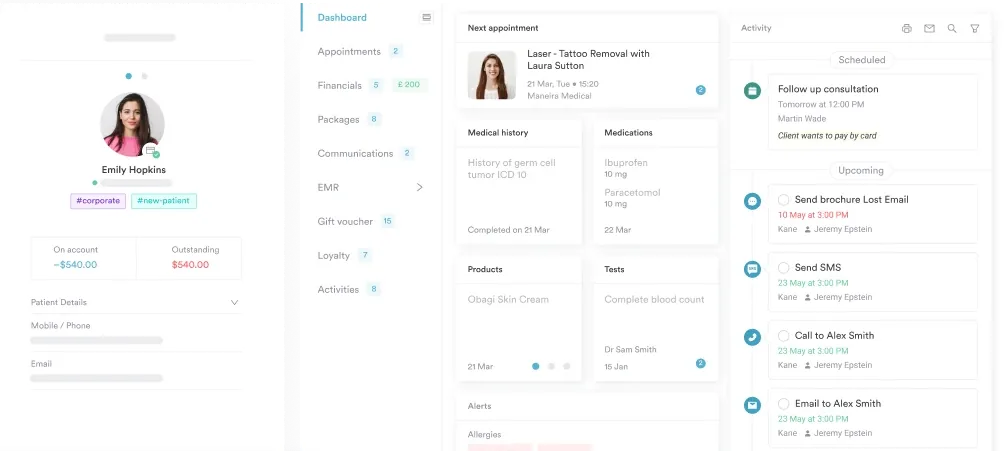
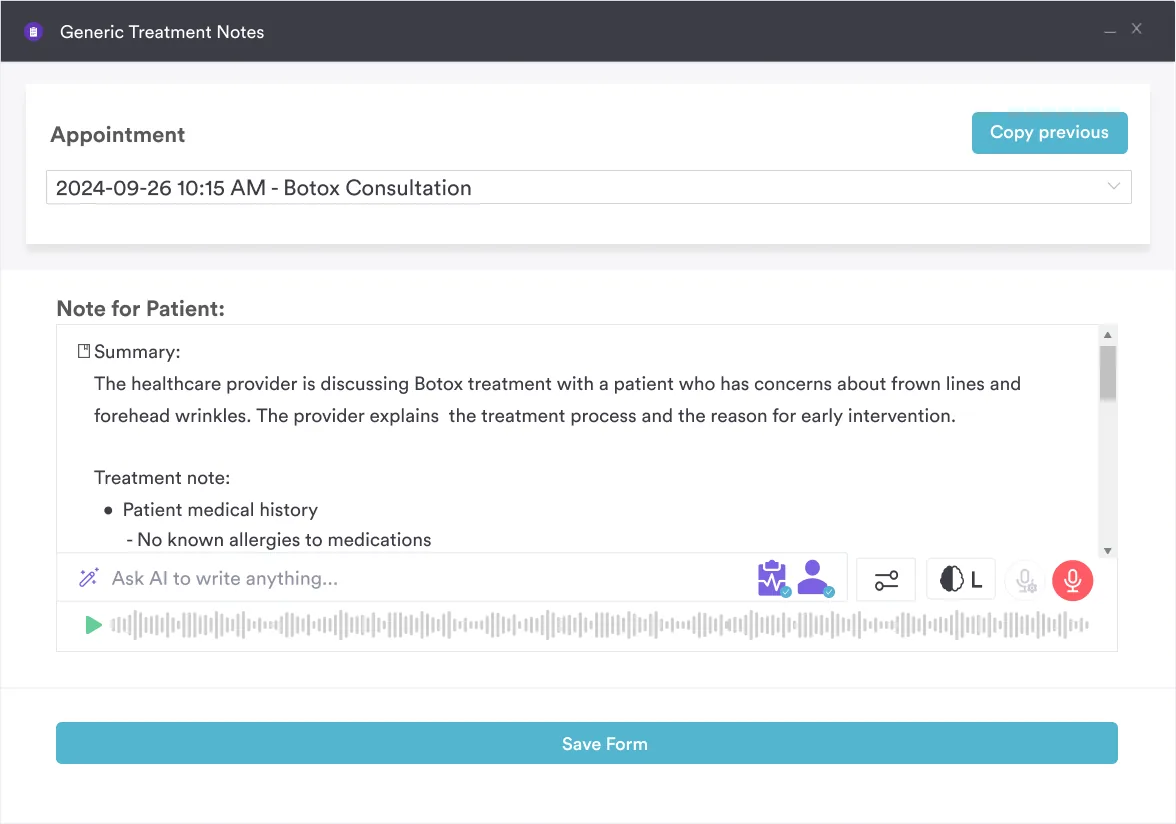
The most significant shift in nursing documentation over the past three years is not EHR adoption. Instead, it is AI-assisted charting. Voice recognition and ambient clinical intelligence tools now allow nurses to speak observations naturally during or immediately after patient contact. Next, the system generates a structured note for review and confirmation.
The practical impact is significant. A structured nurse assessment that previously required eight to twelve minutes of keyboard entry now takes far less time. Specifically, it can be reviewed and confirmed in under two minutes. For a nurse seeing fifteen patients in a shift, that time savings adds up fast. In practice, it totals roughly an hour and a half to two and a half hours of recovered time.
Understanding how AI scribes help gives practice managers a credible case for technology investment. In fact, the clinical benefit extends beyond time savings. Real-time documentation reduces the delay between care delivery and charting, which is where most retrospective documentation errors occur.
This shift also comes with a secondary benefit. Nurses who spend less time on documentation maintain better eye contact and verbal engagement with patients during assessments. As a result, documentation quality and patient experience improve together when the workflow is designed well.
Practice management software like Pabau brings this into private practice settings. For example, its AI-powered clinical documentation lets practitioners capture structured notes during or after consultations without switching between screens.
Medical dictation tools integrate directly into the clinical record, meaning documentation stays current without adding administrative steps. For practices with nursing staff managing multiple patients per session, that workflow change is operationally meaningful.
Every chart entry is a clinical decision and a legal statement. Nursing documentation done well protects patients through continuity, protects nurses through evidence, and protects practices through compliance. However, done poorly, it creates exactly the liability that malpractice cases and board reviews are built on.
Pabau’s AI-assisted charting tools give nursing teams in private practice a way to meet core documentation quality standards. They do this without adding time to already stretched shifts. To see how the workflow fits into a complete clinical record system, book a demo with the Pabau team.

Documenting a do-not-resuscitate order? DNR form template gives a free, ready-to-complete order with physician, proxy, and witness sections.
Need a structured form to pair with your charting? Client Information Template standardizes what gets captured at intake, so downstream notes start from consistent data.
Collecting family history without retyping it each visit? Family medical history form shows what to include across three generations and how to collect it digitally.
Nursing documentation is the formal written or electronic record of all nursing assessments, clinical decisions, interventions, and patient responses during a care episode. It forms part of the legal medical record and is the primary evidence used in malpractice reviews, regulatory audits, and license proceedings.
Legal requirements for nursing documentation are set by HIPAA at the federal level and by individual state Nurse Practice Acts. HIPAA mandates that nursing records be treated as protected health information with access controls, audit trails, and minimum retention periods. State boards typically require retention of adult patient records for five to seven years, though this varies. Nurses practice across state lines must apply the requirements of the state where care is delivered.
The three most common errors are retrospective charting without a disclosure label, vague or subjective language, and omitting critical events such as patient falls or medication refusals. Avoid them by documenting in real time, using objective measurable language, and labeling any delayed entry with the current time, the actual event time, and the reason for the delay.
SBAR stands for Situation, Background, Assessment, and Recommendation. It is a structured communication framework used during clinical handovers and when escalating patient concerns. In documentation, an SBAR note captures what is happening now, the clinical context, the nurse’s clinical judgment, and the action recommended or taken. It is particularly valuable when handing over a deteriorating patient or communicating an urgent concern to a physician.
AI-assisted charting tools and voice recognition systems allow nurses to generate structured clinical notes during or immediately after patient contact, reducing documentation time from minutes down to under two minutes per entry. Electronic systems with built-in templates, automated timestamp logging, and role-based access controls also reduce the risk of common documentation errors compared to manual paper-based charting.
Charting by exception is a documentation method where nurses record only findings that fall outside predefined normal limits, rather than restating every normal result. It saves time on routine assessments, but it carries legal risk. If the normal baseline is not clearly defined in facility protocol, an absent entry can later read as care that was never delivered. Most units that use it pair it with standardized assessment templates so that no note reliably means within normal limits.
There is no single national list of 5 legal requirements for nursing documentation. Obligations stack across accurate records, timely entries, complete assessments and responses, secure handling of protected health information under HIPAA, and retention for the period set by your state Nurse Practice Act, commonly five to seven years for adult records.
Charting in nursing is the act of recording each assessment, intervention, and patient response in the medical record, on paper or in an electronic health record. It is the daily work of documenting in nursing, and every entry becomes both a clinical communication to the next provider and a legal statement about the care delivered.
SOAPIE charting extends the SOAP method with two extra fields, Intervention and Evaluation. A nurse records the Subjective and Objective findings, the Assessment, and the Plan, then adds the action taken and how the patient responded. Capturing the intervention and the outcome in the same note is what makes SOAPIE common for nursing entries rather than problem-focused physician consultations.