Massage Gift Card Template
A massage gift card template is a fill-in-the-blank certificate you customize wi...

21
Last Updated: Sep 11, 2026

The Insomnia Severity Index is a 7-item self-report questionnaire that scores insomnia severity, daytime impact, and sleep-related distress.
Every item scores 0 to 4, so totals run from 0 to 28 across four severity bands.
A total of 15 or above points to clinical insomnia, and a drop of about 6 points marks a meaningful improvement.
Morin’s 2011 validation set the best screening cutoff at 10, with 86.1% sensitivity and 87.7% specificity against a diagnostic interview.
Practice management software like Pabau can total the form on submission and plot every score against the patient record.
All seven ISI items on one patient-ready page, with the 0 to 4 rating scale beside each question. The foot of the form carries the scoring instruction and the four interpretation bands. You can work out the total and read it with the patient in the room.
Download templateA patient says they sleep badly. That could mean three restless nights, or a year of 3 AM wake-ups, and neither version is measurable. The Insomnia Severity Index (ISI) turns the complaint into a number, so you can compare it to the same number six weeks later.
Seven questions, about five minutes, one total out of 28. The scale is only as good as the way you collect it, though. Use the same recall window every time, get every item answered, and write the total into the record. Get those three right and the trend actually means something.
The ISI is a validated 7-item self-report questionnaire that scores how severe a patient’s insomnia is right now. Charles Morin developed it, and it has been in clinical use since the 1990s.
It looks at more than how long someone lies awake. Three items ask about the symptoms themselves. The other four ask about satisfaction with sleep and how visible the problem is to other people. They also cover how worried the patient feels, and what daytime functioning looks like.
Patients rate each item from 0 to 4, so the total runs from 0 to 28. Most people finish in about five minutes. That brevity is why it survives in a full schedule.
The ISI is copyrighted, and Mapi Research Trust manages licensing on the author’s behalf. Routine clinical use is usually free of charge, but it is not permission-free. You submit a request through the ePROVIDE portal and state your type of use, such as individual practice or academic.
That request is also how you get the official wording and any validated translation. Modifying the items, or rebuilding the scale as your own house form, is what the license does not cover.
The PDF above prints all seven items on a single page, with the 0 to 4 scale beside each one. The items appear in this order:
Two details are worth saying out loud before a patient starts. On every item, 0 is the mildest answer and 4 the most severe. On the satisfaction question that means 0 is very satisfied, which catches out anyone expecting a higher number to be better news.
The form also fixes the window. Patients rate the last two weeks, not the last year. A one-month version of the scale exists as well, so pick one and stay with it for the whole treatment course.
Add the seven item scores together. That total is the ISI score, and nothing is weighted or reverse-scored on the way there.
Take a patient who scores 3 on falling asleep, 3 on staying asleep, and 1 on early waking. She adds 3 for satisfaction, 1 for noticeability, 3 for worry, and 3 for daytime interference. Her total is 17, which lands in the moderate clinical insomnia band.
Six weeks into treatment she scores 9. That 8-point drop clears the threshold for meaningful improvement. She still sits in the sub-threshold band, though, so the plan continues rather than closing.
Storing completed assessments in patient management software keeps every score searchable within the patient’s record.
The four score bands map onto four different decisions:
The bands guide a decision, they do not make a diagnosis. The ISI measures severity, so read it next to the clinical interview and the sleep history before you settle on anything.
A reduction of about 6 points is the figure most often used for a meaningful improvement. Remission is usually defined as a total below 8.
Those two numbers give you something concrete to say at the six-week review. A 4-point drop is real to the patient, but it falls short of the accepted threshold. A 7-point drop is a result you can build on.
Run through this once, and the score you get back will still be comparable in three months:
Most ISI errors are not arithmetic. They come from how the form was handed over.
Mixing recall windows. A baseline on the one-month version and a follow-up on the two-week version are not comparable, however tidy the two numbers look side by side.
Scoring only the first three items. Those three cover the symptoms, and a subtotal out of 12 looks plausible enough to slip past a reviewer. The bands only work on all seven.
Reading the total as a diagnosis. A score of 22 tells you the patient is suffering, not why. Sleep apnea, restless legs, and night shifts all push the number up.
Coaching the answers. Explaining what an item “really means” changes the rating. Answer questions about wording, then let the patient rate their own sleep.
Accepting a blank item. One missing answer makes the total lower than the truth, so ask the patient to finish it before they leave the room.
The ISI does two jobs. It flags who needs treatment, and it shows whether the treatment is working.
Anyone raising a sleep complaint gets one. So does anyone starting treatment for depression, anxiety, PTSD, or chronic pain, because sleep is a symptom in all of them. If a patient wants to try a self-scored insomnia test at home first, the items are the same.
Reassess every four to six weeks while treatment is active. The scale responds to change, so the second number tells you whether CBT-I or medication is doing its job.
Adherence is usually where CBT-I stalls, and a visible score helps. Patients who watch the number fall tend to stick with the sleep restriction rules. A motivational interviewing approach also lands better when you are both looking at the same figure.
Write the total, the date, and the recall window into the record every time. A SOAP progress note is the natural home for it, under objective data rather than the patient’s narrative.
Strong, and specific about what it measures. Internal consistency sits between 0.78 and 0.92 across different populations. Test-retest reliability holds up well over short intervals, so a stable patient gives you a stable score.
Morin’s 2011 validation study put the best screening cutoff at 10. At that threshold the scale caught 86.1% of insomnia cases and correctly cleared 87.7% of people without insomnia, measured against a clinical diagnostic interview.
That comparison matters. The ISI records what the patient perceives. Someone can log six hours on the monitor and still score 20 on the form.
The scale also moves when treatment works. Mean reductions of 5 to 10 points are common after CBT-I or medication, which is why it doubles as an outcome measure.
Sleep specialists use the ISI for triage. Everyone else uses it because insomnia rides along with the condition they are already treating.
Psychiatrists and psychologists. Sleep disturbance shows up in depression, anxiety, PTSD, and bipolar disorder. Practices running psychiatry software often attach the ISI to intake.
Therapists and counselors. CBT-I is a talking therapy, so the ISI becomes the outcome measure for the work itself. Therapy practice management tools can schedule the reassessment.
Primary care. A five-minute form separates the patient who needs sleep advice from the one who needs a referral. That is a useful sort in a 10-minute appointment.
Wellness and longevity practices. Sleep quality is a headline metric in preventive programs, and the ISI puts a defensible number on it.
Score every ISI in one place and watch the practice-level average, not just the individual patient. If most of your sleep patients sit in the moderate band, look at running a group CBT-I course. That frees up more one-to-one slots than any scheduling change.
Most practices still print the ISI, add it up by hand, and type the total into a note. That holds together until you want the trend for 40 patients, or until the six-week form quietly never goes out.
Practice management software like Pabau closes both holes.
Scoring is configured once. You map each answer to a value. Every later score plots on the same trend line.
Set the ISI to go out every six weeks. The request, the form, and the score then happen without anyone chasing a patient by phone.
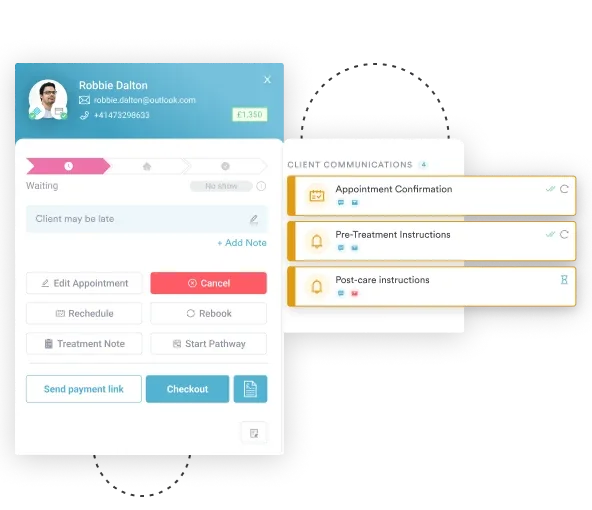
Because each score sits in the patient record next to the notes and letters, the six-week review opens with the trend already on screen. Nobody spends the first five minutes hunting for the baseline.
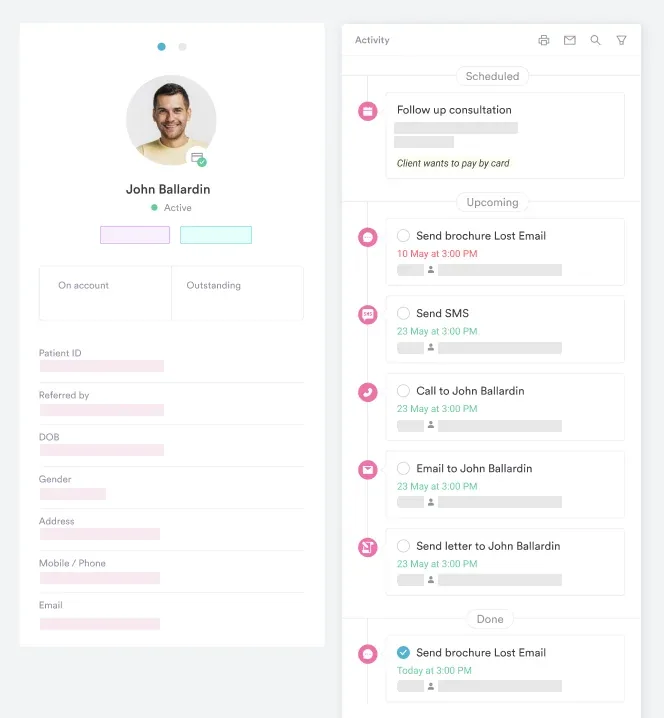

Pabau sends the ISI before the appointment, totals it on submission, and plots every score against the patient record. Your six-week review opens with the trend already on screen.

The ISI is worth using because it is short enough to survive a real schedule and precise enough to show change. Neither of those helps if the number ends up on paper in a folder.
So settle two things before you print it. Decide which recall window you use, and decide where the total gets stored. Then run it at intake and every four to six weeks, and the trend does the rest of the work for you.
Sleep complaints are rarely a one-visit problem, and the practices that track them well are the ones that made the tracking automatic. Book a demo to see how Pabau scores patient assessments and keeps the trend beside the record.

Want a second read on sleep quality? The Pittsburgh Sleep Quality Index covers a full month of sleep quality, where the ISI covers two weeks of severity.
Ready to start CBT-I? The CBT for sleep worksheet gives patients the between-session work that actually moves the score.
Need nightly data instead of a snapshot? A sleep log tracker records bedtime, wake time, and night waking between appointments.
Patient scored in the 0 to 7 band? A sleep hygiene handout gives them something practical to take home.
Struggling with the operational side of the practice? Behavioral health practice management software compares seven platforms on claims, scheduling, intake, and note-taking workflows.
Usually free of charge, but not permission-free. Mapi Research Trust manages the license, and every user submits a request through its ePROVIDE portal, individual practices included. That request is also how you get the official wording and any validated translation.
The score does not pick the code, the diagnosis does. Clinicians commonly document F51.01 for primary insomnia.
No. The ISI asks how bad the sleep problem feels, not what causes it. Untreated apnea.
The ISI has seven items, asks about the last two weeks, and measures severity plus daytime impact. The PSQI has 19 items, covers a month, and describes sleep quality in more detail. The ISI is faster to repeat.
Researchers have tested a three-item short form, the ISI-3, as a quick screener. It uses the three symptom questions only. For scoring bands and outcome tracking, the full seven-item version is still the standard.
Any trained staff member. It is a self-report form, so no clinical qualification is needed to give it out or add up the total. Interpreting the score and choosing treatment stays with the clinician.