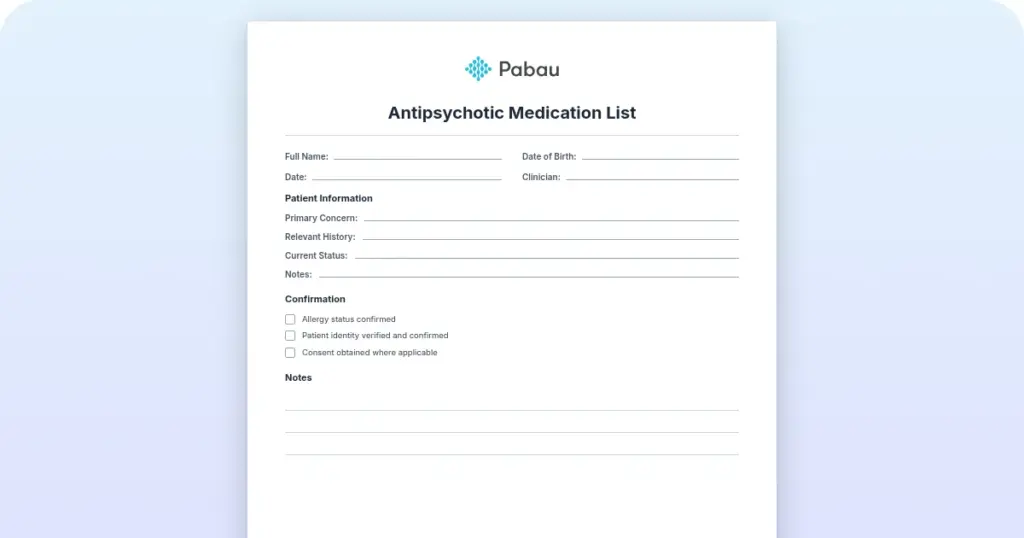
Antipsychotic medication list
An antipsychotic medication list is a structured reference that organizes psychi...

2
Last Updated: Oct 13, 2026

A substance abuse workbook PDF is a structured therapeutic tool grounded in evidence-based frameworks (CBT, Motivational Interviewing, Stages of Change) that guides patients and clinicians through recovery planning, trigger identification, and relapse prevention.
High-quality workbooks include trigger identification exercises, relapse prevention planning steps, coping skill development, goal-setting activities, and support network building, all critical to sustained recovery.
Substance abuse workbook PDFs serve multiple roles: individual therapy tools, group therapy resources for intensive outpatient programs, and structured documentation aids that help clinicians track patient progress within treatment plans.
Practice management software like Pabau lets counselors integrate workbook exercises directly into patient records, automate relapse prevention reminders, and track recovery milestones, transforming paper workbooks into actionable treatment outcomes.
Substance Abuse Workbook PDF
A comprehensive therapeutic resource designed to support healthcare professionals in guiding patients through structured recovery programs. This evidence-based workbook provides practical tools, exercises, and assessment frameworks to facilitate meaningful discussions about substance use disorders while promoting patient engagement in their recovery journey.
Download templateThe substance abuse workbook PDF has become an essential tool in behavioral health settings, helping counselors, therapists, and substance use disorder (SUD) treatment specialists guide patients through the complex journey of recovery. This workbook isn’t just a collection of worksheets. It’s a structured therapeutic intervention grounded in decades of clinical research.
A substance abuse workbook PDF is an interactive therapeutic document that guides individuals and clinicians through evidence-based recovery frameworks. These workbooks draw from three primary clinical modalities:
Unlike generic self-help materials, clinical-grade workbooks integrate psychoeducation, structured exercises, and assessment tools that help clinicians assess patient readiness, track progress, and measure outcomes. They transform abstract recovery concepts into concrete, actionable steps.
The most effective substance abuse workbook PDFs share common structural elements that clinicians and patients should recognize:
Substance use disorder (SUD) is a chronic brain condition characterized by compulsive drug or alcohol use despite harmful consequences. The National Institute on Drug Abuse (NIDA) defines it as a treatable medical condition, not a moral failing, an essential reframing that good workbooks emphasize from the start.
Recovery workbooks built for behavioral health practices recognize that treatment requires structured support across biological, psychological, and social domains. They validate the patient’s experience while offering concrete tools for each domain, making the recovery process feel manageable rather than overwhelming.
Resources like this pair well with telehealth software, letting remote clients complete them during virtual sessions.
The transtheoretical Stages of Change model (Prochaska and DiClemente) underpins most evidence-based substance abuse workbooks. This framework recognizes five stages:
Clinicians using digital intake forms can assess which stage each patient occupies and tailor workbook modules accordingly, ensuring materials match readiness for change.
One of the most practical sections in any substance abuse workbook PDF involves trigger mapping. Triggers, internal (emotions, thoughts, physical states) and external (people, places, situations), are predictable and preventable.
Effective workbooks guide patients through a systematic process: name the trigger, recall the emotional or circumstantial context, identify what craving or urge arose, and describe what happened next. Over time, patterns emerge.
A patient might recognize that stress after work, isolation at home, and contact with a former using partner all converge on Thursday nights, a high-risk window. Once identified, that window becomes a target for intervention: structured activities, peer support check-ins.
A formal relapse prevention plan is the centerpiece of recovery workbooks. Unlike vague intentions, a written relapse prevention plan includes:
Clinicians using automated reminder workflows can sync workbook milestones with appointment calendars, ensuring patients receive motivational check-ins during historically high-risk periods.
Isolation amplifies relapse risk. Connection reduces it. Substance abuse workbooks dedicate sections to identifying and strengthening the patient’s support ecosystem: family members willing to learn about recovery, peers in mutual-aid programs like Narcotics Anonymous or SMART Recovery, mental health providers, and community resources.
Some workbooks include communication templates covering asking for support, setting boundaries with unsupportive relationships, and staying engaged during difficult moments. This practical scaffolding transforms abstract advice (“build your support network”) into concrete action.
Substance use often serves an emotion-regulation function: drugs or alcohol dampen anxiety, loneliness, shame, or anger. Recovery requires replacing that function with skill-based alternatives. The best workbooks teach concrete techniques: breathing exercises for acute anxiety, opposite-action behavioral strategies for depression, mindfulness for cravings, and problem-solving frameworks for frustration-based relapse risk.
These aren’t motivational platitudes. They’re specific, actionable tools. A patient might learn a short sequence for when anger rises, a common relapse trigger:
The workbook provides space to practice and document these sequences so they become automatic.
Intensive outpatient programs (IOPs) and group counseling benefit when workbooks are adapted for collective use. Unlike individual therapy, group workbooks create shared language and peer learning. A clinician might open a session with a relapse prevention worksheet exercise, allowing each group member to identify their own triggers, then facilitate peer discussion: “What strategies have worked when you faced that situation?” Comparing a result against earlier sessions is quicker when software for psychology practices holds the history.
This clinician-facing adaptation turns workbook sections into structured group agendas. Accountability and normalized vulnerability emerge when peers are working through the same exercises in real time. Informed consent for group therapy becomes more meaningful when patients understand they’ll use practical workbook tools as the foundation for session structure.
Recovery doesn’t end when structured treatment concludes. It deepens. Quality substance abuse workbooks include detailed aftercare planning sections: ongoing therapy frequency, mutual-aid meeting attendance, medication-assisted treatment schedules (if applicable), vocational or educational re-engagement, and family therapy goals.
The workbook becomes a bridge between treatment phases. What was completed during intensive treatment is reviewed and adapted for continuing care. Clinicians document which workbook sections were most effective so that aftercare providers can continue leveraging those tools.
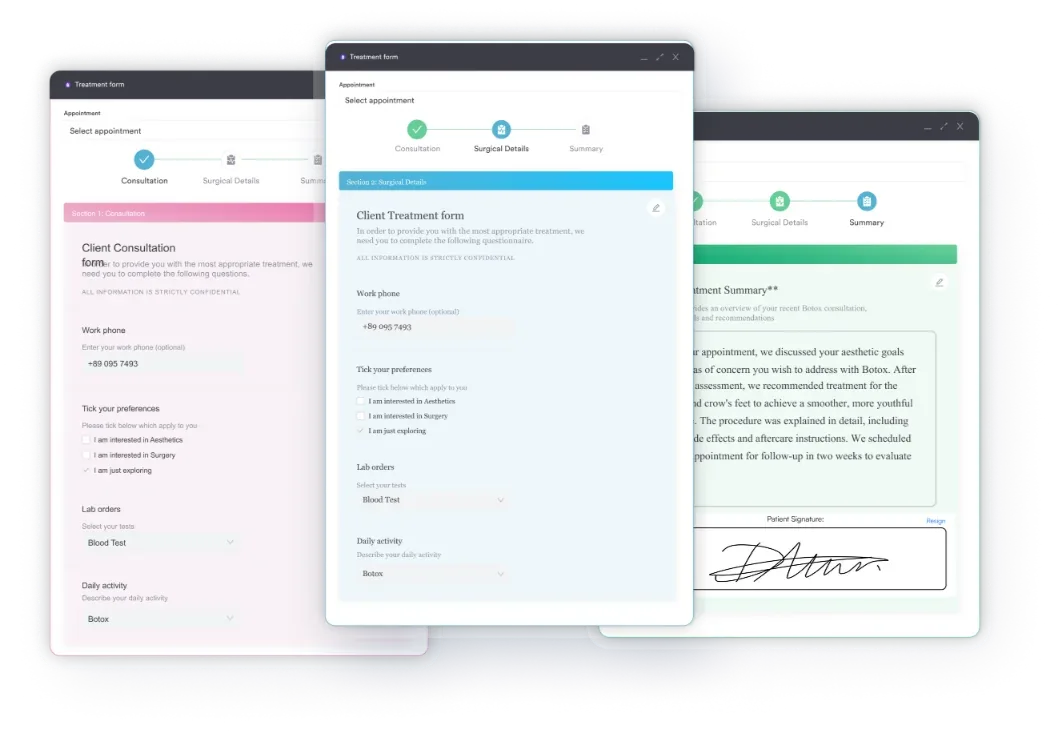
Substance abuse counselors and therapists using Pabau can integrate workbook-based treatment into their clinical workflow.
Automated workflows remind patients of scheduled workbook reviews, treatment goals, and continuing care appointments, turning the static PDF into a dynamic part of ongoing care.
Substance abuse workbooks become a shared reference that clinician and patient both use, reducing redundant explanations and increasing session efficiency.
For therapy practice management, the workbook becomes a standardized clinical asset, available across all clinicians, customized for program specifics, and linked to billing and outcome tracking.
Book a demo to explore how Pabau’s clinical records integrate evidence-based treatment tools like substance abuse workbooks into a cohesive patient care system.
The most impactful substance abuse workbooks combine evidence-based frameworks, practical exercises, and room for personalization. When paired with structured clinical support and integrated into a practice management system, workbooks transform from static documents into living treatment tools that guide sustained recovery.
Substance abuse workbooks turn clinical knowledge into practical patient action. They convert abstract recovery concepts into concrete, measurable steps that patients and clinicians can track together.
Book a demo with Pabau to see how clinical practice management integrates workbook-based treatment into patient records, automates recovery milestones, and reduces documentation burden so clinicians can focus on what matters most: guiding patients toward lasting recovery.

Curious how sleep patterns affect recovery? MEQ test measures chronotype, a client’s natural tendency toward morning or evening alertness, using a validated questionnaire.
Addressing eating habits alongside recovery work? mindful eating worksheet includes a hunger scale, emotional trigger prompts, and a five-step way to use it in sessions.
Running group sessions around this workbook? group therapy informed consent covers what to include: confidentiality limits, group rules, and client boundaries.
A substance abuse workbook provides structured exercises, psychoeducation, and therapeutic tools that help patients understand their addiction, identify triggers, develop coping skills, plan relapse prevention, and build recovery goals, all under the guidance of a clinician.
Clinicians assign workbook sections aligned with the patient’s stage of change, review completed exercises in session to reinforce learning, and use workbook insights to adapt treatment planning. Progress through the workbook becomes a visible marker of treatment engagement.
Yes. Group workbooks are adapted so each participant works through exercises individually, then shares experiences with peers, creating peer learning and accountability, especially effective in intensive outpatient programs.
A workbook is a comprehensive therapeutic resource with multiple sections covering education, assessment, planning, and tracking across the full recovery journey. A worksheet is a single-use exercise addressing one specific topic, often used as a component within a workbook.