Antipsychotic medication list
An antipsychotic medication list is a structured reference that organizes psychi...

2
Last Updated: Oct 13, 2026

Our reflective listening worksheet is a one-page self-reflection form with eight open prompts, plus a blank page for additional notes.
The prompts take one thought or recent experience and move through the emotion, the beliefs behind it, a paraphrase, and a small goal.
Reflective listening means restating what someone shared so they can hear that their meaning and feeling landed accurately.
Practicing on your own material first builds the habit, so the reflection comes more naturally when a client is in the room.
Practice management software like Pabau lets you send the form digitally and file every completed answer in the client record.
A one-page self-reflection worksheet with eight open prompts. They cover the main emotion, the beliefs behind it, paraphrasing, self-empathy, challenging self-critical thoughts, and goal setting. A second page is left blank for additional notes.
Download templateReflective listening is easier to describe than to do well. Most clinicians meet the theory in training, then find in session that hearing the feeling under a client’s words takes practice. This free reflective listening worksheet gives you somewhere to practice it on your own thinking first.
The worksheet is deliberately simple. You choose one thought, feeling, or recent experience, then work through eight written prompts about it. The prompts run from naming the emotion to setting a small goal, with space to write after each one.
You can complete it yourself after a difficult conversation, bring it to supervision, or give it to a client as between-session homework. It prints on two pages and needs no software to fill in.
A reflective listening worksheet is a structured form that prompts you to slow down, restate what was said, and name the feeling underneath it. Ours applies that process to your own thinking. You pick one thought, feeling, or recent experience, then answer eight open prompts about it in writing.
The inward focus is the point. Reflective listening asks you to hold someone else’s meaning without judging it or rushing to fix it. Doing that with your own material builds the same habit, and no client is waiting on your answer while you practice.
The file itself runs to two pages. The first carries the instructions and the eight prompts. The second is a blank page headed additional notes, for anything that surfaces once you have finished writing.
The worksheet opens with fields for a name and a date, then a short instruction on choosing what to reflect on. Eight prompts follow, each with open space to write your answer:
Nothing else is prescribed. There are no scored exercises, no model answers, and no scripts to memorize. The value sits in the writing you do in the open space, which is why the second page is left blank for additional notes.
Set aside fifteen quiet minutes and work down the page in order. Each prompt builds on the answer above it, so skipping ahead loses most of the benefit.
In a practice setting, the same sheet works three ways. Clinicians use it to process their own reactions after a heavy session. Supervisors use it to open a reflective conversation with a trainee. Clients use it as homework between appointments, then bring the sheet to the next one.
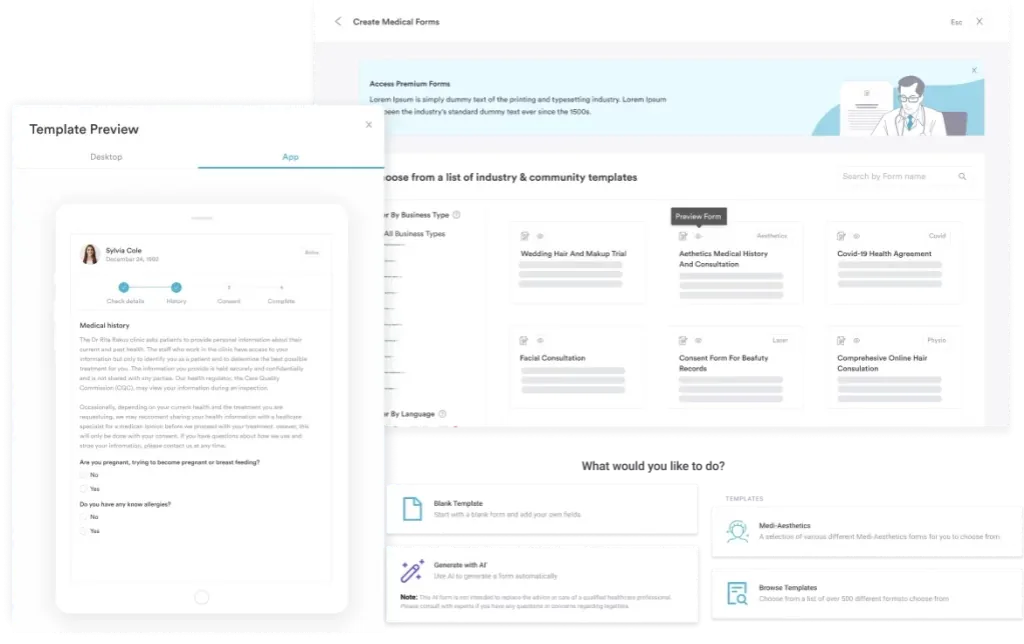
Running this form inside a GP practice system keeps clinical documentation in one place.
Anyone who wants to listen better and has fifteen minutes to think on paper. In practice, it earns its place with:
It suits any modality, because it teaches a stance rather than a protocol. Nothing on the page is specific to a diagnosis or a therapy model.
Reflective listening is the act of hearing what someone says and understanding the meaning and emotion in it. You then feed that back, so the speaker knows they were understood. Reflecting back is not the same as agreeing. The listener is saying that they have followed the speaker, not that they share the view.
Active listening is the wider skill set, covering attending, acknowledging, and responding. Reflective listening is the responding part, the reflection itself. The distinction matters because attentive silence alone leaves the speaker guessing about what landed.
It sits close to the center of the therapeutic alliance because it signals safety. Clients who feel accurately understood tend to say more. Clients who feel misread tend to close down.
Reflections come in two broad forms, and both have a job. A simple reflection stays close to what was said. It repeats or lightly paraphrases the content, which tells the speaker they were heard accurately and builds trust early in a relationship.
A complex reflection adds meaning that was implied rather than stated. Saying that losing the job sounds like losing a sense of being capable goes further than repeating the facts. It names the feeling underneath, which often prompts the speaker to correct, confirm, or elaborate.
Simple reflections build rapport and complex reflections move the work forward. The paraphrase prompt on the worksheet gives you a low-stakes place to try both on your own material. If you also want a structured clinical record, our psychiatric evaluation template and our guide to the mental status examination cover the formal assessment side.
Four habits undo a reflection faster than anything else. None of them are on the worksheet, but they show up constantly in real conversations:
The worksheet helps with the last one in particular. Its first prompt asks for the main point or emotion, which forces the feeling into words before anything else gets written down. Our non-violent communication worksheet drills the same move, from a bare fact to the feeling behind it.
Reflective listening is one of the four core skills in motivational interviewing, alongside open questions, affirmations, and summaries. In that model the reflection does most of the work. It draws out the statements where a client names their own reasons for changing something.
When the reflection lands accurately, the client usually keeps going. They elaborate, or they correct you, and either response moves the conversation forward. Change talk generated that way is the client’s own, which is why it tends to stick better than advice.
Practitioners training in this approach can use the worksheet as a warm-up. Reflecting on your own reasoning is good preparation for holding someone else’s without steering it. Pair it with our motivational interviewing script to rehearse the dialogue itself.
Most therapy practices hand a worksheet over on paper or attach it to an email. The completed sheet then lives in a bag, a drawer, or an inbox thread. By the next appointment, nobody can find what the client actually wrote.
Practice management software like Pabau keeps that loop inside the client record. You can rebuild the eight prompts as a digital form and assign it from the client’s file. It appears in their client portal, and their answers save straight back to the chart.
You see completion status at a glance instead of asking. The reflection then sits next to your treatment notes, where it is useful.
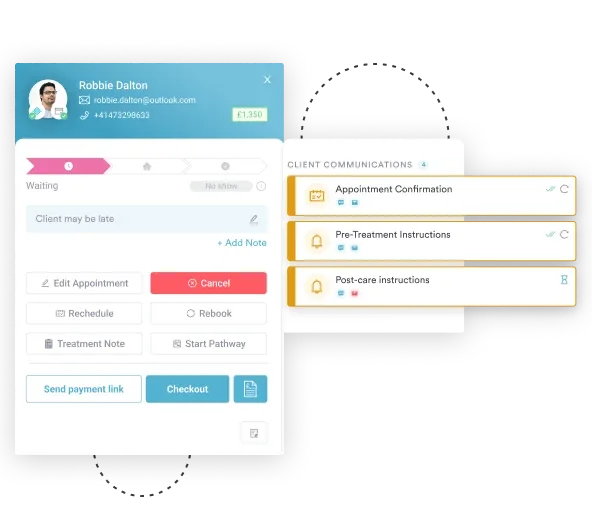

Pabau’s digital forms and client portal let you send the worksheet and track who has completed it. Every answer files itself in the client record.

Reflective listening improves through repetition rather than insight. Eight prompts and one recent experience is a small enough exercise to actually repeat, which is the whole argument for a worksheet this plain.
Start with a conversation that stayed with you. Name the emotion, write the paraphrase, then set one goal you can act on this month. The trade-off worth knowing is that this sheet trains your ear, not a client’s technique, so pair it with live practice.
Keep the completed sheets somewhere you will read them again. Book a demo to see how Pabau keeps client worksheets in the record instead of a filing drawer.

Helping a client prepare to make amends? AA Step 8 worksheet helps clients identify everyone harmed and assess readiness before making amends.
Guiding a client through making amends? AA Step 9 worksheet structures the amends process, from direct contact to exceptions where contact could cause harm.
Documenting what happens between sessions? Case management note gives you a structured place to record the follow-up work.
Need a quick cognitive screen as well? Mini-mental state examination walks through the scoring and what each cutoff means.
Working through fears rooted in abandonment? abandonment therapy worksheets covers abandonment fears, triggers, coping strategies, and healing exercises across several therapy formats.
Reflective listening means hearing what someone says, understanding the meaning and emotion in it, and feeding that back so they know they were understood. It works because an accurate reflection signals safety. People who feel understood keep talking, and often correct or deepen what they said. The listener is clarifying, not agreeing.
Active listening is the wider skill set. It covers attending, acknowledging, and responding. Reflective listening is the responding part, the reflection itself. All reflective listening sits inside active listening, but attentive silence on its own is not a reflection, because the speaker never hears what landed.
A simple reflection repeats or lightly paraphrases what was said, which confirms the speaker was heard accurately. A complex reflection adds meaning that was implied but not stated, such as naming the loss of confidence behind a job loss. Simple reflections build rapport and complex reflections move the work forward.
Yes. Reflective listening is one of the four core skills in motivational interviewing, alongside open questions, affirmations, and summaries. Reflections are the main way a practitioner draws out change talk, the statements where a client names their own reasons for changing something.