Anja Dodevska
Nursing care plan for aggressive behavior
A nursing care plan for aggressive behavior is a structured clinical document fo...

2
Last Updated: Oct 26, 2026
Free PDF 3 pages, print-ready Clinician-reviewed
The Big Five is the most widely validated way to describe how a client thinks, feels, and relates to others. This free Big Five personality questionnaire PDF gives therapists, psychologists, and counselors a ready-to-use intake tool, complete with scoring instructions and clinical interpretation guidance.
Print the Big Five personality test PDF or send it through practice management software like Pabau for clients to complete before their first appointment, so results are scored and saved to the client record before they arrive.
A comprehensive Big Five personality questionnaire PDF measuring all five traits (openness, conscientiousness, extraversion, agreeableness, neuroticism) with Likert-scale responses, scoring instructions, and clinical interpretation guidance for mental health practitioners.
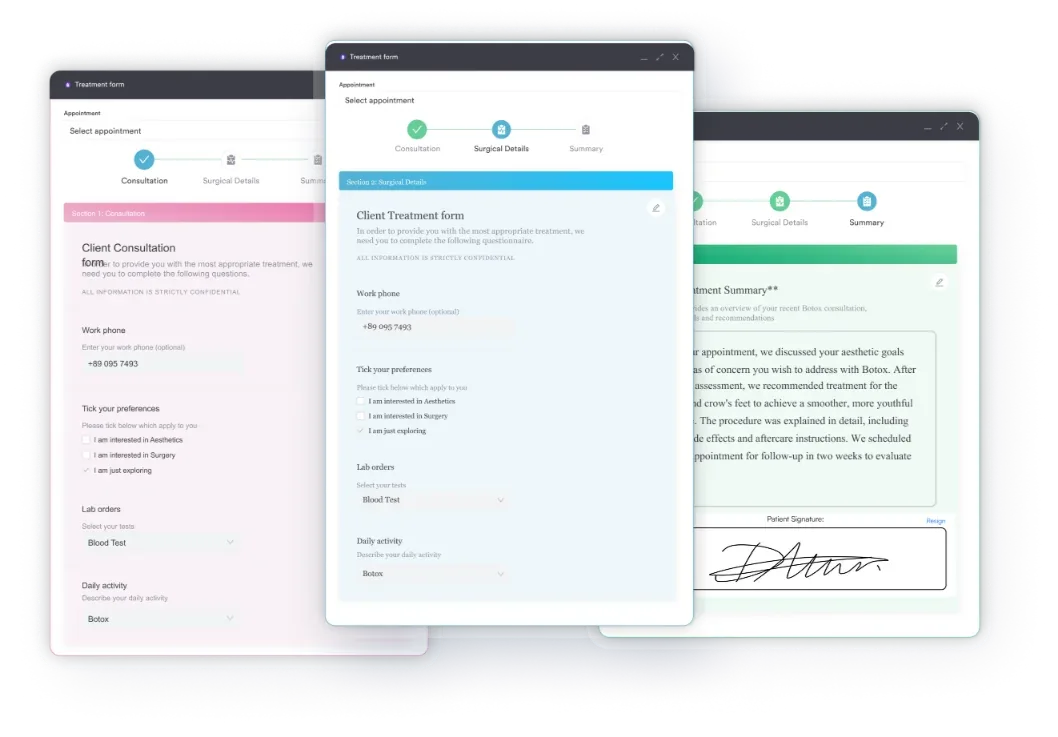
Upload this PDF, or any form you already use, and Pabau's AI Form rebuilds it with tick boxes, text fields and a signature. Attach it to the treatment once, and every patient gets it on time.
AI Form rebuilds the consent, history and aftercare forms you already use. You review each one, then publish.
Patients complete forms on their phone before they arrive, so the front desk stops retyping paper.
Every signed form is versioned and attached to the treatment record, ready when you need it.
Set how long a consent stays valid. Returning patients skip forms they have already signed.
Supports HIPAA and GDPR compliance AES-256 encryption 4.8 on G2 4.7 on Capterra Trusted by 4,000+ practices worldwide

The Big Five (OCEAN) is a research-backed personality model measuring openness, conscientiousness, extraversion, agreeableness, and neuroticism.
Big Five assessments support clinical intake workflows and treatment planning but are not diagnostic tools for personality disorders.
Public-domain IPIP items allow therapists to create free, compliant questionnaires without licensing fees or proprietary restrictions.
Pabau’s digital forms and Pabau Scribe, our AI scribe, help clinicians administer assessments, document trait scores, and integrate results into patient records securely.
The big five personality test is a research-validated psychological assessment that measures five core personality dimensions using the OCEAN model, also called the five-factor model (FFM). It evaluates how individuals score on openness to experience, conscientiousness, extraversion, agreeableness, and neuroticism — the five universal traits that psychologists use to understand personality structure across populations and settings.
Unlike diagnostic tools designed to identify personality disorders, the big five personality test functions as a dimensional assessment of normal-range personality traits. Therapists, psychologists, and mental health practitioners use it during intake appointments to understand client personality patterns, identify potential treatment barriers, and inform therapeutic approach selection.
Psychologists widely regard the Big Five as the most researched personality model in contemporary psychology, backed by decades of empirical study. That research also links the five traits to outcomes like treatment engagement, well-being, and health behaviors.
The assessment relies on Likert-scale items (typically 5-point agreement scales) that respondents complete in 5-10 minutes. Clients often meet it online as a “big five personality quiz,” but the clinical version prioritizes standardized scoring and documentation.
The OCEAN acronym organizes the Big Five dimensions into a memorable framework. Each trait sits on a spectrum — clients are not “high” or “low,” but score at specific points along each dimension. Understanding where clients land informs clinical decision-making and therapeutic pacing.
Clinicians use OCEAN scores to anticipate which clients might benefit from exposure-based work (high neuroticism), group therapy (high extraversion), or psychoeducational approaches (high openness).
Effective administration of the Big Five personality questionnaire requires clear instructions, protected assessment time, and secure data handling. Therapists should position the assessment as an intake tool that informs treatment, not as a diagnostic label.
Many practices pair it with other structured intake tools.
Many practices use Pabau Scribe, to document assessment results and clinical interpretation automatically, reducing administrative burden and keeping notation consistent. Practices billing for a combined behavioral health intake visit sometimes reference G8510 in the same documentation.
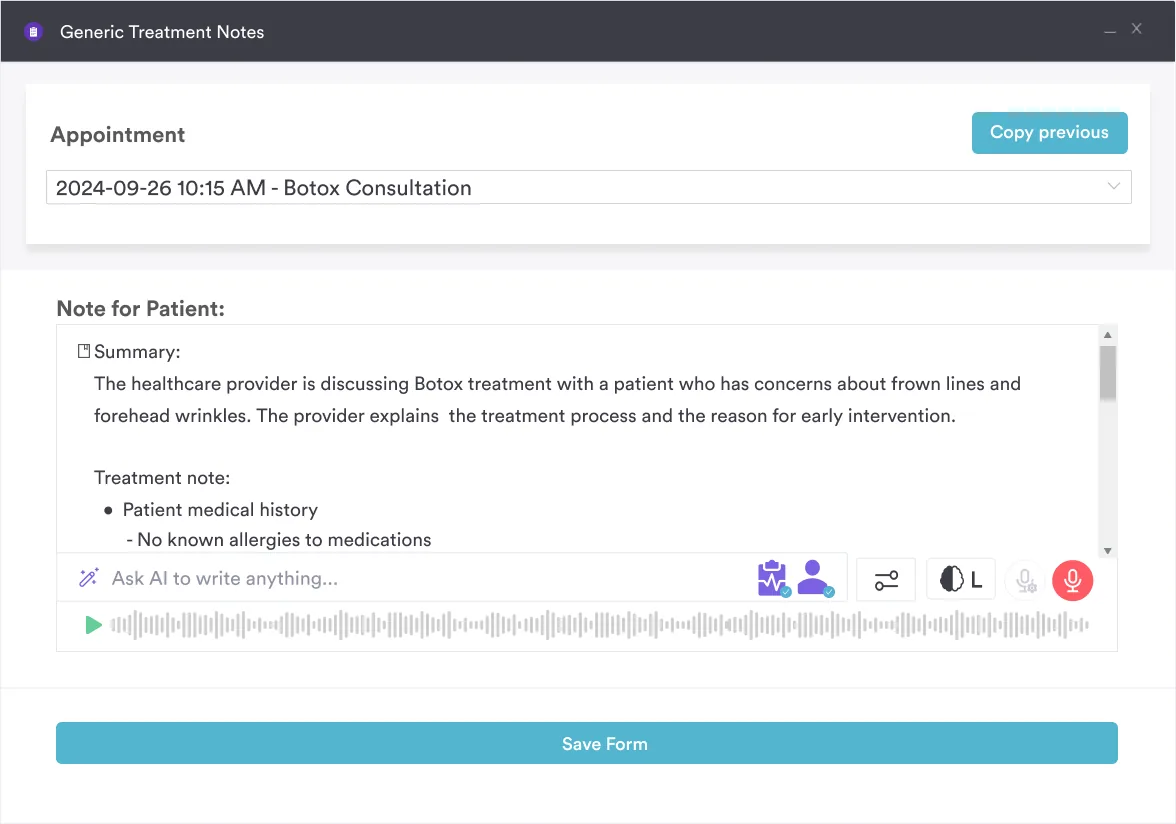
A good patient management system files each completed scale under the right patient automatically.
Scoring the big five personality test converts raw item responses into standardized trait scores, typically normalized on a 0-100 scale or percentile ranking. Interpretation requires understanding normative ranges and the clinical implications of trait elevation.
Scoring Steps: Sum item responses per trait, apply reverse-scoring for negatively worded items, and convert to the standardized metric used by your version (IPIP, BFI, NEO-PI-R equivalents). Public-domain IPIP versions are free and include detailed scoring instructions.
Interpretation Guide: Scores typically fall into low (0-33), medium (34-66), and high (67-100) ranges per trait. High neuroticism paired with low agreeableness, for example, suggests a client prone to hostile rumination and interpersonal conflict — informing a therapeutic focus on emotion regulation and assertiveness. High openness with low conscientiousness suggests creative potential but organizational challenges, warranting structured habit-building work.
Document interpretations in the client record alongside scores. Because the Big Five relies on self-report, weigh scores against social desirability bias, where clients answer as they want to be seen rather than how they are.
Assessment data collected by clinicians is subject to privacy and data-handling regulations. In the US, HIPAA requires encrypted storage and access controls. In the UK, UK GDPR, and across the EU, GDPR requires a valid lawful basis for processing special-category psychological data — most commonly explicit consent.
Consent and transparency: Explain assessment purpose in writing before administration. Patients have the right to request copies of their scores and understand how results inform treatment.
Copyright and attribution: The Big Five Inventory (BFI) and IPIP items are freely available in the public domain or under liberal licenses. NEO-PI-R (Costa & McCrae) is proprietary and requires licensing fees. Verify the copyright status of any version before distributing templates to clients.
Limitations and caveats: The Big Five is not a diagnostic tool for personality disorders. While the model is valid for research and general personality description, clinicians should use specialized assessment instruments (e.g., MCMI, SWAP-200) for diagnostic personality pathology screening. Communicate this distinction clearly to patients and referrers.
Several personality frameworks compete for clinical adoption. The Big Five stands out for research validation, but other models serve different purposes.
Our personality framework comparison sets the Big Five against MBTI, the Enneagram, DISC, and VIA character strengths in one table.
For most mental health practices, the big five personality test using free IPIP items offers the optimal balance of validity, accessibility, and clinical utility.
The OpenPsychometrics Big Five test provides a fully free, open-source implementation suitable for both clinical and research use.

Pabau’s digital forms and automated clinical notes help mental health practices administer Big Five assessments, score results, and integrate personality trait data into client records securely. Reduce paperwork and improve treatment planning coordination.

The big five personality test earns its clinical value when trait scores directly shape treatment decisions. High neuroticism indicates anxiety sensitivity and calls for graded exposure and safety-behavior reduction.
Low agreeableness suggests interpersonal rigidity and may require assertiveness training alongside cognitive work. Low conscientiousness predicts homework non-compliance, so shorter, simpler between-session tasks with frequent check-ins work better than lengthy assignments.
Therapists document trait-informed formulations in session notes: “Client’s high openness makes psychoeducation about trauma mechanisms effective; low extraversion suggests anxiety in group settings warrants individual modality or carefully structured group-CBT with peer matching.” This bridges assessment into actionable clinical strategy.
The big five personality test is the intake lever that reveals these matches:
Step 1 – Select your instrument: Use the free IPIP Big Five test or create a custom version using public-domain items. No licensing fees required.
Step 2 – Embed in intake: Add the big five personality test to your standard intake packet. Administer on the client’s first appointment or request completion through your client portal pre-visit to save appointment time.
Step 3 – Document and score: Transfer responses to your scoring template and calculate trait percentiles. Save results in the client record for clinician reference during treatment planning.
Step 4 – Reference in formulation: Explicitly mention trait patterns in your initial case conceptualization note. Link traits to presenting problems and treatment approach. Example: “Client’s elevated neuroticism + low agreeableness elevates risk for relationship conflict; recommend emotion-focused couples work with assertiveness skills building.”
Step 5 – Monitor and re-assess: Administer the big five personality test at 6-month or annual intervals to track trait changes as treatment progresses. Reduced neuroticism and increased conscientiousness often signal therapeutic progress.
The big five personality test is a validated, practical tool for understanding how client personality traits influence therapy engagement, treatment response, and clinical outcomes. Its evidence base, accessibility via free IPIP items, and direct applicability to case formulation make it a cornerstone assessment in modern mental health practice.
Integrating the big five personality test into intake workflows clarifies treatment direction, improves therapeutic alliance fit, and provides objective reference points for tracking personality-related progress. Book a demo to learn how Pabau’s forms and clinical documentation tools streamline Big Five administration and scoring for your practice.

Notice a client stuck in black-and-white thinking? dialectical thinking worksheet walks clients through five steps for turning black-and-white thoughts into balanced statements.
Screening for domestic violence during intake? domestic violence worksheet is a two-page checklist covering physical, emotional, financial, sexual, and isolation abuse.
Want to map a client’s support systems too? ecomap social work template visually maps a client’s family, community resources, and environmental stressors.
The Big Five personality test is used in intake assessments to understand client personality traits and inform treatment planning, therapeutic approach selection, and prediction of treatment engagement. It is not a diagnostic tool for personality disorders.
Most versions require 5-10 minutes to complete. Full versions range from 50 to 240 items depending on whether you use IPIP (short, 50 items), BFI (44 items), or NEO-PI-R (240 items).
Yes. The Big Five is the most extensively researched personality model in psychology, supported by thousands of peer-reviewed studies that validate its reliability and cross-cultural applicability.
No. The Big Five measures normal-range personality traits and is not designed for personality disorder diagnosis. Clinicians should use specialized tools like the MCMI or SWAP-200 for diagnostic pathology screening.
Yes. The IPIP (International Personality Item Pool) items are free and in the public domain. The BFI is freely available for research and clinical use. The proprietary NEO-PI-R requires a license fee.
Store assessment responses and scores in encrypted systems with access controls. Obtain informed consent before administration. Maintain records in locked physical files or secure digital vaults. Use a HIPAA-compliant digital forms platform if administering online.
The Big Five emerged from decades of research rather than a single author. The lexical groundwork traces to Tupes and Christal (1961) and Lewis Goldberg, who popularized the term “Big Five.” Paul Costa and Robert McCrae later formalized the five-factor model (FFM) and built the NEO-PI-R inventory around it.