Mental health self-care checklist
A mental health self-care checklist is a structured daily tool for tracking the ...

6
Last Updated: Oct 20, 2026

An impulsivity test is a validated self-report questionnaire measuring impulse control, planning, and decision-making patterns.
The Barratt Impulsiveness Scale (BIS-11) is the most widely used impulsivity measure in psychiatry and psychology research.
Stanford et al. (2009) place a BIS-11 total of 72 or above in the high impulsivity range, and 52 to 71 within normal limits.
This download prints items 1 to 29 of the 30-item BIS-11, so its achievable total runs from 29 to 116.
Practice management software like Pabau stores completed forms, scores, and follow-up tasks in one patient record.
A printable BIS-11 screening form with patient name and age fields, 4-point rating instructions, and 29 numbered items across six facets. Page three adds score lines for each facet and the total, a short interpretation note, clinician identification fields, and a notes box.
Download templateImpulsivity screening turns a clinical impression into a number you can repeat at the next visit. Psychiatrists, psychologists, and ADHD clinicians use validated scales to record impulse control at baseline and track it through treatment. Most store those scores in a mental health practice management system alongside the rest of the assessment. Scores recorded at each session are only useful when they sit in one place, which is what psychology practice software does.
This guide covers what the free template contains, how to administer and score it, and how to read the result against published BIS-11 norms. It also flags one defect in the form itself, so you know what to correct before you hand it to a patient.
An impulsivity test is a validated self-report questionnaire measuring how strongly a person tends to act without forethought. Validated instruments differ from online quizzes because they carry published psychometric properties, tested for reliability and validity across populations.
These tools break impulsivity into separate dimensions, such as poor planning, low perseverance, sensation seeking, and urgency. That structure gives you a quantifiable picture of behavioral control rather than a single global impression. Scores then support diagnosis, treatment planning, and research.
Impulsivity screening supports diagnostic clarification, treatment planning, and risk assessment. Elevated impulsivity appears across ADHD. Quantifying it helps you separate those presentations and document your reasoning in the patient record.
The download is a three-page BIS-11 form and nothing else. Every field listed below is printed on the form, so you can see exactly what you are handing out.
Five things are missing or need a workaround, and one of them affects the score. Check each before you put the form into a clinical record.
With a tool that tracks clinical measurements, baseline and follow-up scores sit side by side in the patient record.
The BIS-11 is the most widely used measure of impulsivity in psychiatric and psychological research. The full instrument runs to 30 self-report items, published by Patton, Stanford, and Barratt in 1995. Each item is rated on a 4-point frequency scale, and the items load onto three subscales.
The version in this download prints 29 of those 30 items. It also groups them under six facet headings rather than in the original item order, which makes hand scoring quicker but changes the item numbers.
Those ranges describe the complete 30-item instrument. On this download the non-planning group carries 10 items instead of 11, so it runs 10 to 40 and the total tops out at 116.
Stanford and colleagues published the standard BIS-11 cutoffs in 2009, after five decades of data on the scale. A total of 72 or above indicates high impulsivity. A total below 52 suggests over-control or an invalid response set rather than a genuinely low result.
These bands were derived on the full 30-item scale. A 29-item total from this form runs one to four points low, so treat any score within four points of a cutoff as borderline.
Structured administration is what makes the total comparable between visits. These steps fit the form into a normal appointment using digital intake forms and your clinical record.
Report the number and its limits in the same breath. A high total does not diagnose a disorder. It earns its weight next to the history from your psychiatric interview, the patient’s daily function, and collateral information.
Chart the repeat totals over time so the patient can see impulse control changing rather than taking your word for it.
Impulsivity is a core feature of ADHD and appears across several other diagnoses. Subscale patterns are more useful than the total here. Adults with ADHD usually score highest on motor and non-planning impulsivity, while anxiety presentations tend to raise non-planning without the motor elevation.
Keep the BIS-11 result beside your attention and hyperactivity measures so the diagnostic picture stays in one place. The Vanderbilt ADHD rating scale guide walks through the parallel calculation.
The BIS-11 is not the only validated option. None of the measures below are part of this download, so source and license them separately if one fits your caseload better.
The Short UPPS-P Impulsive Behavior Scale (SUPPS-P) is a 20-item questionnaire covering five facets of impulsivity. It has been validated in community and clinical samples, and it gives a more fine-grained profile than the BIS-11.
The SUPPS-P uses a 4-point rating scale and yields both facet scores and a total. Its value is in showing which facet dominates, which in turn points to a specific therapeutic target.
Pick the BIS-11 for broad screening with the deepest normative base. Pick the SUPPS-P when facet detail will change what you actually do next.
Impulsivity results are sensitive mental health information covered by HIPAA, state privacy rules, and GDPR if you treat patients in Europe. Keep completed forms in an encrypted system with role-based permissions so only treating clinicians can open them.
Take informed consent before you administer the test, and say how the result will be stored and used. The download carries no consent page, so use your own. Share results with another provider only on written patient authorization.
A paper BIS-11 usually ends up scanned into a chart, where the number cannot be charted or compared. Practice management software like Pabau keeps the questionnaire, the score, and the follow-up in the same patient record.
Send the form ahead of the appointment as a digital intake form, so the visit starts with the scoring rather than the paperwork. Record the facet and total scores in the treatment note.
You end up with a documented trend line instead of a one-off number in a scanned file.
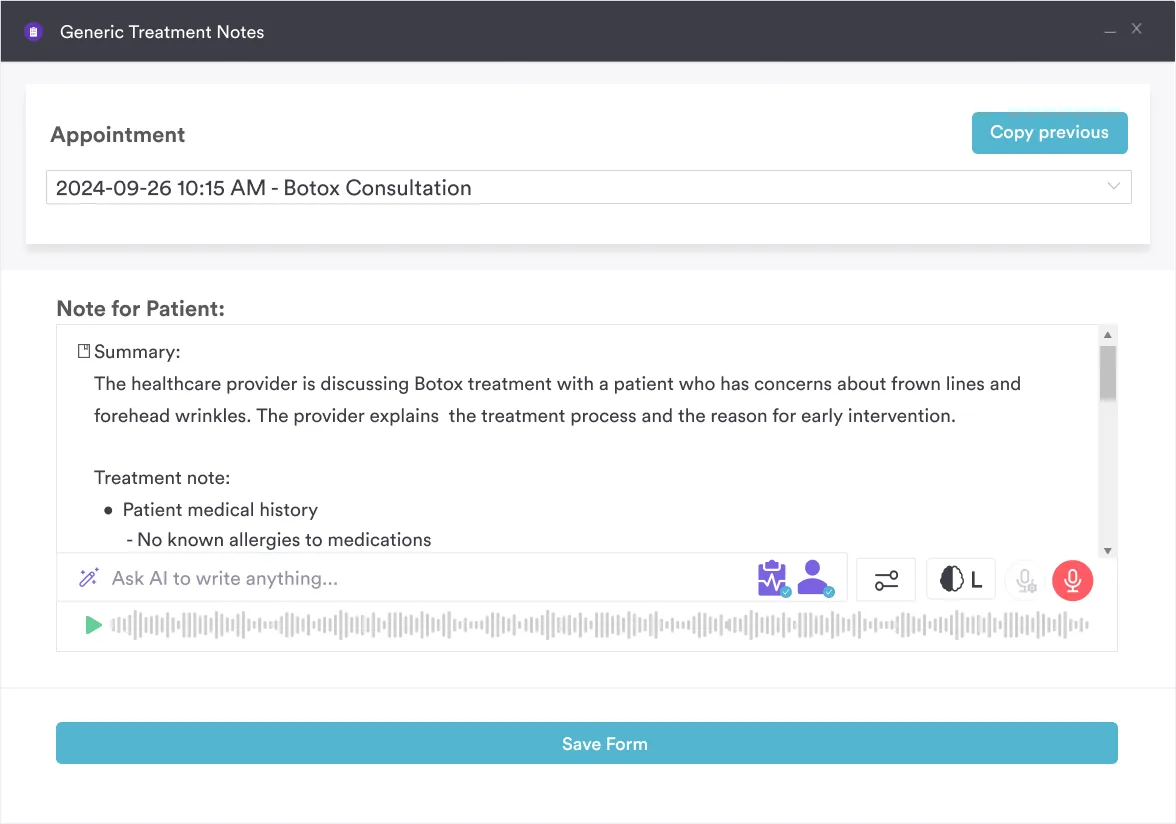

Pabau sends the BIS-11 as a digital form, files the score in the patient record, and schedules the follow-up review. Your scores become a trend you can act on rather than loose paperwork.

The download gives you a printable BIS-11 screening form with hand-scoring lines and a clinician review section. Add the missing 30th item from the published scale if you need a total that maps cleanly onto the Stanford cutoffs. Otherwise score the 29 printed items and read anything near a cutoff as borderline.
The score earns its place by being repeatable. One BIS-11 total tells you little on its own. The same measure repeated after twelve weeks of treatment tells you whether impulse control actually moved.
Book a demo to see how Pabau sends, scores, and tracks impulsivity assessments inside the patient record.

Assessing an adult for ADHD? ADHD psychological assessment for adults covers the wider battery that an impulsivity score fits into.
Documenting the clinical interview? Mental status exam template gives you the observational record that sits next to a self-report score.
Working with high impulsivity and substance use? Substance abuse treatment plan turns an elevated score into measurable treatment goals.
Screening for camouflaged autistic traits? CAT-Q test gives you the masking questionnaire that often runs alongside an adult ADHD workup.
Assessing a patient with a more severe presentation? Schizophrenia nursing care plan lists the current NANDA diagnoses, replacing two retired ones, with matching interventions and monitoring.
An impulsivity test is a standardized self-report questionnaire that measures how prone someone is to acting without thinking. The most widely used is the Barratt Impulsiveness Scale (BIS-11), a 30-item scale rated from 1 to 4 across attentional, motor, and non-planning impulsivity. The patient rates each statement, designated items are reverse-scored, and the total is compared against published cutoffs.
A BIS-11 total of 72 or above indicates high impulsivity, following the cutoffs published by Stanford and colleagues in 2009. Totals of 52 to 71 sit within normal limits, and a total below 52 suggests over-control or an invalid response set. Subscale ranges differ because the item counts differ. Attentional runs 8 to 32, motor 11 to 44, and non-planning 11 to 44.
The form prints 29 items but keeps the reverse-score list from the complete 30-item BIS-11, so item 30 appears with nothing to score against it. One reverse-scored non-planning item was dropped when the form was laid out. Score the 29 printed items, ignore the reference to item 30, and remember that the achievable total is 29 to 116.
If impulsive behavior causes persistent problems in relationships, work, finances, safety, or well-being, a mental health professional can assess the underlying causes and recommend treatment. Those causes include ADHD, mood disorders, substance use, and personality traits. High scores on an impulsivity test warrant a clinical discussion of behavioral, psychological, or pharmacological options.