Professional development record
A professional development record is a structured log of a healthcare practition...

8
Last Updated: Oct 8, 2026

A behavior plan is a written roadmap combining target behaviors, replacement strategies, reinforcement systems, and progress tracking, built on functional behavior assessment (FBA) findings.
Every behavior plan must include six core components: target behavior definition, replacement behaviors, antecedent interventions, consequence strategies, data collection methods, and crisis response protocols.
The FBA process is the foundation: identifying what triggers the behavior and what the person gains from it shapes every intervention choice in the plan.
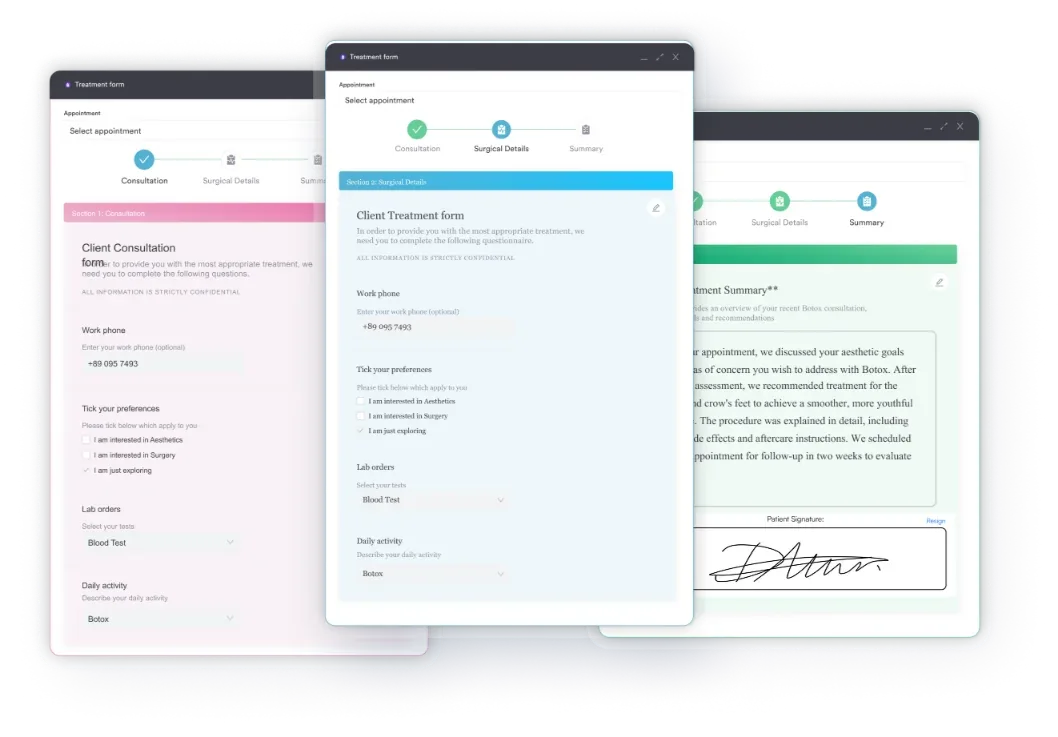
Practice management software like Pabau’s digital forms and clinical notes tools streamline behavior plan creation, storage, and team collaboration for seamless implementation across settings.
A ready-to-use behavior plan template covering target behavior definition, replacement behaviors, antecedent and consequence interventions, and data collection methods. Designed for educators, clinicians, and behavior support teams working in schools, clinics, and therapeutic settings.
Download templateA behavior plan is a structured written document that outlines evidence-based interventions to help students and clients reduce problem behaviors and build healthier alternatives. Used across schools, clinics, and therapeutic settings, a behavior plan translates assessment findings into actionable strategies that drive measurable behavioral change.
This downloadable PDF template gives you a structured starting point for any behavior plan. It walks through each section with prompts and examples so you can customize it for the individual you’re supporting.
A behavior plan is far more than a list of rules. It’s a clinical document grounded in functional analysis, a process that identifies the root causes of problem behavior and builds interventions around those causes.
When a student repeatedly acts out in math class or a client engages in self-soothing behaviors during stress, a well-designed behavior plan doesn’t just punish the behavior. It teaches the person a more appropriate way to meet the same underlying need.
The power of a behavior plan lies in its specificity. Rather than a vague directive like “be respectful,” a behavior plan defines exactly what respect looks like, such as “maintain eye contact during staff interactions” or “use a calm voice when disagreeing.” It measures whether the person is doing it and reinforces the effort.
This precision is what allows psychologists and BCBAs, plus school teams, to track progress and adjust strategy when something isn’t working.
Every behavior plan shares a common architecture. Understanding each component ensures your plan is thorough, measurable, and ready to implement across home, school, or clinic environments.
The best behavior plans emerge from teamwork and data. Follow this structured approach to create a plan that sticks.
Before writing a single intervention, you must understand why the behavior is happening. An FBA involves observing the person in the environment where the problem occurs, then recording what happens just before the behavior (the antecedent), what the behavior looks like, and what the person gets out of it (the function).
Does the student leave their seat to escape a difficult task, to gain peer attention, or to access a preferred activity? The answer shapes everything that comes next.
Write the problem behavior so specifically that any observer could recognize it. “Aggressive behavior” is too vague. “Throws objects, hits others with closed fist, or screams for more than 30 seconds” is measurable. Include frequency or intensity if relevant: “occurs 2-5 times per day during independent work.”
The replacement behavior must be easier to perform, more socially acceptable, and result in the same outcome as the problem behavior.
If a child bites their hand to self-stimulate when anxious, a replacement might be “chews on a sensory ring.” If a student yells to escape math, the replacement is “raises hand to request a break.” Match the function, not just the surface behavior.
Antecedents prevent the problem from starting: clear expectations, visual schedules, transition warnings, sensory input, environmental adjustments. Consequences reinforce the replacement behavior (praise, privileges, points, preferred activities) and briefly interrupt the problem behavior without escalating it.
Choose a method the team will actually use: tally marks, frequency charts, timing sheets, or interval recording. Keep it simple. The goal is to answer: Is the behavior decreasing? Is the replacement behavior increasing? Monthly review of the data tells you whether to continue the plan, adjust it, or redesign it entirely. Therapy sessions build a picture over months, and the record is what makes that picture readable.
If the behavior includes aggression, self-harm, or property destruction that could escalate, include specific de-escalation steps, physical safety protocols (if needed), and decision points for when to involve additional support or emergency services.
Practices running virtual sessions through a telehealth platform can share and review worksheets on screen.
Here’s a condensed real-world example to show how the pieces fit together:
A common question: is a behavior plan the same as an IEP (Individualized Education Program)? No. An IEP is a legal special education document that outlines all accommodations and services a student receives. A behavior plan is one possible component of an IEP, focused specifically on addressing behavioral challenges.
A student can have an IEP without a behavior plan, or a behavior plan can stand alone outside the IEP framework in clinical or private settings.
A behavior plan is a team effort. In schools, the team includes the special education teacher, school psychologist.
In clinical or therapeutic settings, a BCBA (Board Certified Behavior Analyst) usually leads the FBA and plan design, working alongside clinicians and the client’s family. The most effective plans have input from everyone who interacts with the person across different environments: home, school, clinic, and community.
A behavior plan records a student or client’s diagnosis, triggers, and history, so how it’s stored and shared matters. School-based plans fall under FERPA (Family Educational Rights and Privacy Act), which restricts who can view a student’s education record without written parental consent.
In clinical or ABA settings.
Because a behavior plan is usually shared across teachers, therapists, and family members, moving it between home, school, and clinic calls for a signed consent or data-sharing agreement naming exactly who can see the record and why.
Once more than one team works from the same document, role-based access and an audit trail matter, so an unauthorized edit can be traced back to its source. Keep signed consents on file with the plan itself, not in a separate system that’s easy to lose track of.
Creating a behavior plan is one thing. Storing it securely, sharing it with your whole team, and tracking progress over time is another.
When every team member has access to the same up-to-date plan and data, consistency improves and outcomes follow.
A well-designed behavior plan is a roadmap that translates understanding into action. By grounding your plan in assessment data, defining clear behaviors and antecedents, selecting meaningful reinforcement, and tracking progress consistently, you create a foundation for lasting behavioral change.
Download the free behavior plan template above to get started. The most successful plans are developed collaboratively and reviewed regularly as the person learns and grows.
Book a demo of Pabau to see how digital documentation and team collaboration tools can streamline your behavior plan creation and progress tracking workflow.

Working with a client processing loss? Stages of grief worksheet helps you track emotional stages alongside behavioral goals.
Need to measure empathy alongside behavior? Toronto Empathy Questionnaire gives you a validated scoring tool for social-emotional assessments.
Working with a child showing depressive symptoms? CDRS scale template is a clinically validated 16-item scale for rating depression severity in children and teens.
Want to build on the client’s strengths? character strengths assessment is a printable form rating 24 character strength statements for clients to complete.
Need a fuller clinical picture first? Biopsychosocial assessment template captures the psychological and social context that shapes behavior.
A behavior plan is a written intervention strategy that defines target behaviors, identifies replacement behaviors, and outlines antecedent and consequence strategies to help an individual reduce problem behaviors and build new, more appropriate ones. It is grounded in functional behavior assessment findings.
Yes, in school settings governed by IDEA (Individuals with Disabilities Education Act), an FBA must precede a behavior plan when a student’s behavior impedes learning. In clinical ABA settings, a thorough functional analysis is standard practice to ensure interventions target the root cause of the behavior.
Most behavior plans are reviewed monthly based on collected data. If the target behavior is not decreasing or the replacement behavior is not increasing within 4 weeks, the plan should be adjusted or redesigned. Some plans require more frequent check-ins during the initial implementation phase.
Yes. If the behavior includes aggression, self-harm, or property destruction that could escalate into a safety risk, the plan must include specific de-escalation steps, physical safety measures (if applicable), and decision points for when to contact emergency support.
A behavior plan is an individual document addressing a specific person’s behavior. Positive Behavior Support (PBS) or PBIS is a schoolwide or system-level framework that includes universal expectations, tiered interventions, and data collection across all students. Individual behavior plans often operate within a PBS framework.
Board Certified Behavior Analysts (BCBAs) are the primary professionals who design ABA-based behavior plans. They conduct the functional analysis, select evidence-based interventions, and oversee implementation. Behavior Technicians may assist with data collection and intervention delivery under BCBA supervision.