Professional development record
A professional development record is a structured log of a healthcare practition...

8
Last Updated: Oct 8, 2026

A diagnosis letter from a doctor is a formal document confirming a patient’s diagnosis, issued by a licensed provider.
Insurers, employers, disability agencies, schools, and specialists all ask for one, and each checks something different.
Every letter needs patient details, the diagnosis with its ICD-10 code, clinical findings, treatment plan, and physician credentials.
Many disability agencies reject letters older than 60 days or signed electronically, so confirm the recipient’s rules first.
Practice management software like Pabau pulls patient details and clinical notes into the letter, so nothing gets retyped.
The template lays out every section a recipient looks for: patient details, the diagnosis statement with its ICD-10 code, and clinical findings. It closes with the treatment plan and a physician credentials block ready to sign.
Download templateA diagnosis letter takes most physicians 10 to 15 minutes, and most of that time goes on format rather than clinical thinking. A letter that misses one element gets rejected by the insurer, stalls a disability claim, or fails employer verification. Then the patient comes back asking for a corrected copy.
A diagnosis letter from a doctor is a formal medical document that confirms a patient’s diagnosis. A licensed physician or provider writes it, sets out the clinical findings behind the diagnosis, and records the treatment plan.
Below you’ll find what the letter must contain, when each recipient asks for one, and how to write it. There’s a downloadable template above, a filled-in example, and a checklist of the mistakes that invalidate claims. You’ll also see how digital intake forms remove the retyping.
A diagnosis letter from a doctor is a formal document that confirms a patient’s medical diagnosis. Only a licensed physician or provider can issue one.
It works as official clinical documentation for a third party who needs written proof of the condition. That party is usually an insurer, an employer, a disability agency, a school, or a specialist practice.
The letter differs from a patient summary or a referral in one way. It exists to confirm a diagnosis on paper. The physician signing it attests to the accuracy of that diagnosis and stands behind it for legal and administrative purposes.
The EEOC’s accommodation guidance sets out what medical information an employer may ask for. That matters, because an employer is entitled to less detail than an insurer.
Every diagnosis letter carries the issuing physician’s signature. It also needs practice letterhead, the patient’s full name and date of birth, and the formal diagnosis with its ICD-10 code. Relevant clinical findings and the recommended treatment finish it off.
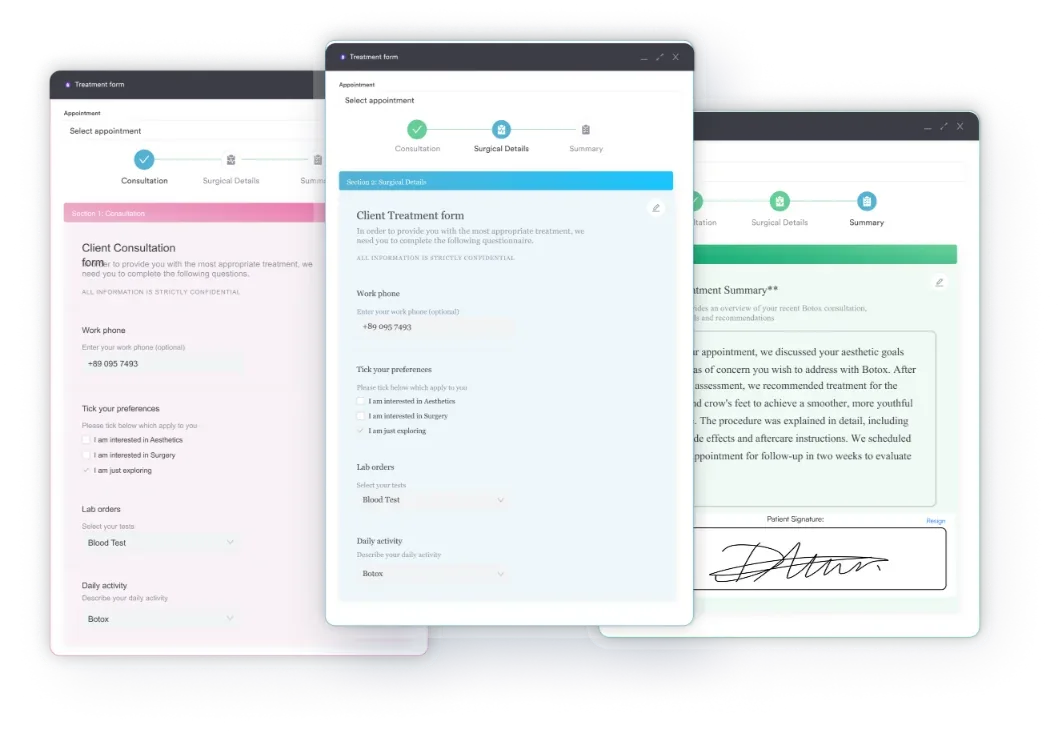
Structured medical forms that prompt for each field keep letters consistent. They also stop the omissions that derail claims weeks later.
A diagnosis letter is required whenever a third party needs independent confirmation of a patient’s condition and its clinical basis. Five scenarios cover almost every request:
Patients often ask for a letter without knowing what the recipient actually wants. Ask who it is going to and why, then write to that requirement. Mental health practices and ADHD practices field these requests constantly, mostly for anxiety, depression, and school or workplace accommodations.
Nine elements make a diagnosis letter legally and clinically complete:
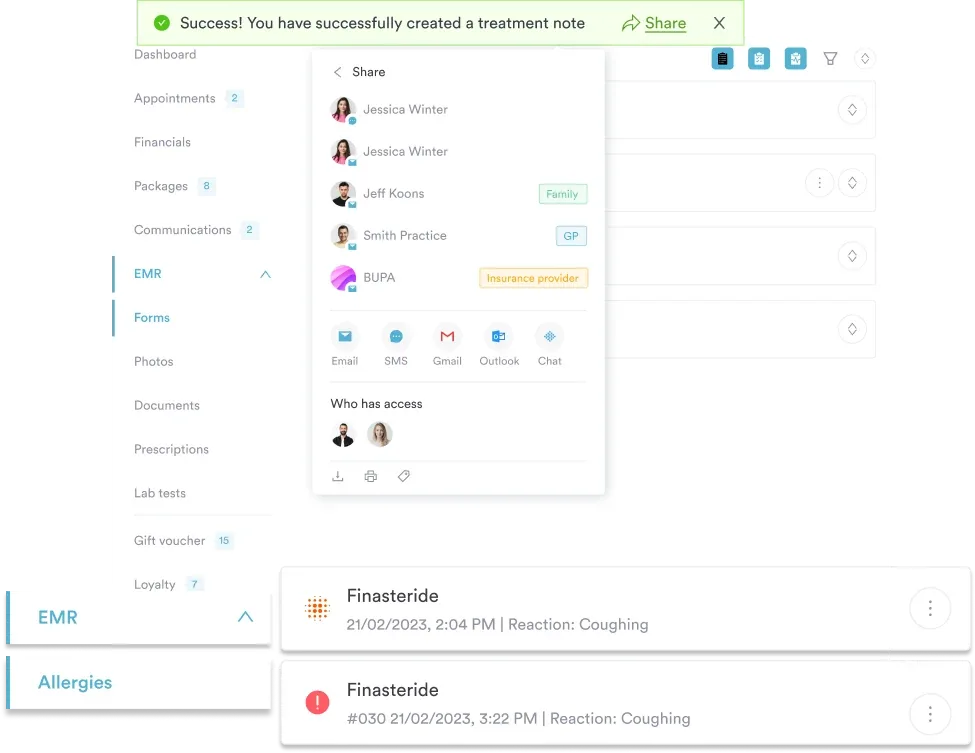
HIPAA-compliant documentation systems prompt for each field in turn. That is what stops a missing code or credential from invalidating the letter downstream. A history and physical form is a useful source for the findings section.
The elements are the same for everyone. What changes is which one gets the letter rejected.
Writing the letter is a structured process. Five steps cover it:
Patient record management keeps every clinical note in one place. You pull the documented findings straight into the letter instead of writing them again.
One error can trigger an insurance denial, add months to a disability claim, or send the patient back for a corrected letter. These are the usual culprits:
Paperless practice workflows with built-in validation catch these before the letter leaves the building.
Here is the same structure filled in for a patient with generalized anxiety disorder:
The example carries every required element. That includes letterhead, patient ID, a current date, the diagnosis with its ICD-10 code, and full credentials.
It also gives measurable evidence, in the GAD-7 score and the symptom frequency. A letter built this way passes insurance review and disability agency scrutiny.
Letter writing becomes a bottleneck when every letter starts from a blank page. Practice management software like Pabau puts the template inside the workflow instead.
Pabau Scribe, our AI scribe, drafts the clinical findings section from your visit notes. The letter template already holds your letterhead, the patient’s demographics from the client record, and the standard formatting. You complete the diagnosis statement, the ICD-10 code, and the treatment plan.
Digital signatures cover most recipients, and they save you printing and scanning. Some disability agencies still insist on a wet signature, so check before you send. Pabau stores either version against the client record.
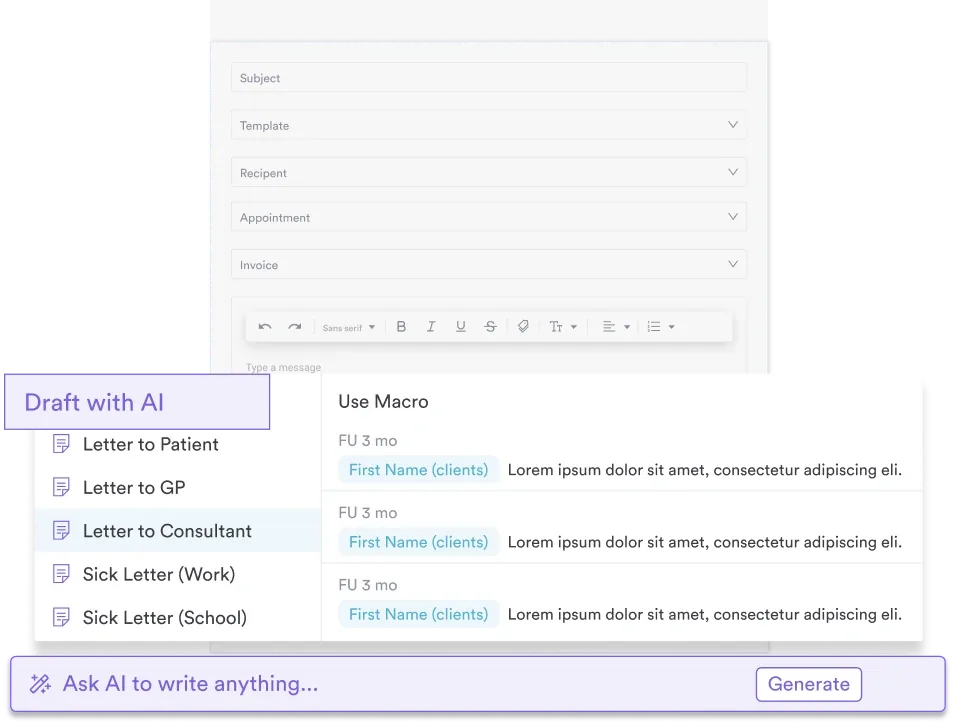
When letters are part of the normal workflow, patients get them the same day they ask. Patient communication tools let you email a signed letter to the patient or the recipient directly. The practice keeps a searchable archive of every letter issued, which cuts duplicate requests.

Digital forms, letter templates, and AI clinical documentation pull the details you already hold into the letter. Your patient leaves with it signed the same day.

The letter that gets accepted is the one written for its reader. Find out who is receiving it and what they reject on, then write to that.
An insurer wants the code to match the service. A disability examiner wants a fresh date and a signature they can accept. An employer wants the restriction, not the label. The nine elements stay the same, but the emphasis shifts.
Practice management software that carries letter templates, clinical documentation, and digital signatures turns this from a time sink into a routine task. Book a demo to see how Pabau gets a compliant diagnosis letter signed and archived the same day.

Need a template for progress notes? Clinical progress notes template has sections for presenting concerns, observations, interventions, client response, and the updated treatment plan.
Need a note for work or school? Doctor’s note template captures the clinical information a work, school, or employer note needs to be valid.
Need a certificate instead of a letter? Medical certificate generator builds a professional and compliant medical certificate for free, and supports multiple certificate types.
Need a nursing care plan example? Diarrhea nursing care plan template guides assessment, diagnosis, intervention planning, and outcome evaluation for a patient with diarrhea.
Want your clinical wording tighter? Medical terminology reference gives you the precise terms that stop a letter reading as vague.
A diagnosis letter is a formal medical document in which a licensed physician confirms a patient’s diagnosis. It carries patient information, the diagnosis with its ICD-10 code, clinical findings, the treatment plan, and physician credentials. Recipients include insurers, disability agencies, employers, and specialists.
Include practice letterhead, the patient’s full name and date of birth, and the date of the letter. Add the diagnosis statement with its ICD-10 code, the clinical evidence, and the current treatment plan. Close with your signature, license number, and contact information.
Insurers ask for one to validate a claim or approve preauthorization. Employers ask under the ADA before approving an accommodation. Disability programs, schools, universities, specialists, and courts all request them too.
No. A diagnosis letter confirms what condition a patient has. A letter of medical necessity, or LMN, explains why a treatment, medication, or device is needed. Diagnosis letters support claims and accommodations, while an LMN justifies a specific intervention.
Yes, for insurance claims and disability applications. Most insurers and disability agencies require a valid, current ICD-10 code. Without it, the letter will likely be rejected, delaying claim processing or benefit determination.
Keep it to one or two pages. Focus on the diagnosis, the clinical evidence, and the treatment plan. A longer letter is not a more credible one, so clarity beats length.