GLP-1 diet plan
A GLP-1 diet plan is a structured eating framework for patients taking semagluti...

2
Last Updated: Oct 13, 2026

An appointment cancellation policy outlines notice periods, no-show fees, and patient responsibilities – protecting practice revenue and managing scheduling efficiently.
Every policy must include notice period (typically 24 hours), fee structure, exceptions (emergencies, medical conditions), and communication method.
No-show fees are legal for most practices but must comply with payer rules, especially Medicare and Medicaid – consistent application is mandatory.
Practice management software like Pabau automates reminders and digital forms, helping practices communicate policies clearly and reduce cancellations before fees become necessary.
A ready-to-use policy document covering patient notice periods, no-show fees, specialty-specific language, and acknowledgment sections. Editable for all practice types.
Download templateNo-shows cost healthcare practices an average of $200-$500 per missed appointment. Lost revenue, wasted clinician time, and empty appointment slots ripple through your day. A clear written appointment cancellation policy sets expectations upfront, reduces last-minute cancellations, and protects your bottom line.
This guide covers what every cancellation policy should include, specialty-specific templates, legal compliance (especially for Medicare and Medicaid patients). You’ll also find a free, editable template above.
An appointment cancellation policy is a written document that describes the rules patients must follow when canceling or rescheduling appointments. It sets out the notice period required (e.g., 24 hours), any fees charged for late cancellations or no-shows, which situations are exempt (emergencies, medical hardship), and how the practice will communicate the policy to patients.
A cancellation policy serves three purposes: it protects your practice’s revenue by establishing accountability; it ensures patients understand their responsibilities before booking; and it complies with healthcare regulations (especially payer rules for government-funded patients).
Every effective cancellation policy covers the same core elements. Here’s what to include:
The policy should be written in clear, plain language (avoid legal jargon) and made available in the patient’s preferred language if your practice serves non-English-speaking populations.
Reporting tools turn well-kept records like this into dashboards your team can act on.
The free template above is ready to download and customize. Follow these five steps to implement it:
A 24-hour notice requirement is the most common cancellation window in healthcare because it gives the practice time to fill the slot with another patient while remaining achievable for most patients. Here’s the core language:
“Patients must provide a minimum of 24 hours’ notice to cancel or reschedule an appointment. Cancellations made less than 24 hours before the scheduled time will incur a cancellation fee of [INSERT FEE, typically $25-$100]. Patients who fail to attend (no-show) without prior cancellation will be charged [INSERT NO-SHOW FEE, typically $50-$150] or the full service cost if higher.”
Automate this using automated appointment reminders. Send a reminder 24 hours before the appointment, then a second reminder 2-4 hours before. This dramatically reduces no-shows and late cancellations before fees apply.
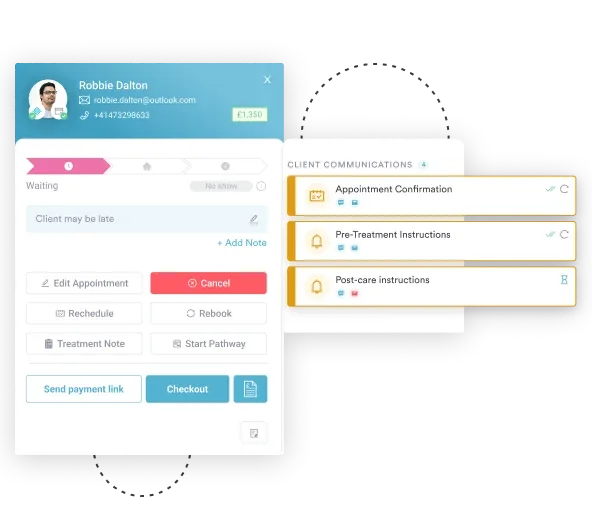
A no-show (when a patient fails to cancel AND doesn’t attend) is more costly than a late cancellation because the practice can’t adjust staffing or fill the slot. Many practices charge a higher fee for no-shows. Example language:
“A ‘no-show’ occurs when a patient does not arrive for their scheduled appointment and has not provided notice of cancellation or rescheduling. No-show charges are [INSERT AMOUNT OR PERCENTAGE, e.g., $75 or 50% of the appointment fee]. Repeated no-shows (3 or more in a 12-month period) may result in discharge from the practice.”
Set a policy threshold defining how many no-shows trigger a warning, fee increase, or discharge. This fairness framework helps patients understand the stakes and motivates compliance.
Mental health therapists and counselors face unique challenges: therapy relies on continuity of care, and missed sessions interrupt clinical progress. Therapy practice management policies often include language about clinical impact:
“Missed therapy sessions interrupt treatment progress and reduce therapeutic effectiveness. Cancellations must be made at least 24 hours in advance. Late cancellations or no-shows will incur a fee of [INSERT AMOUNT]. Exceptions are made only for genuine emergencies (hospitalization, acute crisis, family death). Chronic cancellations may be addressed in session and may affect treatment planning.”
Therapy policies often emphasize clinical continuity rather than pure revenue protection, building patient buy-in through shared responsibility for treatment outcomes.
Charging a no-show or cancellation fee is legal in most jurisdictions – BUT payer rules (especially Medicare and Medicaid) impose strict conditions. You must comply or lose reimbursement.
Medicare permits no-show fees only if they are consistently applied to all patients regardless of payer type. If you waive the fee for private-pay patients but charge Medicare patients, CMS may treat this as fraudulent billing discrimination under the missed-appointment rules in its Medicare Claims Processing Manual. Medicaid rules vary by state; check your state Medicaid board’s guidance.
Document your policy clearly and apply it uniformly. This protects your practice and keeps you audit-ready.
Some states (particularly California, New York, and Texas) have enacted stronger consumer-protection rules limiting cancellation fees. Consult your state medical board or a healthcare attorney to confirm local requirements. Many practices charge $25-$100 for a late cancellation and $50-$150 for a no-show, but reasonableness is context-dependent (a dermatology consultation differs from a complex surgical consultation).
A well-written policy is useless if patients don’t know about it. Communicate it across multiple touchpoints:
Use patient communication software to ensure consistent, timely delivery of the policy. Automation reduces manual errors and improves compliance.
The most effective cancellation policy is one that prevents no-shows before fees are charged.
The automation workflow: When a patient books an appointment, trigger a sequence: (1) Immediate booking confirmation with policy attached. (2) Reminder 72 hours before (gives the patient 3 days to plan). (3) Reminder 24 hours before (final chance to cancel penalty-free). (4) Reminder 2 hours before. Each reminder includes a one-click “I need to reschedule” link.
Research shows automated SMS reminders reduce no-shows by 30-50%. Patients appreciate the reminders, and your cancellation fees become a rare edge case rather than a revenue lever, which is ethically sound and legally safer.
Pabau’s email and SMS tools let you set up these sequences in minutes. Combined with your written cancellation policy, automation creates a patient-friendly system that protects revenue without friction.

Audit your cancellation fees quarterly. Track no-show rates before and after implementing reminders, and adjust your fee structure if patterns emerge (e.g. morning appointments have higher no-show rates). Overly punitive fees breed resentment; fair, consistently-applied fees build accountability.

Automate appointment reminders, track no-shows, and integrate your cancellation policy into patient intake – all in one platform.

A written cancellation policy is the foundation of respectful no-show management. When combined with automated reminders, it shifts the focus from punitive fees to proactive patient engagement.
Patients respect clear expectations, and your practice retains revenue. Download the free template, customize it for your specialty, and integrate it into your intake process alongside other new-patient paperwork. Then use no-show policy software to enforce it automatically.

Looking to keep your calendar full and profitable? strategies for scheduling patients effectively Eight strategies to cut the appointments practices lose each week to no-shows and gaps.
Mapping out provider availability across the week? free practice schedule template Daily and weekly grids for providers, rooms, and breaks, with fixes for delays that build up.
Cutting down on missed appointments? appointment confirmation email guide Explains how confirmation emails build trust and reduce no-shows across the client journey.
A cancellation policy must include: (1) notice period (e.g., 24 hours), (2) cancellation fee amount, (3) no-show fee, (4) rescheduling terms, (5) payment method, (6) exemptions (emergencies), and (7) patient acknowledgment (signature or consent). Include this in intake forms and communicate it via email, SMS, and signage.
Yes, but only if the fee is applied consistently to all patients regardless of payer type. Medicare explicitly prohibits waiving fees for private-pay patients while charging government payers, as this is viewed as fraudulent discrimination. State Medicaid rules vary, so consult your state board for specifics.
Most healthcare practices charge $25-$100 for a late cancellation and $50-$150 for a no-show. The fee should reflect the cost of the missed appointment time and be proportionate to the service (e.g., a complex surgical consultation may justify a higher fee than a brief check-in). Consult your accountant and local market rates.
Reminders at 72 hours, 24 hours, and 2 hours before an appointment remind patients of their commitment and provide easy rescheduling links. Research shows SMS reminders reduce no-shows by 30-50%. Reminders also serve as a patient service, not a threat, so patients appreciate knowing their appointment time.
Yes. Therapists can charge cancellation fees just like any healthcare provider. Many therapy practices emphasize the clinical impact of missed sessions (interrupts treatment continuity) alongside the financial impact. Policies typically allow exceptions for genuine emergencies but hold patients accountable for chronic cancellations through fee or discharge.
Communicate via multiple channels: (1) include the policy in new-patient intake forms (printed or digital) with a signature or consent, (2) email the policy when the appointment is booked, (3) include it in pre-appointment reminder texts, (4) display it on your website and in your waiting room. Consistent, upfront communication reduces disputes and improves compliance.