Patient reported outcome measures
Patient reported outcome measures (PROMs) are validated questionnaires that reco...

Last Updated: Oct 13, 2026

A normal underarm temperature is 96.6-98°F (35.9-36.7°C) in adults, and axillary readings run 0.5-1°F below an oral reading.
Fever starts at 99°F (37.2°C) axillary for adults and newborns, and at 99.5°F (37.5°C) for infants and children.
Any newborn under 3 months with an axillary reading of 99°F or higher needs same-day medical evaluation.
Rectal measurement stays the gold standard under 3 months, while axillary suits screening and trend tracking in older patients.
Practice management software like Pabau records each reading against the patient’s chart and alerts staff when a value crosses your threshold.
Age-banded axillary ranges for newborns, infants, children, and adults, in both Fahrenheit and Celsius. Every row carries its own fever cutoff, and a method comparison sits underneath for handing to parents.
Download templateA normal underarm temperature runs 96.6°F to 98°F (35.9°C to 36.7°C) in adults, and an axillary fever starts at 99°F (37.2°C). Newborn thresholds are tighter, and the underarm temperature chart below breaks out every age band.
Five separate references usually live on five separate pages. They are all on this one, each aimed at a different moment in the visit:
The last section covers what happens after the reading. That is where a practice records it against the patient’s chart and gets an abnormal value in front of a clinician.
An underarm temperature, also called axillary temperature, is a reading taken with a digital thermometer held in the armpit for several minutes. It’s non-invasive and safe, which is why it’s the default in schools, childcare settings, and most home medicine cabinets.
The limitation is a consistent offset. Axillary readings sit 0.5°F to 1°F (0.3°C to 0.6°C) below oral temperature, and 1°F to 2°F below rectal temperature.
That correction factor decides whether a number counts as fever. An axillary reading of 99.5°F already sits above the 99°F axillary fever line for adults. Converted, it estimates an oral temperature of 100°F to 100.5°F, which reaches the familiar 100.4°F cutoff.
Normal underarm temperature shifts with age, and the fever cutoff shifts with it. The armpit temperature chart below sets out the baseline ranges from birth through adulthood.
The normal axillary temperature for newborn patients, meaning the first 3 months, spans 97.5°F to 98.9°F (36.4°C to 37.1°C). A newborn armpit temperature at or above 99°F is treated as fever, a tighter cutoff than any other age band on the chart.
Normal temperature for infants aged 3 to 12 months sits a little higher, at 97.8°F-99°F (36.5°C-37.2°C). Infant temperature is also easily pushed up by heavy bundling or a warm room. Unwrap the baby and repeat the reading before acting on a borderline result.
A low-grade rise in the day or two after a shot is common too. Check the immunization record before you treat a borderline infant reading as a new illness.
Children aged 1 to 12 sit slightly lower, between 97°F and 99°F axillary. Normal axillary temperature for adolescents and adults is the lowest band on the chart, at 96.6°F to 98°F (35.9°C to 36.7°C).
Key observation: newborns have both the narrowest normal range and the lowest fever threshold. Log anything at or above 99°F in an infant under 3 months as an abnormal vital sign and escalate it the same day.
An underarm reading counts as a fever at 99°F (37.2°C) in adults and newborns, and at 99.5°F (37.5°C) in infants and children. Those axillary cutoffs sit below the oral numbers most people quote, because of the built-in 0.5-1°F offset.
The fever temperature adults most often hear, 100.4°F, is an oral or rectal figure rather than an axillary one. Applying it to an armpit reading delays action by roughly a full degree. Expressed as fever in Celsius, the axillary adult threshold is 37.2°C and the pediatric one is 37.5°C.
Our fever temperature chart carries the same thresholds across every measurement method, if you need the oral, rectal, and ear equivalents side by side.
Critical rule for newborns: in infants under 3 months, rectal measurement is the gold standard. If only an axillary reading is available and it hits 99°F (37.2°C), the infant needs urgent evaluation even without other symptoms. Fever at this age can be the only sign of serious infection.
Axillary sits at the bottom of the accuracy ladder and rectal temperature sits at the top, with oral, ear, and forehead readings in between. The table compares all five on the axes that decide which one to reach for.
Rectal temperature stays the reference standard under 3 months, because a missed fever at that age carries the highest consequence. Tympanic temperature is the usual compromise in a busy practice, since it reads in seconds and tracks core temperature closely.
Ear readings are not recommended below 6 months, where the canal is too narrow to seat the probe reliably. Oral becomes practical from around age 4 or 5, once a child can hold the probe under the tongue. Until then, axillary and rectal are the two workable options.
Proper technique is what keeps an axillary reading usable. Follow these five steps:
Common mistakes: cutting the timing short, measuring a damp armpit, or letting the arm move mid-reading will all skew the result. When you’re tracking one patient over time, consistent technique matters more than absolute accuracy.
Use this temperature conversion chart when a device, a parent, or a referral letter gives you Celsius and your own reference is in Fahrenheit.
The Celsius to Fahrenheit chart above stops at the values that change a decision, rather than listing every tenth of a degree. To convert any other reading, multiply the Celsius figure by 9/5 and add 32. For example, 37°C × 9/5 + 32 = 98.6°F.
Call the same day for any newborn under 3 months reading 99°F axillary or higher. Go straight to emergency care when a fever arrives with confusion, a stiff neck, or labored breathing. The full criteria by age:
Recent travel changes the picture. A fever within three months of returning from a malaria-endemic region needs urgent assessment. That is why travel clinics log trip history beside the reading.
Escalation also works better when the number travels with its context. Give the receiving clinician the site, the time, and the trend. An SBAR report keeps all three in one structured handover.
Post a copy where readings are actually taken, so nobody has to remember which threshold applies to a 5-month-old. In a primary care practice, that turns a number into a triage decision in seconds.
It also works as a conversation tool. Parents worry about fever, and a visual reference explains why 98.8°F axillary in a toddler is unremarkable while 99.2°F in a newborn is not. Handing it over during a pediatric physical examination heads off the anxious call at 9pm.
The effect runs both ways. Fewer families arrive at urgent care over a normal reading, and the ones with a genuinely concerning number stop waiting to see whether it settles.
Underarm temperature is the least accurate non-invasive method available. It’s still the right choice for routine screening, repeat trend readings, and patients who can’t tolerate another site. The split below marks where axillary screening ends and a more accurate site takes over.
When axillary is acceptable: screening well patients outside acute care, rapid triage, and any case where rectal measurement is contraindicated. It reliably flags fever as a clinical sign, even though the absolute number reads low.
When axillary is not acceptable: diagnosing fever in infants under 3 months, and monitoring critically ill patients where a degree changes management. Both call for rectal or another core method.
Either way, write the site next to the number on your vital signs record. An armpit temperature logged without its method is a number nobody downstream can interpret.
An axillary reading often lands on a paper vitals sheet and gets filed after the visit. Last month’s sheet sits in another folder, so the two readings never meet. Trend carries more clinical weight than any single number, and filed paper hides it.
Practice management software like Pabau replaces that with one running record. Staff enter the temperature, the method, and the time into a digital vitals form during the appointment.
The value writes straight to the patient’s chart. The next clinician opens one screen and sees every previous reading in order, with the site attached to each one.
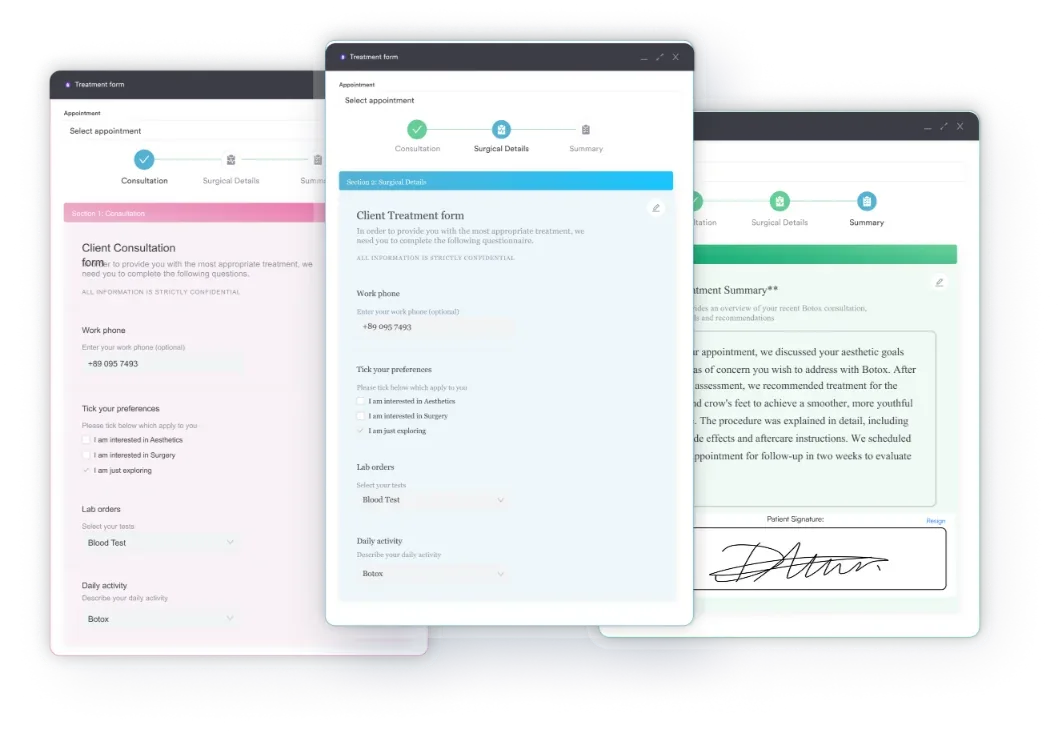
Set a threshold once and the system watches it for you. A newborn axillary reading of 99°F or higher can fire an alert to the on-call clinician the moment it is saved. A sustained fever across two visits can send a secure message to the parent.
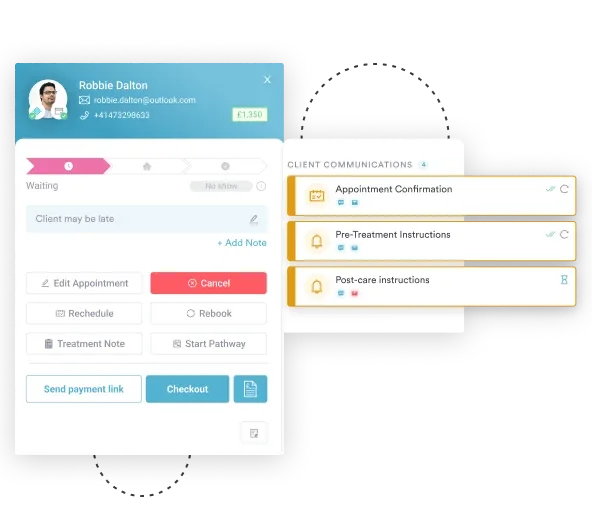
So the front desk stops hunting for last month’s vitals sheet. An abnormal reading reaches a clinician while the patient is still in the building. Every message and alert is logged against the record, which is what HIPAA-compliant practice management asks for.

Pabau’s digital vitals forms record each reading against the patient’s chart and show the trend at a glance. Automated alerts push abnormal values to a clinician before the patient leaves.

Keep the chart where readings are actually taken, and hand a copy to parents who can’t interpret the number in front of them. The newborn threshold is the one line worth treating as absolute. A reading of 99°F axillary under 3 months goes to a clinician the same day.
Everything above that line is a trend question, which is why the chart only does half the job. The other half is a record that keeps yesterday’s reading next to today’s, with the site and time attached to both.
Book a demo to see how Pabau keeps temperature readings, trends, and fever alerts in one patient record.

Need the baseline before the fever question? Body temperature chart sets out normal ranges across every measurement site.
Want the fever cutoffs for oral and rectal readings too? Fever temperature chart lines up the thresholds method by method.
Setting BP targets for an older patient? Elderly blood pressure chart sets treatment targets by age decade and flags fall-risk considerations for older adults.
Need to know when a reading becomes urgent? Abnormal vital signs chart sets the escalation thresholds for each vital sign by age.
Building out your pediatric workflow? Pediatric physical examination shows where the temperature check fits in the wider assessment.
Normal axillary temperature for adults is approximately 96.6°F to 98°F (35.9°C to 36.7°C). A fever is typically defined as an axillary reading of 99°F (37.2°C) or higher.
Newborns (0-3 months) have a normal axillary range of 97.5-98.9°F (36.4-37.1°C). Infants aged 3-12 months typically run 97.8-99°F (36.5-37.2°C) axillary. Any axillary temperature ≥99°F in a newborn under 3 months requires immediate medical evaluation.
By underarm measurement, a fever is 99°F (37.2°C) or higher in adults and newborns, and 99.5°F (37.5°C) or higher in infants and children. The fever temperature adults usually hear quoted, 100.4°F (38°C), applies to oral and rectal readings instead. Any newborn under 3 months at 99°F axillary needs same-day evaluation.
Axillary temperature reads 0.5-1°F lower than oral and 1-2°F lower than rectal. Rectal remains the gold standard for infants under 3 months. Axillary is acceptable for screening in older children and adults when the correction factor is understood.
Ensure the armpit is dry. Place a digital thermometer under the arm, pressed gently against the skin. Hold the arm snugly against the body for the time recommended by the manufacturer, typically 3-5 minutes. Record the reading and the time in the patient’s chart.