GLP-1 usage by state: Who’s taking, searching and paying in 2026
GLP-1 usage by state peaks in West Virginia, America’s GLP-1 capital, with...

Last Updated: Oct 16, 2026

ADIME stands for Assessment, Diagnosis, Intervention, Monitoring, and Evaluation. It’s the standardized framework for nutrition and clinical documentation.
The ADIME note format translates the Nutrition Care Process (NCP) into a structured, five-part note that ensures comprehensive patient assessment and ongoing monitoring.
A basic ADIME note is a condensed version built for initial assessments and progress tracking in time-constrained practice settings.
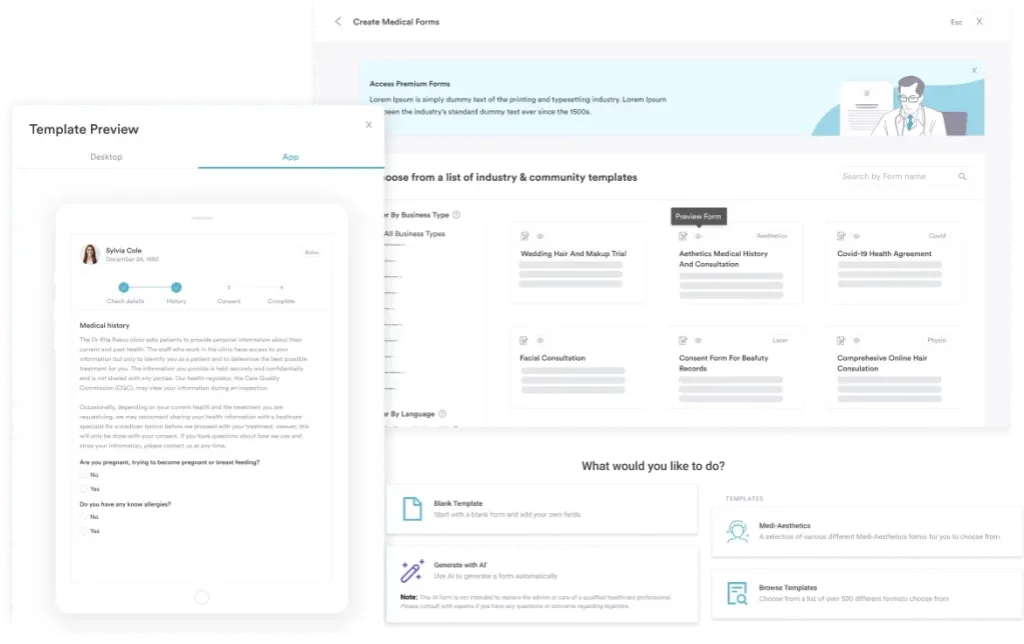
Practice management software like Pabau streamlines ADIME documentation with digital forms and client records, so you can replace paper templates and standardize charting.
A structured clinical documentation template covering patient assessment, nutrition diagnosis, intervention planning, and monitoring. Ready to download as a fillable PDF.
Download templateAn ADIME note is a structured documentation framework that registered dietitians, nutritionists, and allied health professionals use to record patient nutrition assessments and progress. It translates the Nutrition Care Process (NCP) into five clear sections: Assessment, Diagnosis, Intervention, Monitoring, and Evaluation. That structure keeps clinical charting consistent and compliant.
The ADIME format is purpose-built for nutrition care instead, and it aligns with Academy of Nutrition and Dietetics professional standards.
An ADIME note is the preferred documentation method for nutrition professionals managing patient care. The acronym breaks down into five operational components: Assessment (gathering patient data and nutrition history), Diagnosis (identifying the patient’s nutrition-related problem), Intervention (planning and documenting the dietitian’s treatment response), Monitoring (tracking patient progress), and Evaluation (assessing whether treatment goals are being met).
A basic ADIME note differs from a comprehensive one in scope and depth. A basic note focuses on essential assessment and short-term progress tracking, which suits initial consultations, follow-up visits, or time-constrained practice settings. It captures the critical information needed for continuity of care without the extended documentation burden of a full ADIME note.
The format is grounded in Academy of Nutrition and Dietetics standards and aligns with digital forms and structured documentation workflows in modern mental health and wellness practices.
Writing an ADIME note follows a five-step clinical workflow that mirrors the Nutrition Care Process. Each section flows logically from data gathering to outcome measurement, so nothing is overlooked.
Many practitioners use practice management software like Pabau to speed up ADIME charting. Integrated client records keep every ADIME note organized chronologically and accessible to the whole care team.
Here is a basic ADIME note for a common outpatient case: a patient referred for medical nutrition therapy for type 2 diabetes (ICD-10 E11.9). Use it as a model for the level of specificity each section should carry.
The ADIME note serves multiple healthcare professions and practice settings:
Any practice using wellness clinic software or a mental health EMR benefits from standardized ADIME documentation for consistent, compliant clinical records. Weight-loss practices applying the same structure to EMR-based progress tracking see similar gains in charting consistency.
Compliance and legal protection: The ADIME format aligns with Academy of Nutrition and Dietetics standards and satisfies documentation requirements for insurance billing, including dietary counseling and surveillance codes such as ICD-10 Z71.3 and medical nutrition therapy codes like CPT 97804, plus regulatory audits and professional licensing boards.
Structured workflow clarity: The five-part framework eliminates ambiguity about what should go where. Practitioners know exactly what to document at each step, which reduces note-writing time and improves consistency across the team.
Continuity of care: Clear documentation of assessment findings, diagnosis, intervention, and monitoring metrics lets any clinician on the team quickly understand the patient’s nutrition history and current plan. That matters most in multi-practitioner practices.
Measurable outcomes: By explicitly documenting monitoring metrics and evaluation results, ADIME notes create a record of what’s working and what isn’t, which supports data-driven adjustments to treatment and practice-level quality improvement.
Billing efficiency: Well-documented ADIME notes reduce claim denials and support faster processing. The structured format makes it easy for billing teams to identify the relevant diagnostic codes and billable services rendered.
Close the loop in your Evaluation section. Don’t just note patient progress. Compare it to your baseline metrics and state your next action. For example: ‘Weight increased 2 lbs (goal: 5 lbs/month); PO intake improved from 60% to 85% (target achieved). Continue current meal plan and monthly follow-ups.’ This demonstrates care effectiveness and guides the next ADIME cycle.
Before ADIME became the standard, registered dietitians and other healthcare professionals used SOAP notes (Subjective, Objective, Assessment, Plan). Both formats document patient care, but ADIME is purpose-built for nutrition and the Nutrition Care Process, while SOAP is a general clinical format used across all healthcare professions.
SOAP structure: Subjective (patient-reported symptoms and history), Objective (clinician-measured data and tests), Assessment (clinician’s interpretation), and Plan (next steps). This format works for diagnosing medical conditions but doesn’t explicitly separate the nutrition diagnosis from the intervention or monitoring phases. See an example SOAP note template used in mental health practices for comparison.
ADIME structure: Assessment (nutrition-specific data gathering), Diagnosis (nutrition-related problem), Intervention (nutrition care actions), Monitoring (progress metrics), and Evaluation (outcome measurement). Each section connects directly to a Nutrition Care Process step, which makes nutrition-specific outcomes clearer and faster to document.
For nutrition and wellness practices using online booking and digital documentation, ADIME notes fit neatly into structured form fields, while SOAP notes force practitioners to fit nutrition data into a format designed for general medicine. Modern functional medicine software and integrative medicine platforms now include ADIME-specific templates to reflect this shift.
Strong ADIME documentation requires attention to specificity, timeliness, and accuracy. Vague entries like “Patient educated on healthy eating” provide no measurable outcome. Instead, write: “Patient counseled on portion-controlled meal prep; described three example meals meeting a 2,000 calorie daily target; agreed to keep a 3-day food diary before next visit.”
For patients managing comorbid conditions such as type 2 diabetes (ICD-10 E11.9), documentation should also note relevant lab trends and medication changes alongside the nutrition plan.
Timely documentation: Complete ADIME notes immediately after the visit while details are fresh. Delayed charting introduces errors and reduces legal defensibility if disputes arise. Many practitioners use voice dictation and clinical note software to speed up charting without sacrificing detail.
HIPAA and data security: Ensure ADIME notes stored in your HIPAA-compliant practice management system are access-controlled and encrypted. Document only what’s clinically relevant and necessary for continuity of care.
Objective language: Use measurable terms instead of subjective judgments. Bad: “Patient compliant with diet.” Good: “Patient reported adhering to a 1,500 calorie limit 6 of 7 days last week; weight stable at 165 lbs.”
Pairing ADIME intervention plans with a healthy eating plan template gives patients a consistent reference to follow between visits.
Practices using client management software with built-in template fields reduce documentation errors by guiding practitioners through each ADIME section step by step, so nothing is missed and compliance is automatic.
Book a demo to see how Pabau structures clinical documentation workflows so your team spends less time on charting and more time on patient care.
The ADIME note is the modern standard for nutrition and clinical documentation in allied health practices. By organizing assessments, diagnoses, interventions, and outcomes into a clear five-part structure, ADIME notes create compliant, measurable, and shareable clinical records that improve patient care and practice efficiency.
Download the free template above and put it to work in your practice, or use practice management software that automates ADIME formatting so your team spends more time on patient care and less on documentation.

Working with patients on semaglutide injections? The Ozempic pen template guides patients through proper injection technique, dose escalation, and storage requirements.
Need a matching intake form? The weight management intake template feeds straight into the Assessment section of your ADIME note.
Giving patients a plan to follow? Pair your Intervention section with a healthy eating plan template for a consistent between-visit reference.
ADIME stands for Assessment, Diagnosis, Intervention, Monitoring, and Evaluation. It is the standardized documentation framework used by registered dietitians and nutrition professionals to record patient nutrition care aligned with the Nutrition Care Process (NCP) set by the Academy of Nutrition and Dietetics.
Work through five sections in order: Assessment (patient data, anthropometrics, labs, diet history), Diagnosis (a PES statement naming the problem, etiology, and signs/symptoms), Intervention (the nutrition care plan), Monitoring (metrics you will track), and Evaluation (whether goals were met at follow-up). Keep each entry specific and measurable.
A basic ADIME note is a condensed version suitable for initial assessments and progress tracking in busy practice settings. A full ADIME note includes more detailed exploration of all five domains and extended intervention planning, typically used in comprehensive nutritional evaluations or complex medical cases.
Yes. Many modern practice management systems, including HIPAA-compliant EHR platforms, include pre-built ADIME note templates or let you create custom templates matching your workflow. Pabau’s digital forms feature lets you build ADIME-structured intake and progress note forms that auto-save to client records.
Yes. The ADIME note template is available as a free PDF download. You can use it immediately in your practice or adapt it to match your branding and documentation standards.
ICD-10 code Z71.3 is used for dietary counseling and surveillance. This code applies when the primary reason for the visit is nutrition education, medical nutrition therapy (MNT), or dietary intervention, not a disease diagnosis. Always verify billing codes with your practice’s compliance or billing team.
The Nutrition Care Process (NCP) is the four-step clinical method (assessment, diagnosis, intervention, and monitoring and evaluation) that the Academy of Nutrition and Dietetics uses to guide nutrition care. ADIME is the documentation style that records each of those steps in the patient’s chart. In short, the NCP is the reasoning process and ADIME is how you write it down.