List of vitamins: All 13 with RDAs and deficiency signs
A list of vitamins names the 13 essential vitamins the body needs from food or s...

8
Last Updated: Oct 8, 2026

This food diary template is one printable page, with room for meals, hydration, exercise, how you feel, and notes.
Nothing is split into columns, so patients write in their own words and often add detail a checkbox form misses.
Entries have to be written the same day, because memory shrinks portions and drops snacks within hours.
Symptoms go in the How I feel box, with the time each one started, so food and reaction line up later.
Practice management software like Pabau can collect the same answers digitally, so completed diaries reach the patient record without retyping.
One printable page, with a header for name, entry number, date and day. Below it sit five open sections. They cover Meals, Hydration, Exercise and other activities, How I feel, and Additional notes. Print one copy per day and number the entries.
Download templateAsk a patient what they ate on Tuesday and you usually get a rough guess. Meals blur together within hours, and the snacks eaten standing up rarely get mentioned at all.
While that guesswork gets in the way when you are hunting for a trigger food, or for the reason weight loss has stalled, a record written on the day gives you something firmer to work from.
This template keeps that record to one printable page. There are header fields for name, entry number, date and day, plus five open sections. Nothing is pre-boxed into columns, so a patient can write as much or as little as the day calls for.
A food diary is a written record of everything a person eats and drinks, filled in as the day happens. Recall interviews miss items and shrink portions, but a page written the same day keeps the detail an interview never recovers.
That is why practitioners use one to review eating habits, spot trigger foods, and check whether a nutrition plan is being followed. It sits in your patient management workflow next to the notes and forms you already collect.
Formats vary. A printable page suits a practice that hands out forms at the end of an appointment. Patients who want running calorie totals usually prefer a spreadsheet or a phone app. The job stays the same either way: an honest record of eating over a set number of days.
A week of entries shows habits that a consultation cannot reach. Food records are among the better-evidenced tools in dietary assessment.
The American Heart Association recommends keeping one to support weight loss, build dietary awareness, and surface eating patterns worth changing.
Those patterns only surface if the page asks for the right things. Here is what it asks for.
The template is one page. A short header sits at the top, then five open sections follow. There are no columns to complete, so each section is simply a box the patient fills in their own words.
Open boxes ask a little more of the patient than checkboxes do. Practices that standardize their forms get entries that are easier to compare from one day to the next. The Hydration box also works as a fluid record for bladder reviews, where an OAB medication list belongs in the same file.
Accuracy decides how much the diary is worth. A sparse page tells you almost nothing, while a detailed one often points straight at the cause. Six habits do most of the work.
Patients new to tracking rarely get there on day one. Better compliance with nutrition plans starts with clear instructions and a follow-up conversation. Expect two to three weeks before entries settle into a usable standard.
Two minutes of briefing decides what comes back. Run through the page at the end of the appointment rather than handing it over on the way out.
That last one matters most when you are chasing a symptom rather than a habit. The page handles that job too.
Symptoms belong in the How I feel and Additional notes boxes, since the template has no symptom grid. Ask the patient for four things each time: what they felt, when it started, how long it lasted, and how bad it was. Four short notes in one box do the same work as a grid.
Practitioners then use those records to:
Because the boxes are open, one page covers a routine weight review and an elimination diet workup. Only the brief changes, so a practice can hand out a single form instead of maintaining several versions. Crohn’s disease reviews use the page the same way. Keep a Crohn’s medication list beside it, because the drugs taken shape how the symptom notes read.
One page covers one day, and the Entry # field is how a set stays in order. Print five or seven copies, number them, and staple the run together.
The Date and Day fields then let you line weekdays up against weekends, which is where most eating patterns separate.
The form does not add anything up. Calorie and macronutrient totals have to be worked out elsewhere. A nutrition app such as MyFitnessPal or Cronometer will do it, or your own spreadsheet.
For most reviews the shape of the week matters more than the totals. Look at what was skipped, what was repeated, and what came before a bad afternoon.
Three to seven days answers most questions. Longer runs are for symptom work, and they cost you completion rates, so ask for the shortest run that fits the goal.
Read it, then say something about it. Patients who hear nothing back treat the next diary as busywork, and compliance drops within a cycle.
If you want a number to track between reviews, pair the diary with an outcome rating scale. In weight loss practices, that review habit is what separates a diary run from a program that holds.
A printed diary works right up to the point where it has to come back. Pages get left at home, or arrive folded in a bag. Others sit in a tray until someone types the useful parts into the record.
Pabau, our practice management software, does the same job digitally. The diary goes out as a digital intake form before the follow-up, and the patient completes it on their phone. Answers land in the patient record with no retyping. You can also see who has filled it in and who needs a reminder.
That saves the most time where diaries are routine. Functional medicine practices running elimination diets collect one on nearly every review. Ageless Enhancements moved off pen and paper for the same reason. You end up reviewing entries in the same place you write your notes.
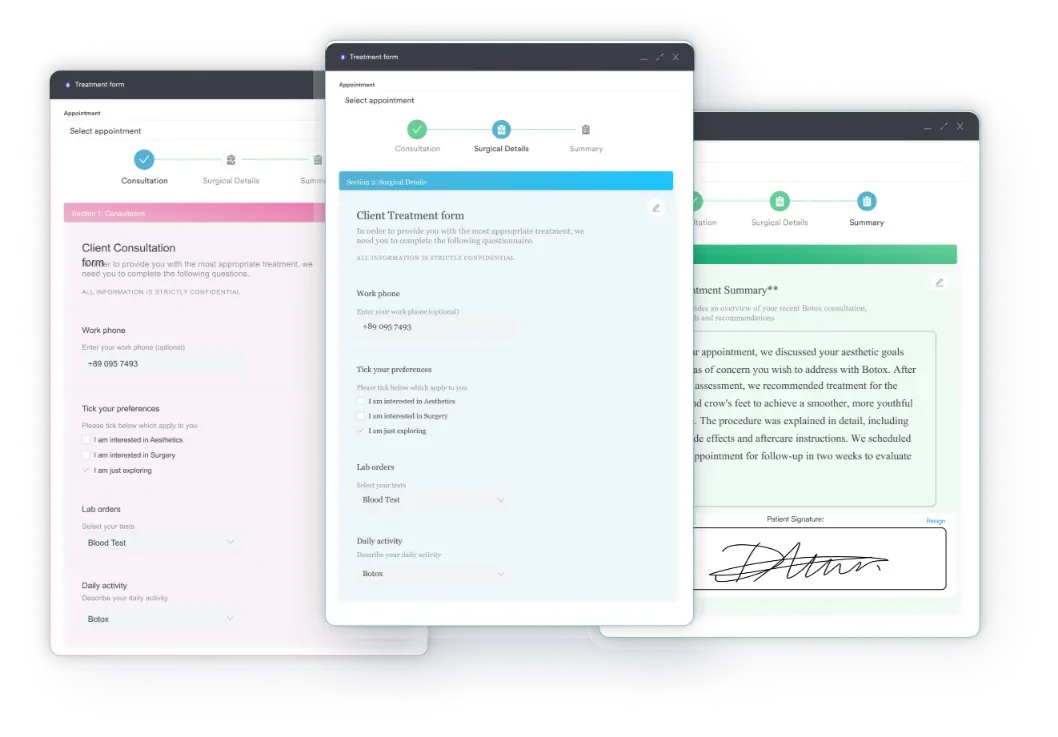

Pabau sends the food diary out as a digital form before the follow-up, then files the answers straight into the patient record. You spend the review reading entries instead of retyping them.

A food diary is worth about as much as the brief that goes with it. Spend two minutes on the page at the end of an appointment and you get a week you can read. Hand it over in silence and you get “sandwich, coffee, dinner”.
So keep the run short, read it within a couple of days, and pull one change out of it. A patient who watches their own page turn into a single piece of advice will fill in the next one. That is the whole trade-off worth remembering: a shorter diary that comes back beats a fortnight that never does.
Collecting entries digitally removes the retyping and the chasing that go with paper. Book a demo to see how Pabau turns a food diary into part of the patient record.

Has a patient asked about the OPTAVIA program? OPTAVIA diet plan combines portion-controlled Fuelings with home-cooked Lean and Green meals across three coaching tiers.
Planning meals for a fish-eating patient? pescatarian meal plan template sets a 7-day schedule with a food list and FDA mercury safety notes.
Supporting a patient with kidney disease? renal diet meal plan covers 7 days of kidney-friendly meals with sodium, potassium, phosphorus, and protein targets.
Ready to add exercise to the plan? weightloss workout plan lays out an 8-week, day-by-day exercise breakdown across four training phases.
Treating a patient with fatty liver disease? 21-day fatty liver diet plan gives a one-page clinical form for each day’s meals, diagnosis, and notes.
Both names get used for the same thing. A journal sometimes adds mood and context, which this template already covers in the How I feel box. Use whichever word the patient recognizes.
No. A food frequency questionnaire asks how often someone eats a food over months, from memory. A diary records the day as it happens. Use the questionnaire for long-term habits, and the diary when timing and portions matter.
Yes, and for a child or an older patient it is often the only way to get a usable record. Ask whoever writes the entries to put their name in the header. Pages written by someone else can miss food eaten out of sight.
It is usually the first step. A food and symptom record shows whether symptoms track particular meals, portions, or timing. That evidence comes before a low FODMAP trial, which a dietitian should supervise.
Treat it like any other form a patient fills in. Scan or upload the pages, then add a short note on what you found and what you changed. That note is what the next clinician reads.