Getting along with siblings worksheet
A getting along with siblings worksheet is a printable that helps children and t...

1
Last Updated: Oct 23, 2026

The AC-OK Screen is a validated 15-question, yes/no assessment that flags co-occurring mental health, trauma, and substance use disorders in a single intake step.
It requires minimal training to administer, takes less than 10 minutes to complete, and can be scored immediately to guide clinical decisions and treatment planning.
Both adult and adolescent versions exist, and the tool shows excellent reliability (Cronbach’s Alpha ranging from 0.80 to 0.92 across subscales) and sensitivity in screening for dual diagnoses across diverse populations.
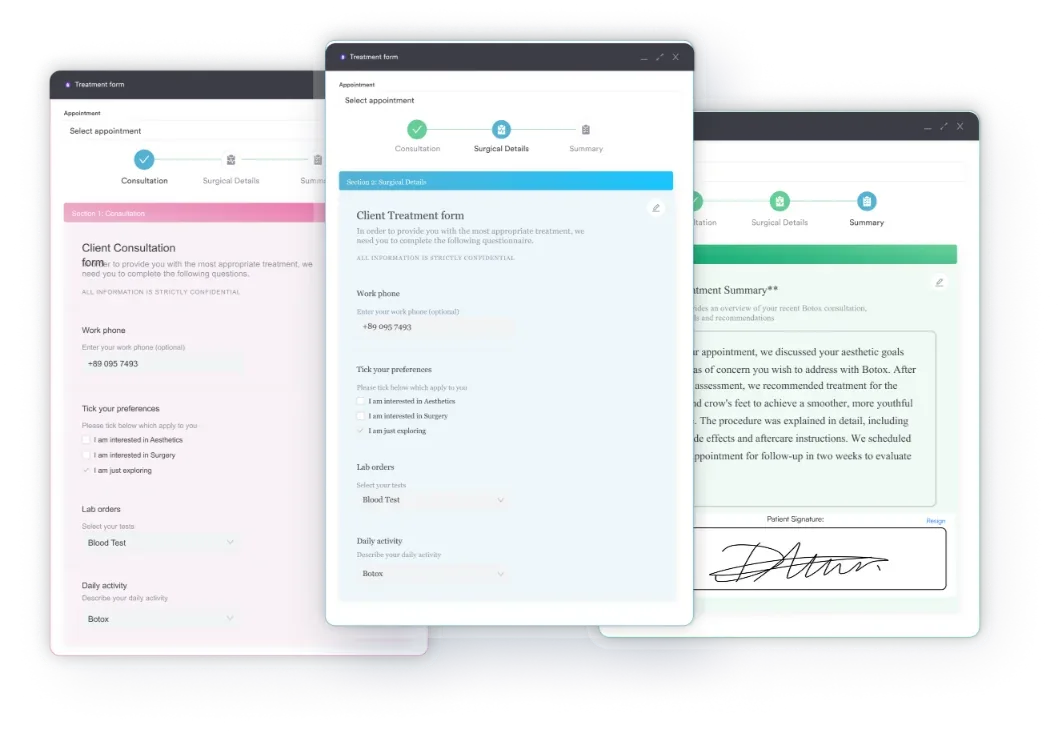
Pabau’s digital intake forms and client records help clinicians administer and document the AC-OK Screen securely within a HIPAA-compliant workflow.
A ready-to-use screening tool for identifying mental health and substance use disorders that co-occur in the same patient. Includes both adult and adolescent versions, scoring guidance, and clinical interpretation for immediate use in intake workflows.
Download templateBehavioral health clinicians who screen only for mental health symptoms, or only for substance use, can miss a co-occurring diagnosis. The AC-OK Screen checks for both conditions in a single intake step.
In less than 10 minutes, this validated screening tool identifies whether a patient has simultaneous mental health and substance use concerns. It’s designed for practices where every intake must be comprehensive: psychiatry practices, community mental health centers, addiction treatment programs, and integrated behavioral health practices.
This guide walks you through the AC-OK Screen’s purpose, how to administer it, how scoring works.
The AC-OK Screen is a brief, validated assessment tool for screening co-occurring mental health and substance use disorders in behavioral health settings. Developed by social work researcher Andrew Cherry at the University of Oklahoma (the name combines his initials, AC, with Oklahoma, OK), it has been used in behavioral health settings across the United States since the late 2000s.
Co-occurring disorders (also called dual diagnoses or comorbid conditions) mean a patient has both a diagnosable mental health condition — such as depression, anxiety, bipolar disorder, or trauma — and a substance use disorder at the same time. The AC-OK Screen detects this overlap quickly.
Practices already running a full biopsychosocial assessment at intake can add the AC-OK Screen as a focused add-on rather than duplicating existing questions.
Unlike full diagnostic assessments, the AC-OK is a screening tool. It points to the need for further evaluation rather than producing a diagnosis on its own. That distinction matters for scope of practice and documentation.
In a validation study of nearly 3,000 screens, the AC-OK showed excellent reliability, very good convergent validity, and excellent sensitivity, with more modest specificity. In practice, that means it rarely misses a co-occurring case but does flag some patients who turn out not to have one. That is exactly why a positive result leads to a fuller assessment rather than a diagnosis.
Administering the AC-OK Screen requires minimal training, one reason it’s been widely adopted. Clinicians follow five core steps:
Practices building a complete intake packet often pair the AC-OK with a broader adult biopsychosocial intake so mental health, substance use, and psychosocial history are captured together.
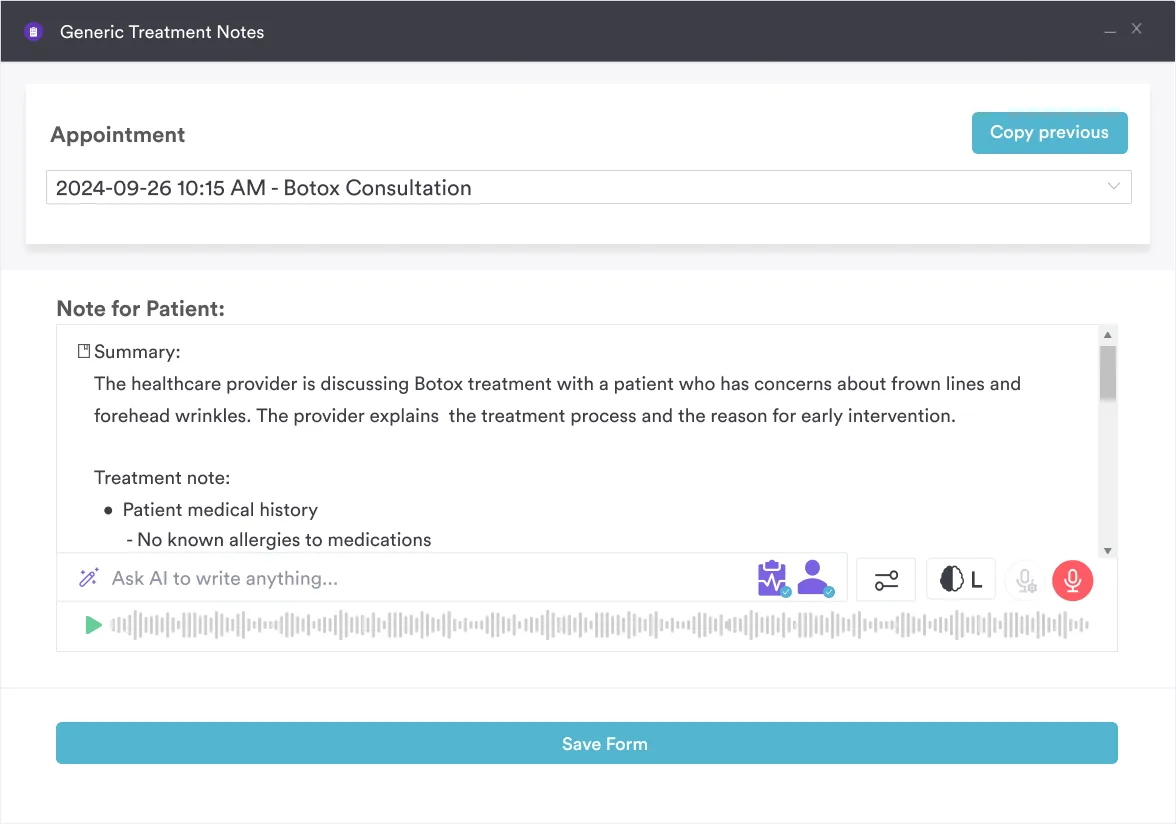
Pairing the screen with AI-powered clinical documentation like Pabau Scribe, our AI scribe, keeps the result and your next step in the patient’s record without re-keying anything by hand.
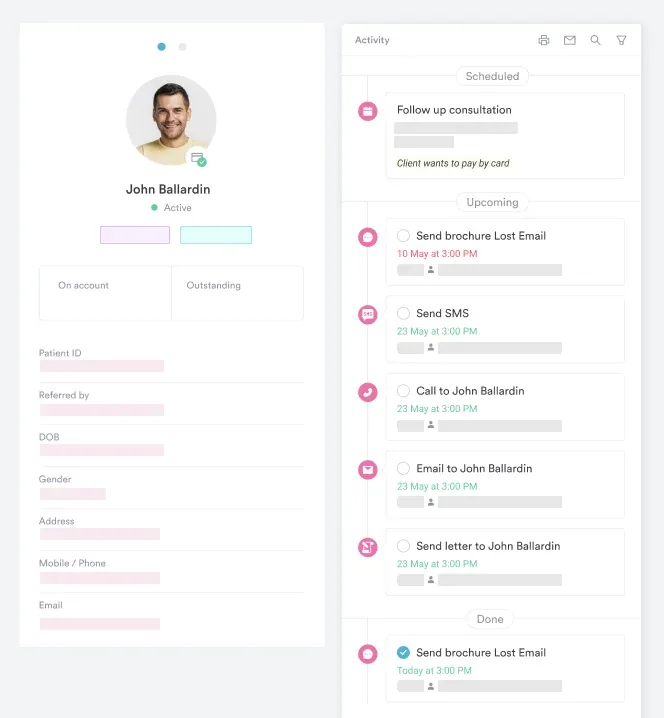
Teams using software to manage patient records can pull up prior scores before every reassessment.

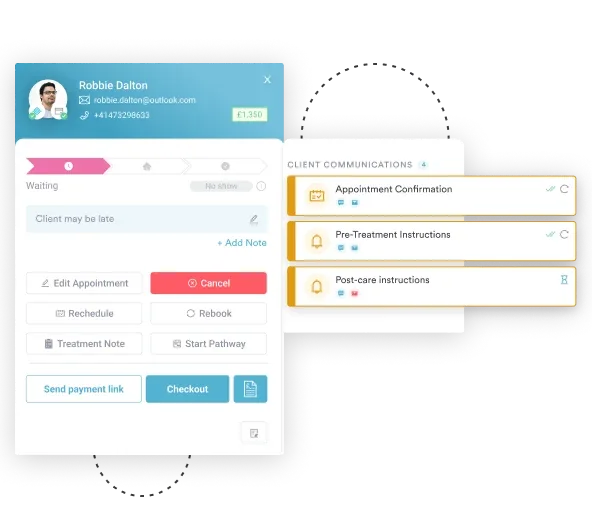
See how Pabau’s digital intake forms and automated workflows help clinicians administer validated screening tools like the AC-OK Screen faster and document results securely.

The AC-OK Screen is designed for any behavioral health professional evaluating patients in settings where co-occurring disorders are common or where comprehensive intake assessment is mandated:
The tool has been validated in English-speaking adult and adolescent populations and in international studies with Latino immigrant communities, making it applicable across diverse clinical settings.
Practices already using other behavioral health templates.
Early identification prevents missed diagnoses. Patients with untreated co-occurring disorders have worse outcomes. Screening from intake ensures both conditions get clinical attention and appropriate referral.
Minimal training and time burden. Clinicians do not need extensive certification to administer the AC-OK. Takes under 10 minutes, making it practical for busy intake workflows.
Validated and reliable across populations. Peer-reviewed studies confirm the AC-OK has excellent reliability, sensitivity, and specificity. It’s a psychometrically sound screener.
Supports treatment planning accuracy. Knowing upfront whether co-occurring disorders exist helps clinicians select appropriate level of care and evidence-based treatment protocols, reducing trial-and-error and improving patient outcomes.
HIPAA-compliant documentation. When administered via secure digital screening forms and encrypted client records, the AC-OK Screen supports regulatory compliance without adding manual paperwork burden, especially when paired with a standard HIPAA authorization form.
Administer the AC-OK Screen to ALL patients at intake, not just those you suspect have dual diagnoses. Universal screening catches cases you would otherwise miss and demonstrates due diligence to accreditors and regulatory bodies.
The adult AC-OK form is 15 yes/no questions, each about the past year, split into three labeled sections: mental health (questions 1 to 7), trauma (questions 8 to 9), and substance use (questions 10 to 15). You tally the yes answers in each section.
The mental health and trauma items cover depressed mood. Any yes answers here point to a possible mental health concern.
The substance use items ask about preoccupation with alcohol use. A yes on these items is a positive substance use screen, which is a clinical alert requiring follow-up.
The screen works on a simple rule. When a patient answers yes on both a mental health (or trauma) item and a substance use item, that flags a likely co-occurring disorder and triggers a full assessment. Because the tool is built to catch cases rather than confirm them, it will flag some patients who turn out not to have both conditions. That is by design, and the reason a positive screen leads to assessment rather than diagnosis. Client sessions produce more data than a paper file holds, so software for psychology practices keeps it retrievable.
Tallying yes answers keeps automated screening workflows simple and cuts documentation time during intake.
When the mental health subscale flags a concern, many clinicians follow up with a full mental status exam before finalizing a diagnosis.
The AC-OK Screen exists in two versions: adult (18 and older) and adolescent (roughly 12 to 17). The differences are language complexity and developmental relevance. Adolescent items address peer substance use, school-based stress, and age-appropriate trauma. Adult items reflect work, family, and adult-onset conditions.
Adolescent-specific considerations: Informed consent and parental notification rules vary by jurisdiction and setting. Ensure your secure patient portal supports age-appropriate access and parental consent workflows before implementing adolescent screening.
Validation in diverse populations: The AC-OK is validated in English-speaking adult and adolescent populations, and a Spanish-language version has been validated in an international sample of Latino immigrants with good to excellent psychometric properties. If your practice serves a specific population, it is still worth confirming the tool fits before relying on it exclusively.
Undetected co-occurring disorders derail treatment and waste clinical resources. The AC-OK Screen offers a quick, validated, easy-to-score assessment that every intake clinician can master in minutes. Both adult and adolescent versions are ready to use, and integration with Pabau’s digital forms and client records keeps screening fast and compliant.
Download the template today and implement universal screening at your next intake appointment. See how Pabau helps behavioral health practices administer and document screening tools securely and efficiently.

Need a fast screen for substance misuse? CAGE-AID questionnaire gives you the four-question screen with its scoring key and interpretation thresholds for problem alcohol and drug use.
Working with clients in 12-step recovery? Character defects worksheet walks a client from naming one character defect through analysis to an action plan and follow-up.
Need a framework for treatment planning? Client goals template uses the 5 Ps case formulation model to guide treatment planning for therapy and mental health practices.
The AC-OK Screen identifies patients who have both a mental health disorder and a substance use disorder occurring simultaneously (co-occurring disorders). It’s administered at intake to flag patients needing dual-diagnosis treatment and to guide treatment planning.
About 5 to 10 minutes. Patients complete a short self-report questionnaire, and clinicians score it immediately. No complex calculations are required.
Tally the yes answers in each section: mental health (questions 1 to 7), trauma (questions 8 to 9), and substance use (questions 10 to 15). A yes on both a mental health or trauma item and a substance use item flags a likely co-occurring disorder and calls for a full assessment.
Yes. Both adult and adolescent versions exist. The adolescent version (ages 12-17) uses developmentally appropriate language and covers age-relevant stressors, substance use patterns, and trauma. Verify parental consent rules in your jurisdiction before implementing with minors.
No. The AC-OK is a screening tool, not a diagnostic instrument. It raises a clinical alert for further evaluation. A positive screen calls for follow-up assessment by a clinician trained in dual-diagnosis evaluation to confirm any diagnosis and guide treatment.
According to peer-reviewed validation studies, the AC-OK has excellent internal reliability (Cronbach’s alpha ranging from 0.80 to 0.92 across subscales), very good convergent validity, and excellent sensitivity. It’s been validated in diverse English-speaking populations and in Latino immigrant cohorts.
The AC-OK is validated in English-speaking adult and adolescent populations and has been tested in Latino immigrant communities. Spanish-language validity data are limited. If serving primarily non-English-speaking populations, verify cultural and linguistic equivalence and consider professional translation if needed.