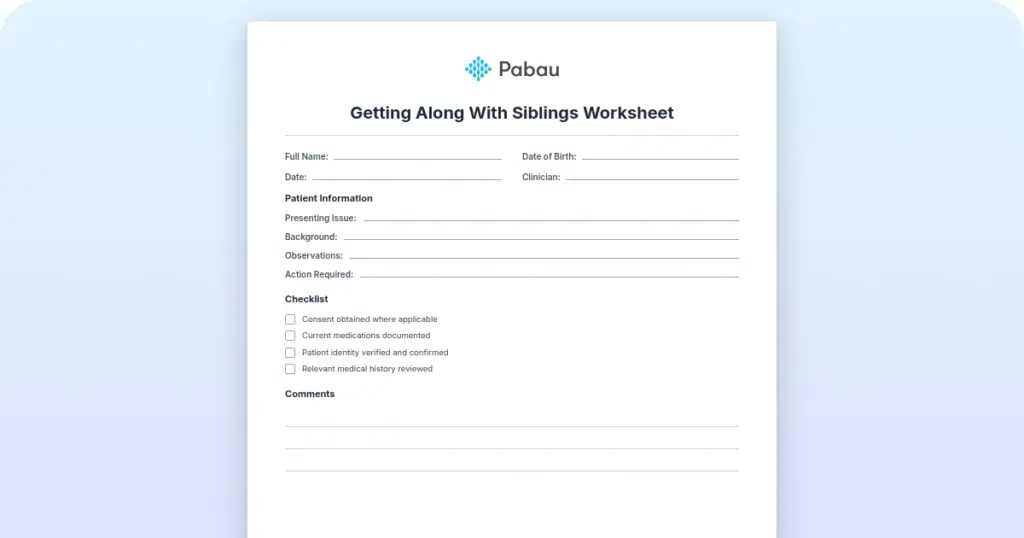
Getting along with siblings worksheet
A getting along with siblings worksheet is a printable that helps children and t...

3
Last Updated: Oct 23, 2026

A compelling about me section introduces your credentials, approach, and values to patients in 2-4 paragraphs.
Healthcare professionals must balance warmth with professionalism, avoiding oversharing while building patient trust.
Specialty-specific examples (therapist bio, aesthetician profile, clinician background) guide your writing to match your practice type.
HIPAA-compliant professional bios focus on your qualifications and approach, not patient details or confidential clinical decisions.
A patient-facing self-assessment form covering personal history, lifestyle, relationships, and goals, so you can personalize care and build rapport from the first visit.
Download templateAn about me section is a short professional narrative that appears on your practice website, online profile, or patient portal. It answers three core questions patients unconsciously ask: Who are you? What is your approach? Why should I trust you?
For healthcare professionals, an effective about me template goes beyond listing credentials. It humanizes your practice by explaining your philosophy, experience, and what patients can expect when working with you. The template below provides structured sections to craft a professional bio that builds patient confidence without crossing into oversharing or clinical detail.
Your about me section is often the first thing a prospective patient reads when they land on your website or online profile. In those opening moments, they are deciding whether you are someone they can trust with their care.
Beyond first impressions, a polished about me bio serves three purposes: it differentiates your practice in a crowded market, gives patients a named practitioner to connect with before they book.
Writing an about me that feels authentic requires balancing professionalism with personality. Follow these five steps to craft a bio that patients connect with.
A well-structured about me takes 2-4 paragraphs. Longer bios risk burying key information; shorter ones may feel dismissive of your experience. Use digital intake forms and your patient portal bio sections to display this professionally across your online channels.
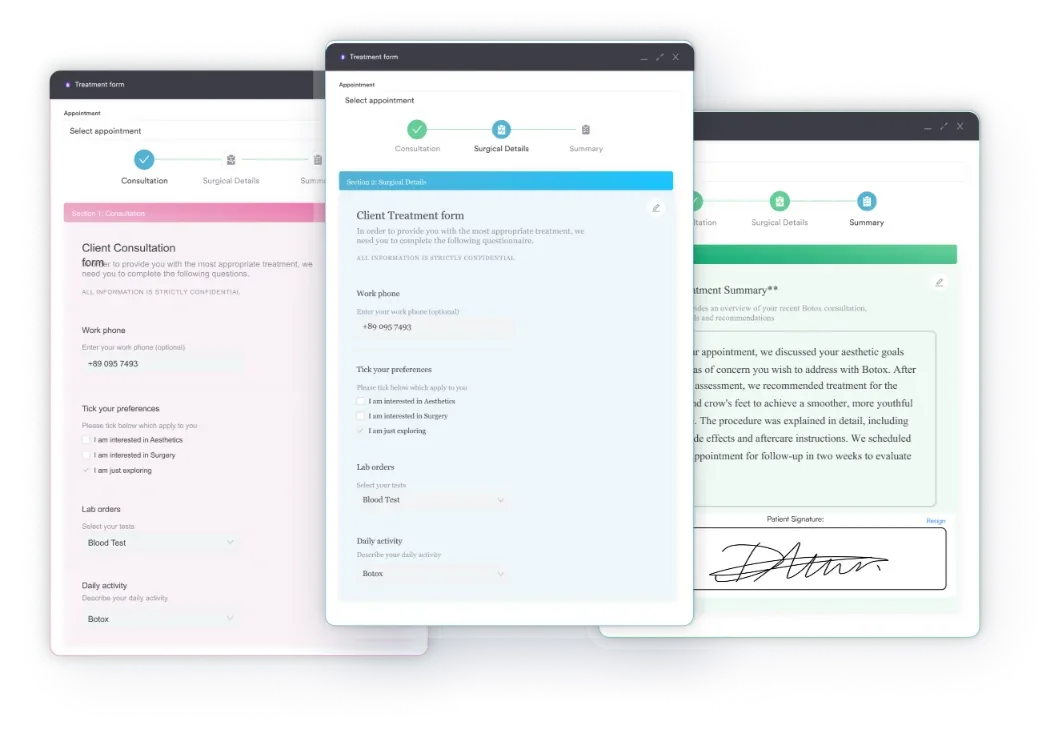
A patient management platform stores every completed form against the right patient record automatically.
“I’m a licensed therapist specializing in anxiety, depression, and life transitions. I use a blend of cognitive-behavioral and somatic approaches to help clients understand their patterns and build resilience. I believe therapy works best when it’s collaborative, so your voice and experiences guide our work. In our first session, I’ll listen to what brought you in and explain how I work, so you can decide if we’re a good fit.”
A bio like this works best alongside a broader mental health practice marketing strategy that positions your approach consistently across every channel.
“As a certified aesthetic nurse with 8 years of experience, I specialize in injectables, laser treatments, and skincare consultations. I prioritize natural-looking results that enhance your features rather than changing them. Every treatment plan starts with a detailed consultation, so I can understand your goals, address any concerns, and explain what to expect. My philosophy is that confidence comes from feeling like the best version of yourself.”
This tone reflects the same principles covered in our med spa branding tips, where a consistent, trust-building voice sets a practice apart from competitors.
“I’m a licensed physical therapist specializing in sports injuries and chronic pain management. I combine hands-on therapy with tailored exercise programs to get you moving pain-free. I work with each client to understand their goals, whether that’s returning to sport, reducing pain, or improving daily function, and we build a plan together. You’ll always know what we’re doing and why.”
Practices choosing between platforms to support this kind of client-centered work can compare options in our review of physical therapy practice management software.
These examples follow a consistent structure: credentials → philosophy → patient-centered approach → invitation to connection. Adapt this template to reflect your own voice and mental health or aesthetics specialty.
Beyond structure, these writing principles elevate your bio from functional to compelling and support the broader practice reputation management effort your bio contributes to.
Pair your about me with patient-facing profiles in your client portal and ensure HIPAA-compliant professional information is displayed consistently across all platforms.

Pabau’s patient portal and online booking system display your about me prominently, helping patients connect with you before their first appointment.

Depending on your location and specialty, regulatory bodies set standards for how you self-promote. Understanding these guardrails helps you craft a bio that builds trust without crossing ethical lines.
HIPAA (United States): HIPAA does not restrict what you share in your own professional bio. However, you must never name patients, reference their conditions, or disclose confidential information. Your bio should focus on your qualifications and approach, not your outcomes.
GMC Good Medical Practice (UK doctors): The General Medical Council requires that doctors’ self-promotion be accurate, factual, and not misleading. Avoid superlatives (“the best doctor”) or guarantees (“guaranteed pain relief”). Instead, use honest descriptive language about your qualifications and approach.
NMC Standards (UK nurses): The Nursing and Midwifery Council emphasizes professional accountability. Your bio should reflect your current registration, scope of practice, and specialties without overstating your expertise.
For improving patient engagement. When in doubt, consult your regulatory body’s guidance or your practice’s compliance officer.
An effective about me appears consistently across multiple touchpoints. Your practice website about page, online booking system, directory listings (Google, Healthgrades, Trustpilot), LinkedIn. This repetition builds recognition and trust.
Practice management software like Pabau lets you centralize bio updates, so when you earn a new certification or shift your specialization, you edit in one place and it updates everywhere. This consistency matters to patient experience and SEO alike. Practices adopting AI clinical documentation tools should confirm those systems display the same bio and credentials shown elsewhere.
Your own about me bio helps patients get to know you. The downloadable All About Me worksheet for adults does the reverse, helping you get to know them. It’s a self-reflection form patients complete before or during an early visit, covering their background, values, goals, relationships, and how they look after their physical and mental health.
For talk therapists, wellness practitioners, and anyone building a long-term treatment relationship, that context shapes the care plan. The worksheet closes with a section for your own observations and recommendations, so it becomes part of the patient record rather than a loose sheet of paper.
Hand the worksheet out on paper, or attach it to a digital intake form in Pabau, so a patient’s answers land straight in their record before the appointment starts. You walk into the room already knowing what matters to them.
A compelling about me section is one of the highest-impact elements of your online practice presence. It introduces your qualifications and values to prospective patients in the moments before they decide to book. By following the template structure above and tailoring it to your specialty, you create a professional bio that builds trust and sets the tone for the patient experience ahead.
Ready to showcase your practice online? Book a demo to see how Pabau’s patient portals display your professional profile prominently.

Need a plan for the marketing behind that bio? healthcare marketing plan template A fillable plan covering SMART goals, a SWOT analysis, patient personas, channels, budget and KPIs.
Building out a wider content marketing plan? healthcare content marketing strategy Explains how clinical records and appointment data become marketing assets, with formats and ROI.
Need guidance on writing other key practice content? How to write effective service descriptions complements your bio with compelling service copy that converts.
A professional about me is typically 150-250 words or 2-4 paragraphs. This length allows you to cover credentials, philosophy, and approach without overwhelming the reader. Shorter bios (under 100 words) risk feeling dismissive; longer ones lose patient attention.
Include your qualifications, specialties, clinical philosophy, one personal touch or turning point, and what patients can expect working with you. Avoid naming specific patients, confidential case details, or guaranteeing outcomes. Focus on your credentials and approach.
Yes, a core about me works across your website, patient portal, and directory listings. Minor adjustments for platform constraints (word limits, format) are fine. Consistency across platforms strengthens your professional brand.
Review and refresh your bio every 12-24 months, or whenever you earn a new certification, shift your specialty focus, or change your clinical approach. Outdated bios hurt credibility and may confuse patients about your current qualifications.
One brief personal detail, such as what drew you to your field or a turning point in your practice journey, builds relatability. However, avoid lengthy personal stories or oversharing about your life outside work. The focus should remain on your professional approach and what patients can expect.