Free model waiver form + what it is and when your practice needs one
A model waiver form is a signed document that lets a healthcare practice use a p...

5
Last Updated: Sep 29, 2026

Plasma IQ uses a controlled plasma arc to sublimate micro-spots of skin, which triggers fibroblast activity and collagen remodeling.
One session suits mild laxity, while moderate laxity usually needs two or three sessions spaced six to eight weeks apart.
Downtime is the objection you have to handle upfront, because the face carries five to seven days of visible crusting.
Turning this into a signature service means pricing by zone, selling packages, and booking the consult on a separate day.
The free consent form and aftercare card below give your team a documented starting point from the first booking.
A ready-to-use treatment record covering patient details, contraindication screening, device settings, risk disclosures, consent declarations, and signature blocks. The same file carries a patient-facing aftercare card for the seven-day recovery window.
Download templatePlasma IQ is a handheld plasma device that tightens skin by sublimating micro-spots of the epidermis. It uses no needles and no blades. This guide is written for the practice deciding whether to add the treatment, not for the patient deciding whether to book it. Part of that decision is the system that books and charts it, a choice our list of med spa software helps narrow.
What follows is the clinical protocol, a day-by-day recovery table, and an honest comparison with Renuvion and RF microneedling. There is also a free consent form and aftercare card your team can use from the first booking.
The later sections cover chair time, how to price a zone, and the week-two conversation. That conversation decides whether a patient books again.
Plasma IQ is a portable electrosurgery device made by Neauvia that generates a controlled plasma arc from ionized gas. The arc crosses a small air gap and sublimates tissue in micro-spots, so the tip never touches the skin. Each micro-spot is a shallow, deliberate injury that wakes up the fibroblasts in the dermis below.
Practitioners usually call it the Plasma IQ pen, because the handpiece is the size of a marker and is held like one. You will also see it listed as the Neauvia Plasma IQ on supplier sites and training courses. It is an FDA-cleared electrosurgery device for tissue ablation and hemostasis, and its aesthetic use rests on clinical evidence for fibroblast stimulation.
The table below is the summary to keep beside you during a consultation. The third column is the part that protects the practice, because a treatment you cannot reconstruct from the notes is a treatment you cannot defend.
Every one of those chart entries has to land somewhere a colleague can find it at the two-week review. Digital forms capture consent by e-signature and attach it to the client record, which removes the print, sign, scan, and upload loop.
The treatment works in four stages. A plasma arc creates micro-spots on the surface, and the healing response rebuilds collagen underneath over the following 12 weeks. Everything the patient can see happens in week one. Everything they paid for happens in weeks four to 12, out of sight.
The clinical workflow runs from consult to twelve-week photograph in five steps. Each one has a documentation output, which is why the protocol and the paperwork are the same job.
They work at three different depths, so the choice is a depth decision rather than a brand decision. Plasma IQ stays at the surface, Renuvion works under the skin through a cannula, and RF microneedling sits in between. That single difference explains the downtime spread from a couple of days to a couple of weeks.
Renuvion started life as the J Plasma device, which is why surgeons and reps still use both names in the same sentence. It is a theater procedure with a cannula and anesthesia, so it is not a menu item for a treatment room. Choosing a plasma device therefore comes down to how much laxity you are treating and how much downtime your patients will accept.
The practical answer for most aesthetic practices is that these are complements rather than rivals. Plasma IQ takes the eyelids and the fine crepey skin that needles cannot reach safely. RF microneedling takes the scarred cheek and the thicker jawline.
Superficial lesions on those same faces are a different job again, and usually go to a CryoPen. Keep a separate document trail per device, so the notes always say which handpiece touched which zone.
The eyelids are where this device earns its reputation, with the face, neck, and décolletage close behind. The upper-lid treatment is marketed as a plasma eye lift, and it is the reason most patients call. Treating the lower lids is possible, but the work stays superficial. Going too close to the lid margin risks ectropion.
Body zones behave differently. Thicker skin tolerates higher power but takes longer to show a result. A patient treating an abdomen needs a different expectations conversation than one treating a lid. Map the zones you treated on a diagram in the record rather than describing them in words.
The ideal candidate has mild to moderate laxity, Fitzpatrick I to III skin, and no active skin disease. They also have a clear week in the diary. Everyone else is treatable with adjustments, and the adjustments belong in the notes. A structured intake process using aesthetic questionnaire templates keeps that screening identical between practitioners.
Screen every contraindication below at intake and write down what you found, including the negatives. A blank field looks like a question nobody asked. Thorough consultation documentation is what stands between your practice and a complaint you cannot answer.
Plasma IQ recovery runs to a predictable schedule: crusting by day two, shedding by day six, and normal skin tone by week two. Give the patient this table at the consultation, not on the way out. Patients who know that day three looks worse than day one do not call the front desk about it.
Hand over written aftercare at checkout, then reinforce it with automated messages on day one, day three, and day seven. Picking at crusts is what causes the scarring and pigment change patients complain about. Repeating that instruction three times over a week is worth more than saying it once at the door.
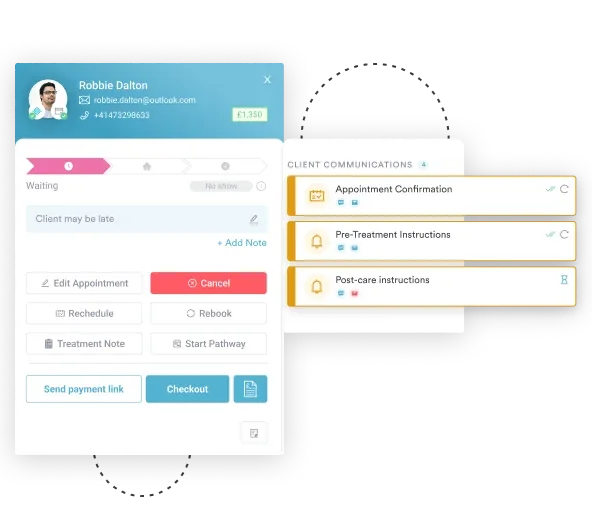
Tie the aftercare sequence to a Plasma IQ treatment tag in your system, so it sends itself. A day-1, day-3, and day-7 sequence covers the three moments patients call about: the swelling peak, the crusting, and the shedding. Your front desk then answers questions about results instead of reassurance calls at 8am.
A Plasma IQ before and after pair only makes sense at 12 weeks, because the visible change arrives between weeks four and 12. Patients expect it at week two, which is exactly when there is least to see. Say that out loud during the consultation and you remove most of the disappointment.
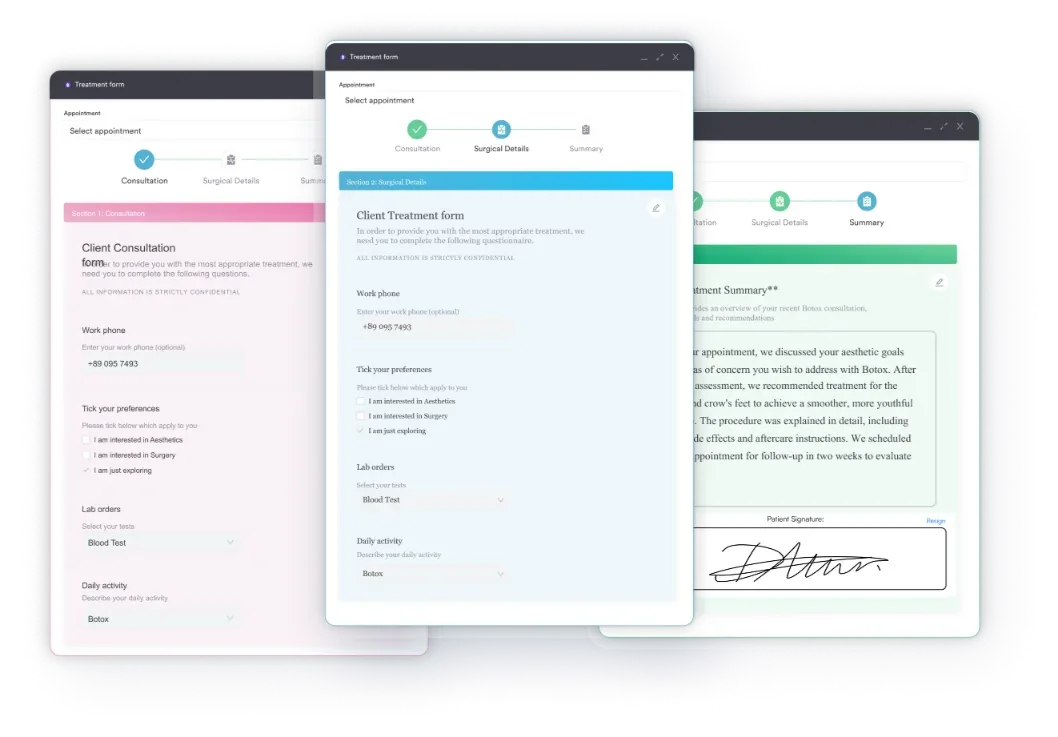
The download above includes a consent section covering patient identification, indication, contraindication acknowledgment, risk disclosure, and signature. Treat it as a starting point rather than a finished document. UK practices usually add CQC language, and US practices often add state-specific liability notices. Have your own counsel read it once before it goes anywhere near a patient.
A workable consent form covers six things, and the last two are the ones practices leave out.
Disclosing the alternatives matters more than it looks on the page. A patient who was never offered a choice can argue they were never informed. Purpose-built skin clinic software lets you send the branded form by secure link before the patient arrives. Check-in becomes a signature rather than a clipboard.
The same download carries a patient-facing aftercare card that condenses the seven-day protocol onto something wallet-sized. It follows the layout of the CO2 laser aftercare card, so a practice running both devices keeps one format. Print it, laminate it, and hand it over at checkout. A card propped against a bathroom mirror gets read five times. An email gets read once, on the way home.
Five things belong on the card.
A QR code on the card, pointing at the automated aftercare sequence, saves the front desk a round of phone calls. It also tells you who is reading the instructions and who is not.
Whether this becomes a signature service comes down to scheduling and pricing rather than clinical skill. The clinical part is settled by the protocol above. What patients say yes or no to is the five to seven days of visible crusting, and how you price and package around it.
That last point is the one that pays. Nothing in the protocol changes a patient’s mind at week two, but a two-minute call showing them the healing photo you took does. Practices that book the second session do it at that call, not at week 12.
Most practices run this treatment across four disconnected places. The consent PDF is printed, signed, scanned, and uploaded. The device settings go into a paper note or a Word file. The photos sit on somebody’s phone. The aftercare email is retyped after every appointment.
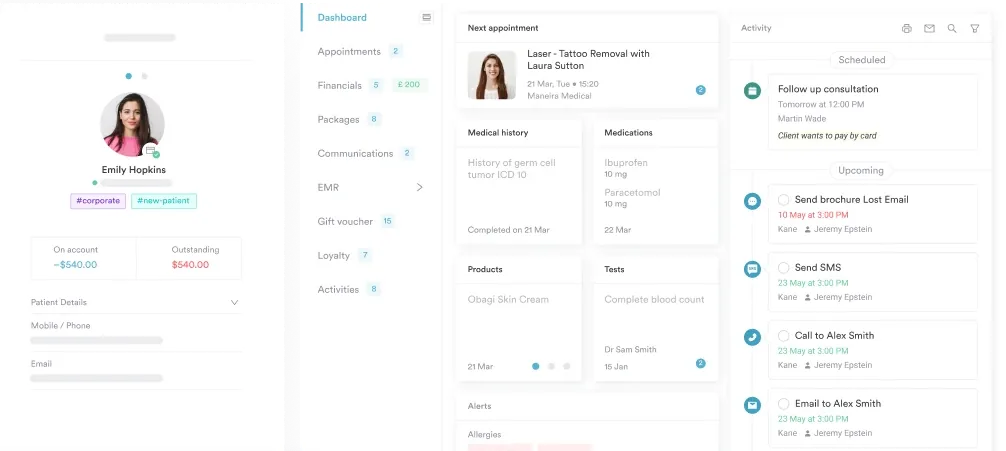
Practice management software like Pabau puts all four in the same client record. You build the Plasma IQ consent form once, then send it by secure link before the patient arrives. Power settings, passes, and tissue response go straight into the treatment note attached to that appointment.
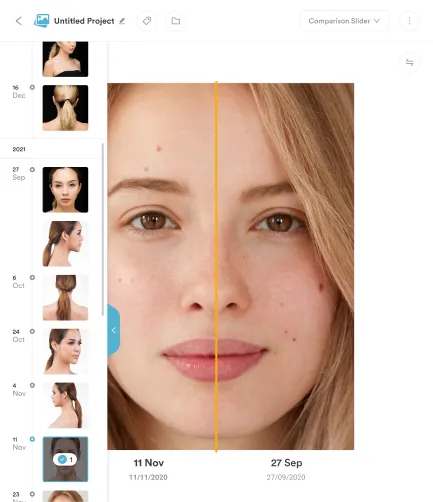
Photos are captured against the same record at baseline, two weeks, six weeks, and 12 weeks. That makes the 12-week comparison two clicks away during the review appointment. The day-1, day-3, and day-7 aftercare messages fire from the treatment tag, so your team stops retyping instructions.
The outcome for the practitioner is one screen mid-appointment showing consent, settings, photos, and message history together. There is nothing to hunt for, and nothing to reconcile at the end of the day. One London skin practice now runs booking, registration, and payments from the same place, as its case study explains.

Pabau’s digital forms capture Plasma IQ consent by e-signature and attach device settings to the treatment note. Automated messages then send the day-1, day-3, and day-7 aftercare prompts for you.

Plasma IQ is a straightforward treatment with an awkward week attached to it. The practices that do well with it set the downtime expectation before the patient books. They also show up again at week two, when the patient is quietly deciding the treatment failed.
So download the consent form and the aftercare card, put your practice name on them, and have your counsel read them once. Then answer the two operational questions: what a zone costs, and how long you block for it. Those two answers are what turn a device in a drawer into a service on your menu.
Book a demo to see how Pabau keeps the consent form, the device settings, and the aftercare sequence in one patient record.

Need to standardize skin assessment before you treat? Skin assessment tools sets out how to grade skin type, damage patterns, and treatment candidacy consistently.
Adding a lower-downtime body treatment alongside it? Pressotherapy template carries the consent, protocol, and aftercare paperwork for that treatment.
Want to cut the reassurance calls during recovery? Clinic automations for revenue growth walks through the email and SMS triggers that answer patients before they phone.
Storing before-and-after photos properly? Med spa before and after photos explains consistent capture, secure storage, and the image release you need before marketing.
Curious what a med spa owner earns? Med spa owner salary guide uses industry data to show what owners typically take home each year.
Plasma IQ is a non-surgical fibroblast treatment that uses a controlled plasma arc to create micro-injuries in the skin. Those injuries trigger collagen remodeling, and the change becomes visible over six to 12 weeks. A single session gives a subtle result on mild laxity. Moderate to severe laxity usually needs two or three treatments.
Visible healing takes five to seven days, which is when the crusts shed. Redness and swelling settle by week two. Full collagen remodeling and the final result take eight to 12 weeks. Most patients are back to normal activity by day five to seven, but should avoid deliberate sun exposure and hard exercise for two weeks.
The upper and lower eyelids, face, neck, décolletage, nasolabial folds, abdomen, chest, and arms are all treatable. The face, neck, and décolletage give the most reliable results where laxity is mild to moderate. Sensitive zones such as the perioral area need lower power settings and a lighter touch.
One session produces a visible but subtle result on mild laxity. Moderate laxity usually needs two sessions spaced six to eight weeks apart. Severe laxity may need three. Results keep improving for 12 weeks, so assess the outcome at week 12 rather than earlier.
It can be used across all Fitzpatrick skin types when power settings are adjusted for pigment. Fitzpatrick I to III tolerate standard power. Fitzpatrick IV to VI need 40 to 60 percent lower power to limit post-inflammatory hyperpigmentation. Darker skin types also need a test spot, close monitoring, and firm sun-protection coaching.
Results typically last 12 to 24 months, depending on age, sun exposure, smoking, and ongoing skincare. Because the tightening comes from the patient’s own new collagen, it fades gradually rather than wearing off. A maintenance session every 12 to 18 months extends the effect.
Keep the zone dry, apply the prescribed ointment, and skip makeup and hard exercise for the first 24 hours. On days two and three, use cool compresses and SPF 30 or higher, and do not pick the crusts. On days four to seven, moisturize well and keep up sun protection. Attend the two-week and six-week reviews.
Do not treat active infection, anticoagulant use or a bleeding disorder, ablative resurfacing within six weeks, pregnancy, or immunosuppression. Isotretinoin rules a patient out during a course and for six to 12 months afterward. Use caution with Fitzpatrick IV to VI skin, melasma, rosacea, and a keloid history. Document every screening answer, including the negatives.
Reviews cluster around two themes. The eyelid results impress people, and the week of crusting surprises anyone who was not warned about it properly. Practitioner feedback follows the same split. Show prospective patients before-and-after photos of your own patients at four and 12 weeks, rather than manufacturer images.
Manufacturers do not publish a patient price, so Plasma IQ pricing is set by each practice. Most practices price by treatment zone rather than by session, then discount a package of two or three. Your cost floor is the single-use tip, the numbing cream, and 60 to 90 minutes of chair time.
Most patients describe a hot, prickly sensation rather than pain, once topical anesthetic has been on for 20 to 30 minutes. The eyelids and the perioral area are the least comfortable zones. In the days afterward, patients report tightness and itching rather than pain. Warn them that itching peaks as the crusts shed, because scratching is what causes scarring.
Neither wins outright, because they work at different depths. Plasma IQ treats the surface, so it suits eyelid hooding and fine crepey skin that needles cannot reach safely. RF microneedling reaches the deeper dermis, so it suits acne scarring and thicker skin. Plenty of practices run both and choose by zone.