Kate Tarrant
Ethical consent form: free template and what to add
An ethical consent form is a written record that a patient or participant agreed...

2
Last Updated: Oct 26, 2026
Free PDF 1 page, print-ready Clinician-reviewed
Download your free 12-panel drug test report 12-Panel Drug Test Report A ready-to-use drug test report form covering all 12 substance panels with result fields, specimen validity checks, cutoff levels, chain-of-custody documentation, and clinical interpretation guidance. Download template What a 12-panel drug test report is and why it matters A 12-panel drug test report documents […]
A ready-to-use drug test report form covering all 12 substance panels with result fields, specimen validity checks, cutoff levels, chain-of-custody documentation, and clinical interpretation guidance.
Upload this PDF, or any form you already use, and Pabau's AI Form rebuilds it with tick boxes, text fields and a signature. Attach it to the treatment once, and every patient gets it on time.
AI Form rebuilds the consent, history and aftercare forms you already use. You review each one, then publish.
Patients complete forms on their phone before they arrive, so the front desk stops retyping paper.
Every signed form is versioned and attached to the treatment record, ready when you need it.
Set how long a consent stays valid. Returning patients skip forms they have already signed.
Supports HIPAA and GDPR compliance AES-256 encryption 4.8 on G2 4.7 on Capterra Trusted by 4,000+ practices worldwide

A 12-panel drug test report documents results from 12 substance classes (amphetamines, cocaine, THC, opiates, and 8 others) with clinical findings and legal defensibility.
Specimen validity testing (SVT) confirms the sample is unaltered through checks for creatinine, pH, specific gravity, and oxidant presence, a critical compliance requirement.
Chain-of-custody documentation from collection through result reporting is mandatory for workplace testing and legally defensible clinical records under DOT and SAMHSA standards.
Practice management software like Pabau supports compliant drug test documentation through digital forms and secure client records, cutting manual paperwork and centralizing result storage.
A 12-panel drug test report documents the presence or absence of 12 substance classes in a biological sample (most commonly urine), with clinical interpretation, result status, specimen validity checks, and chain-of-custody trail. It is the foundation of workplace compliance, occupational health screening, and clinical decision-making in mental health and substance-use treatment settings. The test behind it is a 12-panel drug screen: a single urine immunoassay that checks for all 12 drug classes at once, so the report captures every result in one place.
Healthcare practices performing drug screening must ensure their documentation meets regulatory standards. Under SAMHSA (Substance Abuse and Mental Health Services Administration) mandatory guidelines and DOT 49 CFR Part 40, a legally defensible drug test report includes specimen integrity data, result classification (positive, negative, inconclusive), and documented chain of custody from collection to reporting.
The full 12-panel drug test list covers 12 substance classes. A standard panel screens for:
The exact configuration varies by lab. Older panels included propoxyphene and methaqualone, but most modern panels have dropped those in favor of methamphetamine and buprenorphine. Standard opiate assays also miss some drugs, which is why oxycodone and buprenorphine sit on their own lines rather than under opiates. Detection windows vary too. THC can show for up to 30 days in frequent users, while cocaine typically clears in 2 to 4 days. Always confirm the exact panel with your testing provider.
Detection windows in urine shift with dose, frequency of use, metabolism, and hydration, so read these as typical ranges rather than fixed limits. Chronic use pushes the longer end higher.
| Substance | Typical urine detection window |
|---|---|
| Amphetamines | 2 to 4 days |
| Methamphetamine | 2 to 5 days |
| Cocaine | 2 to 4 days |
| Cannabinoids (THC) | 3 to 30 days |
| Opiates | 2 to 4 days |
| Oxycodone | 1 to 3 days |
| Benzodiazepines | 1 to 30 days |
| Barbiturates | 1 day to 3 weeks |
| Methadone | 3 to 7 days |
| Phencyclidine (PCP) | 7 to 14 days |
| MDMA (ecstasy) | 2 to 4 days |
| Buprenorphine | 3 to 7 days |
A structured template guides you through capturing, documenting, and interpreting each result in the same order every time. That consistency is what keeps transcription errors out of the record and your documentation compliant.
Pabau’s patient intake software automates these steps, pre-populates cutoff levels and panel labels, and enforces required fields before submission. This reduces manual transcription errors and ensures no critical data is missed.
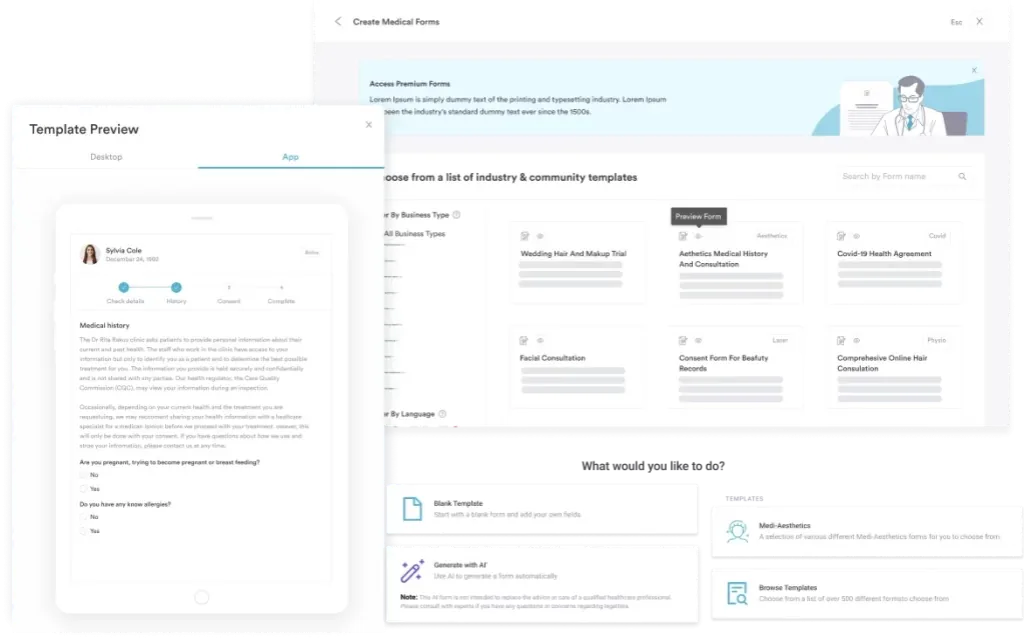
This template is essential for occupational health practices and any practice performing drug screening. Specific settings include:
An occupational therapy platform can store each completed scale beside the patient’s goals and session history.
Regulatory compliance: A well-documented report demonstrates adherence to SAMHSA, DOT, CLIA, and state occupational health standards, reducing audit risk and liability exposure.
Legal defensibility: Chain-of-custody documentation and integrity checks make results admissible in workplace disputes, legal proceedings, and insurance claims. Informal or incomplete records cannot meet that bar.
Clinical clarity: Standardized result interpretation and specimen validity flags help clinicians distinguish true positives from false positives and understand when confirmatory testing is warranted.
Secure patient record storage: This eliminates paper-based security risks.
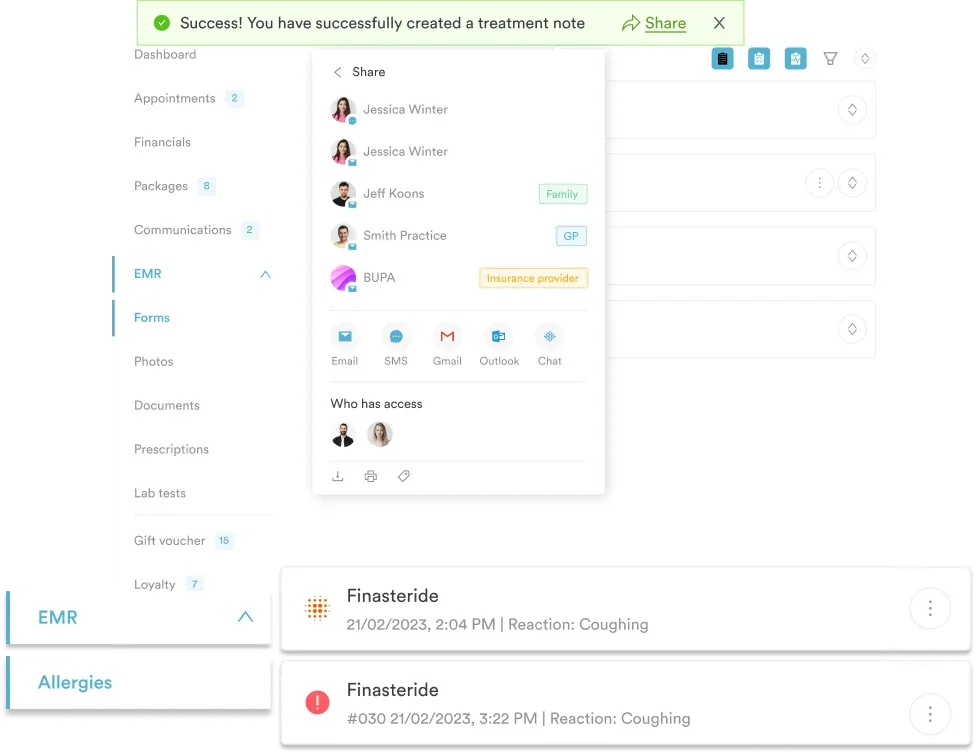

Pabau’s digital forms and compliance tools make 12-panel drug test documentation faster, more accurate, and fully audit-ready.

Flag specimens with creatinine levels below 20 mg/dL immediately. This indicates possible dilution and may require recollection. Document the reason for flagging and the practice’s protocol for handling suspected invalid specimens in the patient record.
Specimen validity testing (SVT) is the checkpoint that confirms a urine sample is genuine and unaltered. It’s required under SAMHSA Mandatory Guidelines for federal workplace testing, and it’s best practice for occupational health programs generally.
SVT measures four parameters:
Chain of custody is the documented record of specimen handling from collection through result reporting. Each person who touches the sample (collector, accessioner, lab technician, reviewer) signs and dates a form, creating an unbroken trail. This prevents tampering claims and ensures legal admissibility in disputes.
Knowing how to read a drug test report comes down to three outcomes. On the report, the 12-panel drug test results are reported as Negative (no detected metabolites), Positive (metabolite level above the cutoff), or Inconclusive (borderline or specimen validity issue).
The 12-panel drug test cutoff levels are the thresholds set by SAMHSA or lab-specific protocols. For example, THC (cannabis) has a standard cutoff of 50 ng/mL for initial immunoassay screening, and 15 ng/mL for confirmatory GC-MS testing. A result above 50 ng/mL is reported as Positive. Below 50 ng/mL, it’s Negative. Immunoassay results are presumptive and should be confirmed using GC-MS or LC-MS before any employment or disciplinary action.
A positive immunoassay isn’t the final word. A Medical Review Officer (MRO) reviews confirmed positives and contacts the patient to rule out a legitimate prescription. A prescribed ADHD stimulant or benzodiazepine can trigger a presumptive positive that isn’t misuse, so record any disclosed prescriptions in the report before a result is finalized.
Inconclusive results occur when specimen validity is compromised (dilute urine, adulteration, or invalid markers) or when the result falls in an equivocal range. These require recollection and retest under strict conditions.
A structured 12-panel drug test report template protects your practice’s regulatory standing, ensures patient data security, and provides the documented evidence needed for workplace compliance and clinical decision-making. Download the free template and integrate it into your practice’s electronic record system so your entire team can document drug screening consistently and securely. Book a demo to see how Pabau’s compliance tools and digital forms keep your drug test documentation audit-ready.

Interpreting a different panel of lab markers? Rheumatoid arthritis test guide explains what RF, anti-CCP, CRP, and ESR results mean and how seronegative RA is diagnosed.
Need to interpret another common lab result? Albumin blood test template gives reference ranges and documentation fields for liver and kidney context.
Documenting a different type of lab panel? ANA levels chart template helps track titer levels and immunofluorescence patterns for antinuclear antibody testing.
Need to schedule and track test appointments? Online scheduling for appointments lets practices book drug screening appointments, send pre-test instructions, and record collection details within the same system.
A 12-panel test screens for amphetamines, cocaine, THC (cannabis), opiates, oxycodone, benzodiazepines, barbiturates, methadone, methamphetamine, PCP, MDMA (ecstasy), and buprenorphine. The exact 12th panel may vary (some labs use tramadol or tricyclic antidepressants instead).
SAMHSA Mandatory Guidelines specify 50 ng/mL for THC immunoassay screening (15 ng/mL for confirmation), 2,000 ng/mL for opiates such as codeine and morphine, 150 ng/mL for cocaine metabolites (100 ng/mL for confirmation), and 500 ng/mL for amphetamines (250 ng/mL for confirmation). Individual labs may use different cutoffs; confirm with your testing provider.
Immunoassay screening results (negative or presumptive positive) are typically available within 24 hours. Confirmatory GC-MS testing adds 2-5 additional business days. Inconclusive results requiring recollection extend the timeline further.
Yes. Creatinine <20 mg/dL indicates dilution; specific gravity <1.003 also suggests dilution. Under SAMHSA guidelines, dilute results are reported separately from positive/negative and may require recollection under observed conditions.
No. Alcohol is not part of a standard 12-panel drug test. Detecting it takes a separate test, usually a breath alcohol reading or an EtG urine add-on ordered alongside the panel. If your program needs to flag alcohol use, order that test at the same time as the screen and pair a positive result with a documented alcohol withdrawal plan.
Suboxone contains buprenorphine, which sits on its own line in a standard 12-panel test. A routine opiate assay won’t flag it, so the panel needs a dedicated buprenorphine assay to detect it. Record any disclosed Suboxone prescription before the result is finalized, so a Medical Review Officer can confirm legitimate use.