Getting along with siblings worksheet
A getting along with siblings worksheet is a printable that helps children and t...

2
Last Updated: Oct 23, 2026

Alcohol withdrawal syndrome (AWS) is a medical emergency requiring structured assessment and 24-hour monitoring – the CIWA-Ar protocol quantifies severity and guides nursing interventions safely.
Seizure precautions and symptom-triggered benzodiazepine therapy are standard-of-care interventions – nurses must understand seizure risks and work within prescriber protocols to prevent life-threatening complications.
Evidence-based discharge planning must include addiction medicine referral, social services linkage, and structured follow-up – unsupported discharge increases relapse risk and readmission rates.
Pabau’s digital forms and clinical record system support HIPAA-compliant documentation workflows, enabling nurses to track CIWA scores, monitor vital signs, and coordinate interprofessional care within one integrated platform.
A comprehensive, clinician-ready template covering CIWA-Ar assessment, nursing diagnoses, evidence-based interventions, expected outcomes, seizure precautions, and discharge planning for patients experiencing alcohol withdrawal syndrome.
Download templateAlcohol withdrawal syndrome can escalate from tremors to seizures or delirium tremens within hours, so nurses need a plan that turns assessment into action fast. This alcohol withdrawal nursing care plan walks through the CIWA-Ar protocol, the nursing diagnoses and interventions that follow from each severity tier, seizure precautions, and discharge planning to keep patients safe from admission through follow-up.
An alcohol withdrawal nursing care plan template is a structured clinical document designed to guide nurses through the systematic assessment, intervention, and monitoring of patients experiencing alcohol withdrawal syndrome (AWS). It serves as both a clinical tool and a legal record, documenting the nursing process from initial assessment through discharge planning.
Alcohol withdrawal occurs when a patient who has been drinking heavily stops or significantly reduces alcohol consumption. The central nervous system, which has adapted to chronic alcohol’s depressant effects, becomes hyperexcitable. This can trigger tremors, sweating, anxiety, hallucinations, seizures, and in severe cases, delirium tremens – a medical emergency requiring intensive nursing and medical management.
Under CMS guidance and Joint Commission standards, nursing facilities and acute-care settings must have documented protocols for alcohol withdrawal assessment and care. A clinical-grade structured clinical assessment template ensures every patient receives consistent, evidence-based evaluation and documentation. This reduces clinical errors, improves continuity of care across shifts, and protects both patient safety and regulatory compliance.
HIPAA-compliant documentation inside practice management software like Pabau keeps patient data private while giving the care team real-time access to withdrawal severity scores and intervention histories, which matters for safe handoffs and shift-to-shift decisions. Meeting HIPAA requirements for medical offices is the baseline every such record has to clear.
Using an alcohol withdrawal nursing care plan template follows a five-step operational workflow that mirrors the nursing process and integrates directly into patient documentation systems.
Each nursing diagnosis links your assessment findings to an expected outcome and the interventions that get the patient there. The three care plans below cover the priorities in acute alcohol withdrawal. Read them against the current CIWA-Ar score and your facility’s protocol.
Nursing diagnosis: Risk for injury related to central nervous system hyperexcitability following alcohol cessation.
Expected outcomes: the patient stays free from injury, has no unwitnessed seizure, and shows a downward CIWA-Ar trend across the monitoring period.
Nursing interventions and rationale:
Nursing diagnosis: Acute confusion related to autonomic hyperactivity and delirium tremens, as evidenced by disorientation, agitation, or hallucinations.
Expected outcomes: the patient returns to baseline orientation, agitation is controlled, and vital signs stay within the target range.
Nursing interventions and rationale:
Nursing diagnosis: Imbalanced nutrition, less than body requirements, related to chronic alcohol use and inadequate intake.
Expected outcomes: electrolytes stabilize, hydration is maintained, and the patient tolerates oral intake before discharge.
Nursing interventions and rationale:
This template is essential for nurses and care teams across multiple clinical settings and specialties.
Hospital inpatient units: Medical-surgical, intensive care. A standardized care plan ensures all nursing staff (across shifts and handoffs) follow consistent assessment and intervention protocols – reducing medication errors and preventing missed seizure precautions.
Nursing facilities and long-term care: CMS has explicitly outlined expectations for nursing facility staff to manage alcohol withdrawal safely. A facility-wide template, paired with staff training, reduces liability and ensures vulnerable elderly or post-acute-care patients receive appropriate monitoring.
Primary care and occupational health practices: Clinicians managing behavioral health in primary care settings can use this template to document patients cutting back on alcohol and experiencing early withdrawal symptoms. Dedicated therapy and counseling practice tools help these clinicians document behavioral health screening alongside routine primary care visits.
Standardizes assessment and reduces clinical error. CIWA-Ar is a validated, reproducible tool. Using a template ensures every nurse administers it identically, preventing subjective misclassifications that could delay benzodiazepine therapy or miss early seizure warning signs.
Improves medication safety. By quantifying withdrawal severity, CIWA scores remove guesswork from benzodiazepine dosing decisions. Nurses document objective triggers for medication administration, which protects against both under-treatment (seizure risk) and over-treatment (oversedation, respiratory depression).
Ensures regulatory compliance. CMS State Operations Manual Appendix PP and Joint Commission standards require facilities to demonstrate systematic withdrawal assessment and management. A documented care plan satisfies survey expectations and protects the facility during regulatory inspections.
Enhances interprofessional communication. A shared care plan format ensures physicians, nurses, therapists, social workers, and pharmacists all see the same CIWA scores, vital signs, and intervention history – reducing miscommunication and enabling rapid escalation if the patient’s condition deteriorates.
Supports discharge planning and continuity. Templates that include a dedicated discharge section ensure referral to addiction treatment is documented before the patient leaves, increasing follow-up engagement and reducing 30-day readmission rates for relapse.
Integrating the template into a comprehensive patient record system enables nurses to track scores over time, flag patterns, and share real-time data with the treatment team – eliminating lost paper forms and manual transcription errors.
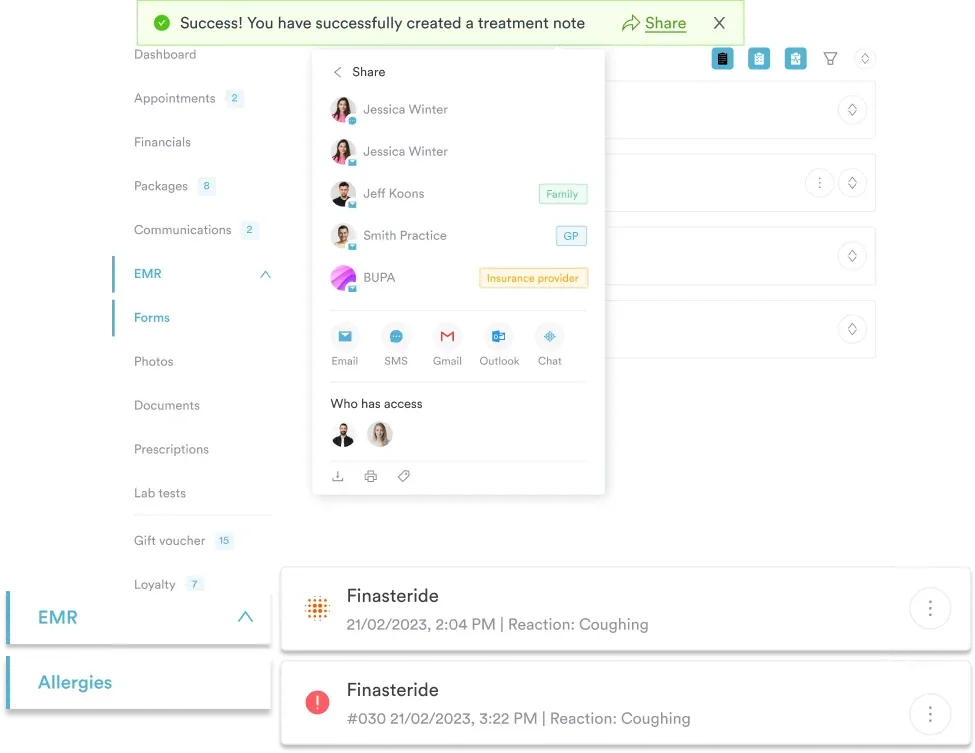

Pabau’s digital forms and structured patient records support HIPAA-compliant alcohol withdrawal assessment, CIWA tracking, and interprofessional care coordination in one integrated platform.

The CIWA-Ar is the gold-standard tool for quantifying alcohol withdrawal severity and guiding symptom-triggered therapy – the evidence-supported approach endorsed by ASAM clinical practice guidelines and SAMHSA’s TIP 45.
The scale assesses 10 items: nausea/vomiting, tremor, paroxysmal sweats, anxiety, agitation, tactile disturbances, auditory disturbances, visual disturbances, headache, and orientation and clouding of sensorium. Nine items are scored 0-7, while orientation and clouding of sensorium is scored 0-4, for a total range of 0-67.
A score of 8 or below indicates minimal to mild withdrawal, managed with supportive care. Scores of 9 to 15 indicate moderate withdrawal requiring benzodiazepines, and scores of 16 or higher signal severe withdrawal or impending delirium tremens requiring physician-supervised intensive management. Published thresholds vary slightly between protocols, so follow your facility’s cutoffs.
Symptom-triggered dosing – giving benzodiazepines only when CIWA scores exceed the facility threshold (commonly a CIWA-Ar of 8 or higher) – reduces total benzodiazepine exposure and shortens treatment duration compared to fixed-schedule dosing. Nurses must understand how to calculate CIWA scores accurately and escalate immediately if scores spike or the patient develops new neurological signs (hallucinations, confusion, seizure activity).
Generalized seizures occur in a minority of alcohol withdrawal cases, typically 12 to 48 hours after the last drink, and represent a medical emergency. Delirium tremens – confusion, hallucinations, and extreme autonomic hyperactivity – develops in roughly 5% of withdrawal cases, usually 48 to 96 hours in. Untreated, it historically carried a mortality rate as high as 15% or more; with prompt benzodiazepine treatment that falls to around 1 to 4%, though it stays a medical emergency.
Seizure precautions include:
If a seizure occurs, notify the physician immediately, administer benzodiazepines per protocol, maintain airway protection, and do not restrain the patient.
Thiamine (Vitamin B1) administration before glucose is a critical intervention to prevent Wernicke’s encephalopathy – a neurological complication of alcohol-induced malnutrition. Nurses administering IV dextrose must confirm thiamine has been ordered and given first. Documentation of thiamine administration within the template protects against this devastating complication and demonstrates compliance with standard protocols.
Unsupported discharge significantly increases relapse and 30-day readmission risk. Before a patient with alcohol withdrawal leaves your facility, a documented care plan must include a confirmed referral to addiction medicine, a substance use disorder treatment program, or a certified addiction specialist.
Many patients also warrant a broader substance use risk screening. Social services must have coordinated placement or outpatient follow-up.
Written aftercare instructions must cover medication adherence (if the patient is prescribed naltrexone, acamprosate, or disulfiram), relapse warning signs such as cravings, tremor, or insomnia, and contacts for a 12-step program or counseling. Give these to the patient and document them in the record.
Schedule follow-up appointments before discharge when possible.
Your care plan doubles as a legal record, so it needs to hold up to a regulatory survey or a malpractice review. At a minimum, chart the following at each shift and whenever the patient’s condition changes:
CMS State Operations Manual Appendix PP and Joint Commission standards both require facilities to demonstrate systematic withdrawal assessment and intervention, not just that care was provided.

How do you document a structured nursing assessment? SOAP notes guide healthcare professionals through the clinical documentation approach that captures subjective patient history, objective vital signs and exam findings, assessment conclusions, and the plan – the same structure underlying alcohol withdrawal care planning.
Looking for a reflective tool for client sessions? Proust Questionnaire carries all 35 questions in order, with space to write answers before or during a session.
Screening for personality disorders in your practice? Psychopath spectrum test template offers an evidence-informed framework for evaluating psychopathic traits across a continuum, not fixed categories.
Alcohol withdrawal syndrome is a medical emergency that demands systematic assessment, rapid intervention, and careful monitoring. An evidence-based alcohol withdrawal nursing care plan template ensures every nurse, across every shift and every facility, follows the same proven approach – reducing errors, preventing seizures and delirium tremens, and improving outcomes.
Paired with practice management software that integrates CIWA scoring, digital forms, and real-time patient records, your care team can document findings instantly, track withdrawal severity trends, and coordinate referrals seamlessly – transforming an unpredictable emergency into a managed clinical pathway that protects both patient safety and regulatory compliance.
The template is a structured clinical document that guides nurses through assessment (using CIWA-Ar scoring), nursing diagnosis selection, evidence-based interventions, monitoring protocols, and discharge planning for patients experiencing alcohol withdrawal syndrome. It standardizes care, improves safety, and creates a legal record of all nursing actions and patient outcomes.
A CIWA-Ar score of 15 indicates moderate alcohol withdrawal severity. According to ASAM guidelines, scores in the 9-15 range typically warrant benzodiazepine administration. A score of 15 (just above moderate) would trigger physician-ordered medication and close monitoring every 2-4 hours to prevent escalation to severe withdrawal or seizure activity.
Seizure precautions include maintaining padded side rails, keeping the bed in the lowest position, having suction and oxygen at the bedside, establishing IV access, administering benzodiazepines per symptom-triggered protocol (guided by CIWA scores), maintaining a quiet environment, frequent neurological assessments, and immediate escalation if the patient develops hallucinations or agitation – all warning signs of impending seizures or delirium tremens.
Unsupported discharge significantly increases relapse and readmission risk. Discharge planning must include confirmed referral to addiction medicine, a substance use disorder treatment program, written aftercare instructions, and coordination with social services for placement or outpatient follow-up. Documented discharge planning improves treatment engagement and reduces 30-day readmission rates.
Yes. The core assessment and intervention framework (CIWA-Ar, seizure precautions, nursing diagnoses) remains constant, but the template’s specific thresholds, medication options, and escalation protocols should be adapted to your facility’s protocols, medical director preferences, and CMS or state regulatory requirements. A digital forms system with customizable templates enables staff to modify sections while maintaining the core safety structure.