HIPAA compliant texting: What you can send patients & how to communicate securely
HIPAA compliant texting is possible when a text holds no protected health inform...

Last Updated: Oct 16, 2026

A HIPAA release form in Illinois is a signed patient authorization under 45 CFR 164.508 that permits disclosure to a named recipient.
Illinois layers stricter consent rules on top of federal HIPAA through the MHDDCA, 740 ILCS 110.
Every authorization needs patient identification, a named recipient, a stated purpose, an expiration date or event, and a signature.
Mental health, HIV, and substance use records each need their own separate authorization, never one combined release form.
Digital consent forms with e-signature and an audit trail make every authorization searchable when a records request arrives.
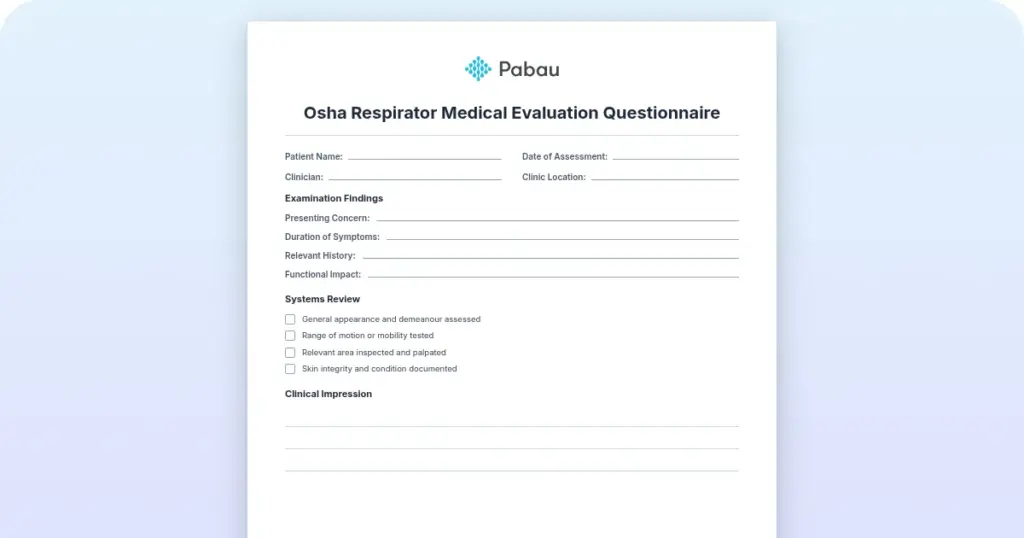
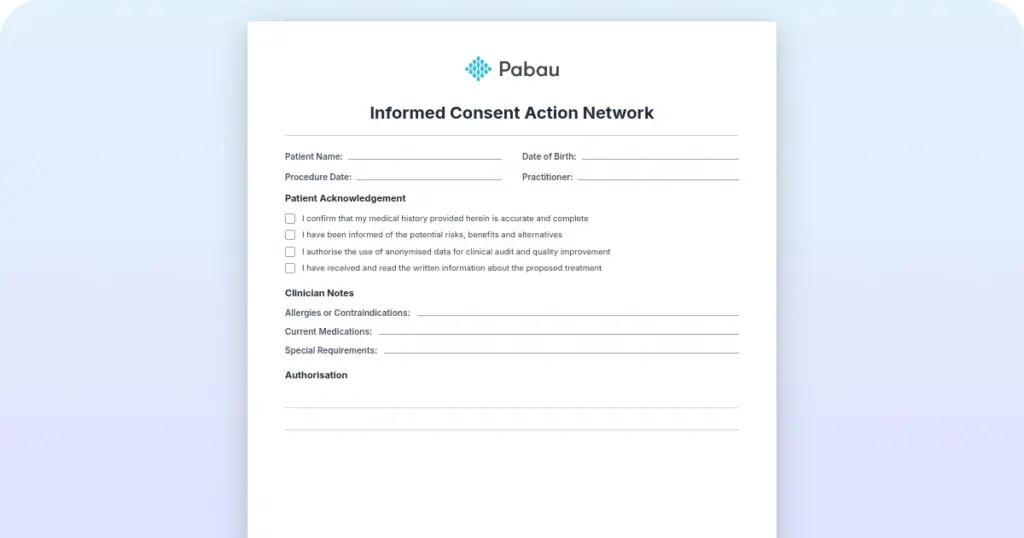
The template covers patient details, the records being released, the recipient, the purpose, the expiration date, and the signature blocks. It also carries prompts for the Illinois mental health and HIV confidentiality rules that a generic federal form leaves out.
Download templatePaper release forms sit in a filing cabinet until a records request lands on the front desk. Then someone has to find the right one, check that it hasn’t expired, and prove the patient signed it.
Illinois providers carry a second layer on top of the federal rules. State law sets stricter consent conditions for mental health records, and a generic federal form does not satisfy them. Other states layer their own conditions, and a Massachusetts release form also has to satisfy the state’s patient rights law.
This guide covers the elements 45 CFR 164.508 requires, the Illinois rules layered on top, and how to complete the form step by step.
A HIPAA release form in Illinois is a signed authorization that lets a provider disclose a patient’s protected health information to a named third party. Under 45 CFR 164.508, a covered entity generally cannot share that information without one.
The form does three jobs. It records the patient’s informed consent, states exactly which records may be released, and names both the recipient and the purpose of the disclosure.
Illinois adds a fourth. For mental health and substance use records, the authorization also has to satisfy confidentiality statutes that go well beyond the federal baseline.
Legal basis: the federal HIPAA Privacy Rule sets the floor at 45 CFR 164.508. The Illinois Department of Healthcare and Family Services publishes standardized forms that fold in both federal and state requirements, on its HIPAA privacy forms listing.
Three additional restrictions apply in Illinois, and a generic federal form addresses none of them.
What this means in practice: an Illinois practice treating mental health or substance use patients keeps several form types on file. Lean on one all-purpose release and a mental health disclosure can end up unauthorized under state law.
Under 45 CFR 164.508(c)(1), every authorization used in Illinois carries these core elements, written in plain language:
Miss one element and the whole authorization fails. A court or the HHS Office for Civil Rights will reject a form with no expiration, no named recipient, or a vague purpose.
Completed forms belong in structured medical records management, not a filing cabinet.
Six steps take the form from blank to defensible under both federal and Illinois rules.
Common mistake: pre-filling the purpose field with “treatment, payment, operations” to speed up signing. Under 45 CFR 164.508 the purpose has to match the actual request, so a boilerplate line invites a challenge later.
Federal law sets no maximum validity period, so the endpoint you write on the form is the one that counts. Every authorization has to name an expiration date or an expiration event.
Best practice: pick a date rather than an event. “When treatment ends” invites an argument about when that actually happened. One year from signature is standard and easy to defend.
A patient can withdraw a HIPAA authorization at any time, in writing. Under 45 CFR 164.508(b)(5) you have to honor a written revocation, and a phone call on its own does not count.
Illinois note: the state adds no revocation requirements beyond federal law. A digital consent system still earns its place, because it timestamps the revocation and flags the record before the next disclosure.
A standard release cannot carry a mental health or substance use disclosure in Illinois. Both categories need their own, more protective authorization, and the table below shows which one applies.
Mental health authorization: psychotherapy notes, psychiatric evaluations, and counseling records each need a separate signed form. It has to name the recipient, carry the statutory language, and state the limits on further use. Practices running mental health EMR software tend to keep the two consent templates side by side.
Substance use authorization: methadone maintenance, opioid treatment, and addiction counseling records fall under 42 CFR Part 2. The form needs the patient’s signature, a named recipient, and a notice that federal law protects these records.
What this means in practice: a practice treating depression, anxiety, and addiction may hold three live authorizations for one patient.
Paper consent is hard to audit. Staff cannot tell at a glance whether a form was signed, whether it has lapsed, or which disclosure it covered. Practice management software like Pabau replaces the paper with digital consent forms that patients sign on an iPad or through an email link.
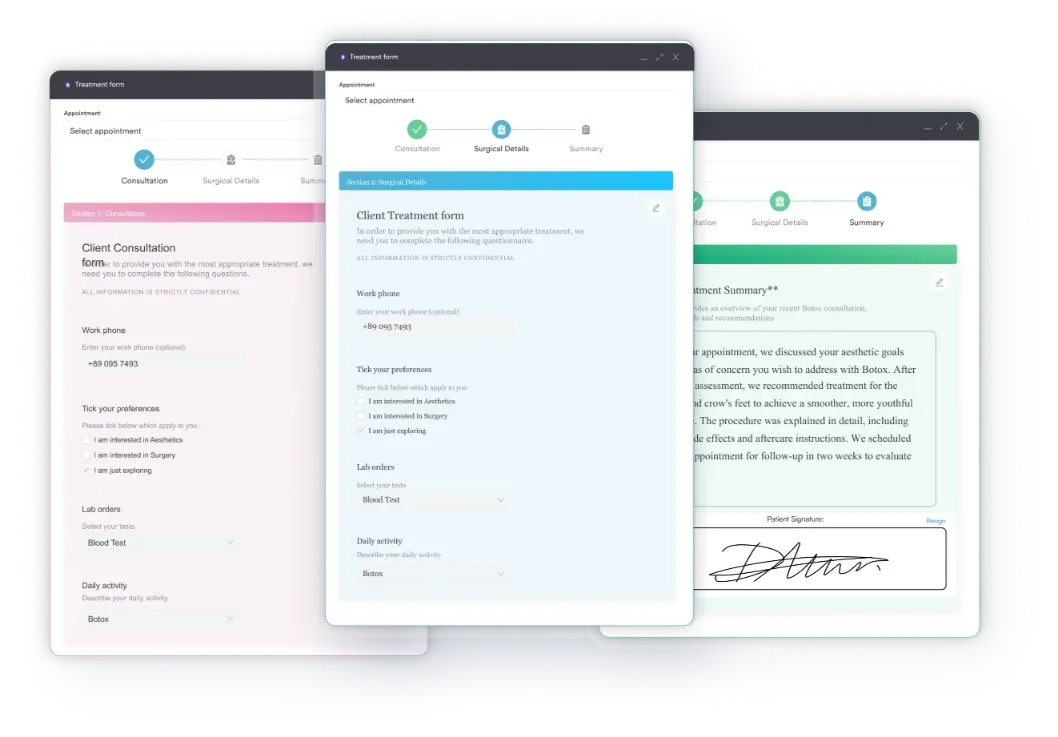
Every signature is timestamped and filed against the patient record. Pabau tracks expiration dates, flags forms that are about to lapse, and keeps an audit trail of who signed which version. When a records request arrives, your team searches for the authorization instead of hunting through cabinets.
For a practice juggling HIPAA, MHDDCA, and Part 2 forms, the builder stores each template separately. The patient signs each one at intake.

Pabau replaces paper release forms with e-signature consent workflows. Patients sign on an iPad or through an email link, and each form files itself against the record with a timestamped audit trail.

The hard part in Illinois is not the federal form. It is knowing when a second or third authorization has to sit alongside it, then proving months later that the patient signed each one.
Build the templates once, by record type, and that judgment stops living at the front desk. Staff reach for the right form because it is the one the system puts in front of them.
Book a demo to see how Pabau captures consent, tracks expiration dates, and keeps an audit trail for Illinois practices.

Ready if an emergency strikes your practice? OSHA emergency action plan covers evacuation routes, assembly points, emergency roles, and contacts for the fire department and EMS.
Operating a practice in Texas? Texas HIPAA release form lets a patient name up to two representatives and carries the required redisclosure clauses.
Moving your records fully paperless? paperless practice HIPAA compliance guide covers the recordkeeping and remote-access benefits of dropping paper files while staying compliant.
Have you posted your privacy notice? notice of privacy practices template covers patient rights, covered entity duties, and the signed acknowledgment page patients must receive.
Operating a UK practice too? UK GDPR compliance checklist walks through the forms and processes practices let slip, from privacy policies to photo consent.
It needs patient identification, the specific records to be released, the recipient’s name and address, and the purpose of the disclosure. It also needs an expiration date or event, the patient’s signature and date, and notice of the right to revoke. Miss one element and the form is invalid.
Yes. The MHDDCA, 740 ILCS 110, requires separate written authorization for mental health records. The AIDS Confidentiality Act, 410 ILCS 305, does the same for HIV and AIDS information. Federal 42 CFR Part 2 adds stricter rules for substance use treatment records.
For as long as the form says, because federal law sets no maximum period. Every authorization has to carry an expiration date or event, and an open-ended form is invalid. Once it expires, you need a fresh signature before disclosing anything else.
Yes, at any time and in writing, and the revocation takes effect when you receive it. It does not undo disclosures you already made to that recipient. Record the revocation in the patient’s chart along with the date of the original form.
The Mental Health and Developmental Disabilities Confidentiality Act, 740 ILCS 110, governs mental health records in Illinois. It requires a distinct consent form with statutory language, so a patient cannot authorize that disclosure on a standard release. A patient can sue over a violation, and a willful breach is a Class A misdemeanor.
They are the same document under different names. A HIPAA release form, a medical records release, and a medical records authorization all describe a signed patient authorization under 45 CFR 164.508. The wording varies by organization, but the legal requirements do not.
Only with legal standing, such as a healthcare power of attorney, a court-appointed guardianship, or a healthcare proxy. A relative cannot sign without that authority. When one does sign, the form must show the relationship and the authority they are signing under.
The Illinois Department of Healthcare and Family Services publishes standardized HIPAA privacy forms on its website. Pabau’s free template sits at the top of this page as a PDF. It follows 45 CFR 164.508 and prompts you on the Illinois mental health and HIV rules.