CPT Code 62284: Injection procedure for myelography
CPT Code 62284: official descriptor and procedure overview The American Medical ...

Last Updated: Oct 19, 2026
J0760 was the HCPCS Level II code for injection, colchicine, per 1 mg. CMS deleted it effective January 1, 2017.
No replacement code was designated, so claims carrying J0760 for later dates of service deny. Injectable colchicine has no FDA approval, and every approved colchicine product today is oral.
Let Pabau's smart automation suggest the right codes, reduce claim denials, and keep your practice compliant—effortlessly.
Automate repetitive tasks and focus on what matters most—your patients.
Reduce coding errors and ensure compliance with the latest regulations.
Clean claims, fewer denials, and faster reimbursements.
Powerful insights and reporting to help your practice thrive.
HIPAA compliant SOC 2 certified GDPR-compliant Trusted by 4,000+ clinics worldwide

J0760 described injection, colchicine, per 1 mg, and CMS deleted it effective January 1, 2017.
CMS designated no replacement code, so a claim carrying J0760 for a later date of service will deny.
Injectable colchicine has no FDA approval, and the FDA moved unapproved versions off the US market in 2008.
Every approved colchicine product today is oral, so a current colchicine prescription is not billed with a J-code.
Treat any J0760 line you find as a date-of-service question first, then correct or remove it.
HCPCS Code J0760 was a Level II code in the set maintained by the Centers for Medicare and Medicaid Services (CMS). Level II covers drugs, supplies, and services that CPT does not. Its official descriptor was Injection, colchicine, per 1 mg.
The code is deleted. CMS terminated it on December 31, 2016, and it left the HCPCS set effective January 1, 2017. No replacement code was named, and AAPC lists J0760 as deleted with no sign of reinstatement.
The J prefix marks drugs administered other than by the oral method. The unit descriptor set the billable quantity: one unit equaled 1 mg of colchicine, so a 2 mg dose was 2 units.
Colchicine is an anti-inflammatory drug best known for treating gout flares. The injectable form that J0760 described has no FDA approval.
In February 2008, the FDA announced enforcement action against all unapproved injectable colchicine products. Its Federal Register notice cited 50 adverse event reports linked to intravenous colchicine, including 23 deaths.
Colchicine has a narrow margin between a therapeutic dose and a toxic one. Unapproved injectable products made on or after March 10, 2008, or shipped on or after August 6, 2008, faced enforcement.
Every FDA-approved colchicine product is oral:
Pericarditis is not an FDA-labeled indication for any colchicine product. Treat older references that pair J0760 with pericarditis, or call injectable colchicine “FDA-approved,” as wrong.
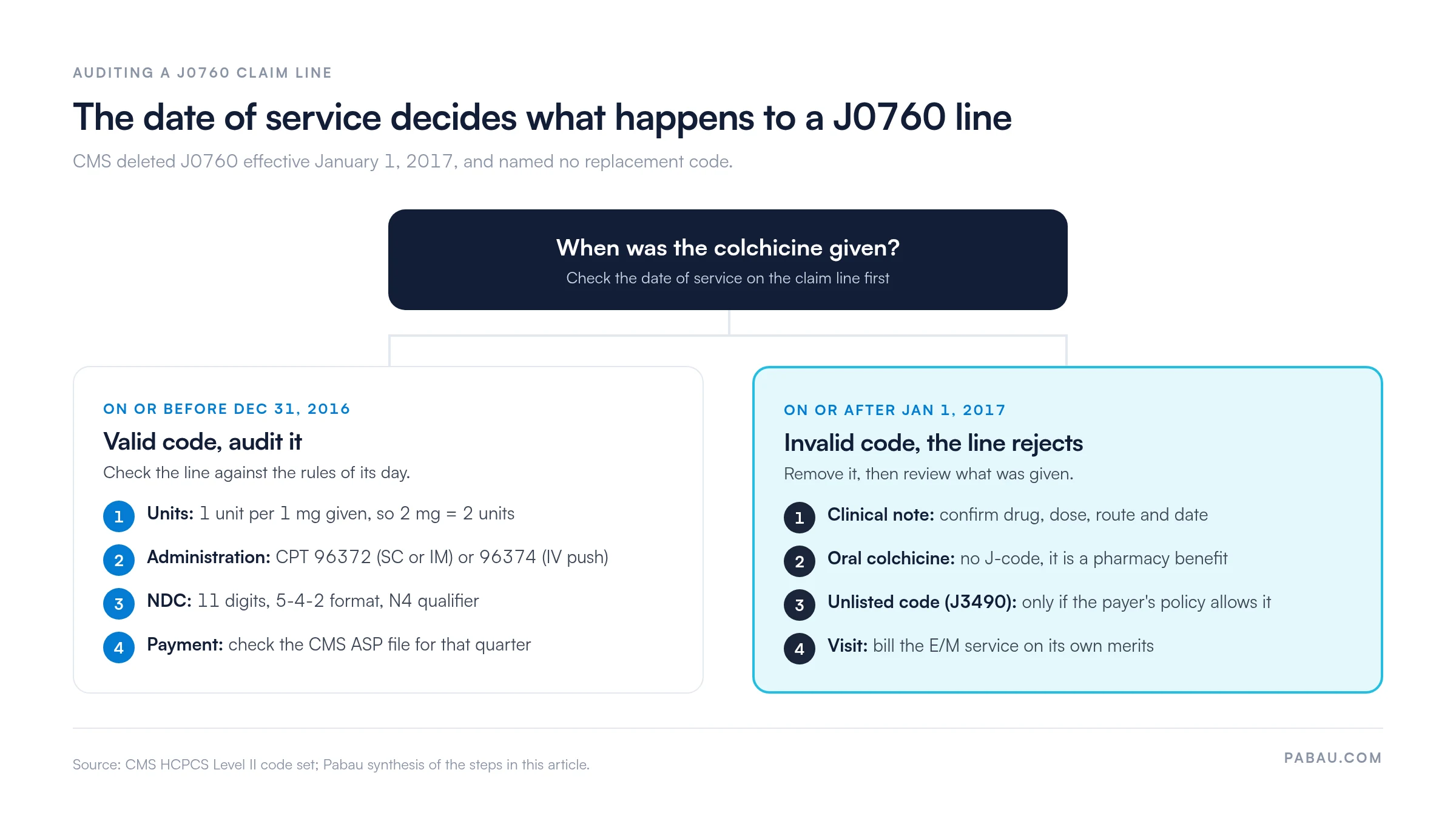
No. Clearinghouses and payers check each claim line against the active HCPCS set for its date of service. A J0760 line dated January 1, 2017 or later fails that check and rejects. The diagram below shows how that one date splits the work.
Billers now meet J0760 in three places: old encounters in a practice management system, retrospective audits, and historical coder training material.
Training goes further with a second case. CMS also deleted J8650 at the end of 2025, so coders can practice the same date-of-service check on a more recent code.
Before you correct a J0760 line, check its date of service. Lines dated December 31, 2016 or earlier used a valid code. Later lines need the drug, the dose, and the payer’s rules reviewed again.
CMS designated no direct replacement for J0760. You cannot swap it for a newer colchicine code, because none exists.
Auditing an old J0760 claim means checking it against the rules of its day. These were the core elements.
No route modifier exists for an intramuscular injection. State Medicaid programs require the NDC on physician-administered drug claims to support drug rebates.
To challenge a historical payment, check the CMS ASP pricing files for the quarter of the date of service. Rates change each quarter, so a figure from a static reference proves little.
Most J0760 problems today come from the code’s deleted status. The rest are legacy errors that surface in audits.
A clean claim review catches most of these before transmission. Check that the code was active on the date of service, then the route, units, NDC, and linked diagnosis.
For denials that still land, a denial management routine groups them by cause. A cluster of invalid-code rejections usually points to one stale charge master entry.
Several codes get mixed up with J0760, usually through nearby numbers or overlapping clinical areas.
Check the current descriptor of any nearby J-code before billing. Adjacent numbers do not signal clinical similarity, so the drug and route must match what was given.
When an auditor pulls an old J0760 claim, the note has to support every line on it. Building these elements into your medical billing compliance routine covers most of the exposure.
A superbill that records drug, dose, route, and NDC at the visit keeps incomplete details off the claim. A denial code reference helps you read the audit results that come back.
Deleted drug codes do the most damage when they hide in old encounters. A biller often finds one only after a denial or an audit letter arrives.
Pabau, the practice management platform we build, keeps the patient record, treatment notes, and invoices in one place. The drug, dose, and route recorded at the visit sit next to the charge built from them.
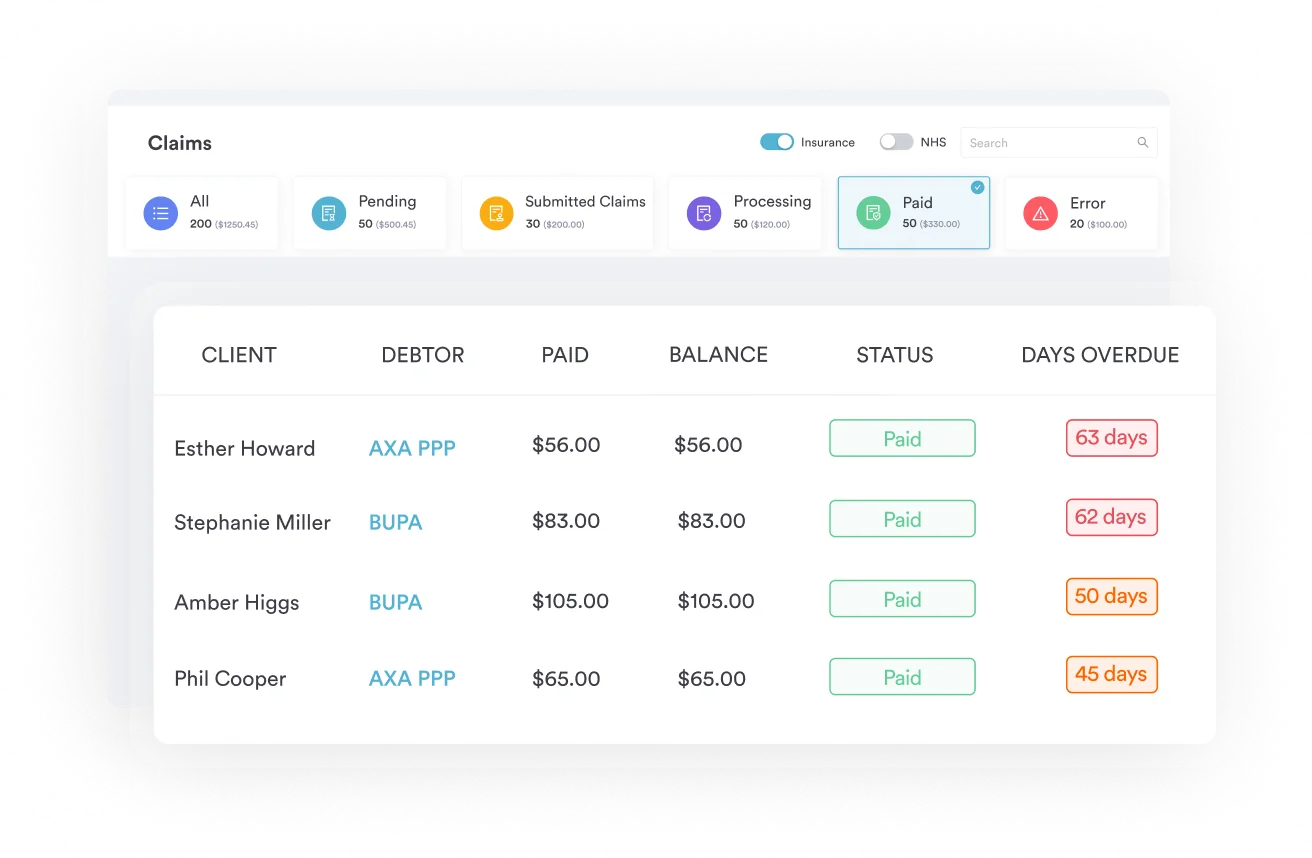
When a legacy line needs correcting, your team can read the note and the invoice side by side. Pabau’s claims management view then shows where each corrected claim stands.

Pabau keeps the patient record, treatment notes, and invoices together, so your team can check a drug line against the note before it goes out. See how it fits your billing workflow.

J0760 has been gone since January 1, 2017, and CMS named no replacement. The product it billed has no FDA approval, and the FDA had moved unapproved versions off the market years before the code went.
So treat any J0760 you find as a date-of-service question first. Audit pre-2017 lines against the rules of their day, and remove later ones after reviewing what the patient received. Book a demo to see how Pabau keeps each drug charge tied to the visit behind it.

Need to understand how denial codes map to billing errors? Common billing denial codes explains how to read and act on CARC denial reasons across J-code and procedure code claims.
Building a cleaner claim submission process? Clean claim submission covers the validation steps that prevent the most common HCPCS billing rejections before they hit the payer.
Managing revenue cycle compliance across your practice? Revenue cycle management breaks down how practices structure billing workflows to reduce denial rates and improve collection timelines.
Dealing with another deleted J-code? HCPCS code J8650 covers what changed when CMS terminated the oral nabilone code.
J0760 reported injection, colchicine, per 1 mg. One unit equaled 1 mg administered. CMS deleted the code effective January 1, 2017, so it now serves only as a historical reference.
Yes. CMS terminated J0760 on December 31, 2016, and deleted it effective January 1, 2017. Claims dated on or after that day reject, because payers check codes against the active HCPCS set.
Nothing. CMS designated no replacement code. If a payer accepts an unlisted drug code such as J3490, its own policy applies, and coverage of an unapproved drug cannot be assumed.
No. Injectable colchicine has no FDA approval. In February 2008, the FDA announced enforcement action against unapproved injectable products after reports of 23 deaths. Every approved colchicine product today is oral.
One unit per 1 mg administered, so a 2 mg dose was 2 units. Partial doses followed each payer’s rounding policy. Use this rule only when auditing claims dated before 2017.
Office claims used POS 11. On-campus outpatient hospital claims used POS 22, and off-campus outpatient hospital departments used POS 19. These codes matter now only when you review historical claims.