CCSD code H4430: Examination of rectum under anaesthetic
CCSD code H4430 pays for the examination alone CCSD code H4430 is the UK private...

Last Updated: Oct 20, 2026
H0018 is the HCPCS Level II code for behavioral health; short-term residential (non-hospital residential treatment program), without room and board, per diem.
HCPCS code H0018 pays for short-term residential behavioral health treatment in a non-hospital program. One unit buys one calendar day, and room and board is not part of it.
That single detail sets your unit count and decides what you may charge on a separate line. Get it wrong and the money usually comes back months later, attached to a repayment demand.
Medicaid writes the rules here, so almost every H0018 answer starts with your own state.
Let Pabau's smart automation suggest the right codes, reduce claim denials, and keep your practice compliant—effortlessly.
Automate repetitive tasks and focus on what matters most—your patients.
Reduce coding errors and ensure compliance with the latest regulations.
Clean claims, fewer denials, and faster reimbursements.
Powerful insights and reporting to help your practice thrive.
HIPAA compliant SOC 2 certified GDPR-compliant Trusted by 4,000+ clinics worldwide

HCPCS code H0018 covers behavioral health short-term residential treatment in a non-hospital program, billed per diem.
One unit equals one calendar day, however many sessions the patient attends that day.
Room and board sits outside the code, so bill it separately where your state Medicaid program covers it.
Medicaid is the primary payer, and Medicare fee-for-service generally does not cover H0018.
Practice management software like Pabau pre-fills the claim from the record and flags required fields that are still empty.
H0018 is a Level II HCPCS code for short-term residential behavioral health treatment delivered outside a hospital.
The Centers for Medicare and Medicaid Services (CMS) maintains it in the H-series, which holds behavioral health and substance use codes. The official descriptor reads: Behavioral health; short-term residential (non-hospital residential treatment program), without room and board, per diem. Medicare billing rules for this code differ from commercial payer rules, including the documentation asked for.
Two phrases in that line cause most of the trouble. “Without room and board” limits the code to clinical services, so lodging and meals never ride along inside it. “Per diem” fixes the unit at one calendar day, no matter how full the day’s schedule was.
Only a program your state Medicaid agency has enrolled for residential substance use disorder services can bill H0018. Provider type and facility certification are checked separately, and a license alone does not settle either one.
Enrollment is where the surprises show up. A program can hold a state behavioral health license and still sit outside the residential benefit.
Practices running a mental health EMR should check that the provider type on file matches the residential program, not the outpatient one next door.
Before billing H0018, verify that your facility’s Medicaid provider type enrollment includes residential substance use disorder services. Enrollment under a general behavioral health category does not always reach residential claims. Ask your state Medicaid agency to confirm your approved provider type and the program codes your certification allows.
Count days, not services. One unit of H0018 equals one calendar day of residential treatment, so a seven-day stay bills as 7 units. Three group sessions, an individual hour, and a medication review on the same date still add up to a single unit.
Take a patient admitted March 3 and discharged March 12. Is that nine units or 10? It depends on whether your state pays the discharge day, and several do not. Settle that question once, then build the answer into the census report your billing desk works from.
Facility-level claims for H0018 usually go out on the UB-04 claim form, also known as Form CMS-1450. Some state Medicaid programs accept the CMS-1500 instead, depending on provider type.
Prior authorization is common, and the prior authorization process needs to finish before admission rather than after.
Rates come from your state, not from a national table. Medicaid runs as a state and federal partnership, so each program sets its own per diem for residential treatment. Two neighboring states can pay very differently for the same day of care.
As a rough benchmark, state per diem rates for short-term residential treatment tend to run from about $100 to $350 a day. Some states land above or below that, based on their rate methodology and cost-of-living adjustments.
Verify the current figure with your state Medicaid agency, and watch the CMS HCPCS quarterly updates for changes to the code itself.
Medicaid covers H0018 in most states, and Medicare fee-for-service generally does not. Knowing which payers recognize the code keeps you from sending claims into programs that were never going to pay them.
Commercial plans under the Mental Health Parity and Addiction Equity Act (MHPAEA) must cover residential treatment on a par with medical and surgical benefits.
Parity does not guarantee that a plan accepts H0018 as the billing code, though. Some use proprietary codes, and others pay from a facility-specific fee agreement.
So verify the accepted code and the benefit before the patient arrives, not after discharge. Those benefit checks move protected health information around, which puts them squarely inside your HIPAA compliance obligations.
Every H0018 claim needs an ICD-10-CM code that supports a residential level of care. Most sit in the F chapter, which covers substance-related and mental health disorders.
The diagnosis has to match both the documented condition and the care actually delivered.
Where the substance use disorder drove the admission, that code goes first and the co-occurring mental health diagnosis follows as secondary. Payers reject claims whose primary diagnosis reads like an outpatient problem.
Specificity carries weight too. An unspecified code invites a reviewer to ask why a residential bed was needed, and severity specifiers are usually the answer.
Programs running psychiatry EMR software should confirm that both diagnoses reach the claim, not just the primary one.
A per diem claim passes five checkpoints between admission and payment. Each one can hold it, and the later you find the problem the more it costs.
Step four is the seam that splits open most often. Census says 14 days, the chart holds 12 notes, and the authorization approved 10, so three different numbers describe one stay. Whichever number reaches the claim, two of them will contradict it in an audit.
Front-end rejections are the cheap ones. A clearinghouse edit or a claim scrubbing rule catches a missing authorization number in hours. A payer would turn the same error into a denial with an appeal clock attached.
The record that survives an audit has one entry per billed day. A signed treatment plan on its own will not carry the claim. Thin documentation is the most common root cause of an H0018 repayment demand.
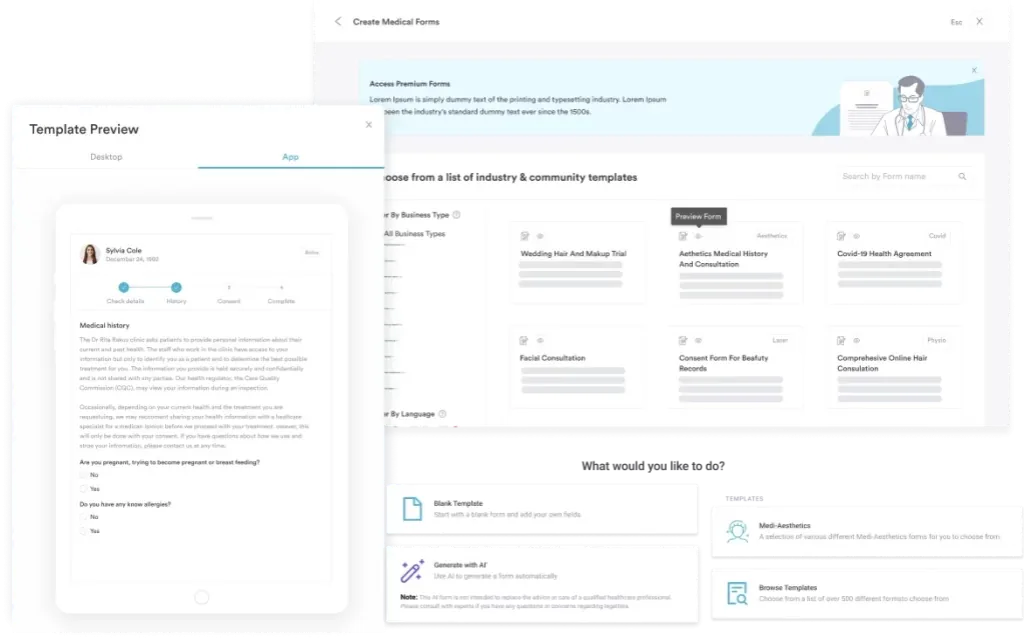
Digital clinical forms keep those records where an auditor can reach them. Paper files hold the same information, but retrieving six months of daily notes from a filing cabinet takes days you rarely have.
Most state Medicaid programs expect records to be kept for at least six years, though the exact term varies.
Standardized clinical documentation forms help here, because a note that always contains the same fields is far easier to audit than free text.
Substance use disorder records carry an extra rule. Under 42 CFR Part 2, disclosure needs patient consent that is narrower than a standard HIPAA authorization.
Keep a current release of information on file for each payer you send records to. The patient data security controls around that file matter as much as the consent itself.
H0018 denials repeat themselves. The same six reasons cover most of what comes back, which is good news, because a pattern can be designed out of the workflow.
Read the denial before you rework the claim. Sound denial management starts with the remittance advice. The denial codes on it tell you whether the fix is a corrected claim or a full appeal.
Track H0018 denials by reason code, not by total volume. A program where 40% of denials share one reason code has a process problem in a single step. One where denials spread evenly across five reason codes has a training problem across the team. The shape of the data tells you which fix to fund.
Seven questions catch nearly everything. Work through them for each residential claim, and most of the denial table above stops applying to you.
Two habits make the list quick. Reconcile the census weekly instead of at month end, and hold a claim rather than send it with a note missing. A held claim costs you days, while a denied one can cost a quarter.
H0018 sits in the middle of a three-code family covering the residential continuum. Two questions separate them: is the setting hospital-based, and how long is the stay?
Setting separates H0017 from H0018. Length of stay separates H0018 from H0019, and your state defines the day threshold where one becomes the other. Watch that threshold as a stay extends, because crossing it without switching codes is an easy audit finding.
Step-down care has its own codes as well. A patient moving from residential treatment into community support is usually billed under H0037, which carries its own per diem and its own authorization rules.
Most residential programs run this on two systems. Clinicians write notes in the clinical record, and the billing desk rebuilds each claim from a census spreadsheet. Every rekeying step is another chance for the unit count to drift.
Practice management software like Pabau closes that distance by building the claim from the record itself. Its claims management software pre-fills the form from what is already on the chart.
The service recorded against the visit lands on the charge line, and the recorded diagnoses seed the ICD-10 fields.
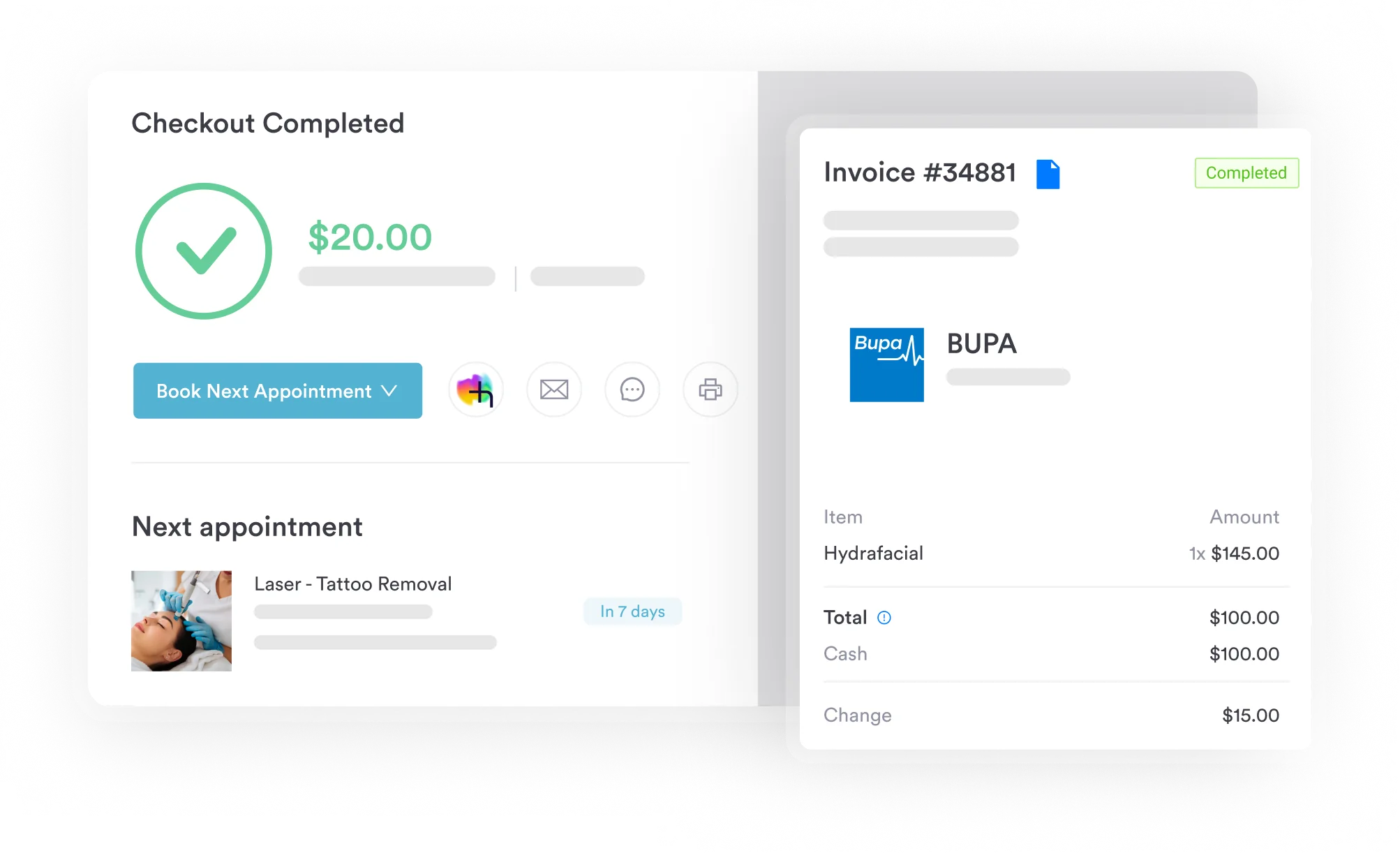
The outcome is fewer surprises at month end. Errors surface while the patient is still in the program, when a note can still be written and an authorization can still be extended.
Automated workflows handle the repeat admin around each admission, so your team spends its time on the exceptions.
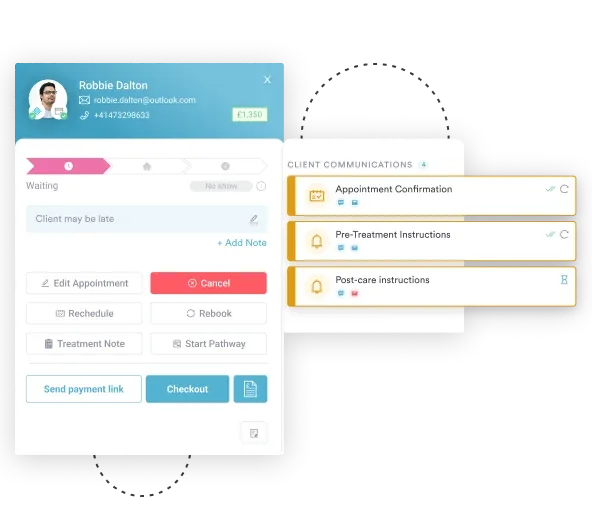

Pabau’s claims management pre-fills each claim from the patient record. Your team gets ICD-10 and HCPCS lookups inside the form, and the claim holds until every required field is complete. Fewer rejections, and less rekeying for your billing desk.

H0018 rewards programs that treat billing as a daily habit rather than a month-end task. Census, notes, and authorization all have to agree on the same set of days, and that agreement is built one day at a time.
So the fix is rarely a better appeal letter. What works is a shorter loop between the clinical floor and the billing desk. Someone has to compare the two while the patient is still in the program.
When those two records live in separate systems, that loop is where the money leaks. Book a demo to see how Pabau builds the claim from the same record your clinicians write in.

Coding a benign nasopharynx growth? ICD-10 code D10.6 is the billable code for a benign neoplasm of the nasopharynx.
Coding a scalp or neck mole? ICD-10 code D22.4 covers melanocytic nevi of the scalp and neck, supporting medical necessity for excision.
Coding a benign ovarian growth? ICD-10 code D27.0 is the billable code for a benign neoplasm of the right ovary.
Coding a related OB/GYN diagnosis? ICD-10 code D28.0 covers the billable diagnosis for a benign neoplasm of the vulva.
Need a thyroid diagnosis code instead? ICD-10 code D34 covers the billable diagnosis for a benign neoplasm of the thyroid gland.
H0018 has no nationally required modifier. Some state Medicaid programs do require one, often HF for a substance abuse program, or U1 through U9 for a state-defined level of care. Check your state fee schedule, because a missing modifier rejects the claim at the front end.
A UB-04 claim does not use one, since institutional claims carry a type of bill instead. Where your state accepts H0018 on the CMS-1500, place of service 55 covers a residential substance abuse treatment facility. Place of service 56 covers a psychiatric residential treatment center.
Expect a duplicate denial. Payers allow one residential per diem per patient per day, so a transfer date billed by both programs will reject. Settle who bills the transfer day before the patient moves.
Most state Medicaid programs will not pay for a day the patient was absent. Some allow a limited number of therapeutic leave days. Confirm your state policy before you count those days as units.
CMS does not tie the code to an ASAM level. Several state Medicaid programs map it to a residential level such as 3.1 or 3.5 in their own crosswalks. So the answer depends on where you bill.