ICD-10 Code S42.444P: Medial epicondyle fracture, right humerus
ICD-10 Code S42.444P: full descriptor and code validity ICD-10 Code S42.444P car...

Last Updated: Oct 13, 2026
Billable Code Specific Code
D34 is the billable ICD-10-CM code for benign neoplasm of thyroid gland.
It covers the non-cancerous thyroid growths that coders classify as thyroid adenoma or follicular adenoma. These are distinct from C73, the malignant thyroid code.
The 2026 edition of ICD-10-CM D34 became effective on October 1, 2025. As a result, it is valid for all HIPAA-covered transaction submissions through September 30, 2026, per CMS ICD-10 coding guidance.
Let Pabau's smart automation suggest the right codes, reduce claim denials, and keep your practice compliant—effortlessly.
Automate repetitive tasks and focus on what matters most—your patients.
Reduce coding errors and ensure compliance with the latest regulations.
Clean claims, fewer denials, and faster reimbursements.
Powerful insights and reporting to help your practice thrive.
HIPAA compliant SOC 2 certified GDPR-compliant Trusted by 4,000+ clinics worldwide

ICD-10 Code D34 is a billable ICD-10-CM diagnosis code for benign neoplasm of thyroid gland, valid for FY2026 (October 1, 2025 through September 30, 2026).
Thyroid adenoma and follicular adenoma map to D34 through the ICD-10-CM Alphabetic Index, not a formal tabular note; D34 also carries a ‘use additional code’ instruction for functional activity, and must not be confused with thyroid goiter or malignant thyroid neoplasms, which use separate codes.
The ICD-9-CM equivalent is code 226; D34 falls under block D10-D36 within Chapter 2 (Neoplasms, C00-D49) and must not be confused with C73 (malignant thyroid neoplasm).
Practice management software like Pabau supports accurate ICD-10 code entry, documentation workflows, and HIPAA-compliant billing for thyroid and endocrine diagnoses.
D34 is a billable, specific ICD-10-CM code. Specifically, it carries a single-level code structure with no sub-codes beneath it. In practice, the table below summarizes the key reference data coders need at the point of claim submission.
D34 has no child codes. In practice, there is no D34.8, no D34.9, and no decimal extension of any kind. When a thyroid neoplasm is confirmed as benign through pathology or imaging, D34 is the correct and final code selection.
No further specificity is available within the ICD-10-CM tabular list for this diagnosis. So a claim edit that rejects D34 for a missing fourth character is misconfigured.
A benign neoplasm of the thyroid gland is an abnormal but non-malignant growth arising from thyroid tissue. By contrast, these growths do not invade adjacent structures or metastasize. This is what separates a benign neoplasm of thyroid from the malignant thyroid tumors coded to C73.
Clinically, the most common presentations coded under D34 include thyroid adenomas discovered incidentally on imaging. In addition, follicular adenomas confirmed on fine-needle aspiration cytology (FNAC) and benign thyroid nodules with pathological confirmation are common. The WHO ICD-10 browser classifies D34 under the broad neoplasms chapter alongside other benign endocrine gland tumors.
Coders use D34 in both outpatient and inpatient settings. In outpatient endocrinology and primary care, it documents the diagnosis following ultrasound or biopsy findings. In inpatient settings, it may appear as a secondary diagnosis. This applies when a practice manages a thyroid adenoma alongside another primary condition.
D34 has no formal “Applicable To” note in the ICD-10-CM tabular list.
Instead, thyroid adenoma and follicular adenoma map to D34 through the ICD-10-CM Alphabetic Index. There, the index lists these terms as approximate synonyms for benign neoplasm of the thyroid gland. Coders frequently search for thyroid adenoma ICD-10 and follicular adenoma coding; both point to D34 for this reason.
D34 does carry one real tabular instruction, shown in the table above: use additional code to identify any functional activity. Specifically, this applies when the adenoma is also producing excess thyroid hormone.
A thyroid scan with uptake, billed as 78014, is the study that documents whether the nodule is functioning.
Any documentation using these clinical terms maps directly to D34. For example, if the operative or pathology report states “follicular adenoma” without malignant features, D34 is the appropriate code. Therefore, pathology confirmation is strongly preferred over imaging-only diagnosis when selecting this code for inpatient claims.
With software for managing patients, these diagnoses stay tied to lab schedules and specialist correspondence.
D34 does not carry an Excludes1 note in the FY2026 ICD-10-CM tabular list.
The codes below are not officially excluded by a coding convention. They are separate diagnoses that get mixed up with D34 because they involve the same anatomy or similar-sounding documentation. So getting the distinction right is a matter of correct code selection rather than a tabular rule.
The codes coders most often confuse with D34 involve the thyroid but represent distinct pathological entities:
Documentation is sometimes ambiguous – for example, “thyroid mass, rule out malignancy.” So coders should query the treating clinician instead of defaulting to either D34 or C73. ICD-10-CM guidelines do not permit coding an unconfirmed malignancy as confirmed in outpatient settings.
Flag any operative or pathology report that uses the phrase ‘thyroid nodule’ without a benign or malignant qualifier. Query the clinician before assigning D34. An indeterminate nodule may warrant E04.1 (non-toxic single thyroid nodule) rather than D34 until pathology confirms the neoplastic nature.
The distinction between D34 and C73 is the single most consequential coding decision for thyroid neoplasm encounters. As a result, assigning C73 incorrectly triggers oncology care pathways, alters insurance risk classification, and affects patient records permanently. Accurate ICD-10 code selection depends entirely on the documentation source. Specifically, that means the pathology report, the cytology result, or the clinician’s confirmed diagnosis. A clean claim rate below the practice benchmark usually points at one recurring coding or eligibility error.
Never assign D34 when pathology is pending. In the outpatient setting, an unconfirmed thyroid mass takes the symptom or finding code. For example, use E04.1 for a non-toxic single thyroid nodule until pathology confirms the benign nature of the growth.
Understanding the parent-child hierarchy helps coders navigate adjacent codes and confirm they have selected the most specific option available. Specifically, the ICD-10-CM classification system organizes all diagnosis codes into chapters, blocks, and individual codes.
Specifically, the block D10-D36 covers benign neoplasms of the mouth, major salivary glands, and other organs including endocrine glands. D34 sits alongside D35 (benign neoplasm of other and unspecified endocrine glands) within this block. That is where a parathyroid adenoma (D35.1) belongs. When the site is the thyroid, D34 is always the correct selection over D35.
Chapter 2 also includes the neighboring D37-D48 block for neoplasms of uncertain behavior, such as D43.2. That code applies only when pathology cannot yet confirm whether a growth is benign or malignant.
Practices transitioning legacy data or reconciling historical claims need the ICD-9-CM crosswalk. For example, the ResDAC crosswalk guidance provides context on how ICD-9-to-ICD-10 crosswalks apply to Medicare claims data.
This is a one-to-one crosswalk. ICD-9-CM 226 maps exclusively to D34 with no alternative ICD-10-CM options. Practices running reports on historical thyroid adenoma coding should use 226 as the ICD-9 filter. D34 is the ICD-10 equivalent when reconciling pre- and post-2015 claims data.

Pabau’s claims management software keeps ICD-10 code workflows clean, documentation complete, and HIPAA-compliant billing on track – so your team spends less time chasing denials.

D34 can appear on an inpatient claim. When it does, the CMS MS-DRG (Medicare Severity Diagnosis Related Group) grouper uses it alongside the principal diagnosis. In addition, the grouper factors in any procedures performed to assign a DRG for hospital payment. The AAPC ICD-10-CM code lookup provides MS-DRG mapping data for D34 based on the current CMS grouper tables.
D34 typically appears as a secondary or comorbidity diagnosis on inpatient claims. The DRG assignment depends primarily on the principal diagnosis and any surgical procedure. For example, a thyroid lobectomy codes under the relevant ICD-10-PCS code.
Thyroid surgery for a benign adenoma typically groups to the Thyroid, Parathyroid and Thyroglossal Procedures range (MS-DRG 625-627). This range falls under MDC 10, Diseases and Disorders of the Endocrine, Nutritional and Metabolic System. Assignments update annually with each fiscal year release. So verify specific DRG numbers against the current CMS MS-DRG grouper at the time of submission.
Coders working with thyroid conditions need the full map of adjacent codes to avoid miscoding. The table below covers the ICD-10 codes most frequently confused with D34. In addition, it includes the non-neoplastic thyroid conditions that show up in the same clinical context.
Three documentation failures drive the majority of D34 claim denials and audit flags. Therefore, addressing each one at the point of clinical note entry prevents downstream billing delays.
D34 requires confirmation that the growth is a neoplasm, not simply a nodule or enlargement. Acceptable documentation sources include a surgical pathology report stating “benign follicular adenoma” or “adenoma of thyroid without invasion.” Other sources are an FNAC report with Bethesda Category II classification (benign), or a cytology report stating benign thyroid tissue.
Ultrasound findings alone (for example, “hypoechoic thyroid nodule”) do not support D34. Use E04.1 until pathology is available.
Clinicians sometimes use imaging guidance to mark a nodule for biopsy or excision. In that case. That code applies alongside the diagnosis code, not in place of it. The CDC/NCHS ICD-10-CM web tool confirms that D34’s conditions are pathologically defined, not imaging-defined.
D34 is a standalone billable code, but some encounters warrant additional diagnosis codes. Document any functional thyroid disorder separately. Add E03.9 when the adenoma coexists with hypothyroidism, E05.- for hyperthyroidism. These represent distinct clinical problems beyond the structural neoplasm, so they need separate documentation.
Practices offering functional medicine often run into this pairing, because hormone panels are part of routine monitoring there. They should treat it as a standard cross-check rather than an afterthought.
For surgical encounters. This procedure code sits alongside D34 as the diagnosis driving the surgical intervention. In addition, payers require the relationship between the diagnosis and the procedure to be explicit in the claim.

In the outpatient setting, D34 is the first-listed diagnosis when the thyroid adenoma is the reason for the encounter.
Inpatient sequencing follows a different rule. ICD-10-CM Official Guidelines require the condition established after study to be the principal diagnosis. For example, when a surgeon performs a thyroid lobectomy, D34 typically functions as that principal diagnosis and drives the admission.
Sometimes the admission is for another condition, such as cardiovascular disease, and the thyroid adenoma is only an incidental finding. So D34 codes as a secondary diagnosis.
Claim denials linked to diagnostic coding errors cost practices significant recovery time. Practice management software like Pabau gives coding teams a structured claims management workflow. This workflow supports attaching ICD-10 codes at the point of service. As a result, clinical documentation and the submitted claim stay in sync instead of drifting apart.

For thyroid and endocrine cases, the workflow matters as much as the code. Pabau’s clinical record management system keeps pathology reports, imaging notes, and clinician documentation in one place. As a result, the coder has everything needed to confirm D34 versus an alternative code before submission. Built-in HIPAA-compliant documentation workflows keep sensitive diagnosis data secure throughout the billing cycle.
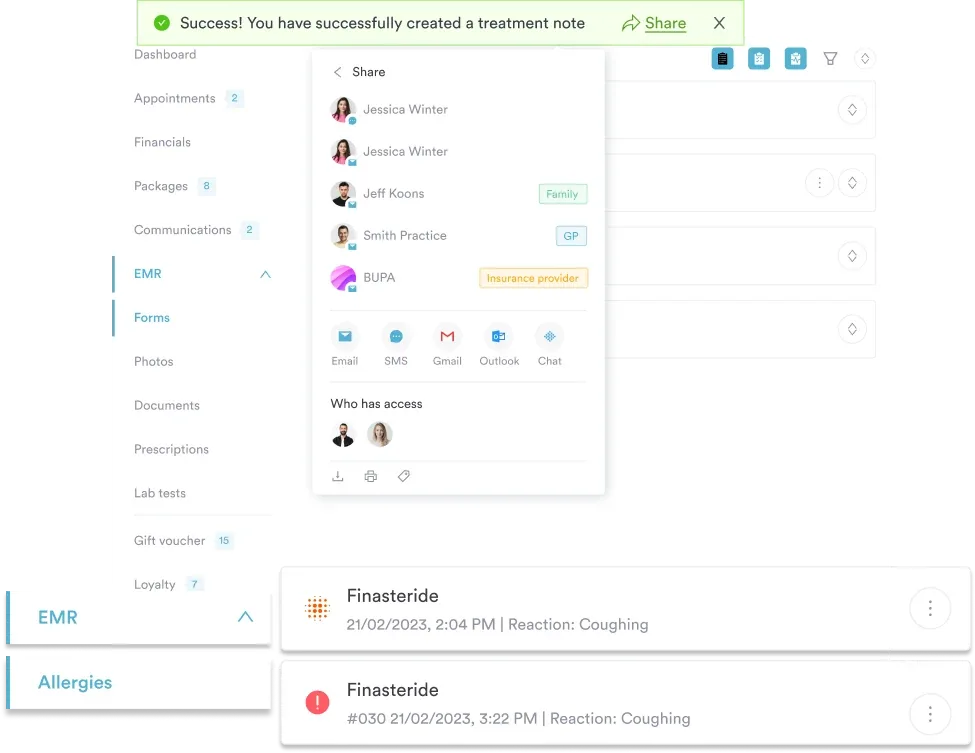
Practices managing multi-specialty or high-volume endocrine coding can use Pabau’s practice management software. In practice, this software flags incomplete documentation before claims leave the system. This especially helps metabolic health practices tracking thyroid function alongside other hormonal markers. As a result, first-pass denial rates drop for codes like D34, which require pathology confirmation.
Protecting patient data security throughout the diagnostic coding and billing process is built into the platform’s core architecture.
Run a monthly audit on D34 claims to check that every submission has a linked pathology or FNAC report in the patient record. Claims without supporting documentation are the first flagged in a payer audit. A simple pre-submission checklist reduces this exposure significantly.
ICD-10 Code D34 is a straightforward billable code when documentation is in order. The failures happen at the edges. For example, coders may submit before pathology returns, or they may conflate a non-toxic nodule with a confirmed adenoma. They may also confuse D34 with the thyroid goiter codes it is routinely mixed up with.
Pabau’s claims management software links pathology documentation to claim submissions. This keeps D34 cases clean from the first clinical note to the final remittance. A standardized endocrinology intake template gives the coding team a consistent starting point. This helps in capturing the clinical detail these claims depend on.

Need structured documentation tools for endocrine diagnoses? Digital clinical documentation forms helps practices capture pathology-linked consent and clinical notes in a single compliant workflow.
Coding hypertension with an endocrine cause? ICD-10 Code I15.2 covers hypertension secondary to endocrine disorders, including hyperthyroidism, and how to sequence it correctly.
Working with manifestation codes for endocrine disease? ICD-10 code E35 explains how to sequence disorders of endocrine glands caused by another documented disease.
ICD-10 Code D34 is a billable ICD-10-CM diagnosis code for benign neoplasm of thyroid gland. It is valid for the FY2026 code set (October 1, 2025 through September 30, 2026) and is used to report a confirmed benign thyroid growth – including adenoma of thyroid and follicular adenoma – for reimbursement and HIPAA-covered transaction submissions.
Yes. D34 is a billable and specific ICD-10-CM code, meaning it can be used directly on claims for reimbursement without requiring further sub-code specificity. No child codes exist beneath D34 in the current ICD-10-CM tabular list.
The ICD-9-CM equivalent of D34 is code 226 (benign neoplasm of thyroid glands). This is a one-to-one crosswalk with no alternative ICD-10-CM mappings. Practices reconciling pre-2015 claims data should use 226 as the historical filter and D34 as the current equivalent.
D34 has no Excludes1 note in the ICD-10-CM tabular list. The codes coders most often confuse with D34 are thyroid goiter (E04.-), malignant neoplasm of thyroid gland (C73), and congenital thyroid anomalies (Q89.2). These describe different pathology from a benign thyroid neoplasm and should never be reported in place of D34. If documentation suggests goiter rather than a discrete neoplasm, the E04.- series is the correct selection.
D34 codes confirmed benign thyroid neoplasms (no invasion, no metastasis); C73 codes malignant thyroid carcinoma. The distinction must be based on pathology or cytology confirmation, not imaging alone. Never assign D34 when malignancy has not been ruled out – use E04.1 (non-toxic single thyroid nodule) until pathology returns.
D34 does not have a fixed independent MS-DRG; the DRG assignment depends on the principal diagnosis and any procedures performed during the inpatient stay. For thyroid lobectomy encounters, D34 typically groups to the Thyroid, Parathyroid and Thyroglossal Procedures range (MS-DRG 625-627) under MDC 10. Verify against the current ICD-10-CM/DRG lookup tool or CMS MS-DRG grouper for the specific fiscal year.
No. D34 is a single, standalone code with no decimal subdivisions, so codes like D34.8 or D34.9 do not exist. A confirmed benign thyroid neoplasm is always reported as D34 with no fourth or fifth character. If a claim edit rejects D34 for lacking further specificity, the edit is misconfigured rather than the code.