CPT Code 62284: Injection procedure for myelography
CPT Code 62284: official descriptor and procedure overview The American Medical ...

Last Updated: Oct 19, 2026
G0293 is the HCPCS Level II code for noncovered surgical procedure(s) using conscious sedation, regional, general or spinal anesthesia in a medicare qualifying clinical trial, per day.
That last part catches teams out. The code looks payable, so it goes out expecting money, and someone spends three weeks chasing a check that was never coming. Others reach for it when G0294 was correct, because nobody opened the anesthesia record.
Both problems trace back to one thing. G0293 is a reporting instrument, and it only works when the trial paperwork, the anesthesia type, and the claim line all agree.
Research hospitals and academic medical centers meet this code most often. Regenerative medicine and longevity practices run into it too, since much of what they study falls outside standard Medicare benefits.
Let Pabau's smart automation suggest the right codes, reduce claim denials, and keep your practice compliant—effortlessly.
Automate repetitive tasks and focus on what matters most—your patients.
Reduce coding errors and ensure compliance with the latest regulations.
Clean claims, fewer denials, and faster reimbursements.
Powerful insights and reporting to help your practice thrive.
HIPAA compliant SOC 2 certified GDPR-compliant Trusted by 4,000+ clinics worldwide

HCPCS code G0293 reports a noncovered surgical procedure done under conscious sedation, regional, general or spinal anesthesia in a qualifying Medicare trial.
The code is billed once per day, and Medicare pays nothing for the procedure it reports.
Anesthesia is the dividing line with G0294, which covers local anesthesia alone or no anesthesia at all.
Clinical trial claims also carry the trial’s NCT number, condition code 30 on institutional claims, and diagnosis code Z00.6.
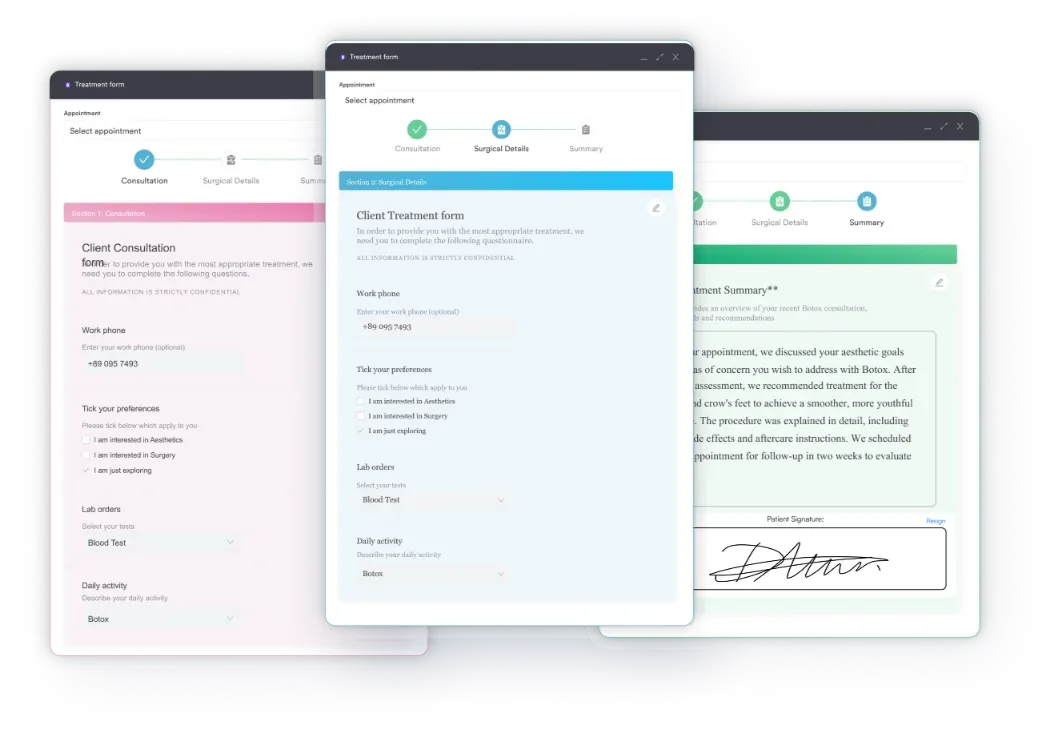
Practice management software like Pabau keeps consent forms, notes, and invoices on one patient record, so billing staff work from one screen.
G0293 sits in HCPCS Level II, the code set maintained by the Centers for Medicare and Medicaid Services (CMS). Level II covers services and supplies that standard CPT codes do not describe. The official descriptor reads:
G0293: Noncovered surgical procedure(s) using conscious sedation, regional, general or spinal anesthesia in a Medicare qualifying clinical trial, per day.
The CMS HCPCS overview describes G-codes as alphanumeric identifiers used mainly for Medicare billing.
G0293 belongs to a small cluster built for clinical trial reporting. Every code in that cluster describes something that happened but is not a covered benefit.
G0293 applies in one narrow situation. All three of these have to hold at the same time:
Miss the first or second condition and G0293 is simply the wrong code. Get the third one wrong and you almost certainly want G0294 instead.
Not every research study counts. A trial qualifies automatically when it meets one of these sponsorship routes:
Sponsorship is only half of it. The trial must also study a disease or condition and carry therapeutic intent. Institutional review board approval sits alongside those criteria as a general requirement, not a sponsor category. The current rules live in the CMS clinical trial policies.
One thing that does not make a trial qualify is registration on ClinicalTrials.gov. Registration matters later, on the claim, and only once the study already meets the criteria above.
Medicare then splits the trial in two. Routine costs of care inside it are covered. Investigational procedures inside that same trial may not be, and G0293 is how you report the surgical ones.
G0293 and G0294 are companion codes for the same clinical scenario, and only the anesthesia separates them. Treating them as interchangeable is the most common error in clinical trial billing.
Read the dividing line in one direction and it stays simple. Any of conscious sedation, regional, general or spinal anesthesia means G0293. Local anesthesia on its own, or none at all, means G0294. Neither code generates a Medicare payment.
Conscious sedation is named in the descriptor itself, so it is not a judgment call. A noncovered trial procedure done under conscious sedation is reported with G0293, never G0294.
Watch the wording on the record, though. Monitored anesthesia care is a separate billing category with its own rules, and it does not stand in for moderate sedation. Read what the anesthesia record names, then pick the code from that.
Check the anesthesiologist’s record, not just the surgeon’s operative note. Surgeons often write “sedation” without saying which kind, and that single word decides between G0293 and G0294. Make the anesthesia record a required attachment on every clinical trial claim before it can be released.
Six checks stand between the procedure and a claim that behaves. Work through them in order, because each one can send you to a different code.
The claim leaves your billing system as an electronic 837 file, reaches your MAC, and comes back denied. That denial is the expected outcome. A correct G0293 submission ends in a noncovered line rather than a payment.
Three pieces of trial data travel with it. Institutional claims on the UB-04 carry condition code 30, the trial’s eight-digit NCT number, and ICD-10 code Z00.6 as a secondary diagnosis. Professional claims carry the NCT number and Z00.6 as well, plus modifier Q0 for an investigational service or Q1 for a routine one.
Leave any of those out and the file can reject before a person ever reads it. A rejection is not a denial. Nothing reached the payer, nothing was recorded, and your clean claim rate takes the hit anyway.
What comes back is an electronic remittance advice showing the noncovered charge and the patient’s share. That line is exactly what a signed ABN supports. Send it inside your MAC’s timely filing limits, because a report still has a deadline.
Say a patient in a qualifying trial has two noncovered procedures on March 4. One uses a peripheral nerve block. The other uses general anesthesia. Both sit inside the protocol, and neither is a covered benefit.
You report one unit of G0293 for March 4. Not two. If a third qualifying procedure happens on March 5, that date gets its own unit. The per-day rule counts dates of service, not trips to the operating room.
Auditors ask for five things on a G0293 claim, and they usually ask years after the procedure. Have all five on file before you submit:
Paper is where these go missing. Practice management software like Pabau captures the anesthesia type, the trial identifier, and consent on digital intake forms.
All of that happens while the patient is still in front of you. Trial records also carry protected health information, so the same HIPAA compliance rules apply to every copy you keep.
Practices new to trial billing repeat the same five errors. Each one has a cheap fix.
When one does come back, read the reason before you resubmit. The denial codes tell you whether the problem was the code, the trial data, or the form.
Building that habit into your medical billing compliance routine keeps the same error from repeating across a whole study.
Five questions, thirty seconds, most denials avoided:
Five yes answers and the claim is ready to go. One no and it will be back on your desk within a month.
G0293 carries a noncovered status, so no payment rate attaches to it. Under Medicare Part B, the CMS Physician Fee Schedule lookup returns no allowable amount for the code. It earns its keep as a record of what happened.
What that means day to day:
Separating those two streams is where most of the effort goes. Sit down with your revenue cycle team and your MAC. Split the trial’s services into routine care and investigational care before the first patient enrolls. Doing it afterwards means unpicking claims one at a time.
G0293 has close neighbors, and one of them is only close alphabetically. Knowing which is which saves a round of corrections.
G0295 trips people up because it sits two digits away in the same range. It has nothing to do with clinical trials. The AAPC HCPCS code lookup is a quick way to confirm a descriptor before you commit to it.
Flag G0293 and G0294 in your billing system as clinical-trial-only codes with a mandatory document checklist attached. That keeps them off standard service claims. It also forces the trial identifier and the anesthesia record to be collected before anyone can hit submit.
Most of the risk in a G0293 claim sits in the paperwork rather than the code. The trial approval letter lives in one system. Your anesthesia record sits in another. Somewhere down the hall, a filing cabinet holds the signed ABN.
Pabau keeps those pieces on one patient record instead. Uploaded documents attach to the same chart, so the trial approval sits beside the operative note and the consent form. Invoicing and claims management run in the same place as the clinical notes.
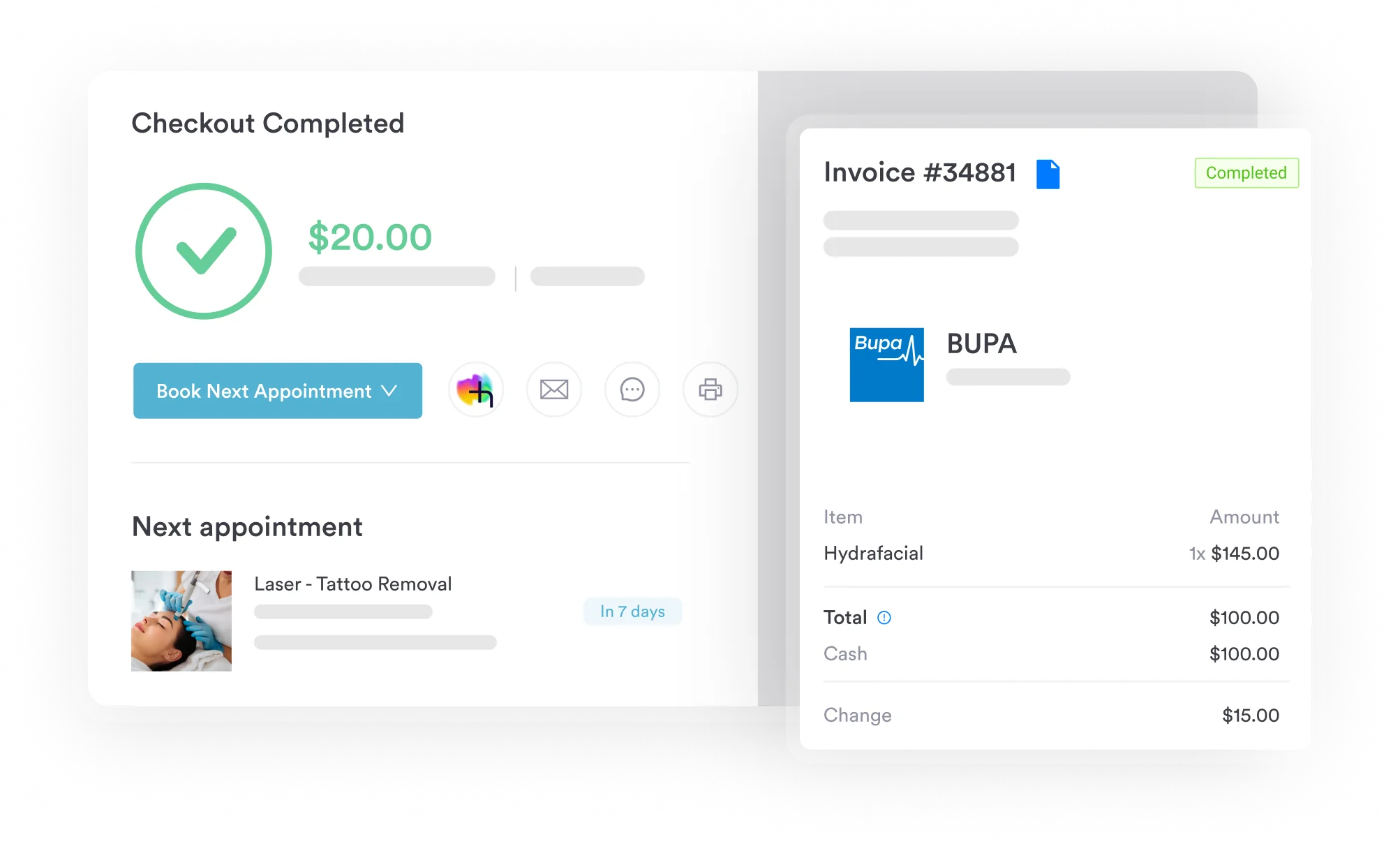
So your billing team builds a G0293 claim from one screen instead of three. Nothing gets re-keyed between systems, which is where NCT numbers usually pick up a typo.

Practice management software like Pabau keeps consent forms, clinical notes, and invoices in one patient record. Your billing team finds what a claim needs in one place.

G0293 is a small code with an outsized ability to waste a week. Treat it as a record of what happened rather than a request for payment, and most of that waste disappears on its own.
The habit worth building is simple. Before the claim goes out, put the anesthesia record, the trial approval, and the signed ABN in front of you. If one of the three is missing, the claim is not ready, whatever the filing deadline says.
Practices that keep those documents on the patient chart stop hunting for them at claim time. Book a demo to see how Pabau holds consent forms, clinical notes, and invoices on one record. Your team can then build a trial claim from a single screen.

Billing a standard power wheelchair? Power wheelchair billing guide covers the weight limit and seat options that define this DME code.
Billing a custom sacroiliac orthosis? Sacroiliac orthosis billing guide explains the custom fabrication requirement behind this pelvic-sacral support device code.
Losing time to payer approvals? Prior authorization breaks down the steps, the usual delays, and how to shorten them.
Billing a prefabricated knee orthosis? Knee orthosis billing guide covers the coverage rules and the prior authorization change for this device code.
Billing a shoulder abduction restrainer? Shoulder orthosis billing guide explains the canvas and webbing device this code covers and when it applies.
Yes, when the day includes both kinds of procedure. G0293 covers the sedation, regional, general or spinal cases. G0294 covers the local-only and no-anesthesia cases. Each code is still limited to one unit for that date. Check your MAC’s local edits before you submit both.
Yes. Qualification comes from the trial’s status with CMS, not from what is being studied. A device trial that meets the criteria supports G0293 the same way a drug trial does. The anesthesia record still decides between G0293 and G0294.
Not automatically. G0293 is a Medicare G-code, and commercial plans set their own research billing rules. Some accept it, some want a different code, and some need prior notification. Read the payer’s clinical trial policy before the procedure, not after the denial.
The patient can be held liable, but only with a signed Advance Beneficiary Notice of Noncoverage on file. Without it, the practice usually absorbs the cost. Get the ABN signed before the procedure and keep it with the trial record.
No. Routine costs of care inside a qualifying trial are billed normally and can be covered. G0293 reports the investigational surgical procedure that Medicare does not cover. Keeping those two streams apart is the core of clinical research billing.