CPT Code 62284: Injection procedure for myelography
CPT Code 62284: official descriptor and procedure overview The American Medical ...

Last Updated: Oct 19, 2026
L1833 is the HCPCS Level II code for knee orthosis, adjustable knee joints (unicentric or polycentric), positional orthosis, rigid support, prefabricated, off-the shelf.
Let Pabau's smart automation suggest the right codes, reduce claim denials, and keep your practice compliant—effortlessly.
Automate repetitive tasks and focus on what matters most—your patients.
Reduce coding errors and ensure compliance with the latest regulations.
Clean claims, fewer denials, and faster reimbursements.
Powerful insights and reporting to help your practice thrive.
HIPAA compliant SOC 2 certified GDPR-compliant Trusted by 4,000+ clinics worldwide

HCPCS code L1833 describes a prefabricated, off-the-shelf knee orthosis with adjustable unicentric or polycentric joints and rigid support, effective for claims from October 10, 2022.
L1833 is an HCPCS Level II code, not a CPT code — a common point of confusion for billers new to durable medical equipment claims.
As of August 12, 2024, L1833 no longer requires prior authorization, a face-to-face encounter, or a written order prior to delivery under Medicare Part B.
LCD L33318 governs coverage. The device must include motion control stops and meet PDAC verification standards to be correctly described by this code.
Pabau’s claims management software helps DME suppliers and orthotic practices track documentation requirements, modifiers, and proof of delivery for L1833 claims.
HCPCS code L1833 is the billing code for a knee orthosis (KO) with adjustable knee joints (unicentric or polycentric), positional orthosis, rigid support, prefabricated, off-the-shelf. It falls under the Orthotic Procedures and Services category of the HCPCS Level II code set, maintained by the Centers for Medicare and Medicaid Services (CMS).
The code became effective for claims with dates of service on or after October 10, 2022, per CMS Policy Article A52465. Suppliers should use this date when documenting the start of billing use for devices they code under L1833.
The “off-the-shelf” label is clinically important. It means the manufacturer prefabricates the device without patient-specific modifications, and the supplier makes only minor changes for individual fit. This separates L1833 from L1832, which describes a custom-fit version of the same adjustable-joint knee orthosis.
L1833 is an HCPCS Level II code, not a CPT code. CPT codes are maintained by the American Medical Association and describe physician procedures and services. HCPCS Level II codes are maintained by CMS and cover supplies, equipment, and devices that CPT doesn’t include, such as durable medical equipment and orthotics.
The mix-up happens because billers often use “CPT code” as shorthand for any procedure code, including L-codes. Orthotic devices don’t have CPT codes at all — they’re billed exclusively through the L-code range of HCPCS Level II.
If a claim scrubber or clearinghouse flags L1833 as an invalid CPT code, that’s expected. The code simply belongs to a different code set.
LCD L33318 (Knee Orthoses), administered by Medicare Administrative Contractors (MACs), governs coverage for L1833. A claim for HCPCS code L1833 qualifies for coverage when the beneficiary meets one or more qualifying conditions documented in the LCD-related Policy Article.
Under LCD L33318, a knee orthosis with adjustable knee joints (L1832 or L1833) is covered for beneficiaries with ligamentous instability, weakness, or deformity of the knee, or who have had a qualifying injury or surgical procedure. The treating practitioner must document the clinical need clearly in the medical record.
The same LCD does not extend that coverage to L1848, the off-the-shelf air-chamber brace, which Medicare denies as not reasonable and necessary. Coverage does not carry across the knee orthosis family, so check each code against the LCD before you bill.
PDAC coding verification guidance from CGS Medicare confirms the product must appear on the approved coding list to support the claim.
For patient compliance documentation, the clinical record from the treating practitioner must support the medical necessity of the device. This record should reflect the diagnosis, functional limitations, and why an adjustable knee orthosis was selected over a simpler immobilizer.
ICD-10 diagnosis codes that commonly support L1833 coverage under LCD L33318 include:
The supplier must document the specific ICD-10 code in both the ordering practitioner’s record and on the claim. Using an unspecified code when a laterality-specific code is available risks denial. Always use the most precise code available for the documented diagnosis.
The distinction between L1832 and L1833 is one of the most common sources of coding errors in knee orthosis billing. Both codes describe knee orthoses with adjustable joints, but they differ in how the device is produced and fitted.
According to Enovis PDAC approval documentation, devices must include motion control stops to qualify as either L1832 or L1833. Suppliers cannot bill a hinged knee brace without motion control stops under either code, regardless of other features. MACs flag this as a frequent audit finding.
Suppliers working in physical therapy practice settings should review the ordering practitioner’s documentation carefully. If the record supports a custom-made device, L1832 may be appropriate. If the device is taken from stock and fitted, L1833 applies. Upcoding to L1832 when an OTS device was provided is one of the most common compliance violations in orthotic billing.
Before billing L1832 vs L1833, confirm in writing whether the device was taken from inventory and fitted to the patient (OTS = L1833) or fabricated to individual measurements (custom = L1832). Document this distinction in the delivery ticket and keep it in the patient’s file alongside the PDAC product list reference number.
Documentation requirements for HCPCS code L1833 changed substantially on August 12, 2024. Prior to that date, Medicare required prior authorization, a face-to-face encounter, and a written order prior to delivery (WOPD). Noridian Healthcare Solutions (JD DME MAC) confirmed that it removed all three requirements for dates of service on or after August 12, 2024.
This does not mean documentation requirements have been eliminated. The following remain required for a clean L1833 claim:
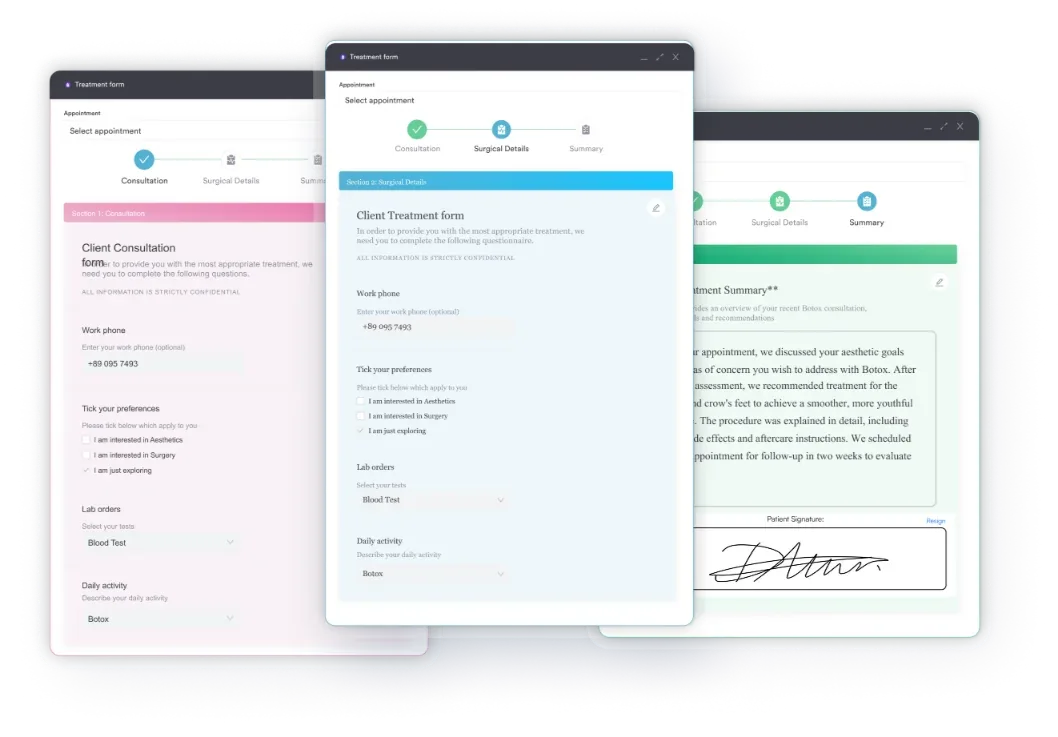
Using digital intake and documentation forms helps DME suppliers and orthotic practices capture all required fields at the point of delivery. With paper-based workflows, required fields go missing more easily, which surfaces later as audits and recoupment demands.
For HIPAA-compliant documentation practices, practices should store all patient records linked to L1833 claims securely and ensure they are available within the timeframes your MAC sets. Medicare contractors can request documentation up to three years after the date of service.
Most L1833 claims submitted to Medicare require modifiers. Using the wrong modifier, or omitting one entirely, is a leading cause of claim denial. The MAC uses each modifier’s specific meaning to process the claim.
The KX modifier is the most important for L1833 claims. Appending KX certifies that the supplier has reviewed the medical record and that the documentation meets LCD L33318 criteria. Submitting a claim with KX when documentation does not support medical necessity puts the supplier at risk of fraud and abuse liability, not just a denial.
Suppliers must append laterality modifiers (RT and LT) when treating a single knee. Billing without laterality on a unilateral orthosis typically results in a request for additional documentation or a denial on the basis that bilateral was not supported. For bilateral knee orthoses, both RT and LT may appear on separate claim lines.

Pabau’s claims management software helps orthotic practices and DME suppliers track documentation, modifiers, and proof of delivery requirements for HCPCS codes including L1833. See how it works for your practice.

The DME fee schedule sets Medicare reimbursement for HCPCS code L1833, and amounts vary by MAC jurisdiction and update annually. CMS publishes fee schedule amounts through the CMS Physician Fee Schedule lookup tool and through DME-specific fee schedule files.
Because annual revision and geographic adjustment affect fee schedule amounts, this guide does not state specific dollar figures. Suppliers should verify current allowable amounts directly through their MAC or through HCPCS code lookup tools that reflect current CMS data.
Tracking allowed amounts by jurisdiction helps sports medicine and orthotic practices forecast revenue accurately and identify underpayments. When a remittance advisory shows a payment below the expected allowed amount, suppliers have the right to appeal.
Several other HCPCS codes in the L-code series describe knee orthoses with different configurations. Selecting the correct code requires matching the device’s actual features to the code descriptor, not billing based on price point or assumed coverage.
Under Palmetto GBA (JM Part B) guidance, suppliers can reach Medicare coverage for prefabricated codes L1832, L1833, L1843, L1845, L1851, and L1852 through two paths: an ordering practitioner’s prescription with supporting medical necessity documentation, or enrollment in the Competitive Bidding Acquisition Program where relevant.
In addition, good practice management software should make it easy to document which specific code was selected and why, particularly when multiple knee orthosis codes could potentially describe a given device. This audit trail is essential when a MAC requests additional documentation.
When a device falls between two HCPCS code descriptors, check the PDAC Product Classification List first. If the specific product is listed under L1833 but not L1843, the PDAC listing is your primary guide. Document which list entry you used, including the product name, manufacturer, and PDAC approval date, and keep this in the patient’s billing file.
Clean claims for HCPCS code L1833 require more than the correct code. Errors build up at multiple points across the billing workflow from ordering through claim submission.
Using automated billing workflows reduces the manual errors that occur between the ordering step and claim submission. When each step in the process is tracked and time-stamped, you already have the documentation trail in place if the MAC requests a review.
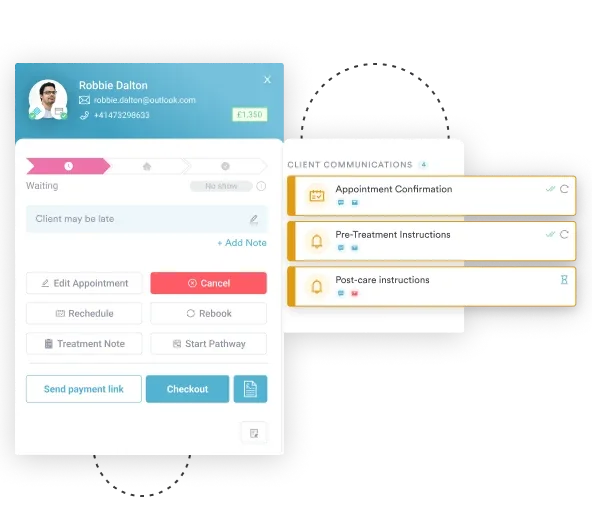
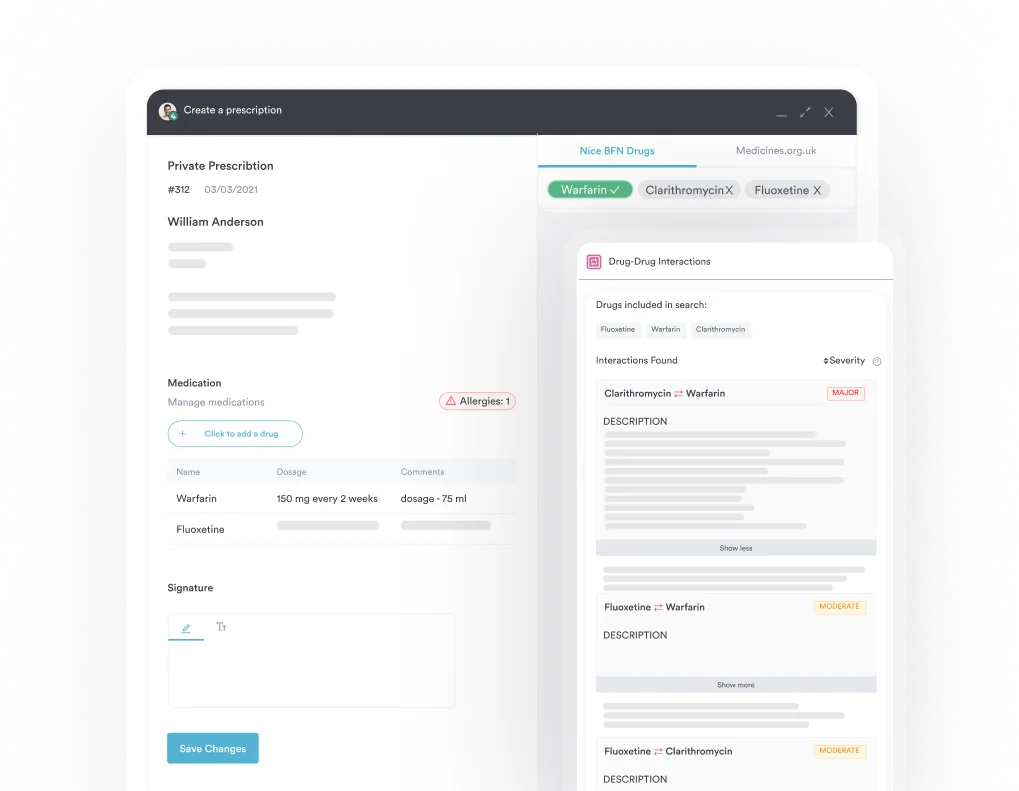
Practices that handle prescription and order management digitally can cross-reference the treating practitioner’s order against the dispensed product’s PDAC listing before the claim leaves the office. This single step catches most avoidable denials before they become appeals.
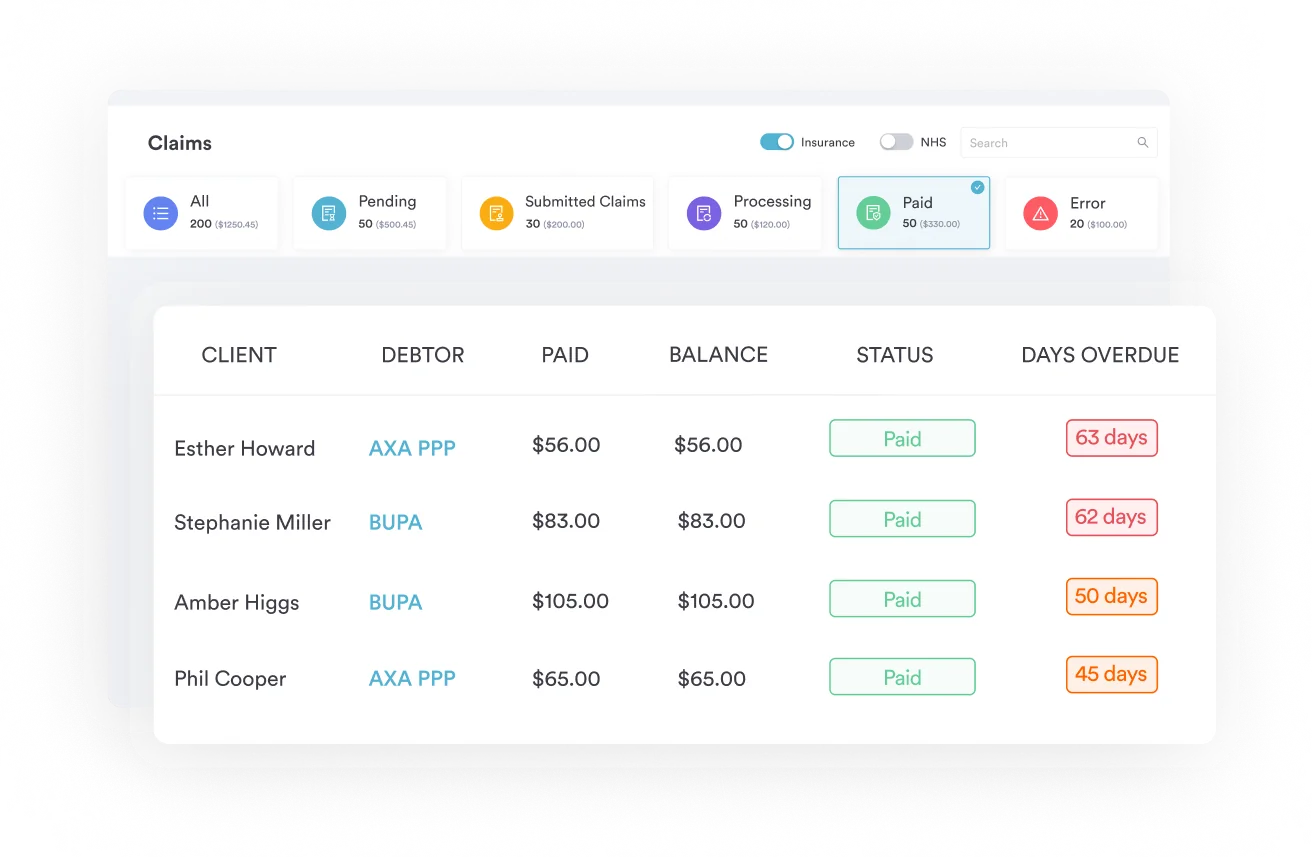
For multi-location orthotic and DME practices, central claims management workflows allow billing teams to audit documentation across sites, apply consistent modifier logic, and flag claims that are missing required elements before submission. This is especially useful for L1833 because the documentation requirements differ from the pre-August 2024 workflow many teams still follow by habit. Coverage verification also surfaces the deductible position, which changes what the practice collects at the desk.
For practices operating across multiple sites. Store every delivery, every signed order, and every PDAC reference number against the patient record — not just in a paper file.
Teams that apply compliance requirements for physiotherapy and orthotic clinics at the point of intake, rather than at billing, catch issues before they create claim problems later.
The August 2024 policy changes simplified L1833 billing in one direction (removing prior authorization and WOPD), but they did not reduce the documentation burden overall. Clean claims still require PDAC verification, correct modifier usage, and medical necessity documentation that links the ICD-10 diagnosis to the device dispensed.
Pabau’s claims management software gives orthotic and DME practices a single system to track each step in the L1833 billing workflow, from ordering through proof of delivery. To see how it handles your specific documentation requirements, book a demo with the team.

Billing a proprietary laboratory test? proprietary lab analysis code CPT code 0049U covers proprietary laboratory analyses, a category the AMA updates quarterly so codes can change without notice.
Billing a laboratory blood specimen test? pathology blood test code CCSD Code 0052B covers a Chapter 34 pathology test billed for a blood specimen rather than a clinical intervention.
Billing a trace mineral blood test? selenium level test code CCSD code 0081H covers a Selenium level test, a biochemistry blood test measuring circulating selenium in a patient’s blood.
HCPCS code L1833 is a prefabricated, off-the-shelf knee orthosis with adjustable unicentric or polycentric joints and rigid support, effective for claims on or after October 10, 2022, and governed by LCD L33318 under Medicare Part B.
L1832 is custom-fabricated to individual patient measurements. L1833 is prefabricated and taken from stock. Both require motion control stops and PDAC verification, but L1832 carries a higher reimbursement rate.
No. As of August 12, 2024, prior authorization, a face-to-face encounter, and written order prior to delivery are no longer required. A standard written order and medical necessity documentation remain mandatory.
Suppliers must retain a standard written order, medical necessity documentation, a signed proof of delivery, PDAC product verification, and beneficiary authorization. Continued need documentation is required for replacement claims.
Append KX when LCD L33318 medical necessity criteria are met. Use RT or LT for laterality. Add GA when the beneficiary has signed an ABN for a potentially non-covered claim.
Key qualifying diagnoses include chronic knee instability (M23.50–M23.699), meniscus derangement from old tear (M23.200–M23.299), ligament sprains (S83.400–S83.599), and post-surgical knee replacement (Z96.651–Z96.659). Refer to the full LCD-related Policy Article for the complete list.
Yes. L1833 is commonly described as a knee brace in everyday use, though the official HCPCS descriptor calls it a knee orthosis. Both terms refer to the same prefabricated device with adjustable joints and rigid support covered under LCD L33318.
No. A knee immobilizer without adjustable joints is typically billed as L1830. L1833 requires adjustable unicentric or polycentric joints, so a fixed-position immobilizer doesn’t meet the code’s descriptor.